
Reliable pellet heat above 9,000 feet.
From Fairplay to Alma to the ranches scattered across the Hartsel flats, Park County winters are long and severe. A properly sized, altitude-adjusted pellet stove or insert delivers steady, automated heat—find the right unit and connect with a trusted local dealer.
Every Project Starts From One of These Five Situations
Clean, automated heat for the high country.
Park County sits in the South Park basin, ringed by the Mosquito Range and the Tarryall Mountains, with the county seat of Fairplay at nearly 9,953 feet and Alma—the highest incorporated town in the United States—at 10,578 feet. This is climate zone 7 country: long, hard winters, wide diurnal temperature swings, and a population of just over 1,200 spread thin across Fairplay, Alma, Hartsel, Bailey, and Como. Homes here are often older cabins or newer builds on large parcels, many without natural gas service, which pushes homeowners toward wood, propane, pellet, or electric heat depending on the property.
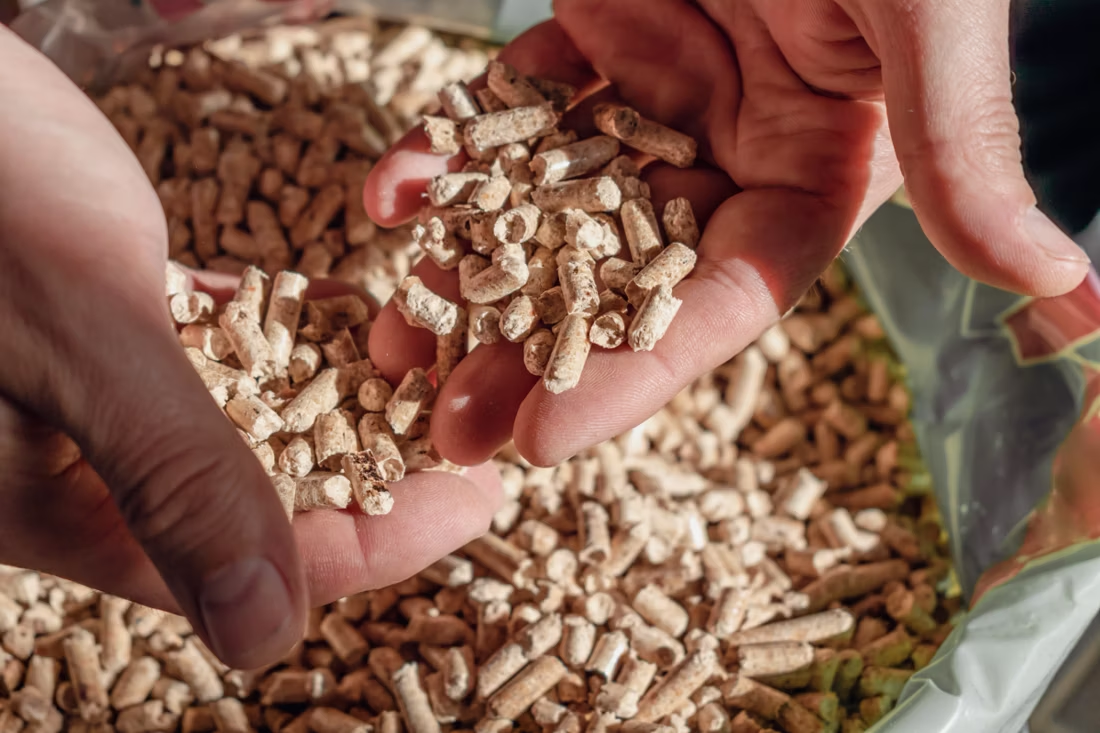
Pellet stoves fit that reality well for a specific kind of homeowner: someone who wants consistent, thermostatically controlled heat without the daily splitting and stacking that wood demands, and who's mindful of the wildfire smoke that regularly settles into the basin during dry summers and shoulder seasons. Pellet appliances burn cleaner than open wood-burning, which matters both for defensible-space thinking around forested parcels and for simple day-to-day air quality. Regional pellet supply comes through brands like Bear Mountain, Lignetics, and Forest Energy, all of which are stocked by hearth dealers serving the South Park area. The tradeoff worth being honest about: pellet stoves need continuous electricity to run the auger, igniter, and combustion blower, and rural Park County sees its share of winter power outages along the Highway 285 and 9 corridors—a real consideration for anyone treating pellet as their only heat source.
Three steps. No salesperson until you're ready.
Tell us about your project
Your zip code, your situation, and the fuel you're leaning toward—or let the answers point you to one.
See what's actually available
The brands dealers within 100 miles genuinely carry—real options, never a catalog mirage.
Get your dealer & Project Guide
A trusted local dealer, plus the free Project Guide & Parts List that names every component of the job.
Frequently Asked Questions
How much does a pellet stove installation cost in Park County?
Most pellet stove and insert installations run in the $3,000 to $6,000 range once you factor in the venting kit, hearth pad, and the dedicated electrical circuit the unit needs to run its auger and igniter. Because most Park County properties sit above 9,000 feet in the South Park basin, some installers also adjust the combustion air intake or exhaust rate to account for thinner air—ask your dealer whether that's built into the quote. Homes without an existing hearth or chimney chase, particularly newer builds around Hartsel or Bailey, tend to land toward the higher end once framing and venting runs are added.
Does elevation affect how a pellet stove performs in Park County?
Yes. At 9,000 to 10,500 feet, the air is measurably thinner, which changes combustion efficiency for any fuel-burning appliance, pellet stoves included. Some manufacturers specify a high-altitude kit—a modified air intake or feed-rate adjustment—for installations above roughly 7,000 feet, which covers essentially all of Park County. A local dealer familiar with South Park basin installs will know which models ship with that adjustment already built in versus which need a field retrofit, and will size the unit up slightly to compensate for reduced BTU output at elevation.
Do I need a permit to install a pellet stove in Park County?
Most new solid-fuel appliance installations, pellet included, require a building permit through the Park County Building Department, along with an inspection of the venting and clearances once the work is done. Most hearth dealers who serve the area handle the permit application as part of the install, so it's worth confirming that's included in your quote before work starts. Because many Park County parcels are on private septic and well systems with no HOA oversight, the county permit is typically the only approval you need—but skipping it can create problems at resale or with insurance if an inspector later finds an unpermitted install.
Will my pellet stove work during a power outage?
Not without a backup power source. Pellet stoves rely on an electric auger to feed fuel, an igniter to start combustion, and a blower to distribute heat and exhaust—cut the power and the stove shuts down, even with a full hopper. That's a real consideration in Park County, where winter storms along Highway 285 and Kenosha Pass can knock out power for hours at a time in Fairplay, Alma, and the more remote Hartsel-area ranches. Homeowners who want pellet convenience day-to-day but need outage-proof backup heat often pair a pellet stove with a small battery backup (a UPS unit can run a stove for several hours) or keep a wood stove as a secondary source for the coldest, stormiest stretches.
Pellet vs. wood—which makes more sense for a Park County home?
Wood is the more self-sufficient option: it needs no electricity, and ponderosa pine, aspen, pinyon, and juniper are all available locally either self-cut or purchased by the cord, which matters during multi-day outages. Pellet stoves trade that self-sufficiency for convenience and cleaner burning—load the hopper, set the thermostat, and walk away, with far less ash and smoke output than an open wood stove. Given how often wildfire smoke already settles into the South Park basin during dry stretches, some homeowners prefer pellet specifically to avoid adding more particulate to the air around their own property. For most Park County homes, the practical answer is either pellet as the primary convenience heater with a wood stove as storm backup, or the reverse, depending on how remote the property is and how often the power actually goes out there.
How often does a pellet stove need cleaning and maintenance in Park County?
Plan on emptying the ash pan every few days during regular winter use and doing a full burn-pot and hopper cleaning roughly every one to two tons of pellets burned—sooner if you're running the stove around the clock during the coldest stretches of a Park County winter. The exhaust venting should get a full inspection and cleaning at least once a year, ideally before the season starts in September, since creosote and fine ash buildup happens even with pellet's cleaner burn. Because parts and service techs are thinner on the ground out here than in Denver or Colorado Springs, it's worth asking your dealer whether they handle annual service calls directly or if you'll need to schedule with a traveling technician.
Where can I buy pellets locally in Park County?
Pellets aren't milled locally, but regional brands like Bear Mountain, Lignetics, and Forest Energy are carried by hearth and hardware retailers serving the South Park corridor, and some deliver by the pallet (roughly 50 forty-pound bags) to Fairplay, Alma, and outlying properties. Given that Kenosha Pass, Wilkerson Pass, and Trout Creek Pass can all see winter closures or chain-law restrictions, many locals buy a season's supply—two to three tons for an average home—in September or October rather than restocking mid-winter.
Are pellet stoves a good choice given Park County's wildfire smoke concerns?
Generally yes. Pellet stoves burn hotter and more completely than an open wood stove, which means less visible smoke and fewer airborne particulates leaving the flue—a meaningful difference on days when wildfire smoke is already settling into the basin from surrounding forests. The sealed hopper and enclosed burn pot also eliminate the ember and spark risk that comes with stacked cordwood and an open hearth, which some insurers and defensible-space assessments look at favorably for forested parcels around Alma and Bailey. It's not a wildfire-proofing measure on its own, but it's a lower-smoke, lower-ember alternative to traditional wood burning for anyone weighing both.
What size pellet stove do I need for a Park County home?
Given the severe cold and thin air of climate zone 7, most Park County homes need to size up relative to the manufacturer's sea-level chart. A stove rated for 1,500 square feet at lower elevations may realistically cover closer to 1,200 square feet in Fairplay or Alma once altitude and older, less-insulated cabin construction are factored in. Larger, better-insulated newer builds around Hartsel can sometimes run a mid-size unit as primary heat, while drafty older log cabins common around Alma and Como often need a larger unit even for supplemental use. A dealer who's installed in the South Park basin before will factor elevation into the sizing conversation rather than just going off square footage.
Why is a fireplace insert so efficient?
An insert does two things: it seals the chimney completely, so you stop losing air you already paid to heat, and it radiates warmth into the room through the firebox and glass. Most add a heat-exchange fan that pulls cool room air underneath, wraps it around the hot firebox, and pushes it back out warm. Your home is more efficient before you've even lit the first fire.
What's the difference between an insert and a zero-clearance fireplace?
An insert is a fireplace that slides into a pre-existing wood-burning fireplace—if you don't have one, there's nothing to insert it into. A zero-clearance fireplace is built into a framed wall, which makes it the answer for remodels and new construction. Simple test: existing masonry fireplace means insert; blank or framed wall means zero-clearance.
What is an in-home preview and do I need one?
It's a visit where a hearth professional measures your space, confirms the model you picked actually works in your home, and walks the specs—framing, gas line, venting, finish work—before anything is ordered. Some details you just can't know until you see the house. Never make a down payment without one; it's the single most-skipped step that burns buyers.
How much should I budget for a fireplace?
For an average home—covering the fireplace, the vent pipe, and basic installation—a budget between $3,900 and $5,500 gives you a lot of options across wood, gas, and pellet. By the time you add finish work, gas line, and electrical, the average complete installation lands between $5,000 and $12,000 all-in. In a remodel or new build, a good rule is to put about 2.5% of the total project cost toward the fireplace.
Pellet Brands Stocked Around Park County
Manufacturers will point you to the nearest stocking dealer.
Find your pellet stove in Park County.
Tell us about your home—elevation, square footage, and whether you need backup heat for outages—and we'll match you with a trusted local dealer and a free Project Guide & Parts List for your pellet project, including the exact vent kit for your install.
Find Your Fireplace →