
Heat that works above 9,000 feet—no chimney, no gas line.
From the South Park basin to Bailey and Guffey, electric fireplaces give Park County homes and cabins clean zone heat without trenching a propane line or running a flue at altitude. Find the right unit and get matched with a trusted local dealer.
Every Project Starts From One of These Five Situations
A high, cold basin with no gas main running through it.
Park County sits in Colorado's Zone 7 climate—one of the coldest building-code zones in the country—across the South Park basin and surrounding peaks. Fairplay and Alma sit above 9,900 and 10,500 feet respectively (Alma is the highest incorporated town in the U.S.), and outlying communities like Bailey, Hartsel, and Guffey run their own mix of full-time homes, hunting cabins, and vacation properties. There's no natural gas main serving most of the county, so heat here has always meant wood—ponderosa pine, aspen, pinyon, and juniper are the common local species—plus propane, both of which come with real costs: fuel delivery, chimney maintenance, tank fills, and the labor of tending a fire through a long, thin-air winter.
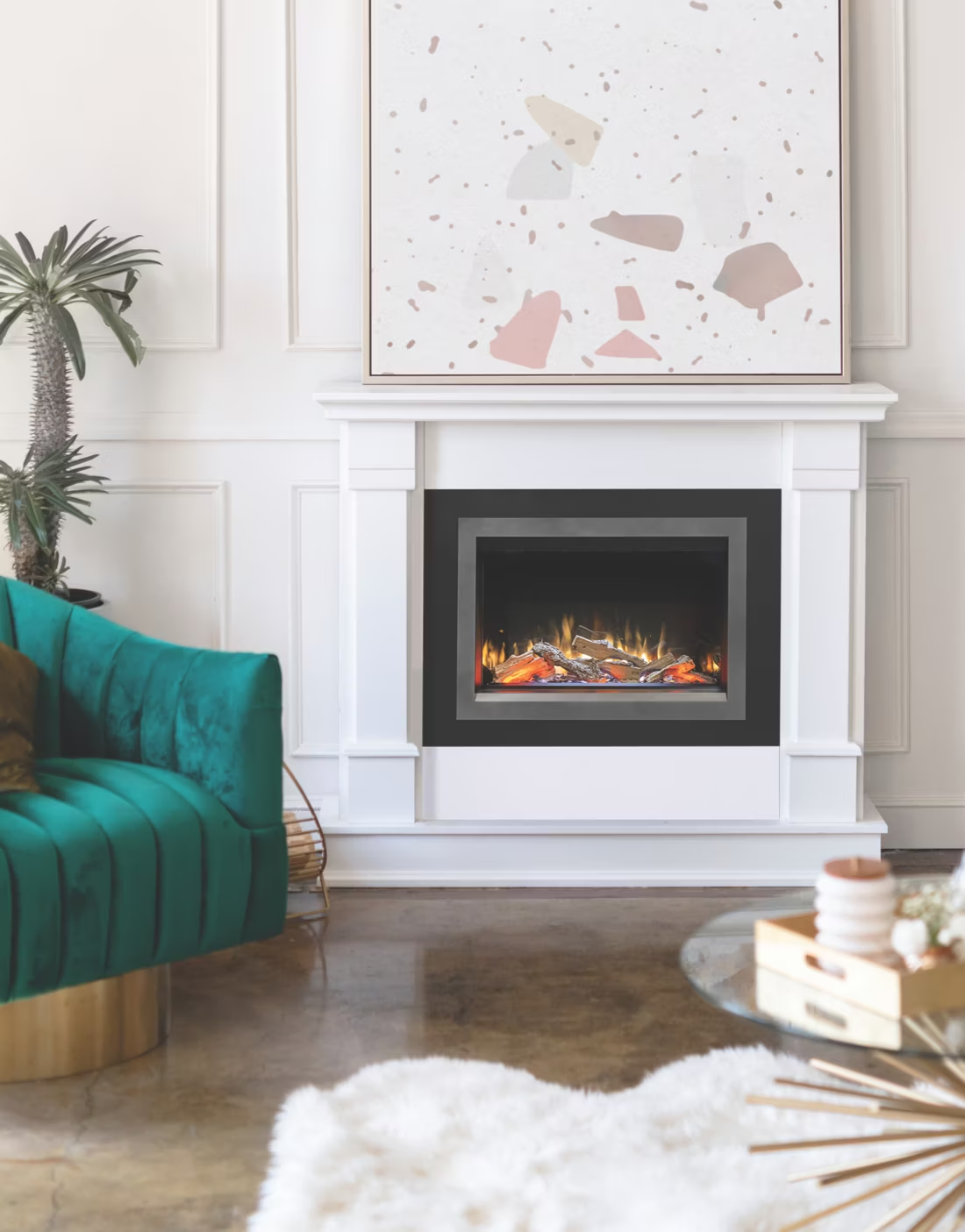
Electric fireplaces have carved out a real role in that mix. Because they don't need a flue, a gas line, or combustion air, they're the simplest thing to add to a remodel, an accessory dwelling, or a rental cabin near Fairplay or Hartsel—plug into an existing 120V circuit or have an electrician run a dedicated 240V line, and you're done. Most Park County homes run electric for supplemental zone heat and ambiance in a specific room, while wood or propane still carries the primary heating load through the coldest stretches of a South Park winter. Power comes through the local rural electric cooperative (IREA in much of the county), which matters when you're weighing electric against a fuel that keeps working if the lines go down in a storm.
Three steps. No salesperson until you're ready.
Tell us about your project
Your zip code, your situation, and the fuel you're leaning toward—or let the answers point you to one.
See what's actually available
The brands dealers within 100 miles genuinely carry—real options, never a catalog mirage.
Get your dealer & Project Guide
A trusted local dealer, plus the free Project Guide & Parts List that names every component of the job.
Frequently Asked Questions
How much does an electric fireplace installation cost in Park County?
Electric is the least expensive fireplace fuel to install, and Park County is no exception. A plug-in unit—a wall-mounted linear fireplace or a freestanding stove—typically runs $200 to $800 for the unit itself, with no additional wiring needed if it's rated for a standard 120V outlet. Built-in units on a dedicated 240V circuit run higher once you add a licensed electrician, generally $1,500 to $4,000 including the new circuit. In more remote parts of the county—Guffey, Hartsel, outlying Bailey—expect a modest travel charge from electricians and installers covering the longer drive.
Can an electric fireplace actually heat a cabin at 9,000+ feet?
Not as the sole heat source in most cases. Electric fireplaces typically max out around 5,000 to 10,000 BTUs, which is enough to comfortably heat a single room or small cabin footprint but generally isn't enough to carry a whole structure through a South Park winter on its own—especially at the elevations common around Alma and Fairplay, where outdoor lows regularly sit well below what most lower-elevation Colorado towns see. Most local homeowners use electric for zone heat in a bedroom, addition, or living room, paired with wood or propane as the primary system for the rest of the home.
Do I need a permit for an electric fireplace in Park County?
Usually less than you'd think compared to wood or gas. A simple plug-in unit generally doesn't require a permit at all. A built-in electric fireplace on a new dedicated circuit typically needs an electrical permit through Park County's building department, since it involves new wiring—most licensed electricians pull this as part of the job. There's no chimney inspection, no gas line permit, and no venting clearance review, which is a real advantage in a county where getting a wood stove or propane insert permitted and inspected can take longer given the distances involved.
What happens to my electric fireplace during a power outage?
It stops working—electric fireplaces have no function without grid power, and there's no battery backup option the way some gas units have. In Park County, where winter storms can take down rural electric cooperative lines across the South Park basin for hours or occasionally days, that matters. Most homeowners who install electric for supplemental heat keep a wood stove or propane unit as their real backup—the electric fireplace handles daily convenience and ambiance, and the wood-burning appliance carries the load when the power's out and it's ten below outside.
Electric vs. wood—which is right for my Park County home?
Wood is the traditional answer here for a reason: ponderosa pine, aspen, pinyon, and juniper are all locally available, wood stoves work with zero electricity during outages, and a well-run catalytic stove can hold a fire through a long, cold South Park night. Electric wins on convenience—no ash, no chimney sweeping, no wood stacking, and no wildfire-smoke concerns during red flag warnings or burn restrictions, since electric units produce no particulate emissions at all. Many homeowners in Fairplay and Alma end up with both: wood or propane for real heat, electric for the room where you want instant ambiance without loading a firebox.
Electric vs. propane—which makes more sense in Park County?
Since there's no natural gas main through most of Park County, propane is the standard gas alternative—but it means a tank, scheduled deliveries, and fuel costs that swing with the market. Electric fireplaces skip all of that: no tank, no delivery truck navigating county roads in Hartsel or Guffey during a storm, and no annual gas appliance service. The tradeoff is that electric heat output is lower and it depends entirely on grid power staying up. For a full-time primary heat source in a remote cabin, propane generally has the edge; for a supplemental unit in a room with reliable power, electric is simpler and cheaper to run day to day.
Are electric fireplaces a good fit for vacation rentals and cabins in Park County?
Yes—this is one of the strongest use cases locally. Vacation cabins and short-term rentals around Fairplay, Bailey, and the South Park basin often sit empty for stretches, and an electric fireplace can be left running unattended (something you'd never do with an open wood fire) or switched on remotely for arriving guests. No chimney to inspect between renters, no ash to clean, and no risk of a fire left untended. Many owners pair a wood stove for guests who want the real experience with an electric unit for shoulder-season warmth and ambiance without the upkeep.
Does wildfire smoke affect whether I should install an electric fireplace?
Wildfire smoke is a real seasonal concern across Park County, and during red flag warnings or local burn restrictions, wood-burning appliances are sometimes the first thing residents are asked to limit. Electric fireplaces produce no smoke, no particulate, and no outdoor emissions, so they keep working—and stay legal to run—regardless of air quality advisories tied to wildfire season. That's part of why some homeowners here add an electric unit specifically as a smoke-season alternative to their primary wood stove.
What's the difference between an electric insert, a wall-mounted unit, and an electric stove?
An electric insert is built to slide into an existing masonry fireplace opening, giving an old wood-burning fireplace a clean, low-maintenance replacement without touching the chimney. A wall-mounted or built-in linear unit is designed for a fresh installation in a wall, often used in additions, remodels, or accessory dwellings around Park County where there's no existing fireplace to work with. A freestanding electric stove mimics the look of a wood stove and can sit anywhere near an outlet, which makes it an easy retrofit for a cabin or bonus room. A local dealer can walk through which fits your existing structure and where you want the heat.
Can I put a TV above my fireplace?
Yes—with an asterisk. Fireplaces are hot and TVs don't like heat. Either put a mantel between them to deflect rising warmth, or choose a fireplace with heat-management technology that creates a cool zone on the wall above—the wall stays around 125 degrees, barely warm, while the room still gets full heat. If you like clean lines and don't want a mantel, heat management is the answer.
What fireplace styles should I know before shopping?
Four cover most of the market: screen-front traditional (mesh front, open feel, fits craftsman homes), traditional door set (the classic look you grew up with), modern linear (wide, low, the statement piece for entertaining), and clean face contemporary (no trim—your tile or stone runs right to the fire's edge). Walk in knowing those four terms and you're ahead of most buyers.
Does a fireplace add value to my home?
On average, a fireplace adds back to the home about the same amount you spent installing it. Add the monthly savings from heating the rooms you actually use instead of the whole house—often hundreds of dollars a year—and the value case is strong before you even count what a fire does for how your family uses the room.
Can a fireplace actually lower my heating bill?
Yes—by creating a comfort zone. A furnace heats every square foot of the house just to warm the one room you're in; a gas fireplace on low burns roughly a sixth of the gas a typical furnace does. Set the furnace around 55–60 degrees as a baseline, then heat the rooms your family actually uses. Families who heat this way commonly save $20–$60 a month.
Find your electric fireplace in Park County.
Tell us about your home or cabin and we'll match you with a trusted local dealer, plus a free Project Guide & Parts List—your recommended unit, the exact parts, and the right installer for a South Park basin winter.
Find Your Fireplace →