
Fireplace Heat for Colorado's Coldest County.
Wood, gas, pellet, and electric fireplace resources for South Park's high-elevation towns—Fairplay, Alma, Bailey, Hartsel, Guffey, and Como. Find the right unit for a Zone 7 winter and connect with a trusted local dealer.
Every Project Starts From One of These Five Situations
Wood, gas, pellet, and electric heat above 9,000 feet.
Park County sits inside the South Park basin, ringed by the Mosquito Range and the Kenosha Mountains, with most of its towns perched between 9,000 and 10,600 feet—Alma is the highest incorporated town in the country, and Fairplay isn't far behind. This is IECC Climate Zone 7, the same severity bracket as International Falls, Minnesota—sub-zero nights are routine from November through March, and the growing season is short enough that firewood is often cut and split the same year it's burned. Ponderosa pine, aspen, pinyon, and juniper from the surrounding Pike National Forest have heated South Park cabins and ranch houses for generations, and Forest Service firewood permits are still a normal part of getting ready for winter here. Wildfire smoke is the other seasonal reality—dry summers and standing beetle-kill timber mean smoke advisories show up in late summer, well before anyone's thinking about lighting a stove.
This hub rolls up hearth retailers, service technicians, and fuel suppliers across the whole county—a sparsely populated stretch of high country where a handful of dealers, based in Fairplay or driving in from the Buena Vista/Salida and South Denver corridors, cover an enormous service radius. Pick your fuel below for local dealer details, installation costs, and unit recommendations specific to elevation, propane service (natural gas is limited outside a few pockets), and the cold. Whether you're heating a Bailey cabin at 8,500 feet or a ranch house out on the Hartsel flats, this is the starting point.
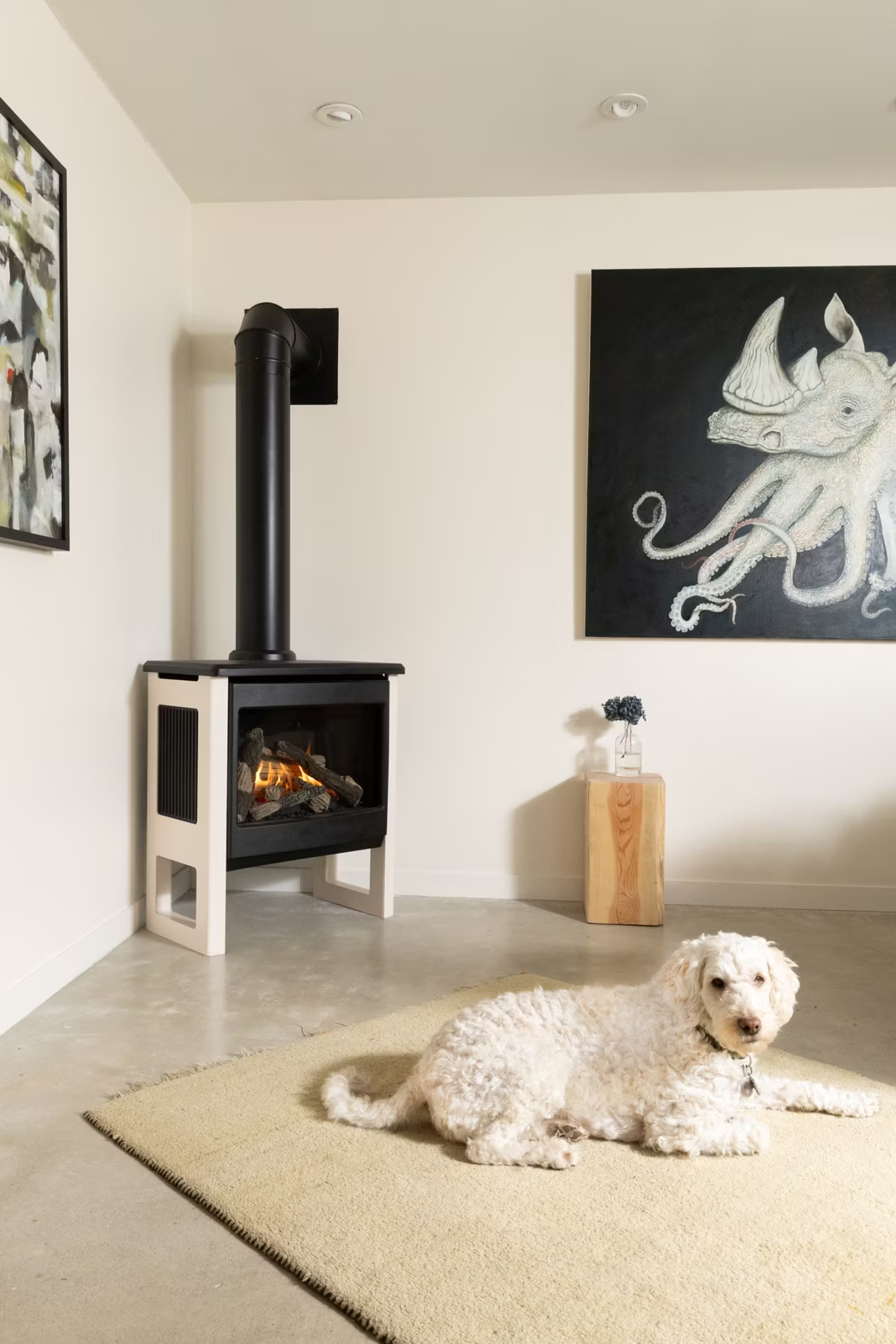
Four fuels. One honest answer for Park County.
Three steps. No salesperson until you're ready.
Tell us about your project
Your zip code, your situation, and the fuel you're leaning toward—or let the answers point you to one.
See what's actually available
The brands dealers within 100 miles genuinely carry—real options, never a catalog mirage.
Get your dealer & Project Guide
A trusted local dealer, plus the free Project Guide & Parts List that names every component of the job.
Frequently Asked Questions
Which fuel works best in Park County?
It depends on the home and how remote it sits. Wood remains the backbone fuel for a lot of South Park cabins and ranch houses—ponderosa pine, aspen, pinyon, and juniper are all locally available, Pike National Forest permits keep fuel cost low, and a catalytic stove holds a fire through the kind of sub-zero nights that are routine here in Climate Zone 7. Gas is mostly propane rather than piped natural gas outside a few pockets near Fairplay—it's the low-labor option for full-time residences and works well paired with wood as backup during power outages, which aren't rare at this elevation in winter storms. Pellet stoves are a solid middle ground where Bear Mountain, Lignetics, or Forest Energy pellets are stocked locally, though supply runs need more planning than in a Front Range suburb. Electric fireplaces are supplemental here—good for a bedroom or a weekend cabin, not something you'd lean on as primary heat through a South Park winter.
Do I need a permit to install a fireplace in Park County?
Generally yes. New wood stoves, wood inserts, gas fireplaces, gas inserts, gas stoves, and pellet stoves typically require a building permit through the Park County building department, and wood appliances need to meet current EPA emissions standards. Propane installations also need a licensed gas-fitter for the tank connection and line work, since piped natural gas isn't an option for most of the county. If you're cutting your own firewood on national forest land, that's a separate permit through the local Pike National Forest ranger district and has nothing to do with the stove installation itself. Most hearth retailers who work regularly in Park County handle the building permit as part of the install, which matters given how far some homes sit from the county offices in Fairplay.
Are there wildfire smoke concerns that affect fireplace use in Park County?
Yes, though it's a summer issue more than a winter one. South Park's dry summers and stands of beetle-kill timber mean wildfire smoke advisories are common from June through September, sometimes lingering for days depending on fire activity elsewhere in Colorado. That doesn't restrict wood stove use in the heating season the way winter inversion rules do in some basins, but it does shape how the county talks about wood heat generally—defensible space around the home, proper chimney clearance, and clean-burning EPA-certified stoves are all part of the same fire-safety conversation local retailers and Forest Service offices have with residents. If you're cutting your own firewood, checking current forest conditions before heading out is standard practice here.
Can one local hearth retailer handle all four fuel types in Park County?
With a population under 1,500, Park County doesn't support a large network of hearth retailers, so most homeowners end up working with a dealer based in Fairplay or one that regularly services South Park from Salida, Buena Vista, or the south Denver suburbs. Some of these dealers carry wood, gas (propane), and pellet, with electric as a smaller sideline; a few are wood- or propane-specialists only. Because the drive time matters more here than in a denser county, it's worth confirming a dealer's actual service radius and whether they'll travel to Hartsel or Guffey before you commit—not every retailer that lists Park County on its website makes the trip past Fairplay.
How does fireplace service work in the more remote parts of Park County?
Most technicians serving Park County are based in Fairplay or come in from Salida or the Denver metro area, and they build South Park stops into a broader mountain-corridor route. Homes out toward Hartsel, Guffey, or Como can expect a travel charge for service calls, and winter storm closures on Highway 9 or County Road 33 can push a scheduled visit by a day or two. Booking pre-season service in late summer or early fall—before the wildfire-smoke season winds down and before the first hard freeze—is far easier than trying to get a technician out during a January cold snap. For full-time residences at elevation, it's also worth keeping a backup heat source on hand given how storms can knock out both power and road access at once.
What's the typical cost range for fireplace installation across fuel types in Park County?
Costs run a bit higher here than in a Front Range suburb, largely due to travel time and propane infrastructure. Wood stove or insert installation: roughly $4,800–$9,500 for a typical job, more if a full masonry chimney is involved. Propane fireplace, insert, or stove: roughly $5,000–$11,500, with tank setup and line work adding to jobs that don't already have propane service on site. Pellet stove or insert: roughly $4,800–$8,000, plus factoring in pellet delivery logistics at this elevation. Electric fireplace: $200–$3,000 for the unit itself, with $400–$1,200 in labor for anything beyond a plug-and-play install. See the county + fuel pages above for retailer-specific pricing.
Can a fireplace actually lower my heating bill?
Yes—by creating a comfort zone. A furnace heats every square foot of the house just to warm the one room you're in; a gas fireplace on low burns roughly a sixth of the gas a typical furnace does. Set the furnace around 55–60 degrees as a baseline, then heat the rooms your family actually uses. Families who heat this way commonly save $20–$60 a month.
How much should I budget for a fireplace?
For an average home—covering the fireplace, the vent pipe, and basic installation—a budget between $3,900 and $5,500 gives you a lot of options across wood, gas, and pellet. By the time you add finish work, gas line, and electrical, the average complete installation lands between $5,000 and $12,000 all-in. In a remodel or new build, a good rule is to put about 2.5% of the total project cost toward the fireplace.
Wood, gas, pellet, or electric—how do I choose?
Match the fuel to your life, not the other way around. Wood: lowest fuel cost and total power-outage independence, but you're hauling and stacking. Gas: press a button, set a thermostat, no maintenance to speak of. Pellet: wood economics with automatic feeding, in exchange for weekly cleaning and a need for electricity. Electric: plugs in anywhere with honest supplemental heat. Nobody regrets the fuel that fits how they actually live.
What is an in-home preview and do I need one?
It's a visit where a hearth professional measures your space, confirms the model you picked actually works in your home, and walks the specs—framing, gas line, venting, finish work—before anything is ordered. Some details you just can't know until you see the house. Never make a down payment without one; it's the single most-skipped step that burns buyers.
Stove and Fireplace Dealers in Park County
Listings include WhyFire partner dealers, dealers we have verified as authorized for the brands we recommend, and established local businesses that carry hearth products. Every listing shows which one it is. The ones marked Preferred run on WhyFire's software, so they can show you real pricing and book your appointment right here. No manufacturer pays for placement. How we verify dealers →
Chimney Doctors
Safe & Warm / Soot Busters
Black Diamond Fireplace
Foxworth-Galbraith Lumber
Get matched with a dealer serving Park County.
Tell us about your project and we'll match you with a trusted local dealer and send a free Project Guide & Parts List—the exact parts, including the vent kit, sized for your elevation and fuel, plus the dealer we recommend for your part of South Park.
Find Your Fireplace →