
Steady heat for Lincoln County's wind-driven winters.
From Hugo to Limon, Genoa, Arriba, and Karval, Lincoln County's open shortgrass plains see steady winter cold and near-constant wind. Pellet heat delivers consistent, thermostat-controlled warmth without needing a woodlot. Find the right unit and connect with a trusted local dealer.
Every Project Starts From One of These Five Situations
Convenient heat where trees are scarce.
Lincoln County spans nearly 2,600 square miles of shortgrass prairie in eastern Colorado, home to just under 2,800 people spread across Hugo, Limon, Genoa, Arriba, and Karval. With winters in the same range as Bismarck, ND, and average winter lows near 10°F, this is genuinely cold country, made colder-feeling by the near-constant wind that sweeps across the plains with little to break it.
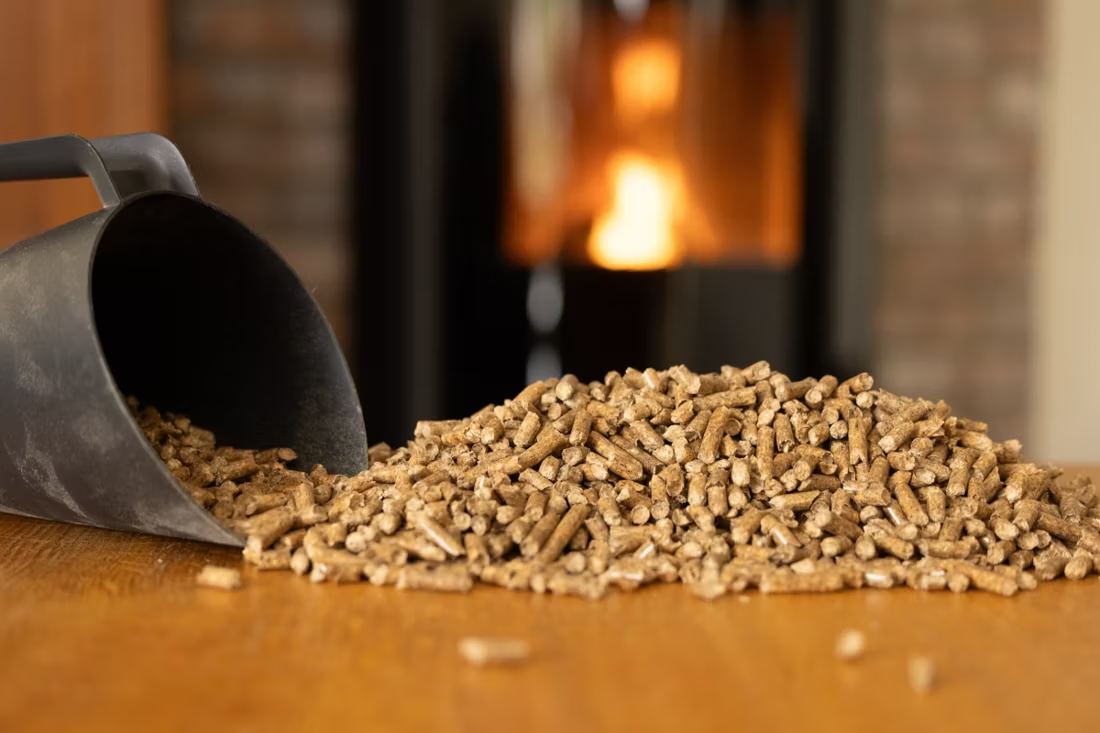
Unlike mountain counties with national forest at their back door, Lincoln County has limited tree cover, so self-cut firewood isn't the tradition here the way it is in Colorado's western counties. That's part of why pellet stoves have found a real foothold on ranches and in town—bagged and bulk pellets from regional brands like Bear Mountain, Lignetics, and Forest Energy show up at area farm and feed stores, and a hopper-fed stove means no cutting, splitting, or hauling cordwood across long rural distances. Pellet units also burn cleaner, which matters when regional wildfire smoke already fills the air during dry summers and falls.
Three steps. No salesperson until you're ready.
Tell us about your project
Your zip code, your situation, and the fuel you're leaning toward—or let the answers point you to one.
See what's actually available
The brands dealers within 100 miles genuinely carry—real options, never a catalog mirage.
Get your dealer & Project Guide
A trusted local dealer, plus the free Project Guide & Parts List that names every component of the job.
Frequently Asked Questions
How much does a pellet stove installation cost in Lincoln County?
A typical pellet stove or insert installation in Lincoln County runs roughly $3,500 to $7,000, depending on whether it's a freestanding stove, an insert into an existing masonry fireplace, and whether new venting or an electrical circuit needs to be added. Because Lincoln County is sparsely populated and spread out—Hugo, Limon, Genoa, Arriba, and Karval are all a good drive apart—installers based near Limon or Colorado Springs may add a modest travel charge for rural ranch properties. Ask about that up front when you get a quote.
What size pellet stove do I need for a Lincoln County home?
Sizing depends on square footage, ceiling height, and how drafty the home is—and on the plains, wind infiltration through older ranch-style construction is a real factor even in a well-built house. A small pellet stove (under 1,000 sq ft) suits a single large room or a compact home; a medium unit (1,000–2,000 sq ft) handles most main living areas; larger homes or open-concept ranch houses may need a bigger hopper and higher BTU output to keep up during sustained wind-driven cold. A local dealer can size your specific home during an in-home visit rather than relying on a generic chart.
Where can I find a certified pellet stove installer near me?
Look for NFI-certified installers, and expect that in a county with under 3,000 residents, your installer may be based out of Limon, Colorado Springs, or another regional hub rather than right in town. That's normal for rural eastern Colorado—the same installer often covers Hugo, Genoa, Arriba, and Karval on a single service route. Confirm they're licensed for the electrical hookup a pellet stove requires, since the auger, igniter, and blower all run off a standard outlet, and that circuit needs to be done correctly.
What's the difference between a pellet stove and a pellet insert?
A pellet stove is a freestanding unit that sits on a hearth pad and vents through a wall or existing chimney—it can go almost anywhere with the right clearances, which makes it a common retrofit in Lincoln County's older ranch homes. A pellet insert is built to slide into an existing masonry fireplace, converting an open hearth into a sealed, thermostat-controlled heat source using the chimney you already have. If your home has a fireplace that's mostly decorative, an insert is usually the more efficient upgrade; if you're heating a shop, addition, or a home without a fireplace, a freestanding stove is the more flexible option.
Do I need a permit to install a pellet stove in Lincoln County?
Yes—new pellet stove and insert installations require a building permit through Lincoln County, and the unit needs to meet current EPA emissions standards. Most local installers handle the permit paperwork as part of the job. Lincoln County doesn't have the winter inversion or non-attainment restrictions you see in some Colorado mountain valleys, but wildfire smoke from regional fires can affect air quality during dry stretches—pellet stoves burn clean enough that they're rarely a factor in those advisories, which is one more reason they're a popular choice here.
What's the best pellet stove for Lincoln County's climate?
Look for a stove with a large hopper capacity and a reliable auger feed—with winters in the same range as Bismarck, ND, and average lows around 10°F, you'll be running the stove hard for months. Bear Mountain, Lignetics, and Forest Energy pellets are all regionally available, so check that whatever stove you choose burns cleanly with what's actually stocked locally rather than a brand you'd have to special-order. One real consideration on the plains: pellet stoves need electricity to run the auger and blower, and rural power lines here can go down in high-wind events. If backup heat during outages matters to you, ask a local dealer about battery backup options or pair the stove with a generator plan.
How often does a pellet stove need to be cleaned and serviced?
Plan on cleaning the ash pan and burn pot weekly during heavy use, wiping the glass as needed, and scheduling a full professional service once a year—typically before the heating season starts each fall. Annual service includes checking the auger motor, exhaust blower, and venting for buildup. Pellet stoves are considerably lower-maintenance than wood stoves, but skipping the yearly service is the most common cause of igniter and auger failures mid-winter, which is a bad time to be without heat on the eastern plains.
Where can I buy pellets in Lincoln County?
Bagged pellets from regional brands like Bear Mountain, Lignetics, and Forest Energy are typically stocked seasonally at area farm and feed stores, with prices generally running in the $240–$320 per ton range depending on the brand and how early in the season you buy. Because Lincoln County is rural, many homeowners buy in bulk early in fall—a full ton or more at once—rather than making repeated town trips over the winter. Ask your local dealer where they source pellets; some can arrange delivery alongside your stove installation.
Pellet stove vs. wood stove—which makes more sense in Lincoln County?
Wood stoves work without electricity, which matters if you're worried about power loss during a plains windstorm or blizzard—but Lincoln County has limited local forest cover, so a steady firewood supply usually means hauling wood in from farther west rather than cutting your own. Pellet stoves solve that problem: bagged fuel from Bear Mountain, Lignetics, or Forest Energy is available locally, the burn is more consistent and easier to control, and there's no splitting or seasoning wood. The tradeoff is that pellet stoves need electricity to run. For most Lincoln County homes without a strong wood-cutting tradition, pellet tends to be the more practical everyday choice—though some ranch properties keep a wood stove as backup for exactly the outage scenario a pellet unit can't cover.
Why is my open fireplace making my house colder?
Open fireplaces suck—literally. As the fire burns, it consumes air your furnace already paid to heat and pulls it out through the chimney, so the house is actually colder after the fire goes out than before you lit it. An insert fixes this: it seals the chimney, puts fixed glass across the front, and turns that hole in your house into a real heat source.
What's the difference between an insert and a zero-clearance fireplace?
An insert is a fireplace that slides into a pre-existing wood-burning fireplace—if you don't have one, there's nothing to insert it into. A zero-clearance fireplace is built into a framed wall, which makes it the answer for remodels and new construction. Simple test: existing masonry fireplace means insert; blank or framed wall means zero-clearance.
How much should I budget for a fireplace?
For an average home—covering the fireplace, the vent pipe, and basic installation—a budget between $3,900 and $5,500 gives you a lot of options across wood, gas, and pellet. By the time you add finish work, gas line, and electrical, the average complete installation lands between $5,000 and $12,000 all-in. In a remodel or new build, a good rule is to put about 2.5% of the total project cost toward the fireplace.
Can a fireplace actually lower my heating bill?
Yes—by creating a comfort zone. A furnace heats every square foot of the house just to warm the one room you're in; a gas fireplace on low burns roughly a sixth of the gas a typical furnace does. Set the furnace around 55–60 degrees as a baseline, then heat the rooms your family actually uses. Families who heat this way commonly save $20–$60 a month.
Stove and Fireplace Dealers in Lincoln County
Pellet Brands Stocked Around Lincoln County
Manufacturers will point you to the nearest stocking dealer.
Find your pellet stove in Lincoln County.
Tell us a bit about your home and we'll match you with the right pellet stove or insert, plus a free Project Guide & Parts List—your exact parts, vent kit included, and a trusted local dealer to install it.
Find Your Fireplace →