
Reliable heat for Lincoln County's high plains winters.
Wood, gas, pellet, and electric fireplace resources for Limon, Hugo, Genoa, Arriba, and the rural stretches between—connect with a trusted local dealer who knows what actually holds up out here.
Every Project Starts From One of These Five Situations
Wind, open plains, and a long heating season on the eastern Colorado high plains.
Lincoln County sits on Colorado's eastern plains at roughly 5,300 to 5,600 feet, and the exposure shows up in the heating bill more than the elevation does. With about 7,024 heating degree days and winter lows averaging 10°F, the season here runs comparable to Fargo, ND—long, dry, and driven by relentless wind that makes drafty older farmhouses lose heat fast. Ponderosa pine, aspen, pinyon, and juniper are the wood species you'll actually find split and stacked in yards from Hugo to Genoa, though much of it gets hauled in from the foothills rather than cut locally, since Lincoln County itself is mostly open grassland with limited timber.
This hub rolls up hearth retailers, service technicians, and fuel suppliers across the whole county—Limon as the commercial hub along I-70, Hugo as the county seat, and the smaller communities of Genoa, Arriba, and Karval. Pick a fuel below to see local dealers, typical installation costs, and the units that actually make sense for a wind-exposed plains home. Whether you're heating a ranch house outside Limon or a small home in Hugo, this is the starting point for figuring out what fits.
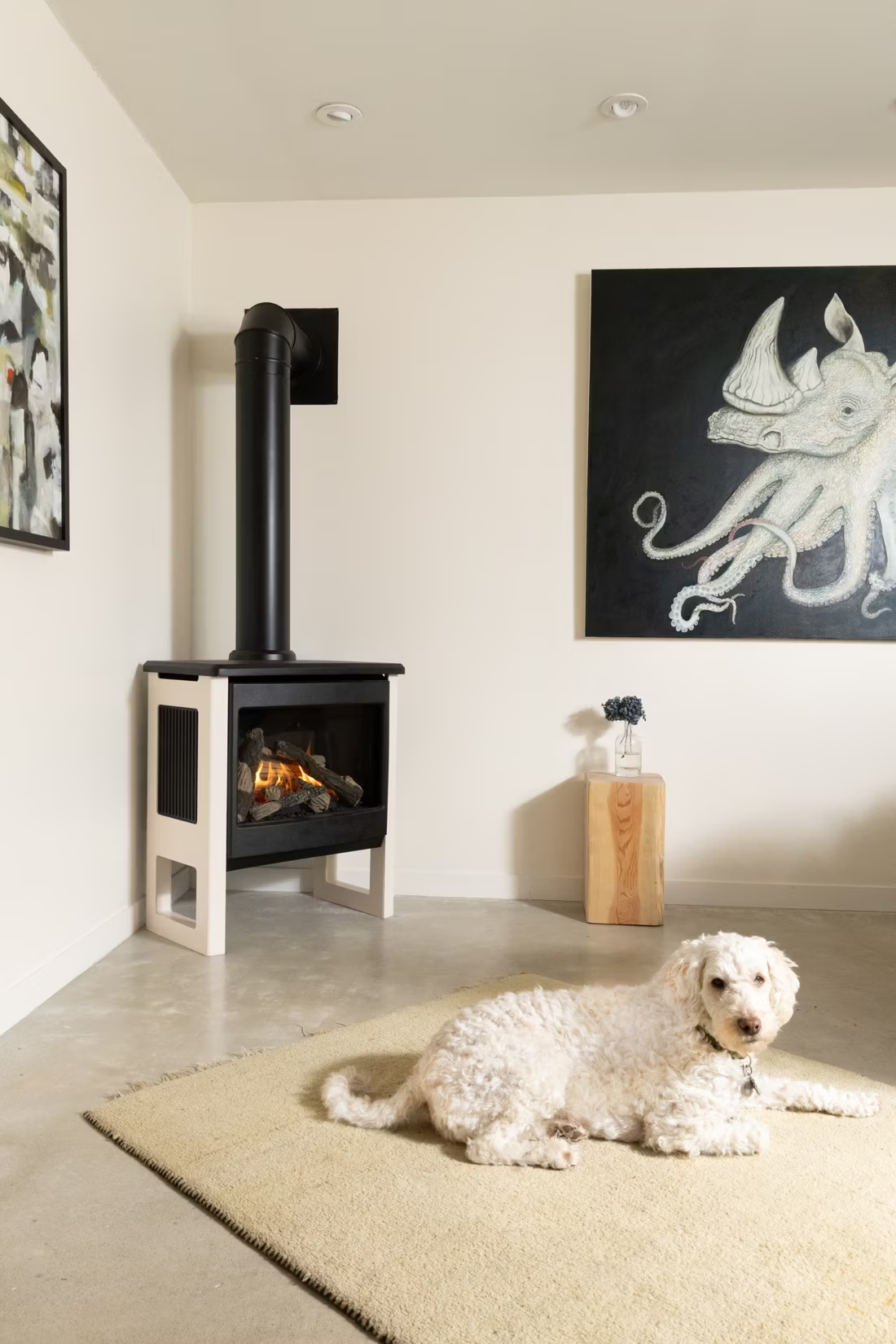
Four fuels. One honest answer for Lincoln County.
Three steps. No salesperson until you're ready.
Tell us about your project
Your zip code, your situation, and the fuel you're leaning toward—or let the answers point you to one.
See what's actually available
The brands dealers within 100 miles genuinely carry—real options, never a catalog mirage.
Get your dealer & Project Guide
A trusted local dealer, plus the free Project Guide & Parts List that names every component of the job.
Frequently Asked Questions
Which fuel works best for a Lincoln County home?
It depends on the house and how exposed it is to the wind. Wood remains a strong choice for rural properties and ranch homes outside Limon and Hugo, especially with catalytic stoves that hold a steady burn through the kind of sustained cold this area sees—but most of the wood itself (ponderosa pine, aspen) gets hauled in rather than harvested locally, since the county is mostly open plains with limited standing timber. Gas is the practical choice in town: Limon has more natural gas infrastructure than the surrounding rural areas, where propane delivery is the norm and works well for on-demand heat without tending a fire. Pellet stoves are a solid middle ground if you want wood-style ambiance without the wood supply hassle—Bear Mountain and Lignetics bags are both regionally available. Electric fireplaces work as supplemental heat in bedrooms or additions but won't carry a whole house through a plains winter with 10°F average lows. Many homes here pair a wood or pellet stove as primary heat with propane or electric as backup.
Do I need a permit to install a fireplace in Lincoln County?
Generally yes for anything involving new venting, gas lines, or structural changes. Within Limon, permits go through the town's building department; in unincorporated Lincoln County—which is most of the county's land area—permits are handled through the county building office. Wood stoves and inserts typically need a permit for the chimney or vent installation, gas fireplaces and inserts need both a building permit and a licensed propane or gas-fitter for the fuel line connection, and pellet stove installs usually require a permit for the venting. Simple plug-in electric fireplaces usually don't need one unless you're hardwiring a built-in unit. Most local retailers handle the permit paperwork as part of a full installation quote, so it's worth asking upfront rather than pulling one yourself.
Are there wood-burning restrictions in Lincoln County?
There's no formal non-attainment air district here like you'd find in some Front Range counties, but wildfire smoke is a real seasonal concern on the eastern plains—dry summers and fall red flag wind conditions can bring smoke in from regional fires, and local fire departments sometimes issue burn bans during extreme fire danger that also affect outdoor burning (not typically indoor wood stoves). New wood stove installations should still meet EPA 2020 NSPS emissions standards, which most current-production stoves from major brands already do. If you're in an area under an active burn ban during dry, windy stretches, it's worth checking with the Lincoln County Sheriff's Office or local fire protection district before any outdoor burning, even if your indoor stove isn't affected.
Can one local hearth retailer handle all four fuel types out here?
Given Lincoln County's small population (under 3,000), most retailers who actually serve the area are based in Limon or drive in from larger markets like Colorado Springs or the Denver metro, and they tend to carry a broad mix—wood, gas, and pellet at minimum, with electric as an add-on line rather than a specialty. It's less about finding a hyper-specialized dealer and more about finding one willing to make the drive and familiar with plains wind-loading, propane conversions, and older farmhouse retrofits. If you're comparing fuels side by side, ask a prospective dealer directly which types they stock working displays of, since a rural service area sometimes means a smaller showroom than you'd find in a bigger county.
How does installation and service work for rural Lincoln County addresses?
Expect technicians and retailers to travel from Limon, Hugo, or further out from Colorado Springs and the eastern Denver suburbs, since Lincoln County itself has limited hearth-service infrastructure given its population. Rural service calls to Karval, Arriba, or ranch properties off the highway often carry a modest travel fee, and scheduling ahead of the first hard freeze—typically September or October—gets you a better appointment window than a mid-January emergency call. Because propane delivery and rural electric co-ops serve much of the county, it's worth confirming which utility serves your specific address before choosing a fuel, since infrastructure varies more here than in denser counties.
What's the typical cost range for fireplace installation across fuel types in Lincoln County?
Costs run similar to other rural eastern Colorado counties, sometimes with a slightly higher labor line for travel time. Wood stove or insert: roughly $4,500-$9,000 for a standard install, more for new chimney construction on an older farmhouse. Gas fireplace, insert, or stove: $4,500-$11,000, with propane tank setup or line work adding to the lower end of that range for homes without existing service. Pellet stove or insert: $4,500-$7,500 typical. Electric fireplace: $200-$3,000 for the unit itself, plus $400-$1,200 in labor for anything beyond a simple plug-in unit. For a firmer number tied to your specific address and fuel choice, the county + fuel pages above break down local retailer pricing in more detail.
How much should I budget for a fireplace?
For an average home—covering the fireplace, the vent pipe, and basic installation—a budget between $3,900 and $5,500 gives you a lot of options across wood, gas, and pellet. By the time you add finish work, gas line, and electrical, the average complete installation lands between $5,000 and $12,000 all-in. In a remodel or new build, a good rule is to put about 2.5% of the total project cost toward the fireplace.
What is an in-home preview and do I need one?
It's a visit where a hearth professional measures your space, confirms the model you picked actually works in your home, and walks the specs—framing, gas line, venting, finish work—before anything is ordered. Some details you just can't know until you see the house. Never make a down payment without one; it's the single most-skipped step that burns buyers.
Should the dealer who sells my fireplace also install it?
Ideally, yes. A fireplace project involves vent pipe, gas line, electrical, and often tile or stone. Hire three or four separate trades and you own the liability and the game of telephone between them. One company selling and installing means one accountable party, start to finish—ask about factory training, on-time completion records, and what happens if an inspection fails.
Does a fireplace add value to my home?
On average, a fireplace adds back to the home about the same amount you spent installing it. Add the monthly savings from heating the rooms you actually use instead of the whole house—often hundreds of dollars a year—and the value case is strong before you even count what a fire does for how your family uses the room.
Stove and Fireplace Dealers in Lincoln County
Listings include WhyFire partner dealers, dealers we have verified as authorized for the brands we recommend, and established local businesses that carry hearth products. Every listing shows which one it is. The ones marked Preferred run on WhyFire's software, so they can show you real pricing and book your appointment right here. No manufacturer pays for placement. How we verify dealers →
Midtown Chimney Fireplace Store
Plains Heating And Air Conditioning
Plains Heating And Air Conditiong Inc
Spa Brokers
Find your fireplace fit for Lincoln County.
Pick your fuel below and we'll match you with a trusted local dealer, plus send a free Project Guide & Parts List built for your specific home and fuel choice.”
Find Your Fireplace →