
Zone heat for Lincoln County's wind-driven winters.
No chimney, no propane tank, no wood pile—just a plug or a dedicated circuit. Find the right electric fireplace for a ranch house outside Hugo or a rental unit in Limon, and connect with a trusted local dealer.
Every Project Starts From One of These Five Situations
Supplemental warmth without another fuel delivery.
Lincoln County spreads across nearly 2,600 square miles of eastern Colorado plains, with a population under 2,800 scattered between Hugo, Limon, Genoa, Karval, and long stretches of wheat and cattle country in between. Elevation sits around 4,700 to 5,300 feet, and the exposure here is real—flat, treeless plains with almost nothing to break the wind, average winter lows near 10°F, and a winter heating load on par with places like Bismarck or Fargo. Most homes in the county run on propane or electric heat rather than piped natural gas, since gas mains don't reach far outside the I-70 corridor at Limon.
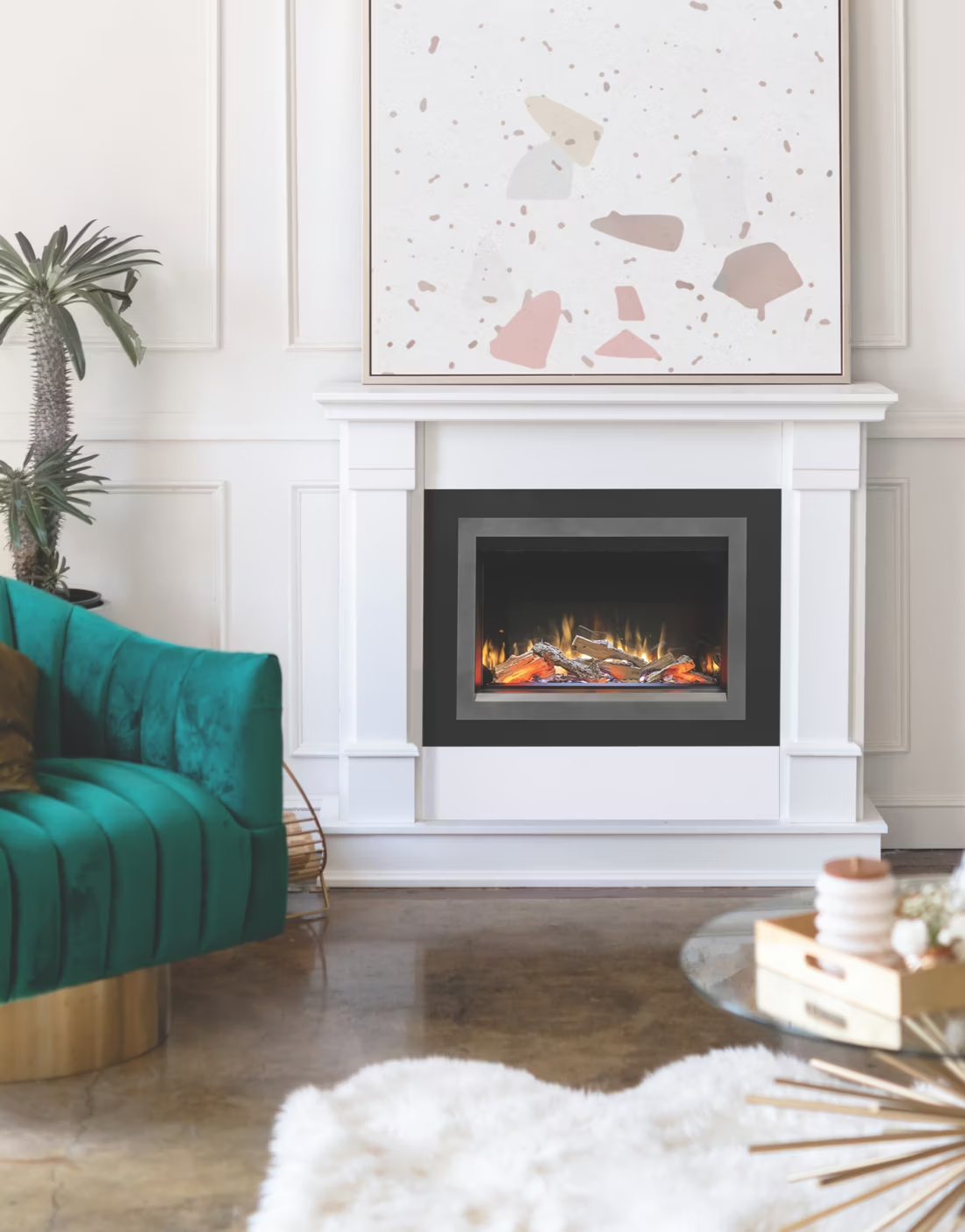
That's exactly where electric fireplaces earn their place. They don't need a chimney, a gas line, or a propane tank refill schedule—just an outlet or, for larger built-in units, a dedicated circuit that a local electrician can run in an afternoon. For manufactured and modular homes, which are common across rural Lincoln County, that simplicity matters: an electric insert or linear unit adds real zone heat and ambiance to a living room or bedroom without touching the structure. The one honest tradeoff—worth saying plainly—is that electric fireplaces run on grid power, and high-wind ice events on the plains do occasionally knock lines down. If you need heat that keeps working when the power doesn't, pair an electric unit with a wood stove or propane appliance rather than relying on electric alone.
Three steps. No salesperson until you're ready.
Tell us about your project
Your zip code, your situation, and the fuel you're leaning toward—or let the answers point you to one.
See what's actually available
The brands dealers within 100 miles genuinely carry—real options, never a catalog mirage.
Get your dealer & Project Guide
A trusted local dealer, plus the free Project Guide & Parts List that names every component of the job.
Frequently Asked Questions
How much does an electric fireplace cost to install in Lincoln County?
Electric fireplaces cost far less to install than wood or gas units because there's no chimney, gas line, or masonry work involved. A plug-in freestanding or mantel-style unit can be running the same day with zero professional labor—you're paying for the appliance itself. Built-in linear fireplaces or inserts that call for a dedicated 20-amp circuit add a modest electrician visit on top of the unit cost. For a manufactured home outside Hugo or a ranch house near Karval, that's typically the only labor involved—no permits for the appliance itself, just standard electrical work. A local dealer serving the county can quote the exact unit and installation cost for your space.
What size electric fireplace do I need for my home?
Electric fireplaces are built for zone heating, not whole-house heat, so sizing is about the room, not the square footage of the house. A compact wall-mount or mantel unit (around 400-1,500 sq ft of coverage) handles a bedroom or den. A larger linear insert or built-in model can take the edge off a living room or open-plan main floor, especially useful in the older farmhouses and ranch homes common around Limon and Genoa where a single wood or propane furnace has to cover a lot of drafty square footage. Given Lincoln County's average winter lows near 10°F and near-constant wind, most homeowners here use electric fireplaces to supplement a propane furnace rather than replace it—a local dealer can help you match wattage to the specific room.
What's the difference between an electric insert, a wall-mount, and a freestanding electric fireplace?
An electric insert fits into an existing fireplace opening—including old masonry wood fireboxes many older Lincoln County homes still have—and can convert an unused hearth into working supplemental heat. A wall-mount or linear unit hangs on the wall like a flat-panel TV and works well in newer construction or manufactured homes without an existing firebox. A freestanding or mantel-style unit is the simplest option: plug it in and set it near an outlet, no installation required, which makes it a popular choice for renters in Limon or Hugo who don't want to modify the structure. All three produce comparable heat output; the choice mostly comes down to whether you have an existing fireplace opening and how permanent you want the installation to be.
Will my electric fireplace work if the power goes out?
No—and this is worth being direct about. Electric fireplaces run entirely on grid power, so if an ice storm or high-wind event knocks out lines, the unit goes dark along with everything else in the house. Lincoln County's exposed plains geography means outages happen during winter storms more often than in sheltered areas, so if backup heat during an outage matters to your household, an electric fireplace should be a supplemental unit, not your only heat source. Many homeowners here pair an electric fireplace for everyday convenience with a wood stove or propane heater as the storm-day backup.
Do I need a permit to install an electric fireplace in Lincoln County?
In most cases, no—plug-in freestanding and mantel-style electric fireplaces don't require any permit since they're just a standard appliance on an existing outlet. Built-in or wall-mounted units that need a new dedicated circuit involve standard electrical work, which a licensed electrician will handle and permit as needed under general electrical code, separate from the appliance itself. There's no combustion, venting, or chimney inspection involved, which is part of why electric installations move faster than wood or gas projects. Check with your local electrician on any specifics for your property.
Is an electric fireplace enough heat for a Lincoln County winter?
On its own, no—not for a whole house. Electric fireplaces typically top out around 4,600-5,000 BTUs (roughly 1,500 watts), which is real, immediate heat for a single room but not enough to carry a home through Lincoln County's long, harsh winter heating load and average winter lows near 10°F. Where electric fireplaces shine here is as zone heat: keeping a home office or bedroom warm without running the furnace harder, or adding ambiance and supplemental warmth to a main living space already heated by propane. Electric resistance heat also costs more per BTU than propane in sustained cold, so most local homeowners use it to reduce furnace cycling in one room rather than as primary heat.
Are electric fireplaces expensive to run?
Electric fireplaces are 100% efficient at the point of use—every watt becomes heat in the room, with none lost up a flue the way it is with wood or gas. That said, electricity generally costs more per unit of heat than propane in a place like Lincoln County, so running one as a full-time heat source in a large room adds up. Most homeowners here use them a few hours a day for supplemental comfort—evenings in the living room, a home office during the workday—rather than running them continuously, which keeps the added cost on your K.C. Electric Association bill modest.
Electric vs. propane fireplace—which is right for my home?
Since natural gas mains don't reach most of Lincoln County outside the Limon area, the real comparison here is usually electric versus propane, not electric versus gas. Propane fireplaces produce more heat, can often run during a power outage on standing pilot models, and make sense as a primary heat source. Electric fireplaces install faster, cost less upfront, need no fuel tank or delivery schedule, and produce no combustion byproducts—a real plus during dry summer and fall stretches when wildfire smoke advisories are already a concern on the plains. For a primary heat source in an outbuilding or drafty older home, propane usually wins. For supplemental warmth, ambiance, or a rental property where you don't want to install a tank, electric is the simpler answer.
Electric vs. wood-burning fireplace—which makes more sense here?
Wood is still workable in Lincoln County—locally available species include ponderosa pine, aspen, pinyon, and juniper—but it requires chimney maintenance, ash cleanup, and dry storage that not every household wants to take on, especially in a manufactured home. Electric fireplaces skip all of that: no chimney, no creosote, no wood to split or store, and they can be installed almost anywhere in the house. The tradeoff is that wood keeps working without power, which matters during the ice and wind events that occasionally take down lines on the plains. Many homeowners here land on both—a wood stove or fireplace as backup heat, an electric unit in a bedroom or office for everyday convenience.
Can I put a TV above my fireplace?
Yes—with an asterisk. Fireplaces are hot and TVs don't like heat. Either put a mantel between them to deflect rising warmth, or choose a fireplace with heat-management technology that creates a cool zone on the wall above—the wall stays around 125 degrees, barely warm, while the room still gets full heat. If you like clean lines and don't want a mantel, heat management is the answer.
Do electric fireplaces actually produce heat?
Yes—most put out around 4,800–5,000 BTUs from a standard outlet, which comfortably warms a bedroom, office, or den as a comfort-zone heater. What they won't do is carry a whole house the way wood, gas, or pellet can. Think of electric as ambiance-first with honest supplemental heat: flames on with no heat in July, flames plus warmth in January.
Can a fireplace actually lower my heating bill?
Yes—by creating a comfort zone. A furnace heats every square foot of the house just to warm the one room you're in; a gas fireplace on low burns roughly a sixth of the gas a typical furnace does. Set the furnace around 55–60 degrees as a baseline, then heat the rooms your family actually uses. Families who heat this way commonly save $20–$60 a month.
What is an in-home preview and do I need one?
It's a visit where a hearth professional measures your space, confirms the model you picked actually works in your home, and walks the specs—framing, gas line, venting, finish work—before anything is ordered. Some details you just can't know until you see the house. Never make a down payment without one; it's the single most-skipped step that burns buyers.
Stove and Fireplace Dealers in Lincoln County
Find your electric fireplace in Lincoln County.
Tell us a bit about your home—whether it's a ranch house outside Hugo or a rental in Limon—and we'll match you with a trusted local dealer and send over a free Project Guide & Parts List for your electric fireplace project.
Find Your Fireplace →