
Real Flame, Without a Chimney in the Way.
Direct-vent gas heat built for Glendale's mix of Cherry Creek high-rises and Infinity Park bungalows. Find the right unit and get matched with a trusted local dealer.
Every Project Starts From One of These Five Situations
A quarter-square-mile city where gas is the default, not the alternative.
Glendale packs about 4,580 residents into roughly a quarter square mile, wedged inside Denver along Cherry Creek. That density means a lot of the housing stock is condos and mid-rise apartment buildings rather than detached homes with a masonry chimney—and at 5,352 feet with a long, cold winter season and winter lows averaging 18°F, that's a real heating season, not a decorative one. Denver's metro area sits in a federal nonattainment zone for winter particulate pollution, driven by winter inversions that trap wildfire smoke and wood smoke low over the valley. Under Colorado's Regulation No. 4, new wood-burning fireplace installs are effectively off the table across the metro area, and pellet stoves see little uptake here too—most Glendale units simply don't have the storage space for bagged pellets. Gas fills that gap as the practical, code-friendly choice for real heat and real flame.
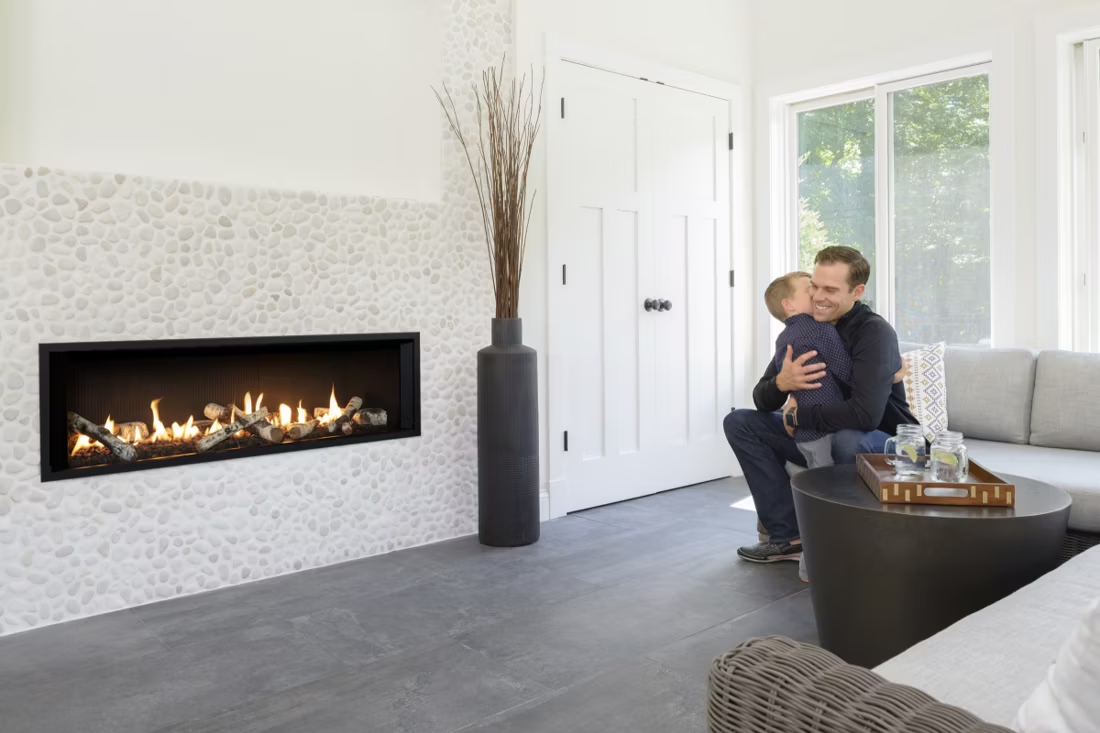
Public Service Company of Colorado—Xcel Energy—runs natural gas service throughout Glendale alongside its electric grid, so most homes and buildings already have a gas line to tap into. Direct-vent gas fireplaces and inserts vent straight through an exterior wall rather than up a chimney, which is exactly what makes them workable in a Cherry Creek high-rise unit or a townhome near Infinity Park. For older single-family homes with an existing masonry fireplace, a gas insert converts that opening into a sealed, efficient heat source without any wood handling or ash—a fit that suits the compact scale of this city.
Three steps. No salesperson until you're ready.
Tell us about your project
Your zip code, your situation, and the fuel you're leaning toward—or let the answers point you to one.
See what's actually available
The brands dealers within 100 miles genuinely carry—real options, never a catalog mirage.
Get your dealer & Project Guide
A trusted local dealer, plus the free Project Guide & Parts List that names every component of the job.
Frequently Asked Questions
How much does a gas fireplace installation cost in Glendale?
Most Glendale gas fireplace or insert projects run in the $4,000 to $10,000 range, with the spread driven mostly by venting complexity and whether a new gas line needs to be run. A direct-vent insert dropped into an existing fireplace opening with gas already nearby tends to land on the lower end. A full-height built-in unit in a high-rise condo, where the installer has to route venting through an exterior wall and coordinate with building management or an HOA, sits toward the higher end. A local dealer will give you a firm number after seeing the space in person—condo installs in particular vary a lot building to building.
Can I install a wood-burning fireplace in Glendale instead of gas?
In practice, no—not a new one. Glendale sits inside the Denver metro nonattainment area, where winter inversions trap smoke low over the Front Range and wildfire smoke adds to the load most summers. Colorado's Regulation No. 4 restricts new wood-burning fireplace and stove installs across this zone, and most Glendale buildings—being condos and multi-family construction—wouldn't have a viable chimney path anyway. Gas is the realistic option for new installations here, and it's what nearly every local hearth dealer will point you toward.
Do I need natural gas service, or is propane more common in Glendale?
Natural gas is the default here. Public Service Company of Colorado (Xcel Energy) provides gas service throughout Glendale, and because the city is entirely surrounded by Denver's developed grid, there's essentially no rural propane market to speak of within city limits. If you already have a gas range, water heater, or furnace, adding a fireplace is a straightforward tie-in for your installer rather than a new fuel setup.
Will a gas fireplace still work if the power goes out?
Most will, with the right ignition system. Units with intermittent pilot ignition (IPI) run on a small battery backup that kicks in automatically if Xcel Energy's grid drops, which does happen occasionally during Front Range windstorms. Valor fireplaces take a different route: their pilot assembly generates its own electricity through a thermocouple, so there's no battery to remember or replace. Either way, ask your local dealer which ignition system is in the unit you're considering—it matters more in a high-rise unit where a backup generator isn't an option.
What's the difference between a gas fireplace, insert, and stove for a Glendale home?
A gas fireplace is a fully built-in unit framed into a wall—common in new condo construction or a remodel. A gas insert slides into an existing masonry fireplace opening and uses that opening (not the old chimney flue, typically) with its own direct-vent piping—this is the common upgrade path for Glendale's older single-family homes near Cherry Creek Drive. A gas stove is a freestanding cabinet-style unit that vents through a nearby wall, which works well in smaller condo footprints where floor space near an exterior wall is at a premium. A local dealer can walk your specific unit or house and tell you which venting path is realistic.
Do I need a permit to install a gas fireplace in Glendale?
Yes—Glendale is a home-rule municipality with its own Building Division, and new gas fireplace installs require both a building permit and sign-off on the gas line work from a licensed gas-fitter. If you're in a condo or apartment building, you'll also likely need HOA or building management approval before any exterior venting work through a shared wall. Most established hearth dealers in the metro area handle the permitting and coordinate with building management as part of the install, which is worth confirming before you sign a contract.
Are vent-free gas fireplaces allowed in Glendale?
Vent-free (ventless) units are legal in Colorado but come with strict room-sizing and oxygen-depletion-sensor requirements, and they release combustion byproducts directly into the living space. Given how compact many Glendale condo units are, that tradeoff is a harder sell—smaller rooms hit the ventilation limits faster. Direct-vent units, which pull outside air and exhaust combustion gases through a sealed pipe, are the more common and more universally recommended choice locally, and they're what most Glendale dealers will steer you toward for a high-rise or a smaller single-family home alike.
How often does a gas fireplace need to be serviced?
Plan on an annual inspection, ideally before the heating season ramps up in the fall. A technician checks the burner, pilot assembly, venting, and gas connections, and cleans the glass and interior—usually $150 to $250 for the visit. This matters in Glendale specifically because winter inversion periods sometimes bring several closed-window, smoke-heavy days in a row, and a well-maintained direct-vent unit keeps drawing outside air cleanly rather than recirculating indoor air through a neglected system.
Gas or electric fireplace—which fits a Glendale condo better?
Both are realistic options here, and the deciding factor is usually your building rather than personal preference. A gas fireplace or insert needs a direct-vent path through an exterior wall and a gas line, which works in ground-floor or perimeter units but can be a harder approval in the interior of a high-rise. An electric fireplace needs neither—just a standard outlet—which makes it the simpler retrofit for interior condo units or where HOA rules restrict exterior venting. Electric units run on Xcel Energy's residential rate (about 15 cents per kWh in the area), so operating cost is a factor worth asking a local dealer to walk through against a comparable gas unit.
What's the difference between an insert and a zero-clearance fireplace?
An insert is a fireplace that slides into a pre-existing wood-burning fireplace—if you don't have one, there's nothing to insert it into. A zero-clearance fireplace is built into a framed wall, which makes it the answer for remodels and new construction. Simple test: existing masonry fireplace means insert; blank or framed wall means zero-clearance.
Can I put a TV above my fireplace?
Yes—with an asterisk. Fireplaces are hot and TVs don't like heat. Either put a mantel between them to deflect rising warmth, or choose a fireplace with heat-management technology that creates a cool zone on the wall above—the wall stays around 125 degrees, barely warm, while the room still gets full heat. If you like clean lines and don't want a mantel, heat management is the answer.
How much should I budget for a fireplace?
For an average home—covering the fireplace, the vent pipe, and basic installation—a budget between $3,900 and $5,500 gives you a lot of options across wood, gas, and pellet. By the time you add finish work, gas line, and electrical, the average complete installation lands between $5,000 and $12,000 all-in. In a remodel or new build, a good rule is to put about 2.5% of the total project cost toward the fireplace.
Can a fireplace actually lower my heating bill?
Yes—by creating a comfort zone. A furnace heats every square foot of the house just to warm the one room you're in; a gas fireplace on low burns roughly a sixth of the gas a typical furnace does. Set the furnace around 55–60 degrees as a baseline, then heat the rooms your family actually uses. Families who heat this way commonly save $20–$60 a month.
Nearby Dealers
Hearth shops serving Glendale and the surrounding area. Every listing shows whether it is a WhyFire partner, a dealer we have verified as authorized for the brands we recommend, or a local business carrying hearth products. No manufacturer pays for placement. How we verify dealers →
Aria Custom Design
Distinctive Mantel Designs
Spa Brokers
Outdoor Kitchen Dist. Inc
Spa Brokers V
Rio Grande Co.
Fireplace And Grill Experts - Service Only
Proud Souls Barbecue & Provisions
Spa Brokers (Corporate)
Spa Brokers
Spa Brokers Iii
Spa Brokers
Thoshini LLC
Spa Brokers
Western Fireplace Supply
Find your gas fireplace in Glendale.
Tell us about your condo, high-rise unit, or single-family home and we'll match you with a trusted local dealer plus a free Project Guide & Parts List—the vent kit, the parts, and the recommended installer for your Glendale space.
Find Your Fireplace →