
Pellet Heat Isn't the Norm in Erie—But It Still Works for the Right Home.
Erie's newer subdivisions were built on natural gas, not solid fuel—but a handful of Old Town and acreage homeowners still choose pellet for backup heat. We'll help you figure out if it's a fit and connect you with a local dealer who can actually install it.
Every Project Starts From One of These Five Situations
Natural gas dominates the Front Range suburbs.
Erie sits at 5,050 feet between Denver and Boulder, in a climate zone (5B) that sees real winter cold—average lows around 14°F and roughly 6,100 heating degree days a year. That's a genuine heating season, comparable to places like Fargo, ND in terms of degree-day load. But unlike a lot of mountain and rural Colorado towns where wood and pellet heat are woven into daily life, Erie has grown almost entirely as a planned suburban community over the last two decades. Neighborhoods like Vista Ridge, Colliers Hill, and Compass were built with natural gas infrastructure from day one, and many carry HOA covenants that restrict solid-fuel appliances, exterior venting, or exposed fuel storage.
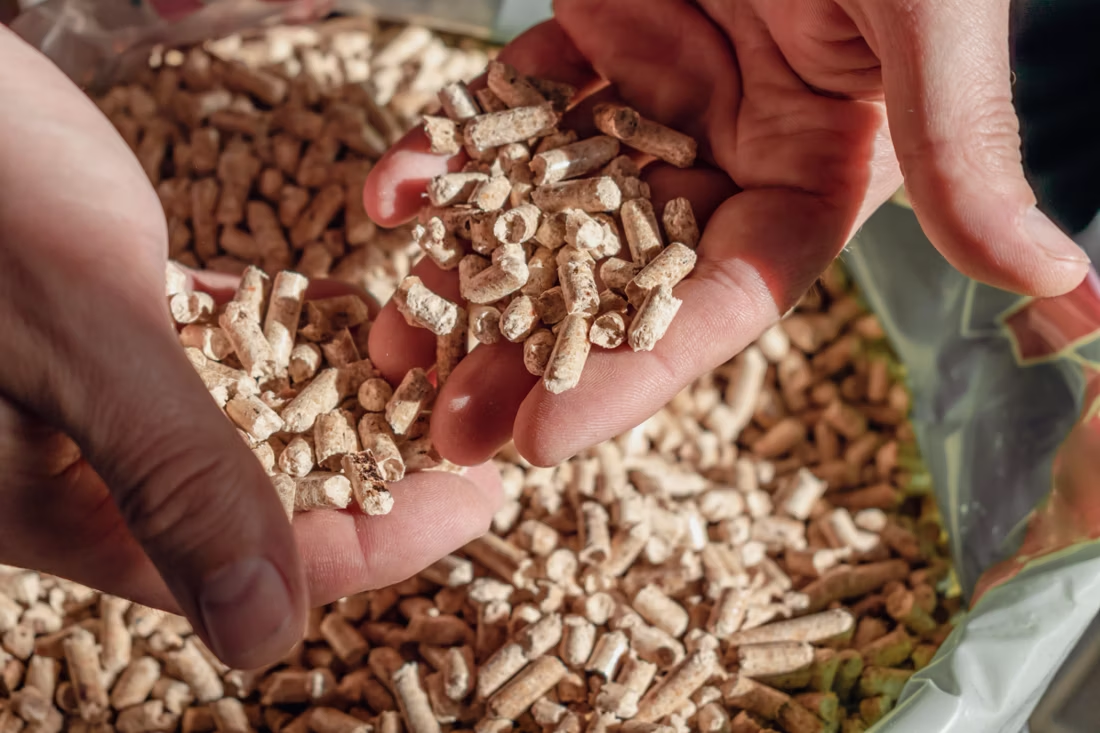
That's why pellet fuel relevance for Erie reads as not-applicable in our data—it's simply not the mainstream choice here the way it is in mountain towns or rural Weld County acreage. That said, it isn't nonexistent. Some Old Town Erie homes on larger lots, and properties without HOA restrictions, do install pellet stoves for supplemental heat, wildfire-smoke-season backup, or the ambiance of a real flame without the hassle of cordwood. Regional pellet brands like Bear Mountain, Lignetics, and Forest Energy are sold through Denver and Boulder-area hearth retailers, so fuel supply isn't the obstacle—covenant restrictions and gas-first construction are. If pellet still makes sense for your specific property, we can help you confirm that and match you with a dealer who installs in this corridor.
Three steps. No salesperson until you're ready.
Tell us about your project
Your zip code, your situation, and the fuel you're leaning toward—or let the answers point you to one.
See what's actually available
The brands dealers within 100 miles genuinely carry—real options, never a catalog mirage.
Get your dealer & Project Guide
A trusted local dealer, plus the free Project Guide & Parts List that names every component of the job.
Frequently Asked Questions
Why aren't pellet stoves more common in Erie?
Most of Erie was built out in the last 20 years as a master-planned suburb between Denver and Boulder, and those developments—Vista Ridge, Colliers Hill, Compass, Nine Mile Corner—were plumbed for natural gas from the start. Many of the HOAs governing these neighborhoods restrict solid-fuel appliances, exterior chimney or vent penetrations, and outdoor fuel storage, which rules out pellet stoves before a homeowner even gets a quote. The exceptions tend to be older Old Town Erie homes and larger acreage parcels in unincorporated Weld County that fall outside HOA jurisdiction.
What does a pellet stove installation cost in Erie?
Because so few installs happen locally, pricing here is less standardized than in mountain towns where pellet is the norm. As a general range, expect $3,000 to $6,000 for a freestanding pellet stove with venting through an exterior wall, depending on the unit and whether new electrical needs to be run for the hopper and blower. Most installers who do this work in Erie are based out of Denver, Boulder, or Longmont, so expect a trip charge and confirm upfront that the technician is familiar with your specific HOA's venting rules before signing anything.
Will my HOA let me install a pellet stove?
Check your covenants before you buy anything. Many of Erie's newer HOAs—including those governing Vista Ridge and Colliers Hill—restrict or prohibit exterior venting for solid-fuel appliances, and some require architectural review board approval for any exterior wall penetration. Beyond the HOA, a building permit through the Town of Erie Building Division (or Weld County Building Department if you're in an unincorporated pocket) is required for the installation itself, covering the appliance clearances and vent termination. Get HOA sign-off first—it's the step that kills most pellet stove projects here before permitting even comes into play.
Where can I buy pellet fuel near Erie?
Pellets aren't stocked at every hardware store in Erie the way they might be in a mountain town, but regional brands like Bear Mountain, Lignetics, and Forest Energy are available through hearth retailers in Boulder, Longmont, and the greater Denver metro. Expect to drive a bit farther for fuel than you would for, say, propane or firewood. If you're weighing a pellet stove seriously, ask your installer about typical per-ton pricing and whether they offer seasonal delivery—some Front Range dealers will drop a season's supply at your home if you order early.
Does a pellet stove work during a power outage?
No—pellet stoves need electricity to run the auger that feeds fuel and the blower that distributes heat, so a power outage shuts the unit down. United Power, Erie's electric utility, generally sees good reliability, but Front Range winter storms can still knock out power for hours at a time. If backup heat during outages is your main reason for considering solid fuel, a wood-burning or gas appliance with a standing pilot is a more dependable choice than pellet—worth discussing with a local dealer before you commit to a pellet unit specifically for storm resilience.
What size pellet stove would I need for an Erie winter?
With roughly 6,100 heating degree days a year and average winter lows around 14°F, Erie's heating season is real, even if the town's housing stock leans on gas furnaces to handle it. For a pellet stove used as supplemental heat in a single room or open living area, a small to mid-size unit (rated for 1,000 to 1,800 square feet) is usually sufficient, since it's rarely asked to be the sole heat source. If you're on acreage and considering pellet as your primary heat, a dealer will want to walk your square footage, insulation, and ceiling height before recommending a unit—oversizing a pellet stove wastes fuel and undersizing leaves you cold on the coldest nights.
Should I go with pellet or gas for my Erie home?
For most Erie homeowners, gas is the more practical answer—it's what the town's infrastructure and HOAs were built around, and gas fireplaces or inserts don't run into the same covenant restrictions that solid-fuel appliances do. Gas also runs cleaner with no fuel storage or hopper refilling. Pellet still has an edge if you want a real flame with a wood-like feel and you're on a property without HOA restrictions, or if you specifically want a supplemental heat source that isn't tied to your home's gas line. If you're not sure which fits your specific lot and covenant situation, that's a good first question for a local dealer.
How much maintenance does a pellet stove need?
Pellet stoves need more frequent attention than a gas unit but less than a wood stove's annual chimney sweep. Plan on emptying the ash pan every few days of regular use, cleaning the burn pot weekly to prevent clinker buildup, and a full professional cleaning and inspection once a year—ideally before the heating season ramps up in October or November. Given the smaller number of pellet-focused technicians serving Erie compared to gas fireplace service techs, it's worth confirming your installer also offers ongoing maintenance service, not just the install.
Are there air quality rules that affect solid-fuel appliances in Erie?
Erie sits within the Denver metro/North Front Range non-attainment area for ozone, and the region periodically issues winter Action Day advisories during temperature inversions, plus wildfire-smoke advisories in late summer that can affect outdoor burning and, in some cases, voluntary requests to limit solid-fuel appliance use. These advisories aren't a blanket ban on pellet stoves, but they're one more reason gas has become the default here—it doesn't carry the same smoke-related restrictions. If you do install a pellet stove, a newer EPA-certified unit will burn cleaner and keep you on the right side of any future local air quality tightening.
Why is a fireplace insert so efficient?
An insert does two things: it seals the chimney completely, so you stop losing air you already paid to heat, and it radiates warmth into the room through the firebox and glass. Most add a heat-exchange fan that pulls cool room air underneath, wraps it around the hot firebox, and pushes it back out warm. Your home is more efficient before you've even lit the first fire.
How often does a pellet stove need cleaning?
A clean pellet stove is a happy pellet stove. Plan on cleaning the burn pot about once a week when you're burning regularly—ash and clinkers gum up the air holes just like a pellet barbecue. Most pellet stove problems trace back to skipped cleaning that nobody explained up front. Some designs make it easy with a trapdoor burn pot: pull a lever and the gunk drops into the ash pan.
What is an in-home preview and do I need one?
It's a visit where a hearth professional measures your space, confirms the model you picked actually works in your home, and walks the specs—framing, gas line, venting, finish work—before anything is ordered. Some details you just can't know until you see the house. Never make a down payment without one; it's the single most-skipped step that burns buyers.
How much should I budget for a fireplace?
For an average home—covering the fireplace, the vent pipe, and basic installation—a budget between $3,900 and $5,500 gives you a lot of options across wood, gas, and pellet. By the time you add finish work, gas line, and electrical, the average complete installation lands between $5,000 and $12,000 all-in. In a remodel or new build, a good rule is to put about 2.5% of the total project cost toward the fireplace.
Nearby Dealers
Hearth shops serving Erie and the surrounding area.
Pellet Brands Stocked Around Erie
Manufacturers will point you to the nearest stocking dealer.
Find your pellet stove in Erie.
Tell us about your home, your HOA situation, and what you're trying to heat, and we'll put together a free Project Guide & Parts List—the right unit, the vent kit, and a trusted local dealer who can actually install it in Erie.
Find Your Fireplace →