
Electric Heat That Fits Erie's Newest Homes.
No gas line, no chimney, no HOA headaches. Find the right electric fireplace or insert for your Erie home and connect with a trusted local dealer.
Every Project Starts From One of These Five Situations
Zone heat built for HOA covenants and cold Front Range nights.
Erie has grown fast over the last two decades, and most of that growth has come in the form of master-planned communities—subdivisions like Vista Ridge and Colliers Hill where HOA covenants routinely prohibit wood-burning appliances and many homes were never plumbed with a dedicated gas line for a fireplace. At 5,050 feet with winter lows averaging 14°F and 6,111 heating degree days a year, Erie residents still want supplemental heat and fire ambiance in living rooms, primary suites, and finished basements—they just need a way to get it that doesn't involve a permit fight with the HOA or a mason.
That's where electric fireplaces do their best work. There's no combustion, no venting, and no chimney to maintain—just a dedicated circuit or a standard outlet, depending on the unit. United Power, the electric cooperative serving Erie, bills residential customers around 15.75 cents per kWh, which keeps the operating cost of a zone-heating electric unit reasonable for occasional or supplemental use. Whether you're finishing a basement in a newer build or adding ambiance to a room a forced-air furnace never quite reaches, an electric fireplace installs in an afternoon rather than a week.
Three steps. No salesperson until you're ready.
Tell us about your project
Your zip code, your situation, and the fuel you're leaning toward—or let the answers point you to one.
See what's actually available
The brands dealers within 100 miles genuinely carry—real options, never a catalog mirage.
Get your dealer & Project Guide
A trusted local dealer, plus the free Project Guide & Parts List that names every component of the job.
Frequently Asked Questions
How much does an electric fireplace installation cost in Erie?
Electric fireplaces are the least expensive hearth option to install because there's no venting, gas line, or masonry work involved. A plug-in insert or freestanding unit that uses an existing outlet typically runs $500 to $1,500 installed, including the appliance and surround work. A built-in linear or wall-mounted unit that requires a dedicated 120V or 240V circuit run by an electrician usually lands between $1,500 and $4,000, depending on wall framing, finish work, and whether you're building out a media wall around it. Compare that to the gas line and venting costs a gas insert would require in the same home, and electric is usually the fastest path to a finished-looking fireplace in a newer Erie build.
Will an electric fireplace actually keep a room warm during an Erie winter?
Most electric fireplaces are rated around 4,600 to 5,000 watts (roughly 9,000-10,000 BTU) at full output, which is enough to noticeably warm a single room but not enough to replace a furnace on a night when temperatures near Erie's average winter low of 14°F. Think of it as zone heat: a good electric insert or wall unit can let you turn down the thermostat in the rest of the house while keeping a living room or bedroom comfortable, and it's genuinely useful during the shoulder-season weeks when running the whole furnace feels like overkill. For homes with a finished basement that runs colder than the rest of the house, electric heat is often the most practical fix without extending ductwork.
Electric vs. gas fireplace—which fits my Erie home better?
It depends heavily on what your home was built with. Many newer Erie subdivisions were built without a fireplace gas line as a standard feature, which makes retrofitting a gas fireplace more expensive since it means running new gas piping through finished walls. Electric skips that problem entirely—it works in any room with an outlet or a simple circuit addition. Gas still makes sense if your home already has a gas line stubbed to a fireplace location or you're doing a larger remodel where running new gas is already part of the project. For homeowners who want fire ambiance without touching gas plumbing, especially in a finished basement or a room added after the original build, electric is usually the simpler and cheaper answer.
Do I need a permit to install an electric fireplace in Erie?
A plug-in electric fireplace that uses an existing standard outlet generally doesn't require any permit—it's treated like any other appliance. If you're installing a built-in or wall-mounted unit that needs a new dedicated circuit, that electrical work typically requires a permit through the Town of Erie Building Division, and it needs to be pulled by a licensed electrician. Most local dealers either handle the electrical subcontracting themselves or coordinate directly with an electrician as part of the installation, so you're not left tracking down the permit yourself.
How much does it cost to run an electric fireplace in Erie?
United Power's residential rate runs about 15.75 cents per kWh. A typical electric fireplace heater draws around 1,500 watts on its highest heat setting, which works out to roughly 24 cents an hour to run at full output. Most units let you run the flame effect alone, with the heater off, for pennies an hour—useful if you want ambiance without adding heat on a mild evening. Compared to running a gas insert or supplementing with a space heater, electric fireplaces are inexpensive to operate for the amount of use most Erie homeowners actually put them through.
What types of electric fireplaces are available for Erie homes?
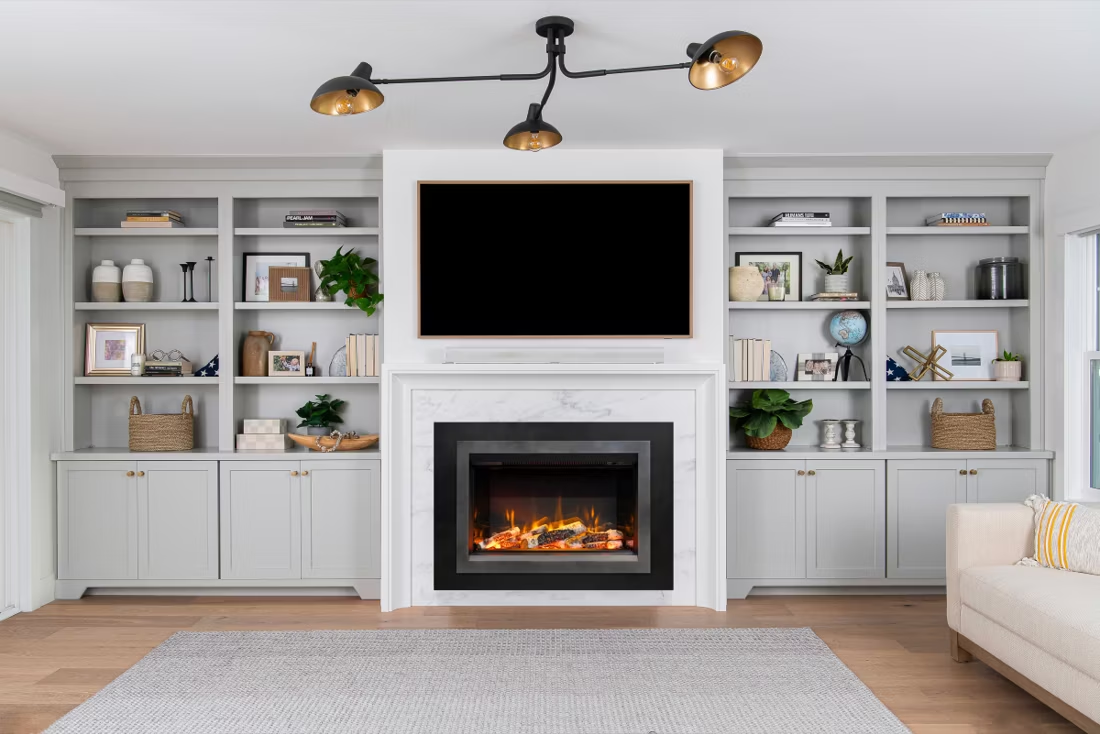
The main categories are plug-in inserts (sized to slide into an existing fireplace opening or a custom-built surround), wall-mounted units (thin, TV-style units mounted flush or recessed into drywall), mantel packages (a freestanding electric unit paired with a mantel surround, popular for homes without an existing fireplace), and built-in linear units (wide, modern units often used as a focal point under a mounted TV in newer great rooms). Erie's newer open-concept floor plans tend to favor wall-mounted or built-in linear units, while older or more traditional homes often do better with a mantel package or an insert into an existing opening.
Is electric heat enough for Erie's cold snaps, or do I need something more?
Erie sees roughly 6,100 heating degree days a year and winter lows that regularly dip into the single digits during Front Range cold snaps, so an electric fireplace should be planned as supplemental heat, not a replacement for your furnace. Where it genuinely helps is reducing reliance on central heat in rooms you use most—a primary bedroom, a home office, or a basement family room—and providing backup ambiance and light heat during shorter power interruptions if you have a battery-backed model. For whole-room primary heat during Erie's coldest stretches, a furnace or a wood/gas appliance with a much higher BTU output is still the better tool.
Does wildfire smoke affect the choice between electric and other fireplace fuels in Erie?
Yes, and it's one of the more practical reasons electric has gained ground along the Front Range. Erie experiences wildfire smoke advisories in late summer, and during those periods, adding any additional combustion—wood or otherwise—inside the home isn't ideal for indoor air quality. Electric fireplaces produce zero combustion byproducts, so they don't compete with an already smoke-compromised outdoor air situation the way a wood stove or even a gas appliance can during poor ventilation days. It's a small but real advantage if you're weighing options for a home that already deals with seasonal haze.
Why don't more Erie homes have wood-burning fireplaces?
Wood-burning appliances are largely impractical for Erie's housing stock. Most of the town's growth has happened inside HOA-governed subdivisions where covenants prohibit wood-burning fireplaces and stoves outright, and Weld County's dry summers bring fire restrictions that periodically ban open burning anyway. If you're after the rustic wood-heat experience, cutting permits through the Arapaho-Roosevelt National Forests run $5 to $20 per cord during the May-to-October season—but that's really suited to a mountain cabin, not a subdivision home in Erie. For in-town use, electric delivers the visual warmth of a fire without running into covenant restrictions or seasonal burn bans.
Can I put a TV above my fireplace?
Yes—with an asterisk. Fireplaces are hot and TVs don't like heat. Either put a mantel between them to deflect rising warmth, or choose a fireplace with heat-management technology that creates a cool zone on the wall above—the wall stays around 125 degrees, barely warm, while the room still gets full heat. If you like clean lines and don't want a mantel, heat management is the answer.
Does an electric fireplace need a vent or chimney?
No—that's its superpower. An electric fireplace needs a wall and an outlet, period. No vent pipe, no gas line, no clearances to design around, which is why it works in bedrooms, offices, apartments, and walls where venting a gas or wood unit would be impractical or impossible. Installation is typically the simplest and least expensive of any fireplace type.
How much should I budget for a fireplace?
For an average home—covering the fireplace, the vent pipe, and basic installation—a budget between $3,900 and $5,500 gives you a lot of options across wood, gas, and pellet. By the time you add finish work, gas line, and electrical, the average complete installation lands between $5,000 and $12,000 all-in. In a remodel or new build, a good rule is to put about 2.5% of the total project cost toward the fireplace.
Can I install a fireplace myself?
If you're putting a fire in your house on purpose, it's best to work with an expert. Unless you're genuinely experienced in framing, gas line, vent pipe, and the national code on clearances to combustibles, have a professional do it—and ideally the same company that sells you the fireplace, so warranty, service, and liability all live under one roof.
Nearby Dealers
Hearth shops serving Erie and the surrounding area.
Electric Service in Erie
An electric fireplace's heater draws about 1,500 watts—pennies per hour at local rates.
United Power, Inc
Find your electric fireplace in Erie.
Tell us a bit about your home and we'll put together a free Project Guide & Parts List—the right electric fireplace or insert for your space, plus a trusted local Erie-area dealer to install it.
Find Your Fireplace →