
Automatic heat for Weld County's high-plains winters.
Thermostat-set warmth for the wind and cold across Weld County—from Greeley and Windsor to Fort Lupton, Erie, and the farm and ranch country between. Find the right pellet stove and get matched with a trusted local dealer.
Every Project Starts From One of These Five Situations
Consistent, thermostat-controlled heat for the high plains.
Weld County is the largest county in Colorado by land area—nearly 4,000 square miles stretching from the South Platte River valley near Greeley up toward the Front Range foothills near Erie and Carbon Valley. Winters here bring roughly 5,580 heating degree days and average lows around 18°F, but the bigger challenge for a lot of homeowners is wind. Front Range downslope events can gust hard enough to disrupt a natural-draft wood chimney's pull. A pellet stove's forced-air combustion blower doesn't care which way the wind is blowing outside—it maintains a steady burn regardless.
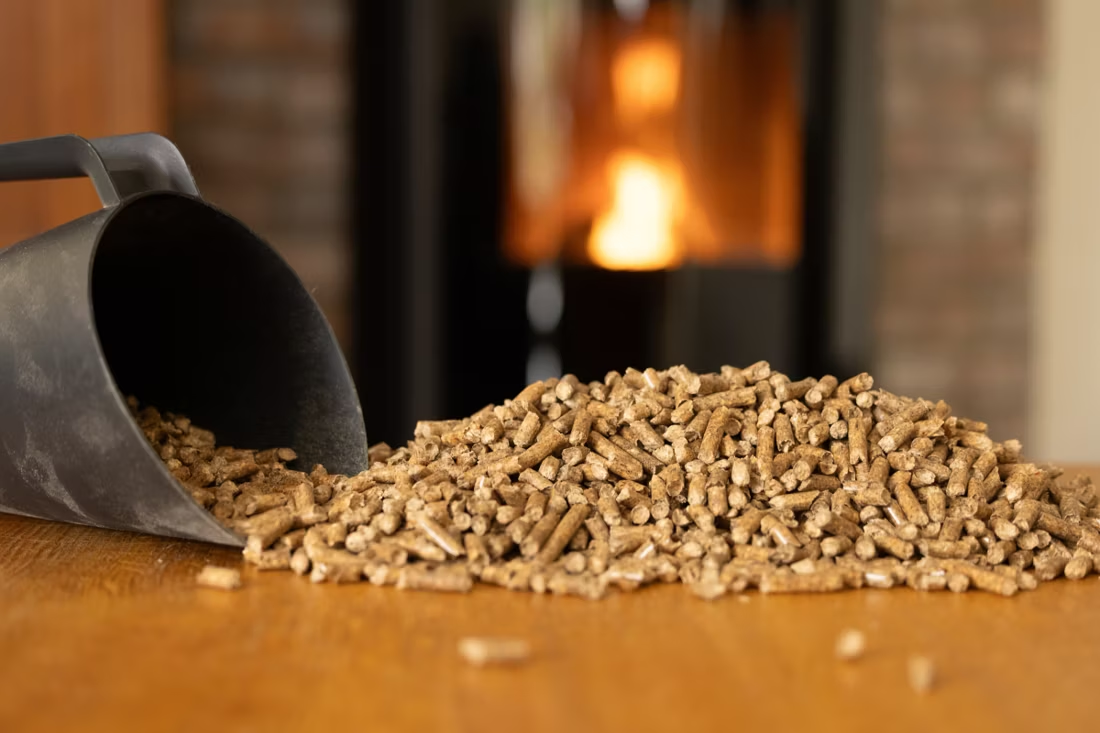
Weld County also sits close enough to the mountains that wildfire smoke is a recurring seasonal concern, and pellet appliances burn dramatically cleaner than cordwood—a real advantage when regional air quality advisories are in effect. Regional pellet brands like Bear Mountain, Lignetics, and Forest Energy are widely stocked at farm and ranch supply retailers along the Front Range, so fuel isn't hard to find. Some Weld County residents still cut their own firewood on permits through the Arapaho-Roosevelt National Forests (roughly $5 to $20 per cord, May through October season), but for full-time farm and ranch operations where labor hours matter more than fuel cost, a pellet stove's set-it-and-forget-it operation is often the more practical fit for daily zone heat.
Three steps. No salesperson until you're ready.
Tell us about your project
Your zip code, your situation, and the fuel you're leaning toward—or let the answers point you to one.
See what's actually available
The brands dealers within 100 miles genuinely carry—real options, never a catalog mirage.
Get your dealer & Project Guide
A trusted local dealer, plus the free Project Guide & Parts List that names every component of the job.
Frequently Asked Questions
How much does a pellet stove installation cost in Weld County?
Most Weld County installations run in the $3,000 to $6,500 range for a freestanding stove, and slightly higher—often $4,000 to $7,000—for a pellet insert going into an existing masonry fireplace, since that involves a liner and venting adapter. Costs shift based on whether you need a new dedicated electrical circuit for the hopper motor and blower, how far the vent run has to travel through an exterior wall, and whether the unit is a straightforward replacement or a first-time install in a home with no existing hearth. A local dealer will give you a firm number after seeing your space.
What size pellet stove do I need for my home?
Sizing depends on square footage, ceiling height, and how open your floor plan is—but with average winter lows around 18°F and over 5,500 heating degree days, most Weld County homes shouldn't undersize. A smaller unit (under 1,000 sq ft) suits a single large room or a shop/outbuilding; a mid-size stove (1,000-1,800 sq ft) covers most main living areas in Greeley, Windsor, or Fort Lupton homes; larger acreage homes and older farmhouses with less insulation often do better with a bigger hopper and higher max BTU output to keep up on the coldest nights. A local dealer will size the unit to your actual floor plan, not just square footage on paper.
Pellet stove vs. wood stove—which makes more sense in Weld County?
Wood is still an option here—Weld County residents can cut their own ponderosa pine, aspen, pinyon, or juniper on permits through the Arapaho-Roosevelt National Forests for roughly $5 to $20 per cord—but it means driving to the mountains, splitting and stacking, and dealing with chimney creosote. Pellet stoves skip all of that: load a bag, set the thermostat, and the auger and blower do the rest. Pellets also burn far cleaner, which matters when wildfire smoke advisories roll through the Front Range in late summer and fall. The trade-off is that pellet stoves need electricity to run—wood doesn't. For a lot of Weld County households, the two end up as a good pair: wood for backup and off-grid resilience, pellet for everyday convenience.
Where can I buy pellets in Weld County?
Bear Mountain, Lignetics, and Forest Energy are the regional brands most commonly stocked at farm and ranch supply stores and hardware retailers along the Front Range, including outlets serving Greeley, Windsor, and Fort Lupton. Pricing shifts seasonally and by species blend (softwood pellets are the standard for most stoves), so it pays to buy a season's supply early rather than in the middle of a cold snap when demand spikes. Ask your local dealer which brand burns cleanest in the specific stove model you're considering—ash content and BTU output vary more between pellet brands than most people expect.
Will my pellet stove work during a power outage?
Not without a backup power source. Unlike a wood stove, a pellet stove depends on electricity to run the auger that feeds fuel and the blower that pushes combustion air through—no power means no fire. Weld County's open plains terrain sees its share of high-wind events that can knock out rural electric service for hours at a time, so if backup heat during outages matters to you, ask your dealer about a battery backup or small generator sized to run the stove's low-draw electronics. Some households pair a pellet stove for daily use with a wood stove or fireplace as the true grid-down backup.
Do I need a permit to install a pellet stove in Weld County?
Most pellet stove installations require a building permit through the Weld County Building Division (or the relevant city building department if you're inside Greeley, Windsor, Fort Lupton, or another incorporated city). Pellet venting is generally simpler than a full masonry wood chimney—most installs use a small-diameter PL-vent pipe through an exterior wall rather than a full Class A chimney system—but the permit and inspection still apply. Most local dealers handle the permitting as part of the installation, so you're not left coordinating that yourself.
What's the best pellet stove for Weld County's climate?
With average winter lows near 18°F and a good number of colder snaps below that, look for a stove with a larger hopper capacity (40+ lbs) so it can run longer between refills on the coldest nights, plus a solid BTU output rating matched to your actual square footage. Brands commonly available through Weld County dealers include units designed for sustained cold-climate operation rather than mild-climate light use. Ask your dealer specifically how the model performs on its lowest thermostat setting during an extended cold stretch—that's a better real-world test than the max-output number on the spec sheet.
How much maintenance does a pellet stove need?
Pellet stoves need more routine attention than a gas fireplace but far less than a wood-burning chimney. Plan on emptying the ash pan every few days during regular use, cleaning the burn pot and glass weekly, and having the venting and combustion blower professionally serviced once a year—typically at the end of burn season. Because pellet stoves have moving mechanical parts (the auger motor, the blower), an annual service visit catches wear issues before they turn into a mid-winter breakdown, which matters when you're relying on the stove for daily heat through a Weld County winter.
Pellet vs. gas—which is right for my home?
Gas fireplaces offer instant on/off heat with no fuel handling and, with the right ignition system, can run without electricity—an advantage during Weld County's occasional wind-driven power outages. Pellet stoves require loading fuel and depend on electricity, but they deliver a real, visible flame with radiant heat output that many homeowners prefer over a sealed gas unit, and pellet fuel is typically cheaper per BTU than propane in areas without natural gas service. If your home already has natural gas or an existing propane tank and convenience is the priority, gas often wins. If you want a strong radiant heat source and don't mind the weekly ash routine, pellet is a solid fit—talk to a local dealer about which matches your home's setup.
Why is a fireplace insert so efficient?
An insert does two things: it seals the chimney completely, so you stop losing air you already paid to heat, and it radiates warmth into the room through the firebox and glass. Most add a heat-exchange fan that pulls cool room air underneath, wraps it around the hot firebox, and pushes it back out warm. Your home is more efficient before you've even lit the first fire.
How often does a pellet stove need cleaning?
A clean pellet stove is a happy pellet stove. Plan on cleaning the burn pot about once a week when you're burning regularly—ash and clinkers gum up the air holes just like a pellet barbecue. Most pellet stove problems trace back to skipped cleaning that nobody explained up front. Some designs make it easy with a trapdoor burn pot: pull a lever and the gunk drops into the ash pan.
Can a fireplace actually lower my heating bill?
Yes—by creating a comfort zone. A furnace heats every square foot of the house just to warm the one room you're in; a gas fireplace on low burns roughly a sixth of the gas a typical furnace does. Set the furnace around 55–60 degrees as a baseline, then heat the rooms your family actually uses. Families who heat this way commonly save $20–$60 a month.
Can I install a fireplace myself?
If you're putting a fire in your house on purpose, it's best to work with an expert. Unless you're genuinely experienced in framing, gas line, vent pipe, and the national code on clearances to combustibles, have a professional do it—and ideally the same company that sells you the fireplace, so warranty, service, and liability all live under one roof.
Stove and Fireplace Dealers in Weld County
Pellet Brands Stocked Around Weld County
Manufacturers will point you to the nearest stocking dealer.
Find your pellet stove in Weld County.
Tell us a bit about your home and we'll match you with a trusted local dealer and send over your free Project Guide & Parts List—the exact parts, vent kit, and recommended installer for your pellet project in Weld County.
Find Your Fireplace →