
Find your pellet stove in Elbert County.
Clean-burning, thermostat-controlled heat for the high plains east of the Front Range—from Kiowa to Elizabeth to Simla. Find the right pellet stove or insert and connect with a trusted local dealer.
Every Project Starts From One of These Five Situations
Clean, efficient heat for Colorado's high plains.
Elbert County sits on the rolling high plains and ponderosa foothills east of the Front Range, at elevations around 6,600 feet in Kiowa and Elizabeth. Winters here run cold and long—average lows near 18°F and a heating season on par with what a rancher in Bismarck, ND deals with most winters. Add in the wind that sweeps across open grassland with little to break it, and heating a ranch house or acreage property here takes real BTUs, not just ambiance.
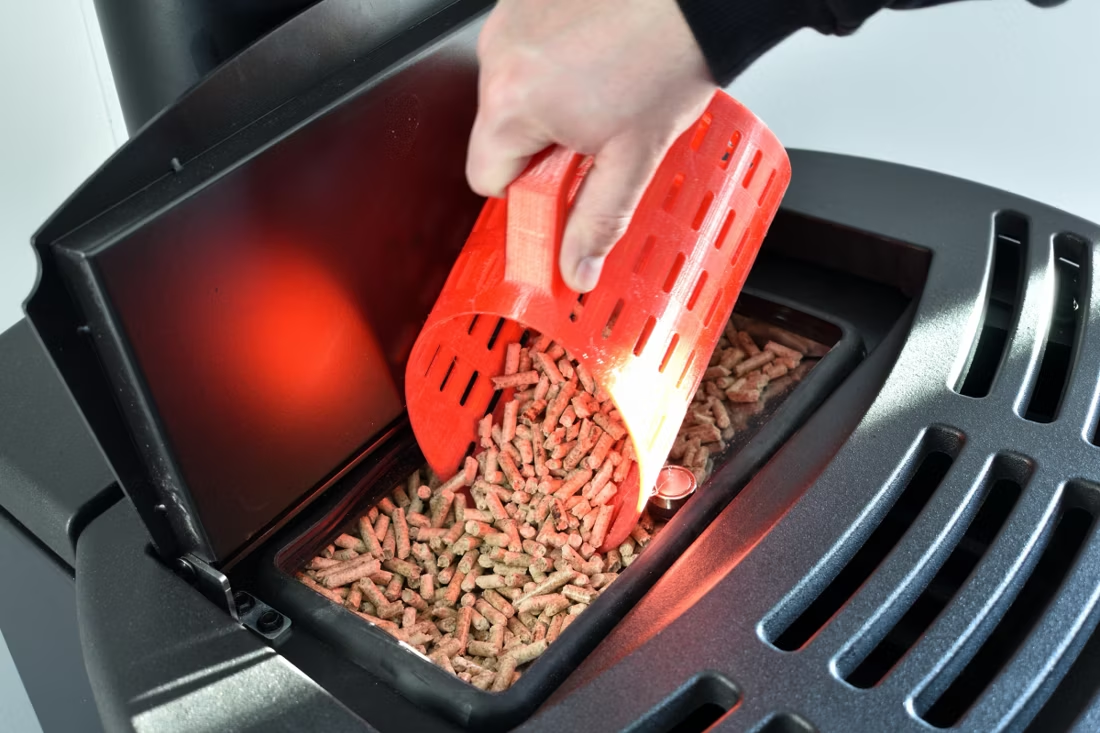
Pellet stoves have found a real niche in Elbert County: they burn cleaner than cordwood—a meaningful advantage given the wildfire smoke that regularly settles over the county during dry summers and fall—and they don't require the cutting, splitting, and stacking that wood heat demands on a working ranch property. Bear Mountain, Lignetics, and Forest Energy pellets are all readily available through regional suppliers, and a hopper-fed pellet stove or insert gives you thermostat-controlled, consistent heat without tending a fire every few hours.
Three steps. No salesperson until you're ready.
Tell us about your project
Your zip code, your situation, and the fuel you're leaning toward—or let the answers point you to one.
See what's actually available
The brands dealers within 100 miles genuinely carry—real options, never a catalog mirage.
Get your dealer & Project Guide
A trusted local dealer, plus the free Project Guide & Parts List that names every component of the job.
Frequently Asked Questions
How much does a pellet stove installation cost in Elbert County?
Most pellet stove installations in Elbert County run $3,000 to $6,500, depending on the unit, whether you're installing into an existing fireplace opening as an insert or as a freestanding stove with new PL (pellet-vent) piping, and how far the vent run has to travel through a wall or roof. Homes with an existing masonry fireplace are usually on the lower end since the chimney chase already exists. Elbert County requires a building permit for new pellet appliance installations, and most local installers handle that paperwork as part of the job.
Pellet stove vs. wood stove—which makes more sense on a ranch property?
Elbert County has plenty of ponderosa pine, aspen, pinyon, and juniper on hand, and wood stoves remain popular for that reason—self-cut or locally sourced firewood keeps fuel costs low if you have the land, time, and equipment to process it. Pellet stoves trade that self-sufficiency for convenience: load a hopper with bagged pellets, set a thermostat, and the auger and blower handle the rest. For acreage owners who are already managing livestock, fencing, and outbuildings, that convenience is often the deciding factor. The tradeoff is that pellet stoves need electricity to run—worth weighing given how exposed overhead power lines are to wind and winter storms out here.
What size pellet stove do I need for my Elbert County home?
Sizing depends on square footage, ceiling height, insulation, and whether the stove is meant as primary heat or a supplement to a propane furnace. As a starting point: smaller units (under 1,000 sq ft) suit a single large room or a cabin, while medium units (1,000-2,000 sq ft) cover most open-plan ranch homes. At Elbert County's elevation—around 6,600 feet in Kiowa and Elizabeth—and with the wind exposure typical of open plains properties, it's common to size up slightly compared to a similar home in a sheltered valley. A local dealer will walk through your floor plan and insulation before recommending a specific model.
Do I need a permit to install a pellet stove in Elbert County?
Yes—new pellet stove and insert installations require a building permit through the Elbert County building department, whether the home is near Kiowa, Elizabeth, Simla, or out on unincorporated county land. The permit review typically checks hearth clearances, venting termination points, and that the unit is a certified model. Most local hearth dealers include permit filing as part of the installation, so it's rarely something homeowners have to manage on their own.
What pellet brands are available near Elbert County?
Bear Mountain, Lignetics, and Forest Energy pellets are all commonly stocked by hearth and farm-supply retailers serving the Elbert County and Front Range area. Bagged softwood pellets typically run in the $250 to $320 per ton range seen across the Colorado Front Range and Eastern Plains, though prices shift a bit with trucking and fuel costs given how far deliveries travel to reach a rural county like this one. Buying by the ton (usually 50 forty-pound bags) ahead of the winter season is the most common approach for ranch households running a stove daily.
Will my pellet stove work if the power goes out?
Not without a backup power source. Pellet stoves rely on an electric auger to feed fuel and a blower to distribute heat, so a power outage stops the stove even with a full hopper. That's a real consideration in Elbert County, where overhead lines run across a lot of open, wind-exposed ranchland served by Mountain View Electric Association, and outages during winter storms aren't rare. Homeowners who want backup heat during outages typically pair a pellet stove with a small battery backup/inverter setup, a generator, or keep a wood stove as a secondary heat source elsewhere in the house.
Do pellet stoves help with the wildfire smoke issues in Elbert County?
They help on the emissions side of the equation. EPA-certified pellet stoves burn more completely and produce a fraction of the particulate output of an open wood fire or older wood stove, so choosing pellet over wood reduces your household's contribution to local smoke during already smoke-heavy stretches of late summer and fall wildfire season. Pellet heat won't do anything about smoke drifting in from regional wildfires, but on days when a burn advisory is in effect for wood stoves, a certified pellet appliance is typically still fine to run.
How much maintenance does a pellet stove need?
Pellet stoves need more routine attention than a furnace but far less than a wood stove. Plan on emptying the ash pan every few days to weekly depending on use, a full interior cleaning of the burn pot and heat exchanger tubes every few weeks during heavy-use months, and an annual professional service that checks the auger motor, blower, gaskets, and vent termination. Elbert County's dust and wind can pull more debris into intake vents than a sheltered suburban lot would see, so it's worth checking exterior vent screens a bit more often than the manual suggests.
Pellet stove vs. propane—which is right for my home?
Most of Elbert County runs on propane rather than natural gas, since there's no natural gas utility infrastructure across the county's rural areas. Propane heat is convenient and thermostat-controlled but tied entirely to tank deliveries and propane pricing, which can spike in a hard winter. A pellet stove offers a genuine second fuel source—pellets store easily in a garage or shed, prices are comparatively stable, and running a pellet stove in your main living space can meaningfully cut propane furnace usage during the coldest months. Many Elbert County homeowners run both: propane for whole-house heat, pellet for the room where the family actually spends its time.
Why is my open fireplace making my house colder?
Open fireplaces suck—literally. As the fire burns, it consumes air your furnace already paid to heat and pulls it out through the chimney, so the house is actually colder after the fire goes out than before you lit it. An insert fixes this: it seals the chimney, puts fixed glass across the front, and turns that hole in your house into a real heat source.
How often does a pellet stove need cleaning?
A clean pellet stove is a happy pellet stove. Plan on cleaning the burn pot about once a week when you're burning regularly—ash and clinkers gum up the air holes just like a pellet barbecue. Most pellet stove problems trace back to skipped cleaning that nobody explained up front. Some designs make it easy with a trapdoor burn pot: pull a lever and the gunk drops into the ash pan.
How much should I budget for a fireplace?
For an average home—covering the fireplace, the vent pipe, and basic installation—a budget between $3,900 and $5,500 gives you a lot of options across wood, gas, and pellet. By the time you add finish work, gas line, and electrical, the average complete installation lands between $5,000 and $12,000 all-in. In a remodel or new build, a good rule is to put about 2.5% of the total project cost toward the fireplace.
Can a fireplace actually lower my heating bill?
Yes—by creating a comfort zone. A furnace heats every square foot of the house just to warm the one room you're in; a gas fireplace on low burns roughly a sixth of the gas a typical furnace does. Set the furnace around 55–60 degrees as a baseline, then heat the rooms your family actually uses. Families who heat this way commonly save $20–$60 a month.
Stove and Fireplace Dealers in Elbert County
Pellet Brands Stocked Around Elbert County
Manufacturers will point you to the nearest stocking dealer.
Find your pellet stove in Elbert County.
Tell us about your home and heating goals, and we'll match you with a trusted local dealer and send over a free Project Guide & Parts List—the exact parts, including the vent kit, for your pellet stove project in Elbert County.
Find Your Fireplace →