
Reliable heat for Elbert County's ranches and rural homes.
Wood, gas, pellet, and electric fireplace resources for every town and rural property in Elbert County—from Kiowa to Elizabeth to Simla. Find the right unit and connect with a trusted local hearth retailer.
Every Project Starts From One of These Five Situations
Plains heating on the edge of the Front Range in Elbert County.
Elbert County sits on the high plains east of the Front Range, with elevations running from roughly 5,700 feet near Kiowa up past 7,000 feet toward the ponderosa forests near the county's western edge. With a winter heating load about like Bismarck, ND, and average winter lows near 18°F, the climate here runs colder and drier than Denver proper—closer to what you'd expect in Bismarck ND than a typical Front Range suburb. Many properties are large-acreage and off municipal utility grids, which shapes real decisions about backup heat: wood and pellet stoves matter here not as novelty but as genuine contingency for the ice storms and extended power outages that hit rural Elbert County a few times most winters.
What you'll find on this hub: hearth retailers, service technicians, and fuel suppliers serving every community in the county—from Kiowa and Elizabeth in the west to Simla and Agate along the eastern plains. Pick your fuel below to drill into specifics—local dealers, installation costs, recommended units, and permit details specific to Elbert County. Whether you're heating a working ranch house or a newer build outside Elizabeth, this is the starting point.
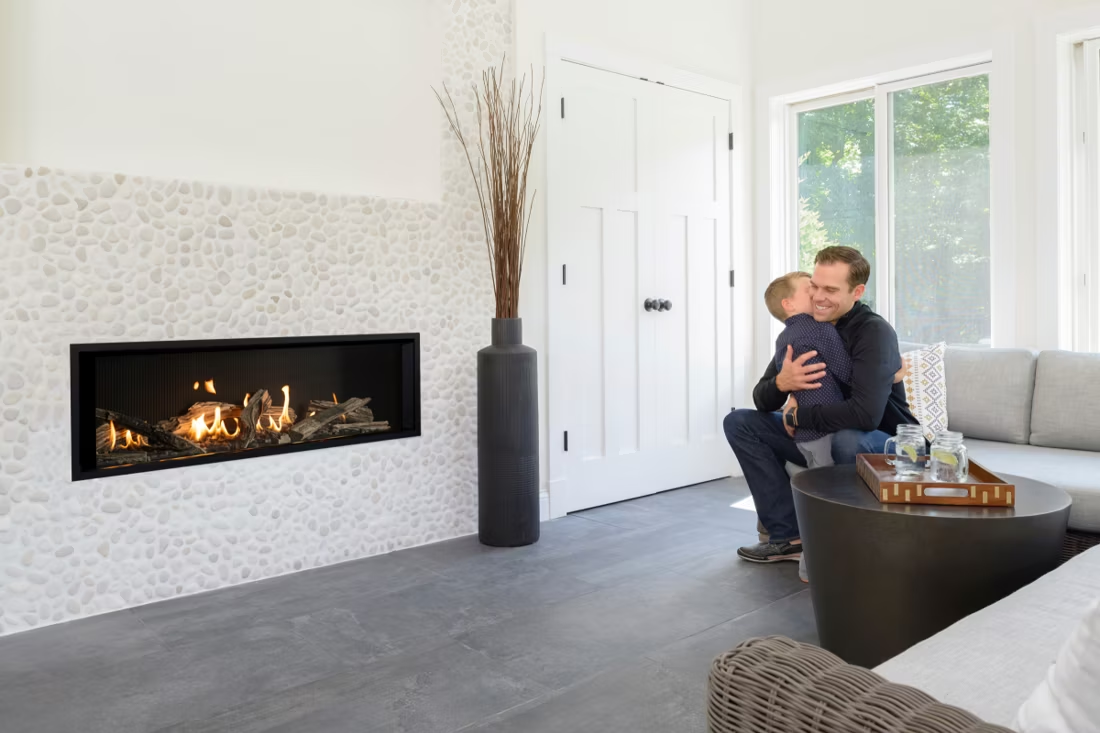
Four fuels. One honest answer for Elbert County.
Three steps. No salesperson until you're ready.
Tell us about your project
Your zip code, your situation, and the fuel you're leaning toward—or let the answers point you to one.
See what's actually available
The brands dealers within 100 miles genuinely carry—real options, never a catalog mirage.
Get your dealer & Project Guide
A trusted local dealer, plus the free Project Guide & Parts List that names every component of the job.
Frequently Asked Questions
Which fuel works best for a home in Elbert County?
It depends heavily on how remote your property is and whether you're on a utility grid. Wood is a strong choice for the many large-acreage ranch properties in the county—ponderosa pine, aspen, pinyon, and juniper are all locally available for cutting or purchase, and a wood stove keeps working through the ice-storm power outages that hit rural Elbert County most winters. Gas is the convenience choice where propane service is already in place—many rural homes here run on propane rather than natural gas, since municipal gas lines are limited outside towns like Elizabeth and Kiowa. Pellet stoves are a solid middle ground, especially with Bear Mountain, Lignetics, and Forest Energy pellets stocked locally, though they do need grid power to run the auger and blower—worth pairing with a backup generator if outage risk is a concern. Electric fireplaces work well as supplemental heat in a den or bedroom but shouldn't be your only plan given how common winter outages are out here.
Do I need a permit to install a fireplace in Elbert County?
In most cases, yes. New wood stoves, wood inserts, gas fireplaces, gas inserts, gas stoves, and pellet stoves generally require a building permit through Elbert County, and gas work also needs a separate permit tied to a licensed gas-fitter for the line connection. Wood-burning appliances need to meet current EPA emissions standards to be permitted for new installation. Electric fireplaces are usually permit-exempt unless the installation involves new wiring or a dedicated circuit for a built-in unit. Because so much of the county is unincorporated, permits for rural properties typically route through the Elbert County building department rather than a town office. Most local hearth retailers handle this paperwork as part of the installation, so it's rarely something homeowners have to manage solo.
Are there wood-burning restrictions in Elbert County?
There's no permanent burn ban comparable to a basin-inversion advisory, but wildfire smoke is a real seasonal concern given the county's grassland and ponderosa forest terrain, and local or state fire restrictions can affect outdoor burning during dry, high-wind stretches—particularly late summer and early fall. Indoor wood stove use isn't typically restricted by these advisories, but if you're burning firewood outdoors or clearing land, it's worth checking current Elbert County fire restriction status before doing so. For indoor installations, sticking with an EPA-certified stove burning well-seasoned local wood (ponderosa pine and aspen season faster than juniper or pinyon) keeps emissions lower and reduces smoke complaints from neighbors on smaller acreages.
Can one local hearth retailer handle all four fuel types?
Many retailers serving Elbert County carry three or four fuel types, since customers here span everything from off-grid ranch houses to newer subdivisions near Elizabeth with full utility service. If you're comparing fuels side by side, look for a dealer with working displays of wood, gas, pellet, and electric units rather than a specialist in just one—that's especially useful in a county where the right fuel choice depends so much on whether your specific property has propane service, reliable grid power, or neither. A dealer familiar with rural Elbert County installs will also know which units hold up best to well pump and septic considerations unique to acreage properties.
How does fireplace service work for rural Elbert County properties?
Most technicians serving Elbert County are based in the Denver metro or Parker/Castle Rock area and drive out to cover rural routes across the county—expect a modest trip fee for properties well outside Kiowa or Elizabeth, generally in the $50–$100 range depending on distance. Because ice storms and high wind events can knock out power for days at a time, it's worth scheduling annual wood stove and chimney service before the first hard freeze rather than waiting for a mid-winter emergency call, when rural routes get booked up fastest. If you rely on a pellet stove as backup heat, testing it—and any battery backup for the auger motor—before the season starts is worth the extra step given how often it's called into service during outages here.
What's the typical cost range for fireplace installation across all fuel types in Elbert County?
Costs run a bit higher than metro Denver in some cases due to rural travel and, for larger acreage homes, longer venting runs. Wood stove or insert installation: roughly $4,500–$9,500 for typical installs, more for new-construction chimney work. Gas fireplace, insert, or stove: $4,500–$11,500, with propane tank and line work adding to the higher end for properties without existing service. Pellet stove or insert: $4,500–$7,500 for most installs. Electric fireplace: $200–$3,000 for the unit itself, plus $400–$1,200 in labor for anything beyond a simple plug-in unit. For property-specific numbers, see the county + fuel pages above.
Can I install a fireplace myself?
If you're putting a fire in your house on purpose, it's best to work with an expert. Unless you're genuinely experienced in framing, gas line, vent pipe, and the national code on clearances to combustibles, have a professional do it—and ideally the same company that sells you the fireplace, so warranty, service, and liability all live under one roof.
Can a fireplace actually lower my heating bill?
Yes—by creating a comfort zone. A furnace heats every square foot of the house just to warm the one room you're in; a gas fireplace on low burns roughly a sixth of the gas a typical furnace does. Set the furnace around 55–60 degrees as a baseline, then heat the rooms your family actually uses. Families who heat this way commonly save $20–$60 a month.
Wood, gas, pellet, or electric—how do I choose?
Match the fuel to your life, not the other way around. Wood: lowest fuel cost and total power-outage independence, but you're hauling and stacking. Gas: press a button, set a thermostat, no maintenance to speak of. Pellet: wood economics with automatic feeding, in exchange for weekly cleaning and a need for electricity. Electric: plugs in anywhere with honest supplemental heat. Nobody regrets the fuel that fits how they actually live.
I know I want a fireplace—where do I actually start?
Do two things today: snap a photo of the wall or fireplace you want to transform, and take a tape measure to the space—width, height, depth. Those two artifacts answer most of a hearth professional's first questions. Then settle fuel (wood, gas, pellet, or electric) and set a realistic budget: $3,900–$5,500 covers fireplace, vent, and basic install for most homes.
Stove and Fireplace Dealers in Elbert County
Listings include WhyFire partner dealers, dealers we have verified as authorized for the brands we recommend, and established local businesses that carry hearth products. Every listing shows which one it is. The ones marked Preferred run on WhyFire's software, so they can show you real pricing and book your appointment right here. No manufacturer pays for placement. How we verify dealers →
Midtown Chimney Fireplace Store
Spa Brokers
Western Fireplace Supply
Thoshini LLC
Spa Brokers Iii
Spa Brokers
Spa Brokers V
Find your fireplace project in Elbert County.
Tell us about your property and fuel preference, and we'll match you with a trusted local dealer plus a free Project Guide & Parts List—the exact parts, vent kit, and recommended installer for your Elbert County home.
Find Your Fireplace →