
Dependable heat for Elbert County's high plains ranches.
From Kiowa to Elizabeth to Simla, propane and gas fireplaces deliver instant warmth through Elbert County's long, dry winters—find the right unit and connect with a trusted local dealer.
Every Project Starts From One of These Five Situations
Instant warmth without the wood pile.
Elbert County spreads across nearly 1,850 square miles of high plains and ranchland southeast of Denver, with roughly 6,835 residents scattered between Kiowa, Elizabeth, Simla, and thousands of acreage properties in between. At an elevation that runs from about 5,900 to 7,300 feet, winters bring an average low near 18°F and a long, cold heating season—a cold, dry stretch that runs from October into April. Wood heat has deep roots here thanks to ponderosa pine, aspen, pinyon, and juniper on the surrounding hills, but wildfire smoke concerns during dry summers and falls have pushed a growing number of homeowners toward gas as a cleaner, lower-maintenance option for daily heat.
Natural gas mains reach only a small portion of Elbert County—mostly pockets near Kiowa and a few subdivisions closer to the Denver metro edge. The rest of the county, including most of its large-lot ranches and acreages, runs on propane delivered by regional suppliers. Either way, a properly sized gas fireplace or insert gives Elbert County homeowners heat at the flip of a switch, no wood splitting or ash hauling, and—with the right ignition system—a source of heat that keeps working when a plains windstorm knocks out power.
Three steps. No salesperson until you're ready.
Tell us about your project
Your zip code, your situation, and the fuel you're leaning toward—or let the answers point you to one.
See what's actually available
The brands dealers within 100 miles genuinely carry—real options, never a catalog mirage.
Get your dealer & Project Guide
A trusted local dealer, plus the free Project Guide & Parts List that names every component of the job.
Frequently Asked Questions
How much does a gas fireplace installation cost in Elbert County?
Most gas fireplace installations in Elbert County run between roughly $4,000 and $10,000, depending on the unit, the venting path, and whether propane tank or gas line work is required. A direct-vent insert going into an existing masonry fireplace with fuel already run to the hearth sits toward the lower end. New construction or a fresh install on a rural acreage—where a propane tank set and a longer buried gas line are often part of the job—runs higher. Because many Elbert County properties sit well outside town limits, expect a travel charge from installers based out of Elizabeth, Parker, or Castle Rock, and budget extra if a new propane tank needs to be delivered and set.
Can I convert my existing wood fireplace to gas?
Yes, and it's a common upgrade in Elbert County's older ranch homes and ranch-style builds that were originally built around a wood-burning masonry fireplace. A gas insert typically slides into the existing firebox, using a stainless liner run up the existing chimney as the vent path, while a licensed gas-fitter runs new supply line—usually from a propane tank on the property since most of the county isn't on natural gas. Conversions generally land in the $4,500 to $9,000 range depending on the insert and how much line work is involved, and the swap trades wood hauling and ash cleanup for a switch-flip flame.
Do I need natural gas, or can I use propane in Elbert County?
For the overwhelming majority of Elbert County, propane is the answer—natural gas mains only reach a handful of pockets near Kiowa and a few subdivisions closest to the metro edge. If your property is on a well and septic system, as most acreages in the county are, you're almost certainly on propane already for your furnace or range, and adding a fireplace on the same tank is straightforward. Nearly every gas fireplace and insert on the market can be configured for propane with the right orifice kit, so fuel type shouldn't limit your options—your installer will set it up correctly during installation.
Will my gas fireplace work during a power outage?
Most modern gas fireplaces will, provided they use intermittent pilot ignition (IPI) with a battery backup—a real consideration in Elbert County, where high-wind events and winter storms on the open plains regularly knock out power to rural lines for hours at a time. IPI units run on AA batteries when the grid goes down, so the fireplace lights on demand just like normal. Valor fireplaces take it a step further: their pilot assembly generates its own electricity through a thermocouple, so there's no battery to remember or replace. Given how exposed Elbert County's rural electric lines are to wind and ice, ask your local dealer about the ignition system before you buy.
What's the difference between a gas fireplace, gas insert, and gas stove?
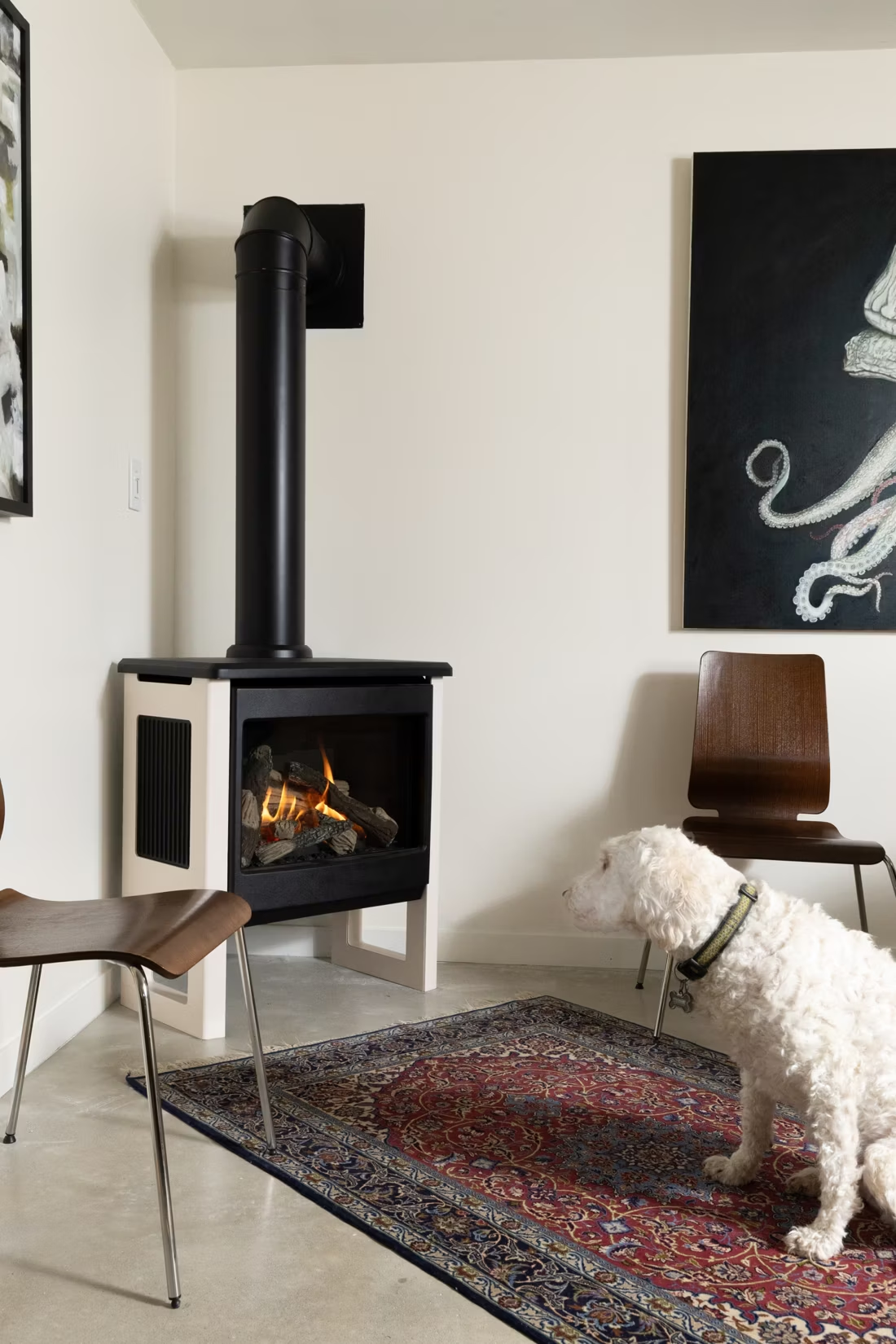
A gas fireplace is a fully built-in unit framed into a wall—the standard choice for new construction or a major remodel on an Elbert County property. A gas insert is built to slide into an existing masonry firebox, converting an old wood-burning fireplace into a sealed, efficient gas unit that vents through the existing chimney. A gas stove is a freestanding cabinet-style unit that sits on the floor, similar in footprint to a wood stove but running on gas or propane. For the county's older ranch homes with an existing fireplace, an insert is usually the most cost-effective upgrade; new builds and additions are better suited to a built-in fireplace or a freestanding stove.
Do I need a permit to install a gas fireplace in Elbert County?
Yes—Elbert County requires a building permit for new gas fireplace and insert installations, and any new propane line or tank work needs to be handled by a licensed gas-fitter or propane technician. Most established local installers pull these permits as part of the job, so you generally don't have to coordinate it yourself. Because much of the county sits above 6,000 feet in elevation, gas appliances also often need an altitude adjustment to the orifice—something a qualified local installer accounts for automatically, unlike a big-box installation crew unfamiliar with the area.
What's the difference between vented and vent-free gas fireplaces?
Vented gas fireplaces—direct-vent or B-vent—pull combustion air from outside and exhaust it back outside through a sealed pipe, keeping combustion byproducts out of the living space. Vent-free units burn fuel directly into the room without external venting, which is more efficient on paper but releases moisture and small amounts of combustion gas indoors, and comes with strict room-sizing and oxygen-sensor requirements. Vent-free units are legal in Colorado but need careful sizing for the room they're heating. For Elbert County's larger rural homes, especially at elevation where combustion efficiency already runs a bit lower than sea level, direct-vent units are the more common and generally recommended choice—ask a local dealer to walk through both options for your specific room.
How often should my gas fireplace be serviced?
An annual inspection is recommended for any gas-burning appliance, including direct-vent fireplaces and inserts. A technician checks the burner, pilot assembly, venting, and gas or propane connections, and cleans the glass and interior components. This matters more in Elbert County than it might elsewhere, since many properties run on propane tanks that can accumulate moisture and sediment over time, and rural service calls take longer to schedule than in-town visits—staying current on inspections avoids being without heat during a cold stretch while you wait for a technician to make the drive out.
Gas vs. wood—which is right for my home?
Wood offers lower fuel costs, especially with self-cut ponderosa pine, aspen, pinyon, or juniper from the county's own hills, plus heat that keeps working without any electricity or propane delivery. But wildfire smoke concerns during Elbert County's dry summers and falls have made some homeowners rethink wood as a daily-use fuel, and hauling and splitting wood isn't for everyone. Gas trades that self-sufficiency for instant, consistent heat with no ash, no smoke, and none of the seasonal fire-danger considerations that come with wood burning on the plains. Many county homes end up with both: gas for daily convenience in the main living space, wood kept in reserve for backup heat during an extended outage.
Why is my open fireplace making my house colder?
Open fireplaces suck—literally. As the fire burns, it consumes air your furnace already paid to heat and pulls it out through the chimney, so the house is actually colder after the fire goes out than before you lit it. An insert fixes this: it seals the chimney, puts fixed glass across the front, and turns that hole in your house into a real heat source.
Why is a fireplace insert so efficient?
An insert does two things: it seals the chimney completely, so you stop losing air you already paid to heat, and it radiates warmth into the room through the firebox and glass. Most add a heat-exchange fan that pulls cool room air underneath, wraps it around the hot firebox, and pushes it back out warm. Your home is more efficient before you've even lit the first fire.
Does a fireplace add value to my home?
On average, a fireplace adds back to the home about the same amount you spent installing it. Add the monthly savings from heating the rooms you actually use instead of the whole house—often hundreds of dollars a year—and the value case is strong before you even count what a fire does for how your family uses the room.
What is an in-home preview and do I need one?
It's a visit where a hearth professional measures your space, confirms the model you picked actually works in your home, and walks the specs—framing, gas line, venting, finish work—before anything is ordered. Some details you just can't know until you see the house. Never make a down payment without one; it's the single most-skipped step that burns buyers.
Stove and Fireplace Dealers in Elbert County
Find your gas fireplace in Elbert County.
Tell us a bit about your home and we'll match you with the right gas fireplace, insert, or stove—plus a free Project Guide & Parts List with the exact parts, vent kit, and your recommended local Elbert County dealer.import
Find Your Fireplace →