
Clean, instant gas heat for every corner of Douglas County.
From Highlands Ranch to Castle Rock, Parker to Lone Tree, gas is the dominant heat source in Douglas County's master-planned communities. Find the right unit and get matched with a trusted local dealer who installs it right.
Every Project Starts From One of These Five Situations
The fuel that fits the front range's newer housing stock.
Douglas County sits between roughly 5,500 and 7,000 feet along the front range, with winters that average 19°F on the cold nights and add up to a long, chilly heating season each year—cold enough that a working fireplace matters, but not the deep-freeze territory of a place like Fargo ND or Bismarck ND. Most of the county's 315,000-plus residents live in master-planned communities built over the last three decades—Highlands Ranch, Parker, Castle Rock, Lone Tree, Castle Pines—where HOA covenants and modern building codes have shaped what's actually installable. Wood-burning fireplaces and freestanding wood stoves are rare here, not because the county lacks cold nights, but because most newer subdivisions were built without masonry chimneys and many HOAs restrict solid-fuel burning outright, especially with wildfire smoke already a seasonal air quality concern along the foothills.
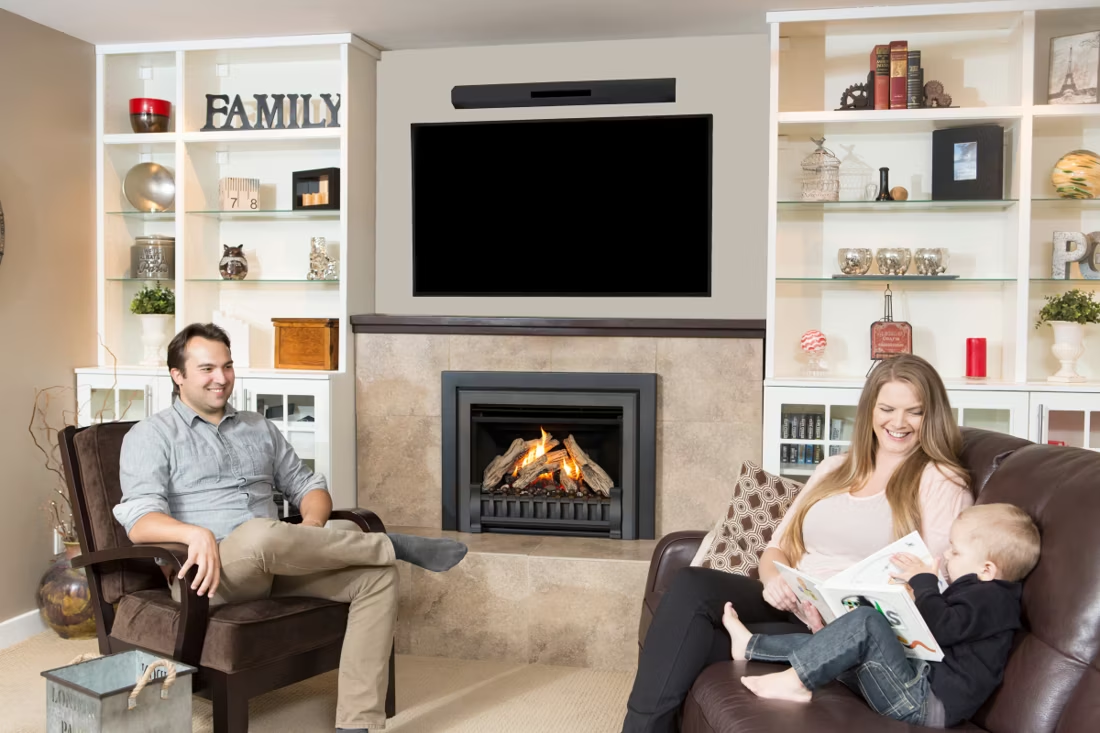
Gas filled that gap. Direct-vent gas inserts, built-in gas fireplaces, and gas log sets are the standard install across the county, plumbed to natural gas in most subdivisions or to propane in the more rural fringe—Sedalia, Larkspur, Franktown, and parts near Deckers. Xcel Energy serves the bulk of Douglas County's natural gas customers, with Black Hills Energy serving areas around Castle Rock. Either way, a gas fireplace gives you real, instant heat with none of the smoke, ash, or covenant headaches of a wood-burning setup—which is exactly why it's the fuel of choice for most homeowners here. My role is simple: match you with a local dealer who knows the codes in your specific municipality and can size the vent run correctly the first time.
Three steps. No salesperson until you're ready.
Tell us about your project
Your zip code, your situation, and the fuel you're leaning toward—or let the answers point you to one.
See what's actually available
The brands dealers within 100 miles genuinely carry—real options, never a catalog mirage.
Get your dealer & Project Guide
A trusted local dealer, plus the free Project Guide & Parts List that names every component of the job.
Frequently Asked Questions
How much does a gas fireplace installation cost in Douglas County?
Most gas fireplace and insert installations in Douglas County land somewhere between $3,500 and $9,500, with the spread driven by three things: whether the home already has a gas line run to the fireplace location, whether you're installing a direct-vent insert into an existing masonry opening or a full built-in unit in new construction, and whether you're on natural gas or need propane tank work. Homes in Highlands Ranch, Parker, or Castle Rock with an existing gas stub near the fireplace tend to land on the lower end; a from-scratch installation with new venting and a gas line extension in a Castle Pines or Sedalia property runs higher. A local dealer will give you a firm number after seeing the space in person.
Can I convert an existing wood-burning fireplace to gas?
Yes, and it's a common project in the older pockets of Douulas County—parts of unincorporated areas and a handful of homes built before HOA covenants tightened around solid-fuel burning. A gas insert typically slides into the existing masonry opening, using a stainless liner run through the existing chimney for venting, with a new gas line brought to the firebox. This preserves the look of the original fireplace while eliminating the ash, creosote, and covenant issues that come with wood in most Douglas County developments. Expect it to run toward the middle of the typical install cost range depending on how far the gas line has to travel.
Should I plan for natural gas or propane?
It depends on where in the county you are. Xcel Energy provides natural gas service to most of Douglas County's incorporated cities and larger subdivisions—Highlands Ranch, Parker, Lone Tree, and much of Castle Rock—with Black Hills Energy also serving parts of the Castle Rock area. Once you get out toward Sedalia, Larkspur, Franktown, or the acreage properties near Deckers, natural gas lines often don't reach, and propane becomes the standard fuel, either from an existing tank or a new tank installed by a local propane supplier. Most gas fireplace models can be configured for either fuel—the installer sets the correct orifice and regulator for whichever you have.
Will my gas fireplace still work if the power goes out?
Most direct-vent gas fireplaces with IPI (intermittent pilot ignition) run on a small battery backup that kicks in the moment power drops, so the fireplace lights and operates normally on batteries alone. That matters in Douglas County, where front-range wind events occasionally knock out power for hours at a time. Valor fireplaces take a different approach—their pilot assembly generates its own electricity through the thermocouple, so there's no battery to remember to replace. Ask your local dealer about the ignition system on any model you're considering if outage backup is a priority for you.
What's the difference between a gas fireplace, insert, and stove?
A gas fireplace is a fully built-in unit framed into a wall—the standard choice in new-construction Douglas County homes and remodels. A gas insert drops into an existing masonry fireplace opening, converting it to a sealed, high-efficiency gas unit that still vents through the original chimney. A gas stove is freestanding, sitting on the floor like a wood stove but running on gas—less common here given how few Douglas County homes have the floor clearance or aesthetic call for one, but it shows up occasionally in older ranch-style properties. For most homeowners with an existing fireplace opening, an insert is the straightforward upgrade.
Do I need a permit to install a gas fireplace in Douglas County?
Yes. Gas fireplace installations require both a building permit and a gas-fitting permit. In unincorporated areas like Highlands Ranch, that goes through the Douglas County Building Division; inside Castle Rock, Parker, Lone Tree, or Castle Pines, it runs through that city's own building department instead. A licensed gas-fitter is required for the line work regardless of jurisdiction, which is one reason working with an established local hearth dealer helps—they coordinate the gas line, venting, and inspections as one job rather than leaving you to manage separate trades.
Can I install a vent-free gas fireplace in Douglas County?
Colorado is one of the states that restricts vent-free (unvented) gas appliances, so most Douglas County jurisdictions steer installations toward vented direct-vent units instead. Direct-vent fireplaces draw combustion air from outside and exhaust it back outside through sealed venting, which keeps combustion byproducts out of the living space entirely. It's also simply the more common choice in the county's newer housing stock, where direct-vent rough-ins are often already part of the home's original construction. A local dealer can confirm what's permitted in your specific city or unincorporated area.
How often should a gas fireplace be serviced?
Plan on an annual inspection—a technician checks the burner, pilot assembly, venting, and gas connections, and cleans the glass and interior. It's a lighter lift than a wood-stove chimney sweep but still important, especially for units that see daily use through Douglas County's long heating season from October through April. Most local service providers charge in the range of $150 to $250 for a standard annual visit.
Why don't more Douglas County homes use wood or pellet stoves?
Both are genuinely rare here, and it's worth being upfront about why. Most of the county's housing was built without masonry chimneys, and many HOA covenants in communities like Highlands Ranch and Castle Pines restrict solid-fuel burning outright. Add in wildfire smoke as a recurring seasonal air quality concern along the foothills, and gas has simply become the practical, code-friendly default. If you do have Forest Service land access to the west—cutting permits through the Arapaho-Roosevelt National Forests run $5 to $20 per cord during the May-to-October season—a wood stove is still possible in the handful of older or rural Douglas County properties that can accommodate one. But for the vast majority of homeowners in the county's subdivisions, gas or electric are the realistic paths, and a local dealer can tell you quickly which your home qualifies for.
Why is my open fireplace making my house colder?
Open fireplaces suck—literally. As the fire burns, it consumes air your furnace already paid to heat and pulls it out through the chimney, so the house is actually colder after the fire goes out than before you lit it. An insert fixes this: it seals the chimney, puts fixed glass across the front, and turns that hole in your house into a real heat source.
Why is a fireplace insert so efficient?
An insert does two things: it seals the chimney completely, so you stop losing air you already paid to heat, and it radiates warmth into the room through the firebox and glass. Most add a heat-exchange fan that pulls cool room air underneath, wraps it around the hot firebox, and pushes it back out warm. Your home is more efficient before you've even lit the first fire.
Does a fireplace add value to my home?
On average, a fireplace adds back to the home about the same amount you spent installing it. Add the monthly savings from heating the rooms you actually use instead of the whole house—often hundreds of dollars a year—and the value case is strong before you even count what a fire does for how your family uses the room.
Can I install a fireplace myself?
If you're putting a fire in your house on purpose, it's best to work with an expert. Unless you're genuinely experienced in framing, gas line, vent pipe, and the national code on clearances to combustibles, have a professional do it—and ideally the same company that sells you the fireplace, so warranty, service, and liability all live under one roof.
Stove and Fireplace Dealers in Douglas County
Listings include WhyFire partner dealers, dealers we have verified as authorized for the brands we recommend, and established local businesses that carry hearth products. Every listing shows which one it is. The ones marked Preferred run on WhyFire's software, so they can show you real pricing and book your appointment right here. No manufacturer pays for placement. How we verify dealers →
Midtown Chimney Fireplace Store
Thoshini LLC
Western Fireplace Supply
Spa Brokers Iii
Spa Brokers
Spa Brokers
Proud Souls Barbecue & Provisions
Spa Brokers V
Outdoor Kitchen Dist. Inc
Aria Custom Design
Distinctive Mantel Designs
Fireplace And Grill Experts - Service Only
Spa Brokers
Spa Brokers (Corporate)
Rio Grande Co.
Find your gas fireplace in Douglas County.
Tell us a bit about your home and we'll match you with a trusted local dealer and send over a free Project Guide & Parts List—the exact parts, vent kit, and recommended installer for your Douglas County gas fireplace project.
Find Your Fireplace →