
Real Warmth, Without the Wood Smoke.
Parker sits at 5,832 feet on the high plains east of the Front Range, where winter lows average 15°F and heating season runs long. Gas is the standard heat source here—find the right unit and connect with a trusted local dealer.
Every Project Starts From One of These Five Situations
The practical, near-universal choice in a fast-growing Douglas County suburb.
Parker has grown from a small rural crossroads into one of Douglas County's largest towns, and most of that growth happened after natural gas infrastructure was already in place. Winter lows here average 15°F with a heating season about as demanding as a long, cold Rocky Mountain winter, and at 5,832 feet, homes need a heat source that performs reliably at altitude—not just at sea level. In newer Parker subdivisions, direct-vent gas fireplaces are typically pre-plumbed during construction, which is a big part of why gas so dominates the local hearth market.
Wood-burning is genuinely uncommon in Parker. Many newer neighborhoods carry HOA covenants that restrict or prohibit wood-burning appliances, and the Front Range's periodic wildfire-smoke advisories make open burning a harder sell even where it's technically allowed. A handful of older homes in original Parker still have wood fireplaces from before the town's gas buildout, but for nearly everyone else, gas is the default. Xcel Energy serves natural gas throughout most of Parker, and Core Electric Cooperative provides electric service at roughly 15.0 cents per kWh—worth knowing if you're weighing a gas fireplace against an electric unit for a secondary room.
Three steps. No salesperson until you're ready.
Tell us about your project
Your zip code, your situation, and the fuel you're leaning toward—or let the answers point you to one.
See what's actually available
The brands dealers within 100 miles genuinely carry—real options, never a catalog mirage.
Get your dealer & Project Guide
A trusted local dealer, plus the free Project Guide & Parts List that names every component of the job.
Frequently Asked Questions
How much does a gas fireplace installation cost in Parker?
A typical gas fireplace or insert installation in Parker runs $4,000 to $10,500. Homes in newer subdivisions with a gas line already stubbed to the fireplace location sit toward the lower end—often the least expensive gas project in the region since the framing and gas rough-in are already done. Older homes in original Parker that need a new gas line run, or projects converting a masonry wood fireplace, land in the middle to upper end. Custom built-ins with extended venting runs push toward the top of the range. A local installer will confirm exact pricing after seeing your gas line and venting path.
Can I convert an older wood fireplace to gas in Parker?
Yes, and it's a common project for the older ranch-style homes in original Parker built before the town's gas infrastructure caught up with newer development. A gas insert typically drops into the existing masonry firebox, using a stainless liner run through your current chimney for venting. Costs usually fall between $4,000 and $8,500 depending on whether a new gas line needs to be run to the fireplace. Given the Front Range's periodic wildfire-smoke advisories, a lot of homeowners making this switch are motivated as much by air quality as convenience.
Is natural gas available throughout Parker, or do I need propane?
Most of Parker, including the 80134 and 80138 zip codes, falls within Xcel Energy's natural gas service territory, so if your home already has gas appliances, adding a fireplace is usually a straightforward tie-in. Some unincorporated pockets on Parker's rural fringe toward the Elizabeth area may be outside the service footprint, in which case propane is the standard fallback, delivered and stored in a tank on the property. Your local dealer can confirm which fuel your address is set up for before you commit to a unit.
Will my gas fireplace still work if the power goes out?
Most modern gas fireplaces will, with the right ignition system. Units with IPI (intermittent pilot ignition) run on battery backup—usually AA batteries built into the unit—that kick in automatically when utility power drops, so the fireplace lights and operates normally. Valor fireplaces take a different route: their pilot assembly generates its own electricity through the thermocouple, so there's no battery to remember at all. Given how exposed Parker is to high-wind events off the Front Range that occasionally knock out Core Electric Cooperative service, this is worth asking about when you're choosing a model.
Gas fireplace vs. gas insert vs. gas stove—what's the difference?
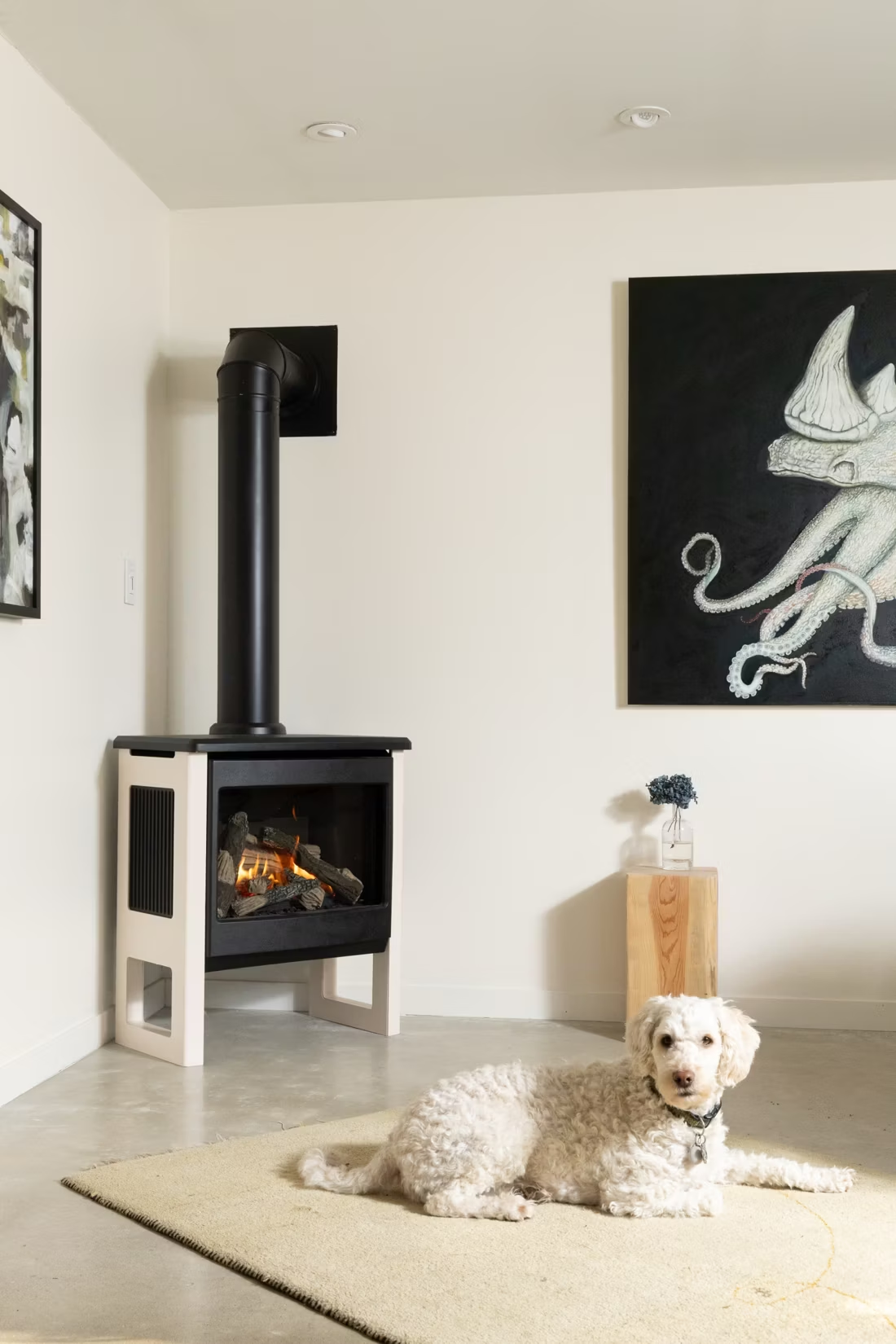
A gas fireplace is a fully framed-in, built-to-the-wall unit, standard in most of Parker's newer construction where builders pre-plumb the gas line during framing. A gas insert fits into an existing masonry firebox and vents through the existing chimney—the right call for older Parker homes converting from wood. A gas stove is a freestanding, cast-iron-style unit that sits on the floor and vents through a wall or ceiling, often chosen for basements or additions without an existing hearth. A local dealer can walk your specific room and tell you which format actually fits.
Do I need a permit to install a gas fireplace in Parker?
Yes. New gas fireplace installations require a building permit through the Town of Parker Building Division (or Douglas County for unincorporated addresses), plus a separate gas line permit if new piping is being run. The gas line work has to be done by a licensed gas-fitter, which is one reason it's worth using a certified hearth dealer rather than a handyman—they coordinate the gas line, venting, and inspection sign-off as one job instead of leaving you to manage separate trades.
What should I know about vented vs. vent-free gas fireplaces at Parker's elevation?
Vented (direct-vent) units draw combustion air from outside and exhaust it back outside through sealed pipe—they're the standard, code-friendly choice and what most Parker installers recommend. Vent-free units are technically legal in Colorado but come with strict room-size and ventilation requirements, and there's an added wrinkle at Parker's 5,832-foot elevation: most gas appliances need to be de-rated or adjusted above roughly 2,000 feet, since thinner air changes how the burner performs. A qualified local installer will handle that altitude adjustment as part of setup—it's not something to guess at with a big-box unit shipped without local support.
How often does a gas fireplace need to be serviced?
Plan on an annual inspection, ideally before the heating season starts each fall. A technician checks the burner, pilot or ignition system, venting, and gas connections, and cleans the glass and interior—a much lighter job than wood chimney sweeping but just as important for safe operation. Local hearth service providers in the Parker area typically charge $150 to $250 for a standard annual visit.
Should I even consider wood heat in Parker, or is gas the only real option?
For nearly all Parker homeowners, gas is the practical answer. Wood-burning is restricted or prohibited outright by HOA covenants in many of the town's newer developments, and Front Range wildfire-smoke advisories add another layer of friction even where it's allowed. A small number of older properties in original Parker still burn wood—often ponderosa pine or aspen sourced through Arapaho-Roosevelt National Forest cutting permits ($5 to $20 per cord, May through October)—but that's the exception, not the rule. If you're weighing options for a new build or remodel, gas will almost always be the more workable path in Parker.
Why is my open fireplace making my house colder?
Open fireplaces suck—literally. As the fire burns, it consumes air your furnace already paid to heat and pulls it out through the chimney, so the house is actually colder after the fire goes out than before you lit it. An insert fixes this: it seals the chimney, puts fixed glass across the front, and turns that hole in your house into a real heat source.
What does it take to replace an existing fireplace?
Fireplaces are like icebergs—bigger behind the wall than in front of it. Replacement means removing the surrounding tile or stone (the finish material laps onto the fireplace face), pulling the old unit, setting the new one in the same enclosure, and re-finishing the wall. A hearth professional can determine what's behind your wall without demolition during an in-home preview.
What is an in-home preview and do I need one?
It's a visit where a hearth professional measures your space, confirms the model you picked actually works in your home, and walks the specs—framing, gas line, venting, finish work—before anything is ordered. Some details you just can't know until you see the house. Never make a down payment without one; it's the single most-skipped step that burns buyers.
Does a fireplace add value to my home?
On average, a fireplace adds back to the home about the same amount you spent installing it. Add the monthly savings from heating the rooms you actually use instead of the whole house—often hundreds of dollars a year—and the value case is strong before you even count what a fire does for how your family uses the room.
Nearby Dealers
Hearth shops serving Parker and the surrounding area. Every listing shows whether it is a WhyFire partner, a dealer we have verified as authorized for the brands we recommend, or a local business carrying hearth products. No manufacturer pays for placement. How we verify dealers →
Midtown Chimney Fireplace Store
Thoshini LLC
Spa Brokers
Spa Brokers Iii
Spa Brokers
Western Fireplace Supply
Spa Brokers V
Proud Souls Barbecue & Provisions
Fireplace And Grill Experts - Service Only
Outdoor Kitchen Dist. Inc
Spa Brokers (Corporate)
Rio Grande Co.
Aria Custom Design
Distinctive Mantel Designs
Spa Brokers
Find your gas fireplace in Parker.
Tell us a bit about your home and we'll match you with a trusted local Parker-area dealer and send over a free Project Guide & Parts List—the exact parts, including the vent kit sized for your elevation, and who to call to get it installed right.
Find Your Fireplace →