
Warm, code-compliant gas heat for Stonegate winters.
At 5,894 feet with winter lows near 15°F, Stonegate homes need a fireplace sized and vented for altitude. Find the right gas unit and connect with a trusted local installer.
Every Project Starts From One of These Five Situations
The default hearth choice in Stonegate's newer homes.
Stonegate is a master-planned community in Douglas County, built out mostly from the late 1990s through the 2000s, with compact suburban lots and homes designed around built-in fireplace boxes rather than site-built masonry chimneys. At 5,894 feet elevation with a long, demanding winter heating season and average winter lows around 15°F, homes here need real heat through a Front Range winter that swings from mild afternoons to sharp overnight cold—but the lot sizes and construction style point toward gas, not wood.
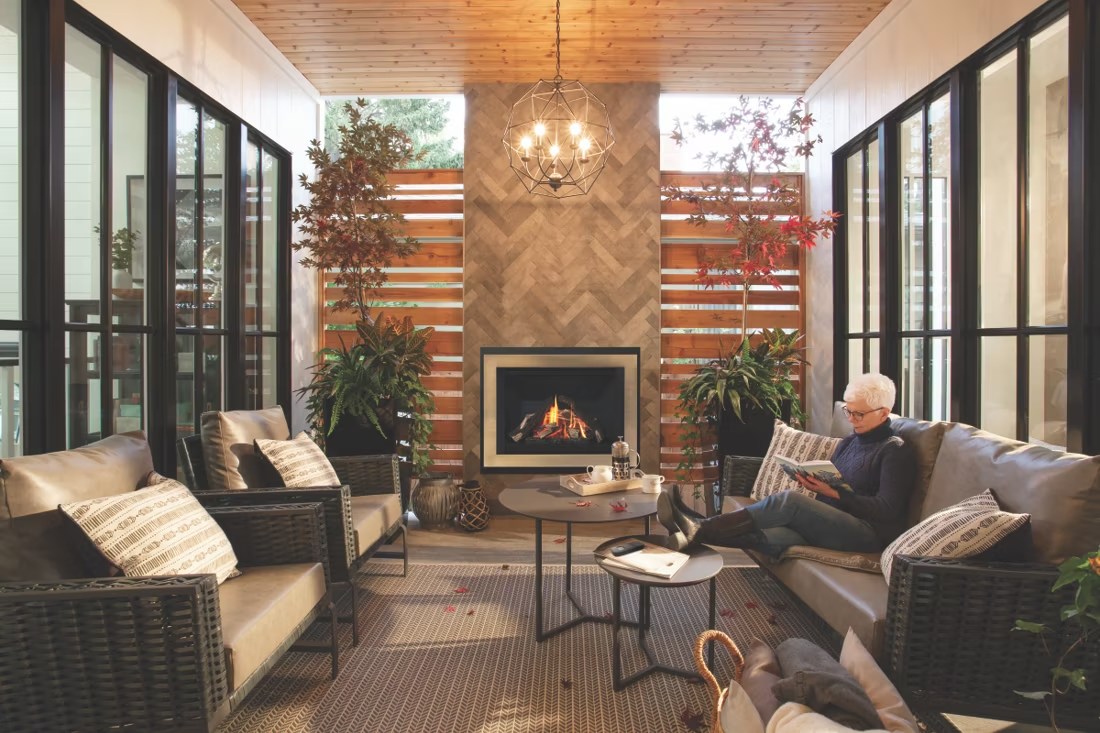
Traditional wood-burning setups are uncommon in Stonegate: newer subdivision homes were built with gas-ready fireplace stubs instead of masonry chimneys, and Douglas County's periodic wildfire-smoke air quality concerns make open wood burning less practical on tightly spaced lots. Gas fireplaces and inserts fill that role instead, delivering instant, thermostat-controlled heat without ash, smoke, or a chimney to maintain. A smaller but growing number of Stonegate homeowners also choose electric fireplaces—served by Core Electric Cooperative—for secondary rooms or zero-clearance installs where running a gas line isn't practical.
Three steps. No salesperson until you're ready.
Tell us about your project
Your zip code, your situation, and the fuel you're leaning toward—or let the answers point you to one.
See what's actually available
The brands dealers within 100 miles genuinely carry—real options, never a catalog mirage.
Get your dealer & Project Guide
A trusted local dealer, plus the free Project Guide & Parts List that names every component of the job.
Frequently Asked Questions
How much does a gas fireplace installation cost in Stonegate?
Most gas fireplace and insert installations in Stonegate run $4,500 to $10,000, depending on the unit, the venting run, and whether the fireplace is going into an existing built-in firebox or a new framed opening. Because Stonegate sits at nearly 5,900 feet, some installers also factor in a high-altitude orifice kit or combustion-air adjustment, which adds a modest amount to labor. Homes with an existing gas stub-out to the fireplace location—common in Stonegate's late-90s and 2000s construction—land on the lower end; new gas line runs or exterior venting through stucco or stone push costs higher.
Does elevation affect gas fireplace installation in Stonegate?
Yes. At 5,894 feet, Stonegate is well above the roughly 4,500-foot threshold where most gas fireplace manufacturers require a high-altitude conversion kit or adjusted burner orifice to keep the flame properly calibrated and the unit burning cleanly. A certified local installer will know which models ship altitude-rated out of the box versus which need a field kit. This is one of the more overlooked steps in a DIY or big-box gas fireplace purchase, and it's a big reason to work with someone who installs at this elevation regularly.
Do I need a permit to install a gas fireplace in Stonegate?
Yes—gas fireplace installations in unincorporated Douglas County, which includes Stonegate, require a building permit and a gas line permit through the Douglas County Building Division, along with an inspection of the completed work. Most licensed hearth retailers pull these permits as part of the installation. If your home falls under one of Stonegate's HOA or metro district architectural guidelines, it's also worth checking whether exterior vent placement needs a quick design review before installation—your installer can usually tell you in the initial site visit.
Can I install a wood-burning fireplace in Stonegate instead of gas?
It's possible but uncommon. Stonegate's homes were built with gas-ready built-in fireboxes rather than masonry chimneys designed for wood, and Douglas County periodically issues wildfire-smoke air quality advisories that make wood burning less practical on the community's closely spaced lots. A handful of older or custom-built homes near the edges of the neighborhood do have wood fireplaces, and a Forest Service permit through the Arapaho-Roosevelt National Forests ($5–$20 per cord, May–October season) is available if you want to source your own firewood. But for new installs in Stonegate, gas and electric are by far the more practical and common choices.
Do I need natural gas, or should I use propane?
Most homes in Stonegate are already connected to a natural gas line for the furnace and water heater, which makes adding a gas fireplace straightforward—your installer taps into the existing gas service rather than starting from scratch. Propane is rarely needed here, though it remains an option for the small number of properties near the community's edges where a gas main hasn't been extended. Nearly every gas fireplace model can be configured for either fuel; the installer sets the correct orifice and regulator for whichever you have.
Gas fireplace vs. electric fireplace—which makes more sense for my Stonegate home?
Gas delivers real radiant heat and can offset furnace use on cold Front Range nights, which matters given Stonegate's long, demanding winter heating season. Electric fireplaces, powered through Core Electric Cooperative at about 15 cents per kWh, produce a flame effect and modest supplemental warmth without any venting or gas line—a good fit for secondary bedrooms, basements, or renters who can't modify gas infrastructure. For a primary living space where you want to actually feel a heat difference on a 15-degree night, gas is the stronger choice; for ambiance in a room that already has adequate central heat, electric is simpler and cheaper to install.
Will my gas fireplace still work if the power goes out?
Most modern direct-vent gas fireplaces will, as long as they use a standing pilot or an IPI (intermittent pilot ignition) system with battery backup. The battery pack—usually a set of AA batteries inside the unit—keeps the igniter and gas valve working when the power drops, so the fireplace still lights on demand. This matters along the Front Range, where high-wind events in Douglas County occasionally knock out power for hours at a time. If backup heat during an outage matters to you, ask your local retailer specifically about the ignition system before you buy—standard millivolt and IPI systems handle this well, while some fully electronic units do not.
How often does a gas fireplace need to be serviced?
Plan on an annual inspection, ideally before the heating season starts each fall. A technician checks the burner, pilot assembly, venting, and gas connections, and cleans the glass and interior—this typically runs $150 to $250 in the Stonegate area. At this elevation, it's also worth having the technician confirm the burner is still tuned correctly for altitude, since flame characteristics can drift slightly over years of use.
Gas insert, built-in fireplace, or freestanding gas stove—which fits my Stonegate home?
Most Stonegate homes were built with a built-in metal firebox already framed into the wall, which makes a gas insert or a direct replacement built-in unit the natural fit—it uses the opening you already have rather than requiring new framing. A fully built-in gas fireplace makes more sense for a remodel or an addition where you're framing a new wall opening from scratch. A freestanding gas stove is less common in Stonegate's newer construction but can work well in a basement or bonus room without an existing firebox. A local retailer can tell you which option matches your home's current setup during a quick walkthrough.
Can I put a TV above my fireplace?
Yes—with an asterisk. Fireplaces are hot and TVs don't like heat. Either put a mantel between them to deflect rising warmth, or choose a fireplace with heat-management technology that creates a cool zone on the wall above—the wall stays around 125 degrees, barely warm, while the room still gets full heat. If you like clean lines and don't want a mantel, heat management is the answer.
Is my gas fireplace wasting gas?
If it was installed more than 15 years ago, probably. Older gas fireplaces keep a standing pilot light burning all the time, and that little flame can cost a couple hundred dollars a year. Newer models use pilot-on-demand ignition—the pilot lights only when you use the fireplace and goes out when you turn it off.
Can a fireplace actually lower my heating bill?
Yes—by creating a comfort zone. A furnace heats every square foot of the house just to warm the one room you're in; a gas fireplace on low burns roughly a sixth of the gas a typical furnace does. Set the furnace around 55–60 degrees as a baseline, then heat the rooms your family actually uses. Families who heat this way commonly save $20–$60 a month.
How much should I budget for a fireplace?
For an average home—covering the fireplace, the vent pipe, and basic installation—a budget between $3,900 and $5,500 gives you a lot of options across wood, gas, and pellet. By the time you add finish work, gas line, and electrical, the average complete installation lands between $5,000 and $12,000 all-in. In a remodel or new build, a good rule is to put about 2.5% of the total project cost toward the fireplace.
Nearby Dealers
Hearth shops serving Stonegate and the surrounding area. Every listing shows whether it is a WhyFire partner, a dealer we have verified as authorized for the brands we recommend, or a local business carrying hearth products. No manufacturer pays for placement. How we verify dealers →
Midtown Chimney Fireplace Store
Thoshini LLC
Spa Brokers Iii
Spa Brokers
Spa Brokers
Western Fireplace Supply
Spa Brokers V
Proud Souls Barbecue & Provisions
Outdoor Kitchen Dist. Inc
Fireplace And Grill Experts - Service Only
Spa Brokers (Corporate)
Rio Grande Co.
Aria Custom Design
Distinctive Mantel Designs
Spa Brokers
Find your gas fireplace in Stonegate.
Tell us about your home and we'll match you with a trusted local dealer and put together a free Project Guide & Parts List—the exact parts, including the vent kit, for your Stonegate gas fireplace project.
Find Your Fireplace →