
A Straight Answer on Pellet Heat in Dakota Ridge.
Pellet stoves aren't the default choice in this Jefferson County foothills community, but for the right home they still make sense. We'll help you figure out if yours is one of them and connect you with a trusted local dealer.
Every Project Starts From One of These Five Situations
Gas fills the role pellet often plays elsewhere.
Dakota Ridge sits in the foothills southwest of Denver at nearly 5,800 feet, in the kind of wildland-urban interface terrain that defines much of Jefferson County. Winter lows average around 19°F and the area sees a real, solid heating season lasting into the colder months—though nowhere near the severity of places like International Falls, MN or Duluth, MN. That matters, because most homes here aren't leaning on a single wood-adjacent appliance to survive winter the way homes in harsher climates sometimes do.
Two things push pellet stoves toward the margins in Dakota Ridge: reliable natural gas service through Public Service Company of Colorado (Xcel Energy) reaches most of the area, and the wildfire and winter-inversion concerns that shape building codes and HOA covenants here tend to lump solid-fuel appliances—wood and pellet alike—into the same scrutiny. That doesn't mean pellet is off the table. Homeowners without gas service, those in older homes with an existing solid-fuel hearth, or anyone who wants backup heat that doesn't depend on a wood pile still choose pellet stoves. It's just a smaller, more deliberate slice of the market here than in mountain towns or rural Colorado counties.
Three steps. No salesperson until you're ready.
Tell us about your project
Your zip code, your situation, and the fuel you're leaning toward—or let the answers point you to one.
See what's actually available
The brands dealers within 100 miles genuinely carry—real options, never a catalog mirage.
Get your dealer & Project Guide
A trusted local dealer, plus the free Project Guide & Parts List that names every component of the job.
Frequently Asked Questions
How much does a pellet stove installation cost in Dakota Ridge?
Pellet stoves are uncommon enough in Dakota Ridge that there isn't a deep local sample to draw a tight cost range from the way we can for gas fireplaces here. Nationally, a pellet stove or insert installation typically runs $3,000 to $6,500 depending on the unit, whether it's a freestanding stove or an insert into an existing masonry fireplace, and any hearth pad or electrical work needed for the auger and blower. A local dealer can give you a firm number after seeing your home.
Why isn't pellet heat more common in Dakota Ridge?
Two things work against it. First, natural gas service from Public Service Company of Colorado reaches most of the area, so homeowners who want easy, thermostat-controlled heat generally install a gas fireplace or insert instead. Second, Dakota Ridge sits in wildfire-prone foothills terrain, and both wildfire mitigation guidance and many HOA covenants here treat solid-fuel appliances—wood or pellet—with more scrutiny than gas units. Pellet stoves aren't banned, but they're a smaller, more considered choice than in mountain or rural Colorado towns without gas access.
Are there air quality restrictions on pellet stoves in Jefferson County?
The Denver metro area, including Jefferson County, deals with winter inversion and periodic wildfire smoke, both of which keep solid-fuel burning on regulators' radar. Pellet stoves generally burn cleaner and more completely than wood stoves because the auger feeds fuel at a controlled rate, and in many Colorado jurisdictions pellet stoves are exempt from wood-burning curtailment advisories issued during inversion events. Confirm the current rule with the Jefferson County building department before you install, since local air quality guidance can shift year to year.
What brand of pellets can I actually buy near Dakota Ridge?
Regional suppliers in the Front Range corridor typically stock Bear Mountain, Lignetics, and Forest Energy pellets, widely available at hardware stores and farm supply retailers along the I-70 and C-470 corridors. Because pellet stoves are a smaller category of appliance in this area, it's worth confirming with a dealer or supplier that a given brand is reliably stocked year-round rather than assuming every hardware store carries it.
If the power goes out, will a pellet stove keep my house warm?
No—this is the tradeoff worth understanding before you buy. Pellet stoves rely on an electric auger to feed fuel and a blower to circulate heat, so a power outage shuts them down unless you have a battery backup or generator running. For Dakota Ridge homes worried about outages from winter storms in the foothills, a gas fireplace with a standing pilot or battery-backed ignition system is a more dependable no-power option. Some homeowners pair a gas fireplace for outage backup with a pellet stove for everyday zone heating.
What's the difference between a pellet stove and a pellet insert?
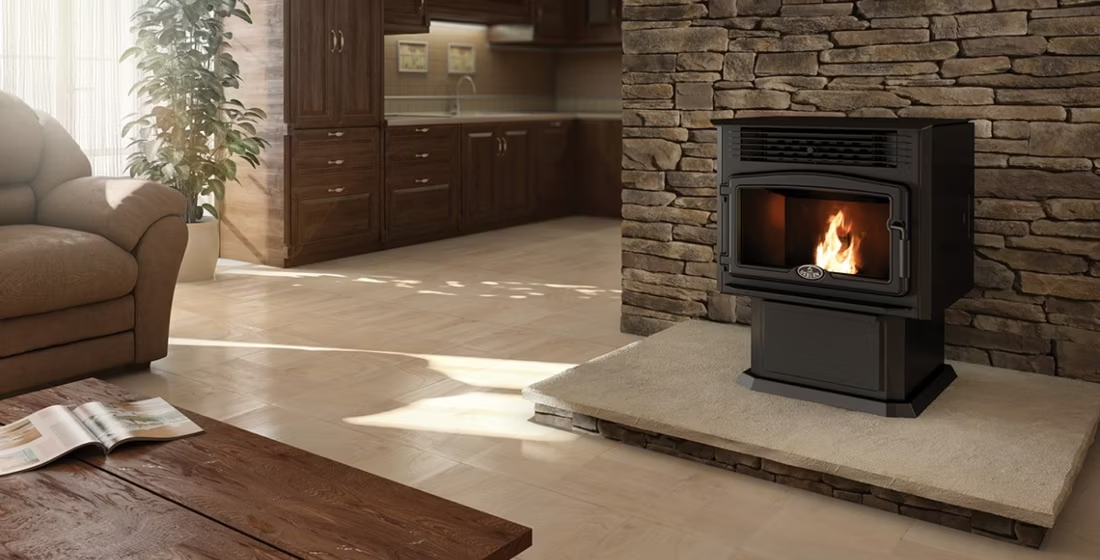
A pellet stove is a freestanding unit that sits on its own hearth pad and vents through a wall or existing chimney chase—it can go almost anywhere with the right clearances. A pellet insert is built to slide into an existing masonry fireplace opening, which is the more common route in Dakota Ridge homes that already have a wood-burning fireplace they want to convert to something more efficient and less restricted. Either way, both need an electrical outlet nearby for the auger and blower, a detail some homeowners overlook when planning the install.
Do I need a permit to install a pellet stove in Dakota Ridge?
Most likely yes—new solid-fuel appliance installations, including pellet stoves, typically require a building permit through Jefferson County, covering venting, clearances, and hearth pad requirements. Because pellet installs are less common here than gas, it's worth confirming permit requirements directly with the county before work starts, and choosing an installer who's pulled pellet stove permits in Jefferson County before, since the process can differ slightly from a gas fireplace permit.
Can I burn firewood I cut myself instead of buying pellets?
That's a wood stove question more than a pellet one, but it comes up often in this area since Jefferson County sits near Arapaho-Roosevelt National Forest, where personal-use cutting permits run about $5 to $20 per cord during the May-to-October season. Pellet stoves can't burn cut firewood—they're built specifically for compressed wood pellets fed through an auger. If flexibility between cut wood and pellets matters to you, that's a real reason to look at a wood stove instead, though wood-burning appliances face the same wildfire and air quality scrutiny in Dakota Ridge that pellet stoves do.
Pellet vs. gas—which makes more sense for a Dakota Ridge home?
For most homes here, gas wins on convenience: natural gas service from Public Service Company of Colorado is already in the ground throughout much of Dakota Ridge, gas fireplaces need no fuel storage, and they aren't caught up in the same wildfire-adjacent scrutiny as solid-fuel appliances. Pellet stoves make sense for homeowners without gas service, anyone converting an existing wood-burning fireplace who wants dramatically less ash and creosote than a wood insert, or those who specifically want fuel independence over relying entirely on a utility. If you're unsure, a local dealer can walk through both options against your home's actual gas access and hearth setup.
Why is a fireplace insert so efficient?
An insert does two things: it seals the chimney completely, so you stop losing air you already paid to heat, and it radiates warmth into the room through the firebox and glass. Most add a heat-exchange fan that pulls cool room air underneath, wraps it around the hot firebox, and pushes it back out warm. Your home is more efficient before you've even lit the first fire.
How often does a pellet stove need cleaning?
A clean pellet stove is a happy pellet stove. Plan on cleaning the burn pot about once a week when you're burning regularly—ash and clinkers gum up the air holes just like a pellet barbecue. Most pellet stove problems trace back to skipped cleaning that nobody explained up front. Some designs make it easy with a trapdoor burn pot: pull a lever and the gunk drops into the ash pan.
Does a fireplace add value to my home?
On average, a fireplace adds back to the home about the same amount you spent installing it. Add the monthly savings from heating the rooms you actually use instead of the whole house—often hundreds of dollars a year—and the value case is strong before you even count what a fire does for how your family uses the room.
Can a fireplace actually lower my heating bill?
Yes—by creating a comfort zone. A furnace heats every square foot of the house just to warm the one room you're in; a gas fireplace on low burns roughly a sixth of the gas a typical furnace does. Set the furnace around 55–60 degrees as a baseline, then heat the rooms your family actually uses. Families who heat this way commonly save $20–$60 a month.
Nearby Dealers
Hearth shops serving Dakota Ridge and the surrounding area. Every listing shows whether it is a WhyFire partner, a dealer we have verified as authorized for the brands we recommend, or a local business carrying hearth products. No manufacturer pays for placement. How we verify dealers →
Proud Souls Barbecue & Provisions
Outdoor Kitchen Dist. Inc
Aria Custom Design
Spa Brokers
Distinctive Mantel Designs
Spa Brokers
Spa Brokers Iii
Spa Brokers
Spa Brokers V
Rio Grande Co.
Thoshini LLC
Fireplace And Grill Experts - Service Only
Western Fireplace Supply
Spa Brokers (Corporate)
Pellet Brands Stocked Around Dakota Ridge
Manufacturers will point you to the nearest stocking dealer.
Find your pellet stove in Dakota Ridge.
Tell us about your home and whether pellet makes sense for it, and we'll put together a free Project Guide & Parts List—the exact parts, including the vent kit, and a trusted local dealer who can install it right.
Find Your Fireplace →