
Heat that keeps running on the days wood-burning doesn't.
Dakota Ridge sits at 5,769 feet in the Jefferson County foothills, with winter lows averaging 19°F and a heating season on par with places that need heat cranking from early fall through late spring. I'll match you with a trusted local dealer who knows the gas line work, the altitude venting adjustments, and what's actually installable on your street.
Every Project Starts From One of These Five Situations
A foothills climate with a metro-Denver air quality problem.
Dakota Ridge sits in the foothills west of Denver, inside the Denver Metro/North Front Range area that regularly deals with winter inversions trapping pollution against the mountains. On high pollution advisory days—which come up often enough through a long, cold heating season that stretches from fall deep into spring—wood-burning appliances are asked to stay cold. That's a real constraint given how much ponderosa pine, aspen, pinyon, and juniper grow in the surrounding foothills, and it's a big part of why wood heat isn't a practical primary option for most Dakota Ridge homes the way it might be in a town like Bozeman, Montana, where no equivalent advisory system exists. Gas fireplaces don't fall under those restrictions, which makes them the more dependable choice for a home that actually needs to hold heat through a cold snap.
Public Service Company of Colorado—Xcel Energy's Colorado utility—serves both electric and natural gas across Dakota Ridge, so most homes already have a gas line somewhere in the house to extend for a fireplace or insert. At 5,769 feet, elevation does affect appliance output and venting sizing; a unit rated at sea level burns differently up here, so a local installer needs to account for altitude derating as part of the job. Jefferson County's Building Division handles the permitting for both the construction side and the licensed gas-fitter work, and most dealers who work this corridor fold that coordination into the installation.
Three steps. No salesperson until you're ready.
Tell us about your project
Your zip code, your situation, and the fuel you're leaning toward—or let the answers point you to one.
See what's actually available
The brands dealers within 100 miles genuinely carry—real options, never a catalog mirage.
Get your dealer & Project Guide
A trusted local dealer, plus the free Project Guide & Parts List that names every component of the job.
Frequently Asked Questions
How much does a gas fireplace installation cost in Dakota Ridge?
Expect somewhere in the $4,500 to $10,500 range for most projects. A direct-vent insert going into an existing masonry firebox near a gas line runs toward the lower end. A new built-in unit for a remodel or addition—with fresh gas line runs, wall or roof venting, and the altitude-adjusted BTU sizing that a 5,769-foot elevation requires—lands toward the top. Homes on the edges of Jefferson County without an existing gas line nearby should budget extra for the line extension itself.
Why isn't wood heat a common option in Dakota Ridge, and does that limit my choices?
Dakota Ridge falls inside the Denver Metro/North Front Range nonattainment area, and winter inversions here trigger high pollution advisories that restrict wood-burning devices on a meaningful number of winter days each year. That's despite plenty of ponderosa pine, aspen, pinyon, and juniper in the surrounding foothills, and despite Arapaho-Roosevelt National Forest issuing cutting permits at $5-$20 per cord—the wood is available, the air quality rules just make it an unreliable primary heat source. It doesn't limit your gas options at all; if anything, it's the main reason most homeowners here choose gas or electric for a fireplace that needs to work every day of the season, not just the clear-air ones.
Do I need a permit to install a gas fireplace in Dakota Ridge?
Yes. Jefferson County's Building Division requires a building permit for the installation itself, plus a separate gas line permit tied to licensed gas-fitter work. Most hearth dealers who install in this part of the county handle both permits and the final inspection as part of the job, which matters here since unincorporated Jefferson County addresses sometimes get confused with nearby municipal jurisdictions—your installer should confirm which office your specific address falls under before pulling paperwork.
Will a gas fireplace still work during a power outage or an Xcel public safety shutoff?
Most will, and this is a bigger question in Dakota Ridge than in a lot of places, because Xcel Energy has used public safety power shutoffs in Colorado's high-wind, fire-prone foothill terrain during red flag conditions—the same wildfire smoke risk that shows up on the area's air quality concerns list. Units with intermittent pilot ignition run on AA battery backup that kicks in automatically when grid power drops. Valor units skip the battery altogether since their pilot's thermocouple generates its own current. Given the foothill wind events here, ask your dealer which ignition system is on any model you're considering before you commit.
What's the difference between a gas fireplace, insert, and stove for my Dakota Ridge home?
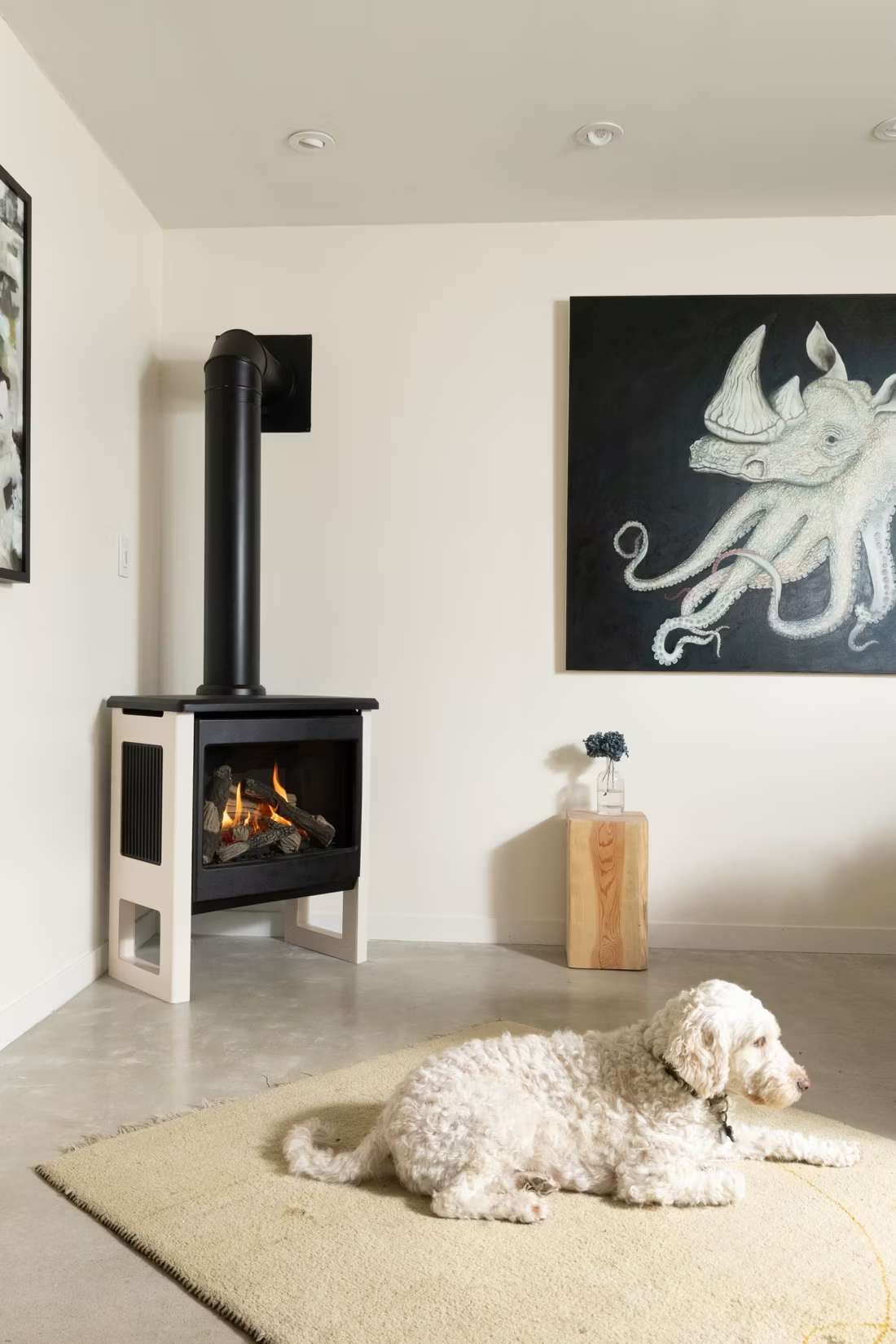
A gas fireplace is a built-in unit framed into a wall, which is common in newer construction throughout the 80465 and 80127 zip codes. A gas insert fits into an existing masonry firebox, the typical retrofit for older homes closer to the foothills that were originally built with a wood-burning fireplace before area-wide burn advisories made that impractical as a daily heat source. A gas stove is freestanding on a hearth pad, similar footprint to a wood stove but running off a gas line or propane tank instead of cordwood. For a home with an existing chimney chase, an insert is usually the least disruptive route.
Vented vs. vent-free—what should I know given local air quality?
Direct-vent units pull combustion air from outside and exhaust it back outside through sealed venting, and they're code-compliant everywhere in Colorado. Vent-free units burn into the room and are legal but carry strict room-sizing limits. Given that Dakota Ridge already deals with winter inversions and periodic wildfire smoke settling into the foothills, most local dealers steer homeowners toward direct-vent so the fireplace isn't adding indoor combustion byproducts during exactly the stagnant-air stretches when it runs the most.
How often does a gas fireplace need to be serviced at this elevation?
Plan on an annual check, ideally before the first cold snap rather than mid-winter when technicians book up fast. A tech checks the burner, pilot assembly, gas connections, and venting, and verifies the unit is still burning correctly for 5,769 feet—altitude affects the air-to-fuel mixture over time, and a fireplace that was dialed in at install can drift. Expect roughly $150-$250 for a standard visit, similar to elsewhere along the Front Range.
Is my Dakota Ridge home on natural gas, or will I need propane?
Most of Dakota Ridge falls within Public Service Company of Colorado's natural gas service area, so if your furnace or water heater already runs on gas, tapping a line for a fireplace is usually straightforward. Some properties on the outer edges of unincorporated Jefferson County, particularly larger acreage lots up in the foothills, sit outside practical gas line reach and run on propane instead. Either fuel works for the fireplace itself—your dealer will confirm what's already run to your house before quoting the project.
Gas vs. wood—which makes more sense for a Dakota Ridge home?
Wood—historically ponderosa pine, aspen, pinyon, or juniper cut under an Arapaho-Roosevelt National Forest permit for $5-$20 a cord—sounds appealing for fuel cost, but Dakota Ridge's spot inside the Denver Metro nonattainment area means wood stoves get sidelined on high pollution advisory days, which happen with real regularity during a long, cold winter heating season. Gas fireplaces keep running through those advisories without restriction and don't require woodpile storage or chimney sweeping. For a primary heat source in this specific location, gas is the more dependable choice; wood tends to make sense only as a secondary or occasional-use setup for homeowners who don't mind working around advisory days.
What's the difference between an insert and a zero-clearance fireplace?
An insert is a fireplace that slides into a pre-existing wood-burning fireplace—if you don't have one, there's nothing to insert it into. A zero-clearance fireplace is built into a framed wall, which makes it the answer for remodels and new construction. Simple test: existing masonry fireplace means insert; blank or framed wall means zero-clearance.
What do I measure to size a fireplace insert?
Four numbers tell you what fits: the front width, the front height, the back width, and the overall depth of your existing fireplace opening. Grab a tape measure, jot those down, and snap a photo of the wall—those two things do more to move your project forward than anything else you can do today.
Does a fireplace add value to my home?
On average, a fireplace adds back to the home about the same amount you spent installing it. Add the monthly savings from heating the rooms you actually use instead of the whole house—often hundreds of dollars a year—and the value case is strong before you even count what a fire does for how your family uses the room.
Can I install a fireplace myself?
If you're putting a fire in your house on purpose, it's best to work with an expert. Unless you're genuinely experienced in framing, gas line, vent pipe, and the national code on clearances to combustibles, have a professional do it—and ideally the same company that sells you the fireplace, so warranty, service, and liability all live under one roof.
Nearby Dealers
Hearth shops serving Dakota Ridge and the surrounding area. Every listing shows whether it is a WhyFire partner, a dealer we have verified as authorized for the brands we recommend, or a local business carrying hearth products. No manufacturer pays for placement. How we verify dealers →
Proud Souls Barbecue & Provisions
Outdoor Kitchen Dist. Inc
Aria Custom Design
Spa Brokers
Distinctive Mantel Designs
Spa Brokers
Spa Brokers Iii
Spa Brokers
Spa Brokers V
Rio Grande Co.
Thoshini LLC
Fireplace And Grill Experts - Service Only
Western Fireplace Supply
Spa Brokers (Corporate)
Get your free Project Guide & Parts List for a Dakota Ridge gas fireplace.
Tell me about your home and whether you're already on natural gas or propane, and I'll match you with a trusted local dealer and send a free Project Guide & Parts List with the exact vent kit and parts your project needs, sized correctly for 5,769 feet.
Find Your Fireplace →