
Keep Your Family Warm and Safe—No Matter What
Wood heat for Ordway, Sugar City, Olney Springs, and every farmhouse and ranch in between across Crowley County's open, wind-scoured plains. Find the right stove or insert, and connect with a trusted local dealer.
Every Project Starts From One of These Five Situations
Wood heat holds its own on Colorado's high plains.
Crowley County sits on the semi-arid plains of southeastern Colorado along the Arkansas River, at roughly 4,300 feet, with just over 3,200 residents spread across Ordway, Sugar City, and Olney Springs. Climate zone 5B and a long, cold winter heating season put the county's winter heating load closer to what a place like Bismarck, ND sees over a full season than to nearby Front Range towns—and the average winter low of 12°F doesn't account for the plains wind, which cuts effective warmth further on open ranch properties with little windbreak.
Most Crowley County residents source firewood from the Wet Mountains to the west, where cutting permits through the Pike-San Isabel National Forests run $5 to $20 per cord for a May-through-October season. Ponderosa pine, aspen, pinyon, and juniper are the common local species—pinyon and juniper in particular are prized for a hot, long, fragrant burn that suits woodstove heat on the coldest nights. Because wildfire smoke, not winter inversion, is the region's main air-quality concern, local burning is more likely to be restricted during dry, high-fire-risk stretches than on cold, still winter days—a different rhythm than the curtailment-day systems used in mountain-basin towns. A properly sized wood stove or insert delivers dependable, self-sufficient heat through the long plains winter and doubles as backup warmth when rural power lines go down.
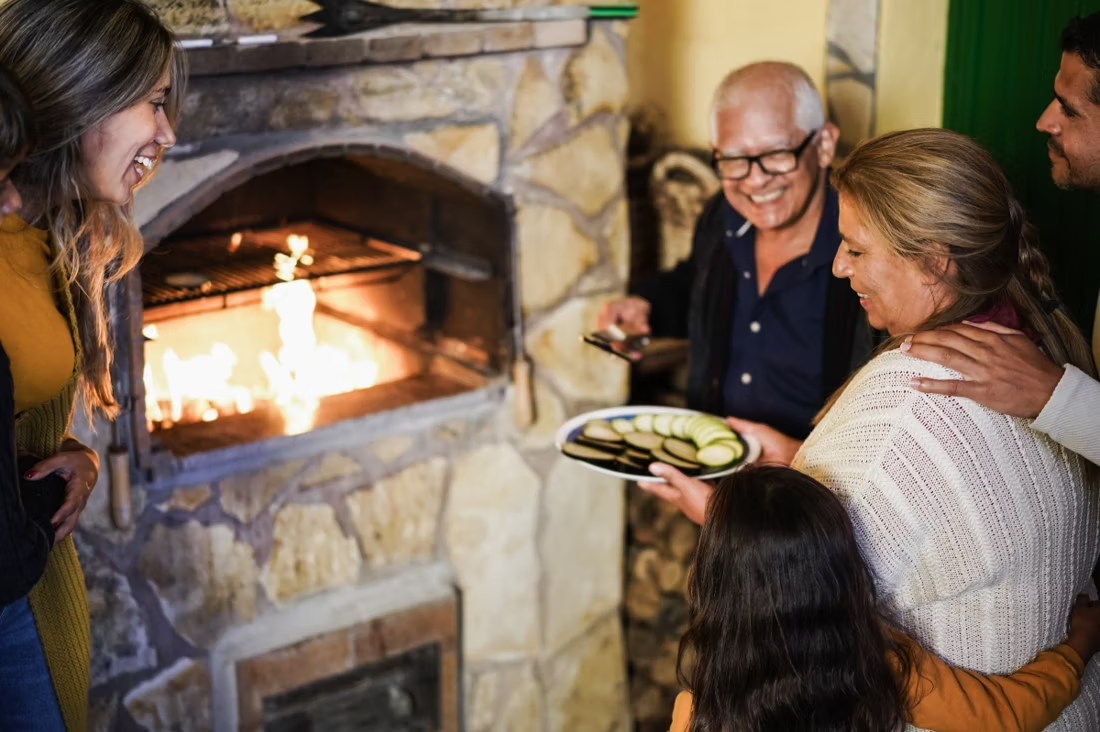
Firewood Cutting Permits Near Crowley County
Three steps. No salesperson until you're ready.
Tell us about your project
Your zip code, your situation, and the fuel you're leaning toward—or let the answers point you to one.
See what's actually available
The brands dealers within 100 miles genuinely carry—real options, never a catalog mirage.
Get your dealer & Project Guide
A trusted local dealer, plus the free Project Guide & Parts List that names every component of the job.
Frequently Asked Questions
How much does a wood stove installation cost in Crowley County?
A typical wood stove or insert installation in this part of southeastern Colorado runs roughly $3,800 to $8,500, depending on the stove model, whether new Class A chimney pipe is needed, and whether the hearth pad requires an upgrade for code clearance. Because Crowley County is small and rural, most certified installers travel in from Pueblo or Colorado Springs, so expect a modest travel charge folded into the quote—especially for homes farther out toward Sugar City or Olney Springs. Homes without an existing chimney, including many older farmhouses on the plains, run toward the higher end once full through-roof venting is added.
What size wood stove do I need for a Crowley County home?
Sizing depends on square footage, insulation, and how exposed the house is to plains wind—a factor that matters more here than in sheltered mountain valleys. As a rough guide: small stoves (up to 1,000 sq ft) suit a single room or ranch outbuilding, medium stoves (1,000–2,000 sq ft) cover most main living areas, and large stoves (2,000+ sq ft) can carry a whole well-insulated home. Older, drafty farmhouses common around Ordway and Olney Springs often need a size bump over what square footage alone would suggest, since sustained plains wind drives heat loss through walls and windows faster than still-air conditions would. A local dealer will size your specific home during an in-home visit rather than guessing from square footage alone.
Where can I find certified wood stove installers near Crowley County?
Look for NFI (National Fireplace Institute) or CSIA (Chimney Safety Institute of America) certification—these credentials indicate real training in wood-burning appliance venting and clearances, not just general contracting experience. Given Crowley County's population of just over 3,200, most certified installers are based out of Pueblo or Colorado Springs and cover the county as part of a wider service area, so expect to schedule a bit further ahead and possibly pay a small travel fee. Avoid handyman installs for wood-burning units—improper clearance-to-combustible work is the leading cause of chimney fires, and it's not a place to cut corners on a rural property where fire response time can be longer.
What's the difference between a wood stove and a wood insert?
A wood stove is a freestanding unit installed on a hearth pad, vented through a chimney, and can go almost anywhere clearances allow. A wood insert is built to slide into an existing masonry fireplace, turning a drafty open hearth into a sealed, efficient heat source using the chimney you already have. For the older homes scattered through Ordway and Sugar City that still have a masonry fireplace from an earlier era, an insert is often the more cost-effective upgrade. Newer construction or homes without an existing fireplace are usually better matched to a freestanding stove.
Do I need a permit to install a wood stove in Crowley County?
Yes—a new wood-burning appliance installation generally requires a building permit through the county, and the stove itself needs to meet current EPA emissions standards. Most local installers handle the permit paperwork as part of the job, so it's rarely something homeowners have to manage on their own. You don't need a permit to simply burn wood in a stove you already own, but during dry, high-fire-risk stretches—which is the region's primary air-quality concern rather than winter inversion—local burn restrictions can apply, so it's worth checking county fire-danger advisories before lighting up in late summer or fall.
What's the best wood stove for Crowley County's climate?
For a plains climate with a long, cold winter heating season and regular wind exposure, catalytic stoves from brands like Blaze King are worth a close look—they can hold a fire 20-plus hours on a single load, which matters when overnight temperatures sit in the low teens and wind pulls heat out of a house faster than it would in a sheltered valley. Non-catalytic models from Pacific Energy or Lopi are a solid fit for smaller homes or for supplemental heat rather than primary heat. Since Crowley County sits at a modest 4,300 feet, elevation-related combustion adjustments are minor compared to higher mountain towns—a local dealer can walk you through options once they know your square footage and how exposed the house is.
How often should my chimney be inspected and cleaned?
The CSIA recommends an annual inspection for any wood-burning appliance, and that holds for Crowley County—ideally scheduled in late summer before the May-to-October cutting season wraps up and burning season begins. Homes using wood as a primary heat source, common on rural properties around Sugar City and Olney Springs, may need a mid-season cleaning if creosote builds up faster than expected, particularly when burning pinyon or juniper, which can leave more resin buildup than ponderosa pine. Skipping inspections is the top cause of chimney fires, and on a rural property where the nearest fire response may be a longer drive, it's not a step worth deferring.
Where can I get firewood in Crowley County?
Many residents cut their own through Forest Service permits issued for the Pike-San Isabel National Forests to the west, which run $5 to $20 per cord for the May-through-October cutting season—a popular, low-cost option given the county's rural, self-sufficient character. Common species include ponderosa pine, aspen, pinyon, and juniper, with pinyon and juniper generally preferred for their long, hot burn. For homeowners who'd rather not cut their own, local sellers around Ordway and the wider Arkansas Valley advertise cordwood seasonally; prices vary with species and delivery distance, so it's worth calling around before the fall rush.
Wood stove vs. pellet stove—which is right for a Crowley County home?
Wood stoves burn cordwood, work without electricity—a real advantage on a rural property where outages can stretch longer than in town—and pair naturally with self-cut firewood from nearby Forest Service land. Pellet stoves burn compressed pellets from regional brands like Bear Mountain, Lignetics, or Forest Energy, are simpler to load and run, and produce less ash, but they need electricity for the auger and blower, so they're not a fallback during a power outage. For ranch and farm properties around Crowley County where losing power in a plains windstorm is a real possibility, wood often makes more sense as primary heat. For in-town homes near Ordway that prioritize convenience and have reliable service, pellet is a reasonable alternative. A local dealer can walk through both options for your specific property.
What's the difference between an insert and a zero-clearance fireplace?
An insert is a fireplace that slides into a pre-existing wood-burning fireplace—if you don't have one, there's nothing to insert it into. A zero-clearance fireplace is built into a framed wall, which makes it the answer for remodels and new construction. Simple test: existing masonry fireplace means insert; blank or framed wall means zero-clearance.
Why won't my new wood stove get going like my old one?
New wood stoves are 70%+ efficient, so far less heat goes up the flue—which also means less draft to get a fire established. The rule: build a genuinely hot fire for about 45 minutes before you choke it down. Skip that and you get smoke in the room, creosote in the chimney, and a fire that never takes off. Most performance complaints trace straight back to this.
What is an in-home preview and do I need one?
It's a visit where a hearth professional measures your space, confirms the model you picked actually works in your home, and walks the specs—framing, gas line, venting, finish work—before anything is ordered. Some details you just can't know until you see the house. Never make a down payment without one; it's the single most-skipped step that burns buyers.
How much should I budget for a fireplace?
For an average home—covering the fireplace, the vent pipe, and basic installation—a budget between $3,900 and $5,500 gives you a lot of options across wood, gas, and pellet. By the time you add finish work, gas line, and electrical, the average complete installation lands between $5,000 and $12,000 all-in. In a remodel or new build, a good rule is to put about 2.5% of the total project cost toward the fireplace.
Find your wood stove in Crowley County.
Tell us a bit about your home and we'll match you with a trusted local dealer and put together a free Project Guide & Parts List—the exact stove, insert, and vent kit recommended for your wood heat project in Crowley County.
Find Your Fireplace →