
Consistent pellet heat for Crowley County's wind-swept plains.
Steady, thermostat-controlled warmth for Ordway, Sugar City, Olney Springs, and the farms and ranches spread across Crowley County's Arkansas River Valley. Find the right pellet stove or insert and get matched with a trusted local dealer.
Every Project Starts From One of These Five Situations
Steady warmth without the wood pile.
Crowley County sits on the high plains of southeastern Colorado along the Arkansas River, with the county seat of Ordway and neighboring communities like Sugar City and Olney Springs spread across roughly 800 square miles of farmland and rangeland at around 4,300 feet elevation. With just over 3,200 residents and a Climate Zone 5B winter that runs cold and long—an average low of 12°F and a heating season on par with places like International Falls, MN—households here need dependable heat through a season that starts early and doesn't let go. Unlike the forested mountain counties to the west, Crowley County's tree cover is sparse; ponderosa pine, aspen, pinyon, and juniper are available through cutting permits at Pike-San Isabel National Forest, but that means a drive out of the county into the foothills rather than a woodlot down the road.
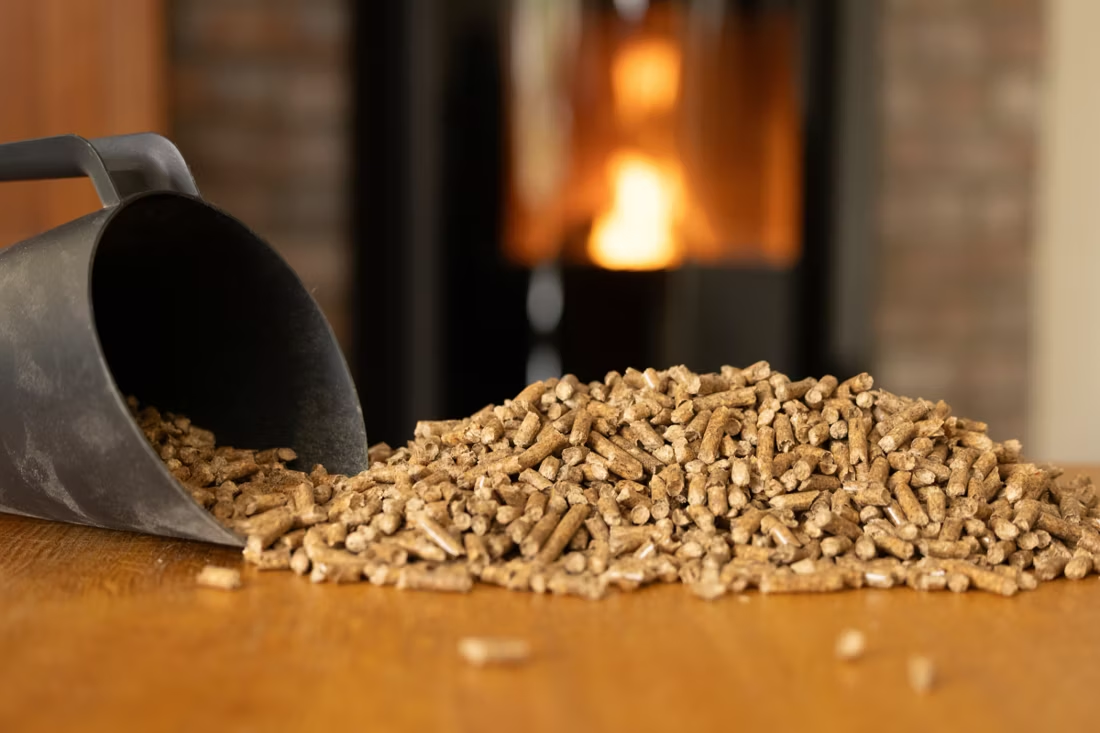
That's part of why pellet stoves have found a real foothold here. Bagged pellets from regional producers like Bear Mountain, Lignetics, and Forest Energy show up at local feed and hardware stores, and a stove with an auger and hopper doesn't ask anyone to fell, split, haul, or season cordwood on a plains property where trees are already scarce. Pellet stoves also burn far cleaner than open wood fires, which matters in a county where wildfire smoke already pushes regional air quality into rough territory during dry summer and fall stretches. The tradeoff is that pellet stoves need electricity to run the auger and blower—worth planning around, since rural stretches of Crowley County can see longer outage recovery times during winter storms than towns closer to the interstate.
Three steps. No salesperson until you're ready.
Tell us about your project
Your zip code, your situation, and the fuel you're leaning toward—or let the answers point you to one.
See what's actually available
The brands dealers within 100 miles genuinely carry—real options, never a catalog mirage.
Get your dealer & Project Guide
A trusted local dealer, plus the free Project Guide & Parts List that names every component of the job.
Frequently Asked Questions
How much does a pellet stove installation cost in Crowley County?
A typical pellet stove installation in Crowley County runs roughly $3,500 to $6,500, depending on the unit, whether venting can use an existing wall penetration, and whether a new hearth pad is needed for code clearance. Freestanding pellet stoves are generally less involved to install than wood stoves since venting requirements are simpler—most use a smaller-diameter PL vent rather than full Class A chimney pipe. Homes in Ordway, Sugar City, or out on rural county roads should expect similar equipment costs, though remote properties may see a modest travel charge from installers based out of Pueblo or Colorado Springs.
Is a pellet stove a good fit for Crowley County, or is wood more common here?
Both are used locally, but pellet stoves make a lot of sense given the county's geography. Crowley County's plains landscape doesn't have the dense forest cover of the mountain counties—usable firewood species like ponderosa pine, aspen, pinyon, and juniper are cut under permit through Pike-San Isabel National Forest, which means a drive up into the Wet Mountains or Sangre de Cristo foothills rather than a source close to home. Pellets, by contrast, are delivered by the bag through regional suppliers and stored in a garage or shed. Wood still has appeal for off-grid backup heat since it doesn't need electricity, but for day-to-day convenience on a working farm or ranch schedule, pellet stoves win out for a lot of Crowley County households.
What size pellet stove do I need for my home?
Sizing depends on square footage, ceiling height, insulation, and how exposed the house is to wind. Crowley County's open plains setting means constant exposure with few windbreaks, so older farmhouses and homes on unshielded county roads often need a stove sized a notch above what the square footage alone would suggest—infiltration losses from wind pressure add up. As a general guide, small units (up to 1,000 sq ft) suit a single room or manufactured home addition, medium units (1,000–2,000 sq ft) cover most main living areas, and larger units (2,000+ sq ft) can serve as primary heat for a well-insulated whole house. A local dealer can size your specific home with a quick in-person or phone consultation.
Where can I buy pellets locally in Crowley County?
Bagged pellets from brands like Bear Mountain, Lignetics, and Forest Energy are typically stocked at feed stores and hardware suppliers in and around Ordway, with additional supply available from larger retailers in Pueblo, about 35 miles west. Given the county's rural stretch and the distance to bigger supply hubs, it's worth ordering a season's worth of pellets—usually 2 to 3 tons for an average home—before the first cold snap rather than restocking bag by bag through the winter. Pricing fluctuates with fuel and transport costs, so check with a local dealer for current per-ton rates.
Do I need a permit to install a pellet stove in Crowley County?
Yes—new pellet stove installations typically require a building permit through the Crowley County Building Department for homes outside town limits, or through the relevant town office for properties inside Ordway, Sugar City, or Olney Springs. Most hearth dealers who sell and install pellet stoves handle the permitting as part of the job, so it's rarely something a homeowner has to manage directly. Unlike wood-burning stoves, pellet units are exempt from most air quality curtailment concerns since they burn far more completely, which simplifies compliance in a county already dealing with wildfire smoke advisories during dry months.
What's the best pellet stove for Crowley County's climate and wind exposure?
Look for a stove with a strong convection blower and a decent-sized hopper—40 to 60 pounds—so it can run longer between reloads during the coldest stretches, when overnight lows average 12°F and wind adds real chill to exposed plains homes. Higher-output units in the 40,000 to 50,000 BTU range suit larger or older, less-insulated farmhouses common in the county, while smaller units work fine for tighter, newer construction. A local dealer familiar with the plains wind exposure here can match hopper size and BTU output to your specific home rather than a generic square-footage chart.
What happens to my pellet stove during a power outage?
Pellet stoves rely on electricity to run the auger that feeds fuel and the blower that circulates heat, so a stove goes cold without power unless you have backup. In a rural county like Crowley, where storm-related outages on county lines can take longer to restore than in town, many homeowners pair a pellet stove with a small battery backup unit or a generator sized to run the stove's low-draw components. If uninterrupted backup heat during outages is a priority for your household, it's worth discussing wood-burning options with your dealer as a supplemental system, since a wood stove will run without any electricity at all.
How often does a pellet stove need to be cleaned and serviced?
Plan on a full cleaning and inspection once a year, ideally in late summer before the heating season starts, plus routine ash pan emptying and glass cleaning every few days during regular winter use. The burn pot and exhaust venting should be checked for creosote and ash buildup, since a clogged burn pot is the most common cause of poor pellet stove performance. Local hearth dealers who service pellet equipment in the region typically handle this as an annual maintenance visit, which is worth scheduling before the cold sets in given how far some Crowley County properties sit from the nearest service provider.
Pellet stove vs. wood stove—which makes more sense for my Crowley County home?
Wood stoves work without electricity, which matters for genuine off-grid backup heat, and pair with Forest Service cutting permits at $5 to $20 per cord if you're willing to make the drive into Pike-San Isabel National Forest. Pellet stoves are more convenient for day-to-day use—load the hopper, set the thermostat, and go—and they burn cleaner, which helps during the wildfire smoke season that already stresses air quality on the plains. For most Crowley County households without easy access to their own woodlot, pellet is the lower-effort choice for daily heat; a wood stove or fireplace elsewhere in the home can serve as an outage-proof backup if that's a priority.
Why is a fireplace insert so efficient?
An insert does two things: it seals the chimney completely, so you stop losing air you already paid to heat, and it radiates warmth into the room through the firebox and glass. Most add a heat-exchange fan that pulls cool room air underneath, wraps it around the hot firebox, and pushes it back out warm. Your home is more efficient before you've even lit the first fire.
What's the difference between an insert and a zero-clearance fireplace?
An insert is a fireplace that slides into a pre-existing wood-burning fireplace—if you don't have one, there's nothing to insert it into. A zero-clearance fireplace is built into a framed wall, which makes it the answer for remodels and new construction. Simple test: existing masonry fireplace means insert; blank or framed wall means zero-clearance.
What is an in-home preview and do I need one?
It's a visit where a hearth professional measures your space, confirms the model you picked actually works in your home, and walks the specs—framing, gas line, venting, finish work—before anything is ordered. Some details you just can't know until you see the house. Never make a down payment without one; it's the single most-skipped step that burns buyers.
Can a fireplace actually lower my heating bill?
Yes—by creating a comfort zone. A furnace heats every square foot of the house just to warm the one room you're in; a gas fireplace on low burns roughly a sixth of the gas a typical furnace does. Set the furnace around 55–60 degrees as a baseline, then heat the rooms your family actually uses. Families who heat this way commonly save $20–$60 a month.
Pellet Brands Stocked Around Crowley County
Manufacturers will point you to the nearest stocking dealer.
Find your pellet stove in Crowley County.
Tell us a bit about your home and we'll match you with the right pellet stove or insert, plus a free Project Guide & Parts List—including the vent kit—and a trusted local dealer to install it.
Find Your Fireplace →