
Warmth on demand, wired right, for Crowley County.
No chimney, no venting, no wood to split—just clean heat for the ranch homes and manufactured housing spread across Ordway, Sugar City, and Olney Springs. Find the right unit and connect with a trusted local dealer.
Every Project Starts From One of These Five Situations
Convenient heat for the county's spread-out homes.
Crowley County sits along the Arkansas River valley in southeastern Colorado, roughly 4,300 feet up on the plains, with just over 3,200 residents spread thin across Ordway, Sugar City, Olney Springs, and a lot of open agricultural land in between. Winters here average around 12°F on the cold nights, with a heating season on par with other high-plains towns—enough cold to matter, but not the kind of extreme mountain winter you'd find higher in the Sangre de Cristos. Wood heat has real roots here too, with ponderosa pine, aspen, pinyon, and juniper available through Pike-San Isabel National Forest cutting permits, but a lot of the county's housing stock—manufactured homes, older ranch houses, rentals—is better suited to something that doesn't require a chimney or a masonry hearth.
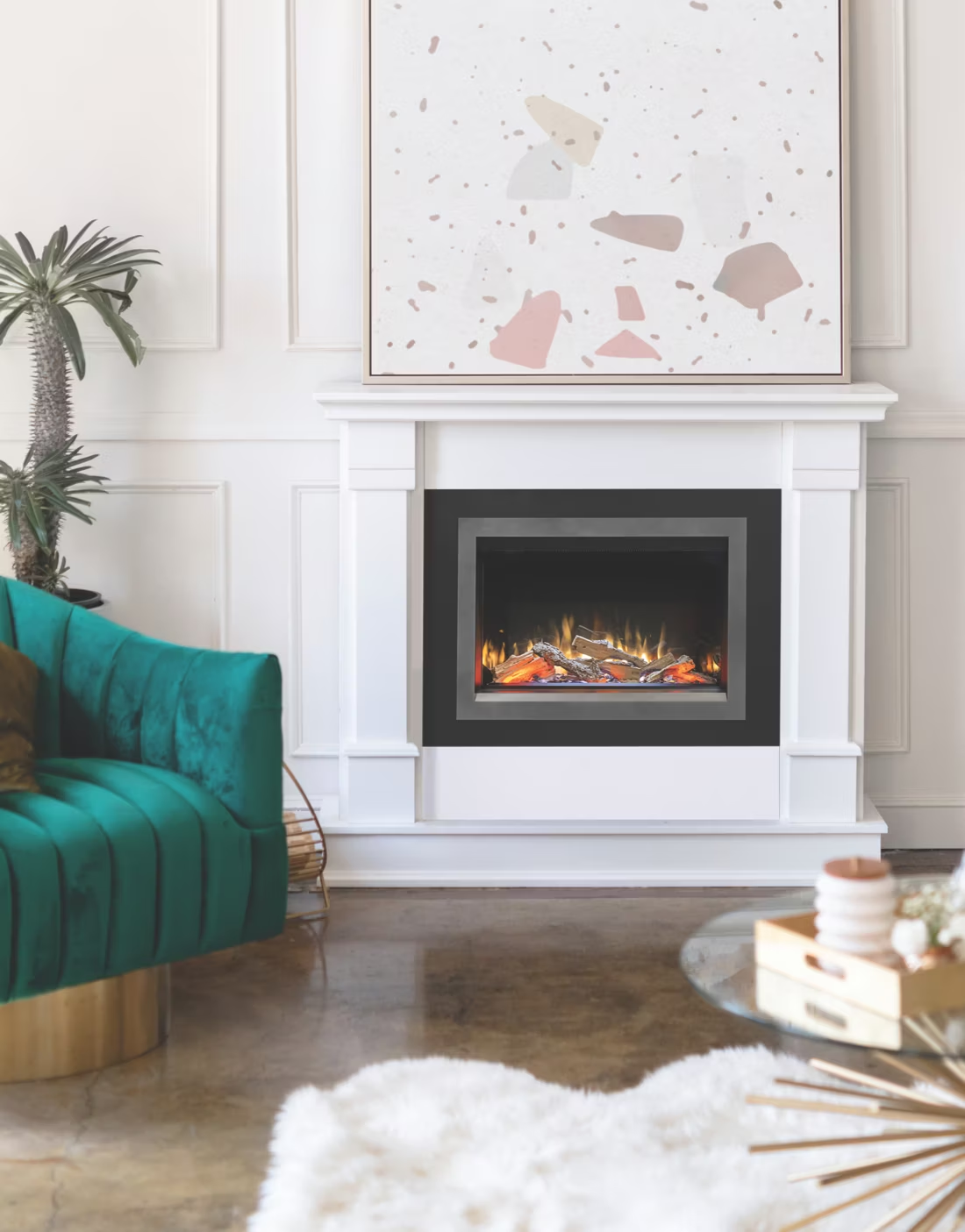
That's where electric fireplaces do real work in Crowley County. A wall-mount or built-in electric unit installs without venting, without a gas line, and often without any permit at all beyond a standard electrical inspection if it's hardwired rather than plugged in. For a county this spread out—where the nearest big hearth showroom is likely a drive into Pueblo or La Junta—that simplicity matters. The tradeoff worth understanding up front: electric heat depends on the grid, and rural line outages during winter storms do happen here. Most Crowley County homeowners treat electric as supplemental zone heat for a bedroom, sunroom, or living area rather than sole backup during an outage—and pair it with a wood stove or propane furnace where true off-grid heat matters.
Three steps. No salesperson until you're ready.
Tell us about your project
Your zip code, your situation, and the fuel you're leaning toward—or let the answers point you to one.
See what's actually available
The brands dealers within 100 miles genuinely carry—real options, never a catalog mirage.
Get your dealer & Project Guide
A trusted local dealer, plus the free Project Guide & Parts List that names every component of the job.
Frequently Asked Questions
How much does an electric fireplace installation cost in Crowley County?
Plug-in electric fireplaces and stoves are the cheapest path—many units simply roll into place and plug into a standard outlet, with no permit or electrician needed. Built-in or wall-mounted units that require a dedicated 120V or 240V circuit run higher once you factor in an electrician's time to run new wiring, especially in older Ordway or Sugar City homes with dated panels. Recessed or linear electric fireplaces set into a wall or custom surround land at the top end once framing and trim carpentry are included. A local dealer can walk you through where your specific home and unit fall on that range.
Can an electric fireplace be my primary heat source in Crowley County?
Generally not on its own. Most electric fireplaces top out around 5,000–10,000 BTUs—enough to comfortably heat a single room or open living area, but not enough to carry a whole house through a Crowley County winter with its long, steady stretch of cold months. Most homeowners here run electric units as zone heat—warming the room they're actually in so the propane furnace or forced-air system can run less—rather than as the sole heat source for the home. If you're looking to heat a larger manufactured home or an uninsulated older farmhouse as the primary source, a wood stove or propane appliance is usually the better fit.
Do I need a permit to install an electric fireplace in Crowley County?
It depends on the installation type. A freestanding, plug-in electric stove or fireplace that uses an existing standard outlet typically doesn't require a permit—there's no gas line, no venting, and no structural change. A hardwired, built-in unit that needs a new dedicated circuit does require an electrical permit, which goes through the Crowley County Building Department for anything outside Ordway's town limits. Local installers who handle electric fireplace work regularly can tell you within a few minutes which category your project falls into.
Will my electric fireplace still work during a power outage?
No—and this is the honest tradeoff of electric heat in a rural county like Crowley. Southeast Colorado Power Association's rural lines can go down during winter storms on the plains, sometimes for hours at a stretch, and an electric fireplace is completely dependent on grid power to run its fan and heating element. If reliable heat during an outage matters to your household—especially out on more isolated stretches near Olney Springs—pair your electric unit with a wood stove using local ponderosa pine or aspen, or keep a propane heater on hand as backup.
What's the difference between an electric insert, a wall-mount unit, and an electric stove?
An electric insert drops into an existing masonry fireplace opening—a good option if you've got an old wood-burning fireplace in an Ordway-area home you want to convert to something maintenance-free. A wall-mount or linear unit hangs on or recesses into a wall like a piece of art, popular in newer builds or remodels where floor space is tight. A freestanding electric stove sits on the floor like a traditional wood stove and can go virtually anywhere with an outlet nearby—often the simplest option for manufactured homes, which make up a meaningful share of Crowley County's housing.
What size electric fireplace do I need for a Crowley County home?
For a single bedroom or small living room, a compact 1,000–1,500 watt unit is usually enough. For an open-concept living area in a typical Crowley County ranch home, step up to a 1,500–5,000 BTU unit with a built-in thermostat so it cycles rather than runs constantly. Manufactured homes with lower ceilings and tighter square footage often do fine with a mid-size wall-mount unit rather than a large linear fireplace built for open, high-ceilinged spaces. A local dealer can size the unit to your actual room rather than a rule of thumb.
How much maintenance does an electric fireplace need?
Very little compared to wood or gas. There's no chimney to sweep, no gas line to inspect, and no creosote to worry about. Periodically dust or vacuum the vents to keep airflow clear, and wipe down the flame-effect screen if it's a model with a projection or LED display. Most units last well over a decade with essentially no service calls—a real advantage for Crowley County homeowners who don't want to schedule an annual chimney sweep out to a rural property.
How much does it cost to run an electric fireplace in Crowley County?
Running cost depends on wattage and how many hours a day you run it. A typical 1,500-watt electric fireplace run for several hours an evening adds a modest amount to a monthly electric bill through Southeast Colorado Power Association—generally far less than running a whole-home furnace to heat the same space. Because most owners use electric fireplaces for zone heating rather than round-the-clock whole-house heat, the cost stays manageable even through a full Crowley County winter.
Electric vs. wood—which makes more sense for my Crowley County home?
Wood offers real primary-heat capability, works without electricity during outages, and taps into an established local tradition—ponderosa pine, aspen, pinyon, and juniper are all available through Pike-San Isabel National Forest cutting permits at $5 to $20 per cord in season. Electric offers instant on-off convenience, zero venting or chimney maintenance, and an easy fit for manufactured homes and rentals where a masonry chimney isn't practical. Many Crowley County households end up with both: wood for genuine cold-weather backup and ambiance, electric for everyday convenience in a bedroom or living room.
Can I put a TV above my fireplace?
Yes—with an asterisk. Fireplaces are hot and TVs don't like heat. Either put a mantel between them to deflect rising warmth, or choose a fireplace with heat-management technology that creates a cool zone on the wall above—the wall stays around 125 degrees, barely warm, while the room still gets full heat. If you like clean lines and don't want a mantel, heat management is the answer.
Do electric fireplaces actually produce heat?
Yes—most put out around 4,800–5,000 BTUs from a standard outlet, which comfortably warms a bedroom, office, or den as a comfort-zone heater. What they won't do is carry a whole house the way wood, gas, or pellet can. Think of electric as ambiance-first with honest supplemental heat: flames on with no heat in July, flames plus warmth in January.
Can I install a fireplace myself?
If you're putting a fire in your house on purpose, it's best to work with an expert. Unless you're genuinely experienced in framing, gas line, vent pipe, and the national code on clearances to combustibles, have a professional do it—and ideally the same company that sells you the fireplace, so warranty, service, and liability all live under one roof.
What is an in-home preview and do I need one?
It's a visit where a hearth professional measures your space, confirms the model you picked actually works in your home, and walks the specs—framing, gas line, venting, finish work—before anything is ordered. Some details you just can't know until you see the house. Never make a down payment without one; it's the single most-skipped step that burns buyers.
Find your electric fireplace in Crowley County.
Tell us a bit about your home and we'll match you with the right electric fireplace, insert, or stove—and connect you with a trusted local dealer who can hand you a free Project Guide & Parts List.
Find Your Fireplace →