
Keep Your Family Warm and Safe—No Matter What
Real radiant heat for the foothill winters west of Denver. Find the right wood stove or insert for your Applewood home, and connect with a trusted local dealer.
Every Project Starts From One of These Five Situations
Wood heat has deep roots in these Front Range foothills.
Applewood sits at 5,801 feet in unincorporated Jefferson County, tucked into the foothills where the plains meet the mountains west of Denver. Winters here bring an average low of 21°F and a heating season about as demanding as a long Rocky Mountain winter—a climate profile not far off from Helena, Montana, where wood heat is also standard practice rather than novelty. Applewood is best known for its mid-century ranch homes, including the Krisana Park neighborhood's distinctive 1950s and '60s builds, many of which still have their original masonry fireplace as the architectural centerpiece of the living room.
The Arapaho-Roosevelt National Forests lie within reach for firewood cutting, and permits run $5 to $20 per cord during the May-to-October season—locals commonly bring home ponderosa pine, aspen, pinyon, and juniper. The tradeoff is air quality: the Denver metro area is subject to winter inversion events that trap smoke low in the valley, and the Regional Air Quality Council issues voluntary burn advisories on the worst days. Combined with periodic wildfire smoke drifting down from the foothills and mountains in late summer, it's worth choosing an EPA-certified stove that burns clean even when conditions call for restraint.
Firewood Cutting Permits Near Applewood
Three steps. No salesperson until you're ready.
Tell us about your project
Your zip code, your situation, and the fuel you're leaning toward—or let the answers point you to one.
See what's actually available
The brands dealers within 100 miles genuinely carry—real options, never a catalog mirage.
Get your dealer & Project Guide
A trusted local dealer, plus the free Project Guide & Parts List that names every component of the job.
Frequently Asked Questions
How much does a wood stove installation cost in Applewood?
In the Denver-metro and Jefferson County market, a typical wood stove or insert installation runs roughly $4,500 to $9,500, depending on the unit, whether you're installing into an existing masonry fireplace or starting from scratch, and how much chimney or hearth pad work is required. Applewood's mid-century ranch homes—including the Krisana Park stock—often already have a masonry fireplace and chase, which usually keeps costs toward the lower end since an insert can use the existing flue. Homes without an existing chimney, or new construction needing full Class A pipe run through the roof, land closer to the top of that range.
What size wood stove or insert do I need for my home?
Sizing depends on square footage, ceiling height, and how open your floor plan is—a real consideration in Applewood, where many of the original mid-century ranch homes have low ceilings and compact, sectioned rooms compared to newer open-concept builds. As a rough guide: stoves rated for up to 1,000 sq ft suit a single room or den, 1,000–2,000 sq ft covers most main living areas, and 2,000+ sq ft units can carry a whole well-insulated home. A stove that's too large for a smaller ranch layout will run you out of the room; local retailers will size your specific floor plan during a free in-home consultation.
Where can I find certified wood stove installers near me?
Look for installers carrying NFI (National Fireplace Institute) certification or CSIA (Chimney Safety Institute of America) credentials—both signal professional training specific to wood-burning appliances, not general contracting. In the Jefferson County area, most hearth retailers employ their own certified installers rather than subcontracting, which keeps warranty coverage and code sign-off with one accountable party. Given Applewood's mix of original masonry fireplaces from the 1950s and '60s, an installer experienced with older chimney and flue conditions is especially valuable—some of those original chases need a liner assessment before an insert goes in.
What's the difference between a wood stove and a wood insert?
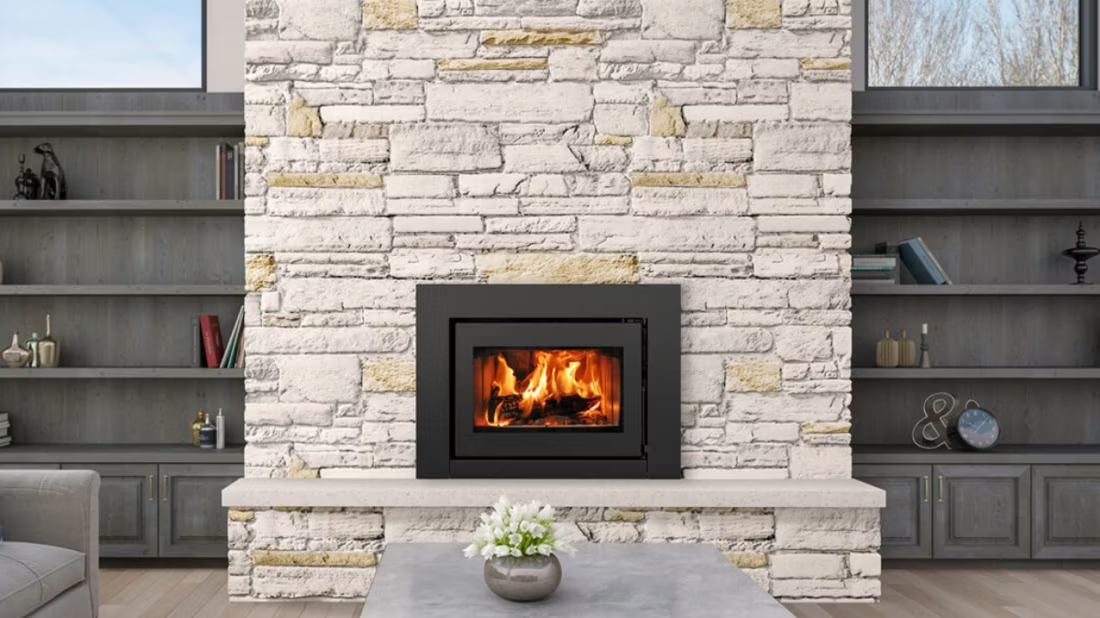
A wood stove is a freestanding unit on its own hearth pad, vented through new or existing chimney pipe—it can go almost anywhere with the right clearances. A wood insert is built to slide into an existing masonry fireplace opening, converting an old, inefficient open hearth into a sealed, high-output heater that still uses the original chimney (typically with a stainless liner). Given how many Applewood homes already have a masonry fireplace as a focal point of the living room, an insert is often the natural fit—it keeps the original look while multiplying the heat output. Homes without an existing fireplace opening are usually better served by a freestanding stove.
Do I need a permit to install a wood stove in Applewood?
Yes—new wood-burning installations in unincorporated Jefferson County require a building permit through the county's Planning and Zoning building division, and the appliance itself needs to meet current EPA emissions standards. Most local installers fold the permitting into the install so you don't have to file it yourself. Beyond the permit, keep an eye on air quality advisories: the Regional Air Quality Council issues voluntary burn requests on high-pollution winter days when inversions settle over the Denver metro area, and Jefferson County occasionally posts fire-restriction notices during dry, high wildfire-risk stretches—both worth checking before lighting up on a marginal day.
What's the best wood stove for Applewood's climate and elevation?
At 5,801 feet, thinner air can affect combustion slightly, so it's worth asking your retailer whether a given model's air intake is calibrated for elevation—most quality stoves handle it fine, but it's a legitimate question at this altitude. For sustained cold, catalytic stoves from Blaze King are built for long, low, steady burns—useful on nights when temperatures drop into the low 20s or below. For homes wanting strong heat without the catalytic maintenance, non-catalytic models from Lopi or Pacific Energy are common choices among Front Range retailers and burn ponderosa pine and aspen cleanly.
How often should my chimney be inspected and cleaned?
CSIA recommends an annual inspection for any wood-burning appliance, and it matters more in Applewood's older masonry-fireplace homes, where original chimneys from the 1950s and '60s may have liners that have never been evaluated. Plan on a full sweep and inspection each late summer before burning season starts, especially if you're a heavy user burning several cords of ponderosa pine or aspen through the winter. A Level 2 inspection with a camera scope is worth requesting the first time you burn in an older, unassessed chimney.
Where can I get firewood in the Applewood area?
Self-cut permits are available through the Arapaho-Roosevelt National Forests for $5 to $20 per cord during the May-to-October cutting season, and common species in the area include ponderosa pine, aspen, pinyon, and juniper—pinyon and juniper burn hot and are prized for kindling and mixed loads. For homeowners who'd rather not cut their own, several Front Range firewood suppliers deliver seasoned cordwood to Jefferson County addresses, typically priced by the cord and higher for kiln-dried or split-and-seasoned loads ready to burn immediately.
Wood stove vs. pellet stove—which is right for my Applewood home?
Wood stoves burn cordwood, work without electricity—a real advantage during a foothills power outage from a spring snowstorm—and pair naturally with the low-cost Arapaho-Roosevelt cutting permits available nearby. Pellet stoves burn compressed pellets from regional brands like Bear Mountain, Lignetics, and Forest Energy, are easier to load and run, and produce less ash, but they need electricity for the auger and blower—worth weighing against Xcel Energy's residential rate near 15 cents per kWh if you're comparing long-term running costs. For Applewood homes where winter storm outages are a real concern, wood tends to be the more resilient backup; for households prioritizing hands-off convenience, pellet is often the easier daily fit.
What's the difference between an insert and a zero-clearance fireplace?
An insert is a fireplace that slides into a pre-existing wood-burning fireplace—if you don't have one, there's nothing to insert it into. A zero-clearance fireplace is built into a framed wall, which makes it the answer for remodels and new construction. Simple test: existing masonry fireplace means insert; blank or framed wall means zero-clearance.
Why won't my new wood stove get going like my old one?
New wood stoves are 70%+ efficient, so far less heat goes up the flue—which also means less draft to get a fire established. The rule: build a genuinely hot fire for about 45 minutes before you choke it down. Skip that and you get smoke in the room, creosote in the chimney, and a fire that never takes off. Most performance complaints trace straight back to this.
What is an in-home preview and do I need one?
It's a visit where a hearth professional measures your space, confirms the model you picked actually works in your home, and walks the specs—framing, gas line, venting, finish work—before anything is ordered. Some details you just can't know until you see the house. Never make a down payment without one; it's the single most-skipped step that burns buyers.
How much should I budget for a fireplace?
For an average home—covering the fireplace, the vent pipe, and basic installation—a budget between $3,900 and $5,500 gives you a lot of options across wood, gas, and pellet. By the time you add finish work, gas line, and electrical, the average complete installation lands between $5,000 and $12,000 all-in. In a remodel or new build, a good rule is to put about 2.5% of the total project cost toward the fireplace.
Nearby Dealers
Hearth shops serving Applewood and the surrounding area. Every listing shows whether it is a WhyFire partner, a dealer we have verified as authorized for the brands we recommend, or a local business carrying hearth products. No manufacturer pays for placement. How we verify dealers →
Spa Brokers
Spa Brokers
Aria Custom Design
Distinctive Mantel Designs
Outdoor Kitchen Dist. Inc
Proud Souls Barbecue & Provisions
Rio Grande Co.
Fireplace And Grill Experts - Service Only
Spa Brokers V
Spa Brokers
Find your wood fireplace in Applewood, CO.
Tell us about your home and we'll match you with a trusted local dealer and a free Project Guide & Parts List—the exact parts, vent kit, and plan for your wood stove or insert project in Applewood.
Find Your Fireplace →