
Clean-Burning Heat for the Front Range Foothills.
Applewood sits at 5,800 feet in the foothills west of Denver, where winter inversions trap smoke against the hillsides. Pellet heat keeps burning when wood restrictions kick in. Find the right stove or insert and connect with a trusted local dealer.
Every Project Starts From One of These Five Situations
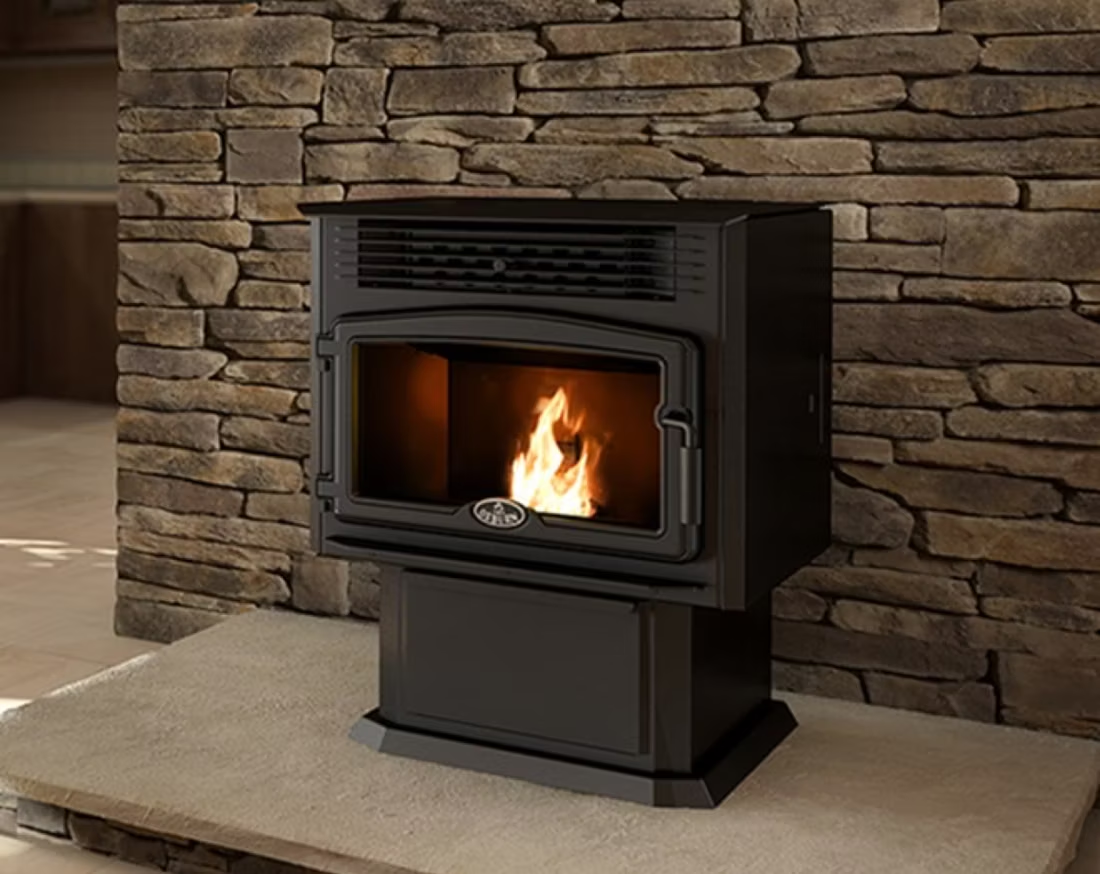
Efficient heat that keeps burning on inversion days.
Applewood is an unincorporated pocket of Jefferson County tucked against the foothills west of Denver, at roughly 5,800 feet elevation. Winters here average 21°F lows and bring a winter heating load in the same neighborhood as Helena, Montana. Many of the area's ranch-style homes date to the 1950s and 60s, often with an existing masonry fireplace that never quite kept up with a Colorado winter.
The Denver metro area regularly issues Action Day burn advisories during winter temperature inversions, when smoke and particulates get trapped against the foothills instead of dispersing. Wood-burning devices are frequently restricted on those days, but EPA-certified pellet stoves are typically exempt—which makes pellet a genuinely practical choice for a region that cares about air quality but still wants dependable heat when a storm rolls off the Divide. Regional pellet brands including Bear Mountain, Lignetics, and Forest Energy are all sold through Front Range dealers, so fuel supply isn't an issue.
Three steps. No salesperson until you're ready.
Tell us about your project
Your zip code, your situation, and the fuel you're leaning toward—or let the answers point you to one.
See what's actually available
The brands dealers within 100 miles genuinely carry—real options, never a catalog mirage.
Get your dealer & Project Guide
A trusted local dealer, plus the free Project Guide & Parts List that names every component of the job.
Frequently Asked Questions
How much does a pellet stove installation cost in Applewood?
Most pellet stove and insert installations in the Applewood area run roughly $3,500 to $6,500, depending on the unit, whether it's a freestanding stove or an insert going into an existing masonry fireplace, and whether new venting has to be run through a wall or roof. Inserts using an existing chimney with a liner tend to land on the lower end; freestanding stoves in homes without an existing fireplace or chimney run higher once venting and a hearth pad are factored in. A local dealer will give you a firm number after seeing your specific fireplace or wall layout.
Do I need a permit to install a pellet stove in Applewood?
Yes—new solid-fuel appliance installations in unincorporated Jefferson County require a building permit through the Jefferson County Building Division, and the venting has to meet manufacturer and code clearance specs. Most local hearth retailers handle the permit paperwork as part of the installation. If your property is part of an HOA (common in several Applewood subdivisions), it's also worth checking covenant restrictions on exterior venting before you commit to a unit.
Will my pellet stove work during a Denver metro Action Day or burn ban?
In most cases, yes. Denver metro winter inversion events trigger Action Day advisories that restrict uncertified wood-burning devices, but EPA-certified pellet stoves are generally exempt from those restrictions because they burn cleaner and more consistently than open wood fires or older wood stoves. That exemption is one of the main reasons pellet appliances have gained ground in foothills communities like Applewood, where inversions are a regular winter occurrence. Confirm exemption status with your dealer for the specific model you're considering, since rules can shift.
What's the difference between a pellet stove and a pellet insert?
A pellet stove is a freestanding appliance that sits on a hearth pad and vents through a wall or existing chimney chase—it can go almost anywhere with the right clearances. A pellet insert is built to slide into an existing masonry fireplace opening, using a vent liner run up the old chimney. For Applewood's older ranch homes with an existing wood-burning fireplace that rarely gets used, an insert is often the simpler retrofit since it reuses the chimney you already have. Homes without an existing fireplace, or newer construction, are usually better suited to a freestanding stove.
What size pellet stove do I need for my Applewood home?
Sizing depends on square footage, ceiling height, and how open your floor plan is. As a rough guide for this climate: smaller units (under 1,000 sq ft) suit a single room or finished basement, mid-size units (1,000 to 1,800 sq ft) cover most main living areas in Applewood's typical ranch and split-level homes, and larger units can handle an open-concept main floor as primary heat. At 5,800 feet elevation, combustion air intake and altitude-rated auger settings matter more than in lower-elevation cities, so it's worth confirming with a dealer that any model you're considering is rated for high-altitude operation.
What's the best pellet stove for this elevation and climate?
Look for models with a high-altitude kit or factory settings rated for elevations above 5,000 feet—thinner air affects combustion efficiency and auger feed rates, and not every stove on a big-box shelf accounts for that. Brands like Harman and Quadra-Fire offer altitude-specific configurations that local Front Range dealers are familiar with installing correctly. Pair that with pellets from a regional supplier like Bear Mountain or Lignetics, both of which are formulated and distributed for Rocky Mountain conditions, and you avoid the ash and clinker issues that come from mismatched fuel.
Where can I buy pellet fuel near Applewood?
Bear Mountain, Lignetics, and Forest Energy are the three regional pellet brands most commonly stocked by Front Range hearth retailers and farm supply stores serving the Applewood and Jefferson County area. Bagged pellets typically run in the $250 to $320 per ton range depending on brand, softwood versus hardwood blend, and whether you buy a single ton or a full-season pallet order. Buying a season's supply (roughly 2 to 3 tons for an average home) before cold weather sets in usually locks in the better per-ton price.
Pellet stove vs. wood stove—which makes more sense in Applewood?
Wood is the lower-cost fuel if you're willing to cut your own—Arapaho-Roosevelt National Forest issues personal-use cutting permits from May through October for $5 to $20 per cord, and ponderosa pine, aspen, pinyon, and juniper are all available locally. Wood stoves also run without electricity, which matters during a Front Range winter storm outage. Pellet stoves need power to run the auger and blower, but they burn cleaner, are exempt from most winter Action Day restrictions, and don't require splitting or stacking cordwood. For Applewood homes without easy wood storage or access to National Forest cutting units, pellet is usually the more practical everyday choice; for those with the space and time to source their own wood, a wood stove can be the more economical option.
How often does a pellet stove need to be serviced?
Plan on a full cleaning and inspection once a year, ideally before the fall burn season starts, along with routine ash removal and a burn-pot cleaning every one to two weeks during heavy winter use. Because pellet stoves rely on an auger motor, igniter, and combustion blower, a certified technician should also check those mechanical components annually—this is a different maintenance rhythm than a masonry wood chimney, but skipping it leads to the same result: poor burns, clinker buildup, and reduced efficiency. Local dealers that sell pellet appliances typically offer this service directly.
Why is my open fireplace making my house colder?
Open fireplaces suck—literally. As the fire burns, it consumes air your furnace already paid to heat and pulls it out through the chimney, so the house is actually colder after the fire goes out than before you lit it. An insert fixes this: it seals the chimney, puts fixed glass across the front, and turns that hole in your house into a real heat source.
How often does a pellet stove need cleaning?
A clean pellet stove is a happy pellet stove. Plan on cleaning the burn pot about once a week when you're burning regularly—ash and clinkers gum up the air holes just like a pellet barbecue. Most pellet stove problems trace back to skipped cleaning that nobody explained up front. Some designs make it easy with a trapdoor burn pot: pull a lever and the gunk drops into the ash pan.
How much should I budget for a fireplace?
For an average home—covering the fireplace, the vent pipe, and basic installation—a budget between $3,900 and $5,500 gives you a lot of options across wood, gas, and pellet. By the time you add finish work, gas line, and electrical, the average complete installation lands between $5,000 and $12,000 all-in. In a remodel or new build, a good rule is to put about 2.5% of the total project cost toward the fireplace.
Can a fireplace actually lower my heating bill?
Yes—by creating a comfort zone. A furnace heats every square foot of the house just to warm the one room you're in; a gas fireplace on low burns roughly a sixth of the gas a typical furnace does. Set the furnace around 55–60 degrees as a baseline, then heat the rooms your family actually uses. Families who heat this way commonly save $20–$60 a month.
Nearby Dealers
Hearth shops serving Applewood and the surrounding area. Every listing shows whether it is a WhyFire partner, a dealer we have verified as authorized for the brands we recommend, or a local business carrying hearth products. No manufacturer pays for placement. How we verify dealers →
Spa Brokers
Spa Brokers
Aria Custom Design
Distinctive Mantel Designs
Outdoor Kitchen Dist. Inc
Proud Souls Barbecue & Provisions
Rio Grande Co.
Fireplace And Grill Experts - Service Only
Spa Brokers V
Spa Brokers
Pellet Brands Stocked Around Applewood
Manufacturers will point you to the nearest stocking dealer.
Find your pellet stove in Applewood.
Tell us a bit about your home and heating goals, and we'll match you with a trusted local dealer and send over a free Project Guide & Parts List—the exact parts, venting, and recommended installer for your Applewood pellet project.
Find Your Fireplace →