
A pellet stove is a rare choice in Vallejo's mild bay climate.
With winter lows averaging just 42°F, most Vallejo homes never need supplemental heat like this—but for the households that do want one, we'll connect you with a dealer who actually stocks and installs them locally.
Every Project Starts From One of These Five Situations
Limited heating demand, not limited interest.
Vallejo sits at 58 feet elevation on the north edge of the San Francisco Bay, in climate zone 3B, where winters are mild by any national standard. The city logs about 2,093 heating degree days a year and an average winter low of 42°F—a fraction of what a place like Duluth, MN sees in a single cold snap. That mild bay climate is the main reason pellet stoves, like wood stoves, are genuinely rare here: most Solano County homes rely on a central furnace or heat pump and never need a dedicated supplemental heat source.
Two other factors shape the picture. The Bay Area Air Quality Management District treats Vallejo as part of a non-attainment area, and wildfire smoke is a recurring seasonal concern—both of which push some homeowners toward gas or electric options that carry no combustion emissions at all. And because pellet stoves rely on an electric auger and blower to run, they don't function during a PG&E Public Safety Power Shutoff unless paired with a battery backup, which undercuts the emergency-heat argument that makes pellet stoves popular in colder, storm-prone regions. Even so, a small number of Vallejo homeowners do install pellet stoves—usually in older homes with a masonry fireplace they want to convert, in the cooler hill neighborhoods above the bay, or simply for the lower-maintenance ambiance pellet units offer compared to wood.
Three steps. No salesperson until you're ready.
Tell us about your project
Your zip code, your situation, and the fuel you're leaning toward—or let the answers point you to one.
See what's actually available
The brands dealers within 100 miles genuinely carry—real options, never a catalog mirage.
Get your dealer & Project Guide
A trusted local dealer, plus the free Project Guide & Parts List that names every component of the job.
Frequently Asked Questions
How much does a pellet stove installation cost in Vallejo?
There isn't a deep local track record to draw from since pellet stoves are installed far less often in Vallejo than in colder-climate markets, but a typical freestanding pellet stove installation nationally runs $3,000 to $6,000 depending on the unit, venting path, and whether you're converting an existing masonry fireplace. Because so few Bay Area installers specialize in pellet appliances, expect a dealer serving Vallejo to also cover Sacramento or the East Bay—get a firm, in-home quote rather than relying on a national average.
Are pellet stoves actually common in Vallejo, or are they rare?
They're rare. Vallejo's 2,093 heating degree days and 42°F average winter low mean most homes here simply don't need a dedicated secondary heat source the way homes in colder parts of the country do. Pellet stoves show up occasionally—usually as a design choice for an existing fireplace, or in a home a few hundred feet up in Solano County's cooler hill terrain—but you won't find the density of pellet dealers or the retail pellet-fuel infrastructure that exists in places like the Sierra foothills or the Pacific Northwest.
Will a pellet stove work as backup heat during a PG&E power shutoff?
Not on its own. A pellet stove's auger and igniter both run on electricity, so during a PG&E Public Safety Power Shutoff—the planned outages PG&E uses during high fire-risk conditions—a standard pellet stove goes dark along with everything else. Some homeowners pair their unit with a small battery backup or generator specifically to keep it running through an outage. If uninterrupted backup heat during a PSPS event is your main goal, a wood stove or a gas unit with a battery-backed ignition system will serve that purpose more reliably than pellet.
What size pellet stove makes sense for a Vallejo home?
Given how mild Vallejo winters run, most local installs are sized for supplemental heat in a single room or open living area rather than whole-home heating—think 1,000 to 1,500 square feet of coverage, well below what you'd size for a home in a high-HDD climate. A local dealer will still want to walk your space, since ceiling height, insulation, and whether you're feeding an open floor plan or a closed-off room all change the right size.
Where can I buy pellets near Vallejo?
Regional brands like Bear Mountain, Lignetics, and Pacific Pellet are the names most West Coast retailers carry, and hardware stores or farm supply outlets around Solano County typically stock at least one of them, especially heading into fall. Because demand is lower here than in pellet-heavy markets, availability can be inconsistent late in the season—buying a season's supply early, rather than restocking bag by bag in January, is the safer approach for Vallejo owners.
Do Bay Area air quality rules restrict pellet stove installations in Vallejo?
The Bay Area Air Quality Management District regulates wood-burning devices more heavily than pellet stoves, since pellet appliances generally burn cleaner and are often exempt from the district's Spare the Air burn bans that apply to open wood fires and older wood stoves. That said, any new installation in Vallejo still needs a building permit, and if you're converting an existing fireplace, your dealer should confirm current BAAQMD device certification requirements before you buy—rules do get updated.
What's the difference between a pellet stove and a wood stove for a Vallejo home?
Both are genuinely uncommon in Vallejo for the same underlying reason—mild winters—but they differ in what they need to run. A wood stove burns cordwood, needs no electricity, and can be fed with locally cut oak, madrone, or Douglas fir if you're willing to pursue a BLM cutting permit (around $10 per cord, April through October). A pellet stove burns manufactured pellets, runs cleaner with less ash, but needs steady electricity for the auger and blower. In a low-outage, low-HDD market like Vallejo, the convenience of pellet often outweighs wood's off-grid advantage for the handful of owners who want either option.
Pellet vs. gas vs. electric—which fits a mild bay climate home best?
For most Vallejo homes, gas and electric are the standard choices, and for good reason: natural gas fireplaces deliver instant heat with no fuel storage, and electric units install cheaply and need no venting at all. Pellet sits in a narrower niche—it appeals to owners who specifically want the visual and radiant qualities of a real flame without wood's mess, and who are comfortable with a fuel that needs sourcing and storage. With PG&E's residential rate running $0.317 per kWh, running an electric-only unit heavily as a primary heat source can get expensive fast, which is one reason some owners still lean toward pellet or gas for anything beyond occasional supplemental use.
Where can I find a pellet stove dealer near Vallejo?
Because pellet stoves are a lower-volume product in this market, the dealer best equipped to handle your install may be based in the wider Sacramento or East Bay service area rather than in Vallejo itself. That's exactly the kind of gap Find My Fireplace exists to close—we match you with a trusted dealer who genuinely carries and installs pellet appliances, rather than leaving you to guess which big-box store actually has the parts and expertise to do it right.
How often does a pellet stove need cleaning?
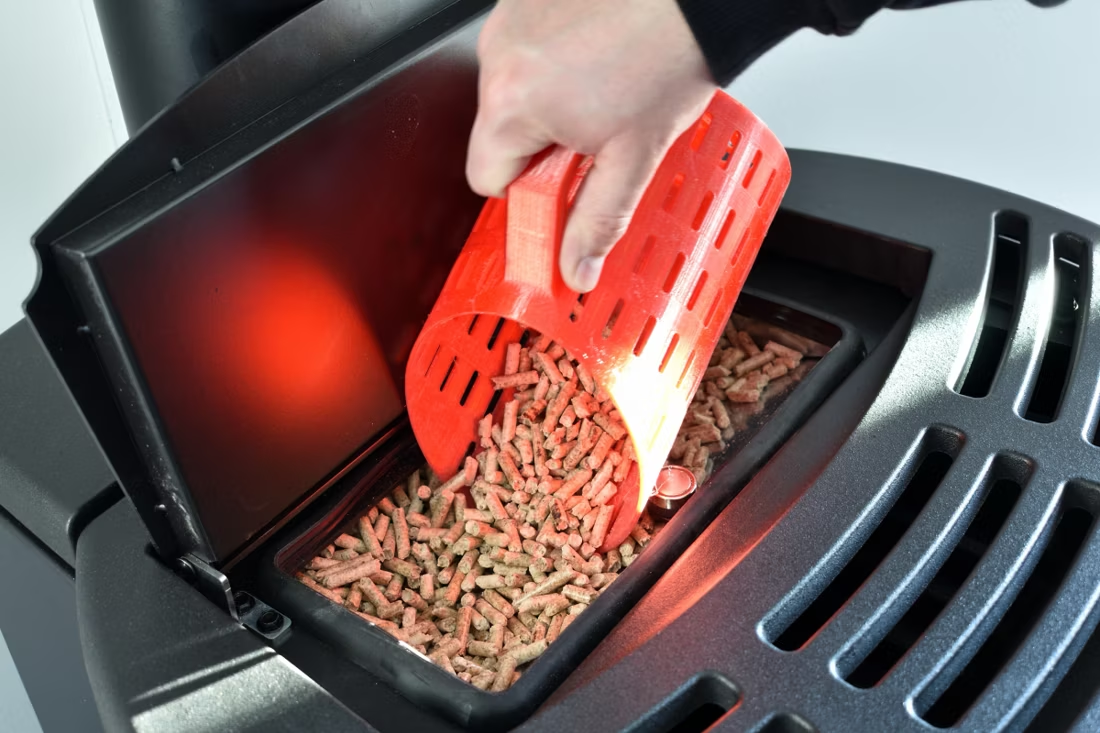
A clean pellet stove is a happy pellet stove. Plan on cleaning the burn pot about once a week when you're burning regularly—ash and clinkers gum up the air holes just like a pellet barbecue. Most pellet stove problems trace back to skipped cleaning that nobody explained up front. Some designs make it easy with a trapdoor burn pot: pull a lever and the gunk drops into the ash pan.
What's the difference between an insert and a zero-clearance fireplace?
An insert is a fireplace that slides into a pre-existing wood-burning fireplace—if you don't have one, there's nothing to insert it into. A zero-clearance fireplace is built into a framed wall, which makes it the answer for remodels and new construction. Simple test: existing masonry fireplace means insert; blank or framed wall means zero-clearance.
Can I install a fireplace myself?
If you're putting a fire in your house on purpose, it's best to work with an expert. Unless you're genuinely experienced in framing, gas line, vent pipe, and the national code on clearances to combustibles, have a professional do it—and ideally the same company that sells you the fireplace, so warranty, service, and liability all live under one roof.
Does a fireplace add value to my home?
On average, a fireplace adds back to the home about the same amount you spent installing it. Add the monthly savings from heating the rooms you actually use instead of the whole house—often hundreds of dollars a year—and the value case is strong before you even count what a fire does for how your family uses the room.
Nearby Dealers
Hearth shops serving Vallejo and the surrounding area.
Pellet Brands Stocked Around Vallejo
Manufacturers will point you to the nearest stocking dealer.
Find your pellet stove in Vallejo.
Tell us a bit about your home and, if pellet is genuinely the right fit for your Vallejo property, we'll match you with a trusted local dealer and send over a free Project Guide & Parts List—including the exact vent kit and parts your installer will need.
Find Your Fireplace →