
Warm, Code-Compliant Heat for Bay Area Homes.
Mild winters and strict Bay Area air rules make gas the practical choice in Vallejo. Find the right fireplace or insert, and get matched with a trusted local dealer.
Every Project Starts From One of These Five Situations
In Vallejo, gas is the practical default.
Vallejo sits at just 58 feet of elevation on the north shore of San Pablo Bay, where winters are mild—average lows around 42°F and only 2,093 heating degree days a year, a fraction of what a place like Duluth, MN or Bismarck, ND logs each winter. Real heating need here is modest. What isn't modest is the Bay Area Air Quality Management District's Regulation 6, Rule 3, which tightly restricts new wood-burning devices across Solano County and effectively rules out new wood fireplace or pellet stove installs in most homes. That combination of mild climate and wood-smoke restrictions is why gas has become the default fireplace fuel in Vallejo.
Pacific Gas & Electric supplies both natural gas and electric service throughout Vallejo, and most homes—from the older craftsman and Victorian houses near Mare Island to newer construction east of Highway 80—already have a gas line feeding the furnace or water heater, which makes adding a direct-vent gas fireplace or insert straightforward. With PG&E's residential electric rate running around 31.7 cents per kWh, among the highest in the country, a gas fireplace is also typically the more affordable zone-heating option compared to electric resistance heat, and it gives you real warmth and ambiance during winter Spare the Air advisories when open wood burning is restricted.
Three steps. No salesperson until you're ready.
Tell us about your project
Your zip code, your situation, and the fuel you're leaning toward—or let the answers point you to one.
See what's actually available
The brands dealers within 100 miles genuinely carry—real options, never a catalog mirage.
Get your dealer & Project Guide
A trusted local dealer, plus the free Project Guide & Parts List that names every component of the job.
Frequently Asked Questions
How much does a gas fireplace installation cost in Vallejo?
Most gas fireplace installations in Vallejo run somewhere between $4,500 and $11,000, with the wide range driven by venting complexity and whether new gas line work is needed. A direct-vent gas insert dropped into an existing masonry fireplace with a gas line already nearby sits toward the lower end. A new built-in gas fireplace for a remodel or addition—with framing, a fresh gas line run, and BAAQMD-compliant venting—lands in the middle to upper end, and Bay Area labor rates push costs somewhat higher than in less expensive regions of California. A local retailer will give you a firm number after an in-home walkthrough.
Can I install a wood-burning fireplace in Vallejo instead of gas?
Not easily. BAAQMD Regulation 6, Rule 3 prohibits installing new wood-burning fireplaces and non-EPA-certified wood stoves in Solano County, including Vallejo, in both new construction and most remodels. Pellet stoves aren't common here either—the mild coastal climate (winter lows averaging 42°F) doesn't create the sustained heating demand that makes cordwood or pellet fuel practical the way it does in colder inland or mountain climates. For Vallejo homeowners, gas and electric are realistically the two paths, and gas is the one that still delivers a real flame and strong heat output.
Can I convert my existing wood fireplace to gas?
Yes, and it's a common project in Vallejo's older neighborhoods, including the Victorian and craftsman homes near downtown and Mare Island that were built with masonry fireplaces decades before BAAQMD's wood-burning rules existed. A gas insert is installed into the existing firebox, venting through the original chimney with a stainless liner, typically for $4,500 to $9,500 depending on the insert and whether a new gas line needs to be run to the fireplace. It's also the most direct way to bring an old, non-compliant wood fireplace into line with current Bay Area air rules while keeping the original mantel and surround.
Do I need natural gas, or can I use propane?
Pacific Gas & Electric provides natural gas service throughout nearly all of Vallejo, so most homes in the 94589, 94590, 94591, and 94592 zip codes already have a gas meter and can tie a fireplace directly into existing service. Propane is really only a consideration for a handful of unincorporated pockets of Solano County outside PG&E's gas footprint. If you're on natural gas already—which covers the large majority of Vallejo addresses—your installer will simply tap into the existing line rather than deal with tank installation and propane delivery.
Will my gas fireplace work during a power outage or PSPS event?
It depends on the ignition system, and this matters more in Vallejo than in most places because PG&E periodically initiates Public Safety Power Shutoffs (PSPS) during high fire-risk weather. Gas fireplaces with IPI (intermittent pilot ignition) include a battery backup that keeps the unit firing during an outage—just make sure the batteries are fresh. Valor fireplaces take a different approach: their pilot assembly generates its own electricity through a thermocouple, so the fireplace works with zero batteries, ever. For a household that wants a heat source that survives a multi-day PSPS shutoff without any dependency on batteries staying charged, that's worth asking your local dealer about directly.
What's the difference between a gas fireplace, gas insert, and gas stove?
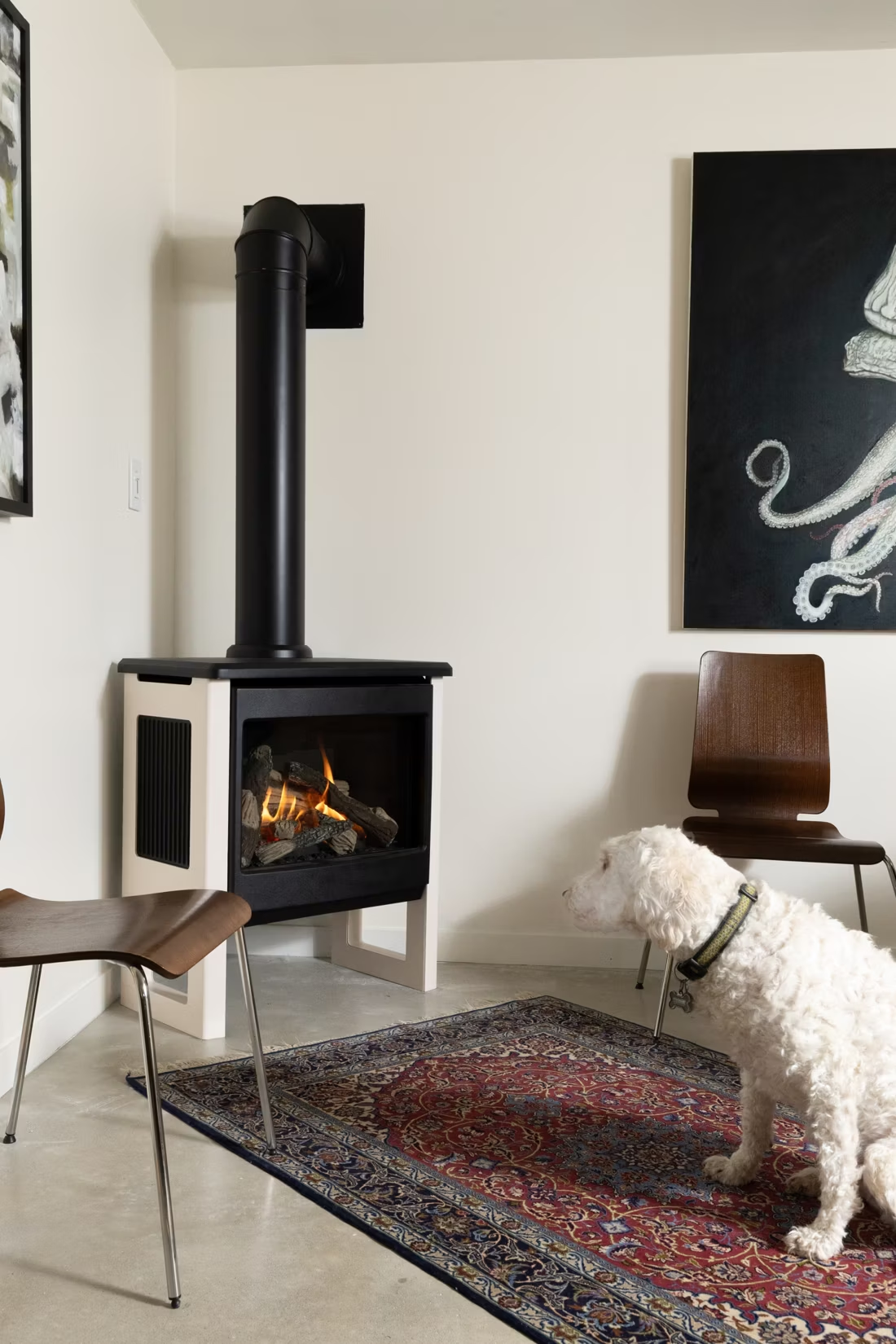
A gas fireplace is a fully built-in unit framed into a wall, typically chosen for new construction or a full remodel. A gas insert is sized to slide into an existing masonry firebox, using the existing chimney as a vent chase for a liner—the common choice for Vallejo's older homes with existing fireplaces. A gas stove is a freestanding cast-iron or steel unit that sits on the floor and vents through a wall or existing flue, often used where there's no fireplace opening at all, like a den or converted garage. Most Vallejo homeowners with an existing fireplace go with an insert; new builds or additions usually go with a built-in unit.
Do I need a permit to install a gas fireplace in Vallejo?
Yes. The City of Vallejo Building Division requires a building permit and a gas line permit for new gas fireplace or insert installations, and unincorporated areas of Solano County go through the Solano County Building Division instead. The gas line connection has to be done by a licensed gas fitter, and the unit itself needs to meet current venting and clearance code. Most established local hearth retailers pull these permits as part of the installation, which is one advantage of working with a certified dealer rather than a handyman install.
Can I install a vent-free gas fireplace in Vallejo?
Generally, no—California is one of the states, along with Colorado and Washington, that restricts unvented gas appliances under Title 24 and local mechanical code, and Vallejo permitting follows that statewide standard. In practice, this means direct-vent gas fireplaces and inserts, which draw combustion air from outside and exhaust exhaust gases back outside through a sealed system, are the standard and effectively the only widely permittable option here. That's not a drawback in practice—direct-vent units deliver strong, efficient heat and are the type nearly every local Vallejo dealer installs and services.
Gas vs. electric fireplace—which is right for my Vallejo home?
Gas gives you real flame, stronger heat output, and—with the right ignition system—a way to keep some heat and ambiance running during a PG&E PSPS outage. Electric fireplaces are simpler to install (often just a 120-volt outlet, no venting or gas line required, in the $400–$1,200 range) and are common as supplemental or accent units in bedrooms, offices, or rentals. Given that PG&E's residential rate runs around 31.7 cents per kWh, running an electric unit as a primary heat source can get expensive fast; gas tends to be the better choice for anyone using the fireplace regularly rather than occasionally for ambiance.
Why is a fireplace insert so efficient?
An insert does two things: it seals the chimney completely, so you stop losing air you already paid to heat, and it radiates warmth into the room through the firebox and glass. Most add a heat-exchange fan that pulls cool room air underneath, wraps it around the hot firebox, and pushes it back out warm. Your home is more efficient before you've even lit the first fire.
Can I put a TV above my fireplace?
Yes—with an asterisk. Fireplaces are hot and TVs don't like heat. Either put a mantel between them to deflect rising warmth, or choose a fireplace with heat-management technology that creates a cool zone on the wall above—the wall stays around 125 degrees, barely warm, while the room still gets full heat. If you like clean lines and don't want a mantel, heat management is the answer.
What is an in-home preview and do I need one?
It's a visit where a hearth professional measures your space, confirms the model you picked actually works in your home, and walks the specs—framing, gas line, venting, finish work—before anything is ordered. Some details you just can't know until you see the house. Never make a down payment without one; it's the single most-skipped step that burns buyers.
Can I install a fireplace myself?
If you're putting a fire in your house on purpose, it's best to work with an expert. Unless you're genuinely experienced in framing, gas line, vent pipe, and the national code on clearances to combustibles, have a professional do it—and ideally the same company that sells you the fireplace, so warranty, service, and liability all live under one roof.
Nearby Dealers
Hearth shops serving Vallejo and the surrounding area.
Find your gas fireplace in Vallejo.
Tell us a bit about your home and we'll match you with a trusted local Vallejo dealer and send over a free Project Guide & Parts List—the exact parts, vent kit, and next steps for your gas fireplace project.
Find Your Fireplace →