
Pellet heat that meets Solano County's clean-air rules.
From the Delta flats around Rio Vista to the foothill edges near Vacaville, Solano County winters are short and mild—but Bay Area Air Quality Management District smoke rules and wildfire season make a clean-burning pellet stove one of the smartest zone-heat options around. Find the right unit and get matched with a trusted local dealer.
Every Project Starts From One of These Five Situations
Efficient heat for short, mild winters.
Solano County sits in climate zone 3B, where the average winter low hovers around 42°F and the county logs only a light winter heating season—a fraction of what a place like Bismarck, ND or Duluth, MN racks up in a single month of real winter. That means most Solano homes, whether in Fairfield, Vacaville, Vallejo, Benicia, Dixon, or out toward the Suisun Marsh and Rio Vista, don't need a furnace-replacing heat source. They need something that takes the edge off a cold Delta morning, holds a room warm through a rare cold snap, and does it without adding to the smoke problem the county already deals with.
Solano County is a designated non-attainment area, and wildfire smoke drifting in from Northern California fire seasons compounds the issue every fall. The Bay Area Air Quality Management District calls Spare the Air alerts that restrict uncertified wood burning on the worst days—but EPA-certified pellet stoves and inserts are typically allowed to keep running because they burn cleaner and more completely than an open wood fire. For Solano County homeowners who want visible flame and real heat without worrying about a curtailment notice, pellet is often the path of least resistance.
Three steps. No salesperson until you're ready.
Tell us about your project
Your zip code, your situation, and the fuel you're leaning toward—or let the answers point you to one.
See what's actually available
The brands dealers within 100 miles genuinely carry—real options, never a catalog mirage.
Get your dealer & Project Guide
A trusted local dealer, plus the free Project Guide & Parts List that names every component of the job.
Frequently Asked Questions
How much does a pellet stove installation cost in Solano County?
Most pellet stove installations in Solano County run in the $3,500 to $6,500 range, with pellet inserts into an existing masonry fireplace landing on the higher end once venting and a dedicated electrical outlet are factored in. Because pellet units vent through a small-diameter pipe rather than a full masonry or Class A chimney, labor and material costs are typically lower than a comparable wood stove install. Cities like Fairfield, Vacaville, and Vallejo each run their own building permit process through their local building divisions, and most local dealers handle that paperwork as part of the installation.
Is a pellet stove exempt from Spare the Air burn restrictions?
In most cases, yes. The Bay Area Air Quality Management District—which covers Solano County—generally exempts EPA-certified pellet stoves and inserts from Spare the Air wood-burning curtailments because they burn more completely and produce far less particulate matter than an open wood fire. That exemption is a major reason pellet has caught on in a non-attainment county like Solano, where winter inversions and wildfire smoke already strain air quality. Always confirm current exemption status with BAAQMD or your installer, since program rules are updated periodically.
What size pellet stove do I need for a Solano County home?
Because Solano County's winter heating load is light—the winter heating season here is short and mild—most homes don't need a large, primary-heat-rated pellet stove. A small to mid-size unit rated for 1,000 to 1,800 square feet comfortably handles a great room or open living area in Fairfield, Vacaville, or Vallejo without running constantly on its lowest setting, which can shorten auger and igniter life. Larger homes on the cooler, breezier Delta side near Rio Vista or Suisun Marsh may want a slightly larger unit for consistent zone heating, but full whole-home pellet heating is rarely necessary here.
Where can I buy pellets in Solano County, and what do they cost?
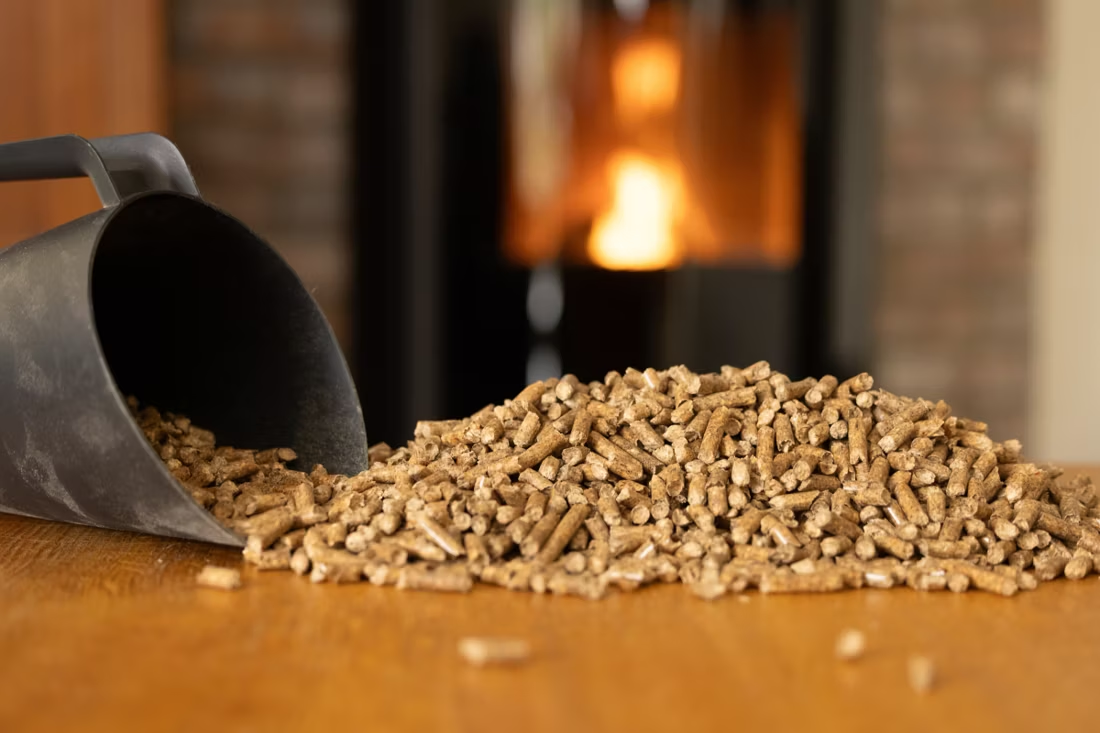
Regional brands like Bear Mountain, Lignetics, and Pacific Pellet are commonly stocked at hearth retailers and farm and home supply stores throughout Solano County, with hardwood and softwood blends often sourced from Northern California sawmill byproducts including Douglas fir and oak. Expect to pay roughly $300 to $400 per ton depending on brand and season—prices tend to climb in late fall as demand picks up ahead of the rainy season. Buying a season's supply early, rather than a bag at a time, is the most common way local homeowners keep costs down.
Do I need a permit to install a pellet stove in Solano County?
Yes—a building permit is required for new pellet stove or insert installations, issued through whichever city building division covers your address (Fairfield, Vacaville, Vallejo, Benicia, Dixon, Rio Vista, or Suisun City) or through the county for unincorporated areas. Because pellet stoves run on household electricity, an electrical permit for the dedicated outlet is often required alongside the building permit. Most local dealers handle both as part of a standard installation, so homeowners typically don't need to file anything themselves.
Will my pellet stove work during a PG&E power outage?
Not without help. Pellet stoves depend on electricity to run the auger that feeds pellets and the blower that circulates heat, so a standard unit goes dark the moment the power does. That matters in Solano County, where PG&E Public Safety Power Shutoffs during high fire-danger periods can cut power for hours or days at a time. Homeowners who want pellet heat to double as emergency backup should plan for a battery backup unit or a small generator sized for the stove's draw—ask your local dealer which pellet models pair well with a backup power setup.
How does wildfire smoke affect pellet stove use in Solano County?
Wildfire smoke drifting into Solano County during fall fire season adds to an already sensitive air quality picture in this non-attainment area, and it's one more reason pellet stoves have gained ground locally. Because EPA-certified pellet appliances burn more completely than open wood fires, they contribute far less particulate matter to already smoky air, and they're generally not swept into the same Spare the Air restrictions that can sideline uncertified wood stoves. That said, on the heaviest smoke days, air quality officials sometimes recommend limiting all combustion appliances—check current BAAQMD guidance before burning.
How often does a pellet stove need cleaning and maintenance?
Pellet stoves need a lighter maintenance routine than wood stoves, but they're not maintenance-free. Plan on emptying and cleaning the burn pot every few days during regular use, a deeper interior and venting cleaning every one to two months, and a full annual service—including the auger, exhaust fan, and vent pipe—before each burning season starts. In Solano County's mild climate, where a pellet stove is often used for zone heat rather than around-the-clock primary heat, many homeowners find a single annual professional service between fall and spring covers everything the unit needs.
Pellet stove vs. gas fireplace—which fits a Solano County home better?
Gas fireplaces offer instant, thermostat-controlled heat and work well in homes already served by natural gas lines across Fairfield, Vacaville, and Vallejo, with no fuel storage needed. Pellet stoves require loading a hopper with bagged fuel and offer a real flickering flame, but they burn cleaner than wood and typically sidestep Spare the Air burn restrictions that can affect uncertified wood-burning appliances. For Solano County's mild, short winters, either fuel comfortably handles zone heating—the choice usually comes down to whether a homeowner values the hands-on ritual of loading pellets or the flip-a-switch convenience of gas. A local dealer can walk through both options for your specific home.
Why is my open fireplace making my house colder?
Open fireplaces suck—literally. As the fire burns, it consumes air your furnace already paid to heat and pulls it out through the chimney, so the house is actually colder after the fire goes out than before you lit it. An insert fixes this: it seals the chimney, puts fixed glass across the front, and turns that hole in your house into a real heat source.
What's the difference between an insert and a zero-clearance fireplace?
An insert is a fireplace that slides into a pre-existing wood-burning fireplace—if you don't have one, there's nothing to insert it into. A zero-clearance fireplace is built into a framed wall, which makes it the answer for remodels and new construction. Simple test: existing masonry fireplace means insert; blank or framed wall means zero-clearance.
How much should I budget for a fireplace?
For an average home—covering the fireplace, the vent pipe, and basic installation—a budget between $3,900 and $5,500 gives you a lot of options across wood, gas, and pellet. By the time you add finish work, gas line, and electrical, the average complete installation lands between $5,000 and $12,000 all-in. In a remodel or new build, a good rule is to put about 2.5% of the total project cost toward the fireplace.
Can I install a fireplace myself?
If you're putting a fire in your house on purpose, it's best to work with an expert. Unless you're genuinely experienced in framing, gas line, vent pipe, and the national code on clearances to combustibles, have a professional do it—and ideally the same company that sells you the fireplace, so warranty, service, and liability all live under one roof.
Stove and Fireplace Dealers in Solano County
Pellet Brands Stocked Around Solano County
Manufacturers will point you to the nearest stocking dealer.
Find your pellet stove in Solano County.
Tell us a bit about your home and we'll match you with a trusted local Solano County dealer and send over a free Project Guide & Parts List—the exact pellet stove or insert, vent kit, and installation plan for your address.
Find Your Fireplace →