
Pellet Heat for Benicia's Mild, Smoke-Watched Winters.
Benicia winters rarely get brutal, but Spare the Air alerts and wildfire smoke can shut down open burning fast. Find a pellet stove or insert that keeps working, and connect with a trusted local dealer.
Every Project Starts From One of These Five Situations
Clean heat that stays legal on Spare the Air days.
Benicia sits at just 368 feet elevation on the Carquinez Strait, with winter lows averaging in the low 40s and only about 2,093 heating degree days a year—a fraction of what a place like Duluth, MN or Bismarck, ND racks up each winter. Most homes here don't need a stove to survive the season; they want one for zone heat on the coldest nights, ambiance, and increasingly, for the nights when wood burning simply isn't allowed.
Solano County falls inside the Bay Area Air Quality Management District's non-attainment area, and BAAQMD issues mandatory Spare the Air alerts during winter inversions and wildfire smoke events that ban uncertified wood-burning devices outright. EPA-certified pellet stoves are typically exempt from these burn bans, which is a big part of why pellet inserts have become a popular upgrade for Benicia homeowners who want real, radiant heat without risking a violation notice on a red-flag day.
Three steps. No salesperson until you're ready.
Tell us about your project
Your zip code, your situation, and the fuel you're leaning toward—or let the answers point you to one.
See what's actually available
The brands dealers within 100 miles genuinely carry—real options, never a catalog mirage.
Get your dealer & Project Guide
A trusted local dealer, plus the free Project Guide & Parts List that names every component of the job.
Frequently Asked Questions
How much does a pellet stove installation cost in Benicia?
A typical pellet stove or insert installation in Benicia runs $3,500 to $7,500, depending on the unit, whether it's a freestanding stove or an insert going into an existing fireplace, and how much venting work is required. Bay Area labor rates tend to push jobs toward the upper half of that range compared to inland California. A pellet insert going into an existing masonry fireplace with straightforward wall venting is usually the most affordable path; new construction or homes without an existing chimney cost more once framing and venting are added.
Are pellet stoves affected by Spare the Air burn bans?
Generally no. BAAQMD's Winter Spare the Air program restricts uncertified wood-burning devices—and sometimes even EPA-certified wood stoves—on declared no-burn days, but EPA-certified pellet stoves are typically exempt from mandatory curtailment because they burn cleaner and more consistently than cordwood. That exemption is one of the main reasons pellet stoves have gained ground in Solano County homes that still want real heat and flame without worrying about a citation. Confirm exemption status for your specific model with BAAQMD or your local dealer before you buy.
What size pellet stove do I actually need in a climate this mild?
With winter lows averaging in the low 40s and under 2,100 heating degree days a year, very few Benicia homes need a pellet stove as primary heat. Most homeowners here are sizing for a single large room or open living area—a small to medium unit (rated for 1,000 to 1,800 square feet) is plenty for supplemental heat and ambiance in a typical Benicia house. Oversizing is the more common mistake locally; a stove sized for a much colder climate will run on low settings most of the season and burn less efficiently as a result.
Where does pellet fuel come from, and what does it cost here?
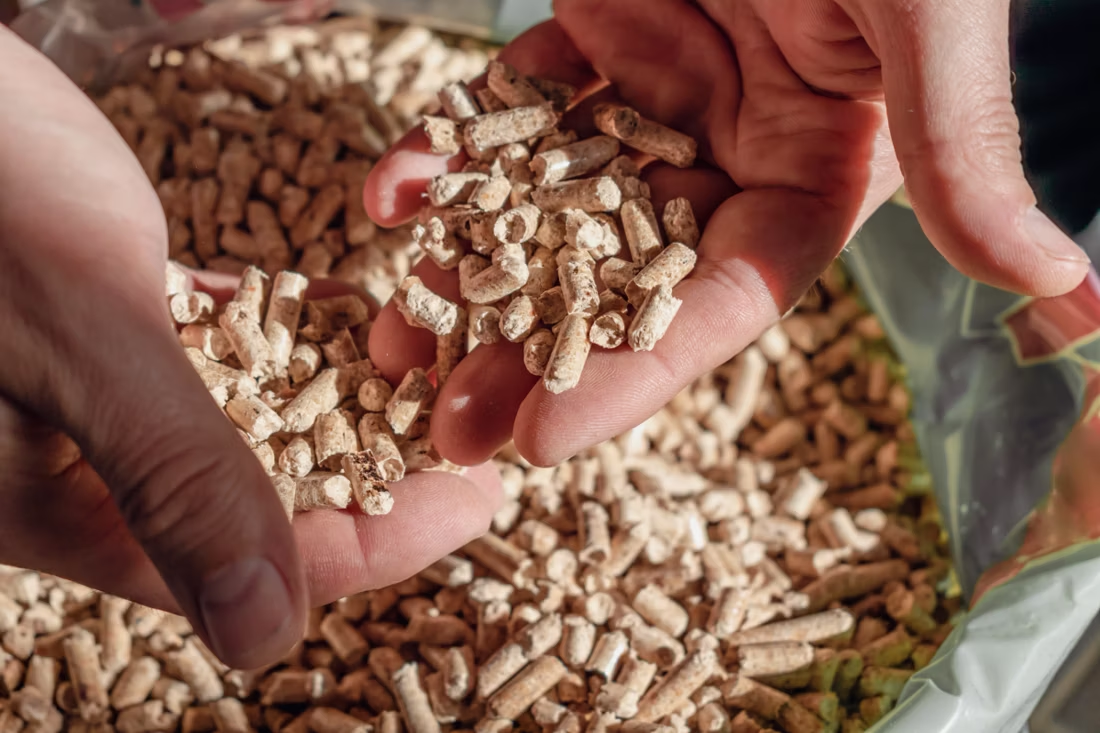
Regional brands like Bear Mountain, Lignetics, and Pacific Pellet are widely available through Bay Area hearth retailers and hardware stores, with premium hardwood and softwood blends typically running $300 to $400 per ton. A moderate-use Benicia household burning a stove for supplemental heat through the mild winter season usually goes through 1 to 2 tons per year, well below what a full-heat-season home in a colder climate would need. Buying a season's supply in fall, before demand spikes, is the easiest way to avoid running short.
Do I need a permit to install a pellet stove in Benicia?
Yes—new pellet stove and insert installations require a building permit through the City of Benicia Building Division, covering hearth clearance, venting termination, and electrical work for the unit's auger and blower. Most local hearth dealers handle the permit application and inspection scheduling as part of the installation, so it's rarely something you coordinate yourself. Because pellet units vent through a wall rather than a full masonry chimney, permitting is generally simpler and faster than a wood stove install.
Pellet stove vs. wood stove—which makes more sense in Benicia?
Wood stoves burn local oak, madrone, and Douglas fir, and self-cut permits through the BLM California State Office run about $10 per cord during the April-to-October cutting season—appealing if you already have a source of firewood and storage space. But wood stoves are more exposed to Spare the Air curtailment, and unlike pellet stoves, most standard wood units don't qualify for exemption. Pellet stoves burn cleaner, store fuel in smaller bags instead of stacked cordwood, and are far less likely to be shut down on a bad-air day. For most Benicia homeowners without an existing wood-cutting habit, pellet is the lower-friction choice.
Will my pellet stove work if the power goes out?
Not without help. Pellet stoves rely on an electric auger to feed fuel and a blower to distribute heat, so a standard unit stops running the moment power drops—which matters in a PG&E service area where Public Safety Power Shutoffs (PSPS) during fire season and wildfire-smoke events can cut power for hours or days. Some pellet stove models offer battery backup kits or can be paired with a small generator or battery system to keep the auger and igniter running through an outage. If backup heat during outages is a priority, ask your local dealer which models support battery backup before you buy.
How much maintenance does a pellet stove actually need?
Less than a wood stove, but it's not maintenance-free. Plan on emptying the ash pan every few days to weekly during regular use, cleaning the burn pot and glass roughly every 1 to 2 weeks, and scheduling a full professional inspection and venting cleaning once a year—typically before burning season starts in fall. Because Benicia's mild winters mean most stoves run on lower settings for shorter seasons than in colder climates, wear on components is generally slower here, but annual servicing still matters for the auger motor, gaskets, and exhaust fan.
Pellet stove vs. an electric fireplace or heater—which costs less to run?
With PG&E's residential rate around $0.317 per kWh—among the highest in the country—running an electric fireplace or space heater as a primary heat source in Benicia gets expensive fast, even with the mild climate. A pellet stove burning $300-to-$400-per-ton fuel typically costs less per BTU of heat delivered, especially for extended use in a living room or family room. Electric units still win on install simplicity and zero venting requirements, which is why many Benicia homeowners use electric for occasional-use rooms and reserve a pellet stove for the space where they want real, sustained heat.
How often does a pellet stove need cleaning?
A clean pellet stove is a happy pellet stove. Plan on cleaning the burn pot about once a week when you're burning regularly—ash and clinkers gum up the air holes just like a pellet barbecue. Most pellet stove problems trace back to skipped cleaning that nobody explained up front. Some designs make it easy with a trapdoor burn pot: pull a lever and the gunk drops into the ash pan.
Why is a fireplace insert so efficient?
An insert does two things: it seals the chimney completely, so you stop losing air you already paid to heat, and it radiates warmth into the room through the firebox and glass. Most add a heat-exchange fan that pulls cool room air underneath, wraps it around the hot firebox, and pushes it back out warm. Your home is more efficient before you've even lit the first fire.
Does a fireplace add value to my home?
On average, a fireplace adds back to the home about the same amount you spent installing it. Add the monthly savings from heating the rooms you actually use instead of the whole house—often hundreds of dollars a year—and the value case is strong before you even count what a fire does for how your family uses the room.
Can I install a fireplace myself?
If you're putting a fire in your house on purpose, it's best to work with an expert. Unless you're genuinely experienced in framing, gas line, vent pipe, and the national code on clearances to combustibles, have a professional do it—and ideally the same company that sells you the fireplace, so warranty, service, and liability all live under one roof.
Nearby Dealers
Hearth shops serving Benicia and the surrounding area.
Pellet Brands Stocked Around Benicia
Manufacturers will point you to the nearest stocking dealer.
Find your pellet insert in Benicia.
Tell us a bit about your home and we'll match you with a trusted local Benicia dealer and send over a free Project Guide & Parts List—the exact stove or insert, vent kit, and install plan for your space.
Find Your Fireplace →