
A pellet stove in Saratoga's mild climate—here's the honest picture.
Saratoga's foothill winters rarely call for serious heating hardware, so pellet stoves stay a niche choice here. If one still fits your home, we'll connect you with a local dealer who can tell you what's actually available.
Every Project Starts From One of These Five Situations
Saratoga's climate doesn't demand much from a heating appliance.
At 431 feet in the western foothills of Santa Clara County, Saratoga racks up around 2,562 heating degree days a year and an average winter low near 40°F—a fraction of what a place like Duluth, Minnesota sees in a single season (closer to 9,000+ HDD). Hard freezes are rare, and most Saratoga homes lean on central gas furnaces or electric heat pumps for everyday comfort. A hearth appliance here is usually about ambiance, zone heat on a chilly evening, or backup—not the primary defense against winter, which is a big part of why pellet stoves show up so rarely on local job sites.
There's also an air quality layer: Santa Clara County sits in a non-attainment area, and wildfire smoke is a recurring seasonal issue that shapes how the Bay Area Air Quality Management District treats new wood-burning appliances. Pellet stoves burn cleaner than cordwood and are generally EPA-certified low-emission units, so they're typically exempt from Spare the Air burn restrictions—but the practical reality in Saratoga is that few hearth dealers stock them regularly. Demand is thin enough that gas inserts and electric units end up solving the same ambiance-plus-supplemental-heat problem with less equipment, no hopper to refill, and no dependence on a wall outlet. If a pellet stove still makes sense for your situation, a matched local dealer can tell you what's genuinely orderable and installable near you.
Three steps. No salesperson until you're ready.
Tell us about your project
Your zip code, your situation, and the fuel you're leaning toward—or let the answers point you to one.
See what's actually available
The brands dealers within 100 miles genuinely carry—real options, never a catalog mirage.
Get your dealer & Project Guide
A trusted local dealer, plus the free Project Guide & Parts List that names every component of the job.
Frequently Asked Questions
Are pellet stoves actually available in Saratoga, or are they too rare to bother with?
They're rare, not nonexistent. Saratoga's mild winters (2,562 heating degree days, average lows around 40°F) mean most homeowners never need a pellet stove's heat output, so the handful of hearth dealers serving the Santa Clara County foothills don't keep them in regular stock the way they do in colder Sierra or Northern California markets. That said, dealers who serve this area can special-order EPA-certified units from brands like Lignetics or Bear Mountain-affiliated lines if you specifically want one—for a detached studio, a garage workshop, or a backup-heat setup. It's a special-order conversation rather than an off-the-shelf purchase.
What does a pellet stove installation cost in Saratoga?
Because pellet stoves aren't a high-volume product in this market, pricing here is less standardized than it is for gas inserts, which nearly every local dealer sells and quotes regularly. Expect a wider range depending on the specific unit, venting requirements, and whether your installer needs to run new electrical for the auger and combustion blower. The honest answer is that a firm number requires an in-home look from a dealer who actually carries pellet equipment—which is exactly the kind of matching we do.
If PG&E shuts off power during fire season, will a pellet stove still work?
No—and this is worth knowing before you commit to one. Pellet stoves rely on electricity to run the auger that feeds fuel and the blower that pushes heat into the room, so a Public Safety Power Shutoff from Pacific Gas & Electric will take your pellet stove offline right along with your furnace. In the Santa Clara County foothills, where PSPS events do happen during dry, high-wind periods, that's a real limitation. If backup heat during an outage is your actual goal, a battery-backed gas insert or a wood-burning option (uncommon locally, but not impossible) handles outages more reliably than pellet equipment does.
What pellet brands are sold in the Bay Area if I want to source fuel locally?
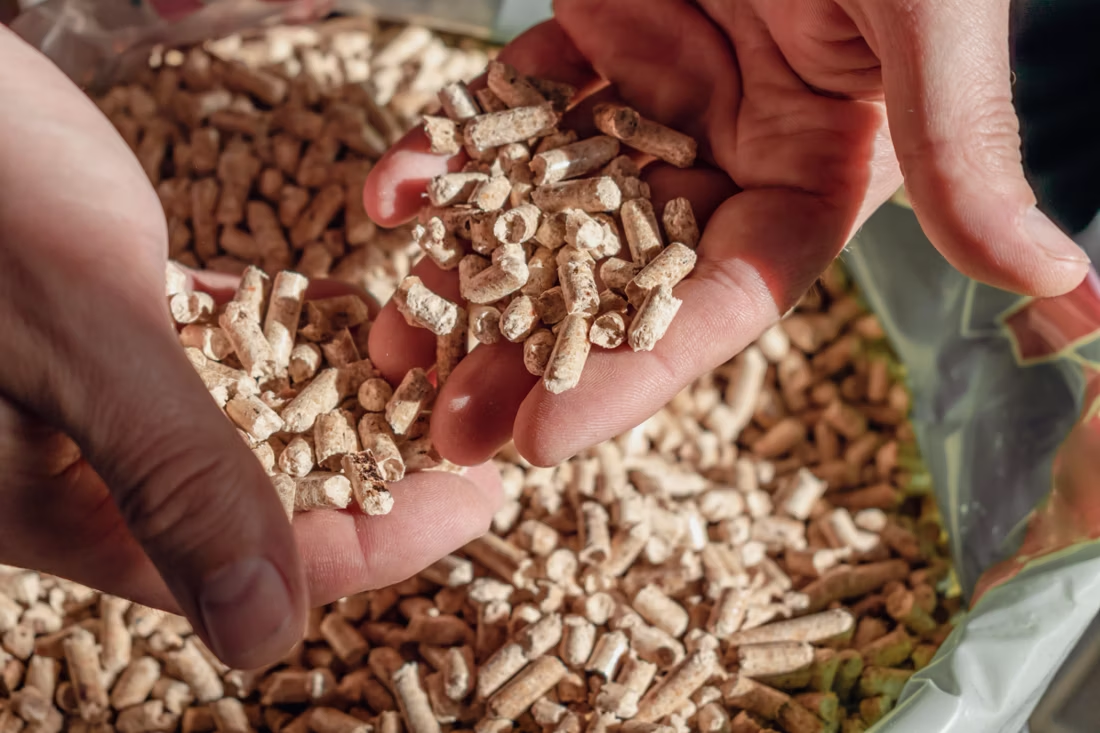
Bear Mountain, Lignetics, and Pacific Pellet are the regional brands most commonly found at Northern California hardware stores and feed suppliers, typically manufactured from Douglas fir and pine sawmill byproducts sourced from the Pacific Northwest and Sierra timber industry. Because pellet appliances are uncommon in Saratoga specifically, you're more likely to find consistent stock at bigger box stores in San Jose or Santa Clara than at a boutique Saratoga hearth shop—worth checking before you buy a stove assuming fuel will be around the corner.
Since wood and pellet are both unusual here, why is gas so much more common in Saratoga?
Gas fireplaces and inserts fit Saratoga's housing stock and climate better on almost every axis: no fuel storage, no hopper or wood stacking, instant on-off operation, and a clean look that suits the newer construction common in the foothills. Local wood species like oak, madrone, and Douglas fir are around if you wanted to burn cordwood, but between the mild HDD numbers and the county's non-attainment air quality status, most homeowners here choose the convenience of natural gas or propane over the maintenance of a solid-fuel appliance. If you're set on a pellet stove despite the tradeoffs, a matched dealer can still walk you through it.
Do I need a permit to install a pellet stove in Saratoga?
Yes—new pellet stove installations typically require a building permit, coordinated through the City of Saratoga's building division since Saratoga is an incorporated city with its own permitting process separate from unincorporated Santa Clara County. Most dealers who install pellet equipment handle the permit paperwork and inspection scheduling as part of the job, which matters here specifically because so few installers in this market do pellet work regularly—you want someone who already knows the local process, not someone learning it on your project.
What's the difference between a pellet stove and a pellet insert, and does that matter for a Saratoga home?
A pellet stove is a freestanding unit that vents through a wall or existing chimney chase, while a pellet insert is built to slide into an existing masonry fireplace opening. Given how few Saratoga homes have wood-burning masonry fireplaces to begin with—most local construction favors zero-clearance gas units or no fireplace at all—a freestanding pellet stove is the more realistic fit if you're pursuing this route, since there's often no existing masonry opening to convert.
If pellet doesn't fit my home well, what should I actually consider instead?
For most Saratoga homes, a direct-vent gas fireplace or insert solves the ambiance-and-supplemental-heat goal with far more local dealer support, more predictable pricing, and no electricity dependency for combustion (a battery-backup IPI unit will even run during a PSPS event). Electric fireplaces are another straightforward option given PG&E's residential rate of roughly $0.317/kWh—pricier to run than gas per BTU, but zero venting and zero permitting hassle for a plug-in unit. Pellet remains an option if you specifically want it, but it's the appliance least suited to this particular climate and grid situation.
I still want a pellet stove—how does Find My Fireplace help given how rare they are here?
We're a neutral matchmaker, not a retailer, so our job is figuring out which of the dealers actually serving the Saratoga and greater Santa Clara County area can genuinely source, permit, and install pellet equipment—rather than sending you to a big-box store that stocks the fuel but not the expertise. Once we match you with the right local dealer, you'll get a free Project Guide & Parts List covering the specific unit, venting components, and electrical needs for your pellet project, so you walk into that conversation already informed.
Why is my open fireplace making my house colder?
Open fireplaces suck—literally. As the fire burns, it consumes air your furnace already paid to heat and pulls it out through the chimney, so the house is actually colder after the fire goes out than before you lit it. An insert fixes this: it seals the chimney, puts fixed glass across the front, and turns that hole in your house into a real heat source.
How often does a pellet stove need cleaning?
A clean pellet stove is a happy pellet stove. Plan on cleaning the burn pot about once a week when you're burning regularly—ash and clinkers gum up the air holes just like a pellet barbecue. Most pellet stove problems trace back to skipped cleaning that nobody explained up front. Some designs make it easy with a trapdoor burn pot: pull a lever and the gunk drops into the ash pan.
Can a fireplace actually lower my heating bill?
Yes—by creating a comfort zone. A furnace heats every square foot of the house just to warm the one room you're in; a gas fireplace on low burns roughly a sixth of the gas a typical furnace does. Set the furnace around 55–60 degrees as a baseline, then heat the rooms your family actually uses. Families who heat this way commonly save $20–$60 a month.
What is an in-home preview and do I need one?
It's a visit where a hearth professional measures your space, confirms the model you picked actually works in your home, and walks the specs—framing, gas line, venting, finish work—before anything is ordered. Some details you just can't know until you see the house. Never make a down payment without one; it's the single most-skipped step that burns buyers.
Nearby Dealers
Hearth shops serving Saratoga and the surrounding area.
Pellet Brands Stocked Around Saratoga
Manufacturers will point you to the nearest stocking dealer.
Find your pellet stove option in Saratoga.
Tell us a bit about your home and situation, and we'll match you with a local dealer who actually handles pellet installations in this market—plus a free Project Guide & Parts List for your project.
Find Your Fireplace →