
Electric warmth that never trips a Spare the Air alert.
Saratoga's mild winters and strict Bay Area air rules make electric the fireplace fuel that actually fits. Find the right unit and get matched with a trusted local dealer.
Every Project Starts From One of These Five Situations
Mild winters, strict air rules, and a fireplace that just works.
Saratoga sits at 431 feet in the foothills below the Santa Cruz Mountains, in climate zone 3C—mild, marine-influenced, and nothing like the deep-freeze winters of places like Duluth or Burlington. The average winter low here is around 40°F and the city logs a light, short heating season overall, a fraction of what cold-climate regions see. That's not a climate that calls for a high-BTU wood stove or a pellet hopper running all night; it's a climate where a fireplace is mostly about ambiance and light supplemental warmth on the coldest evenings.
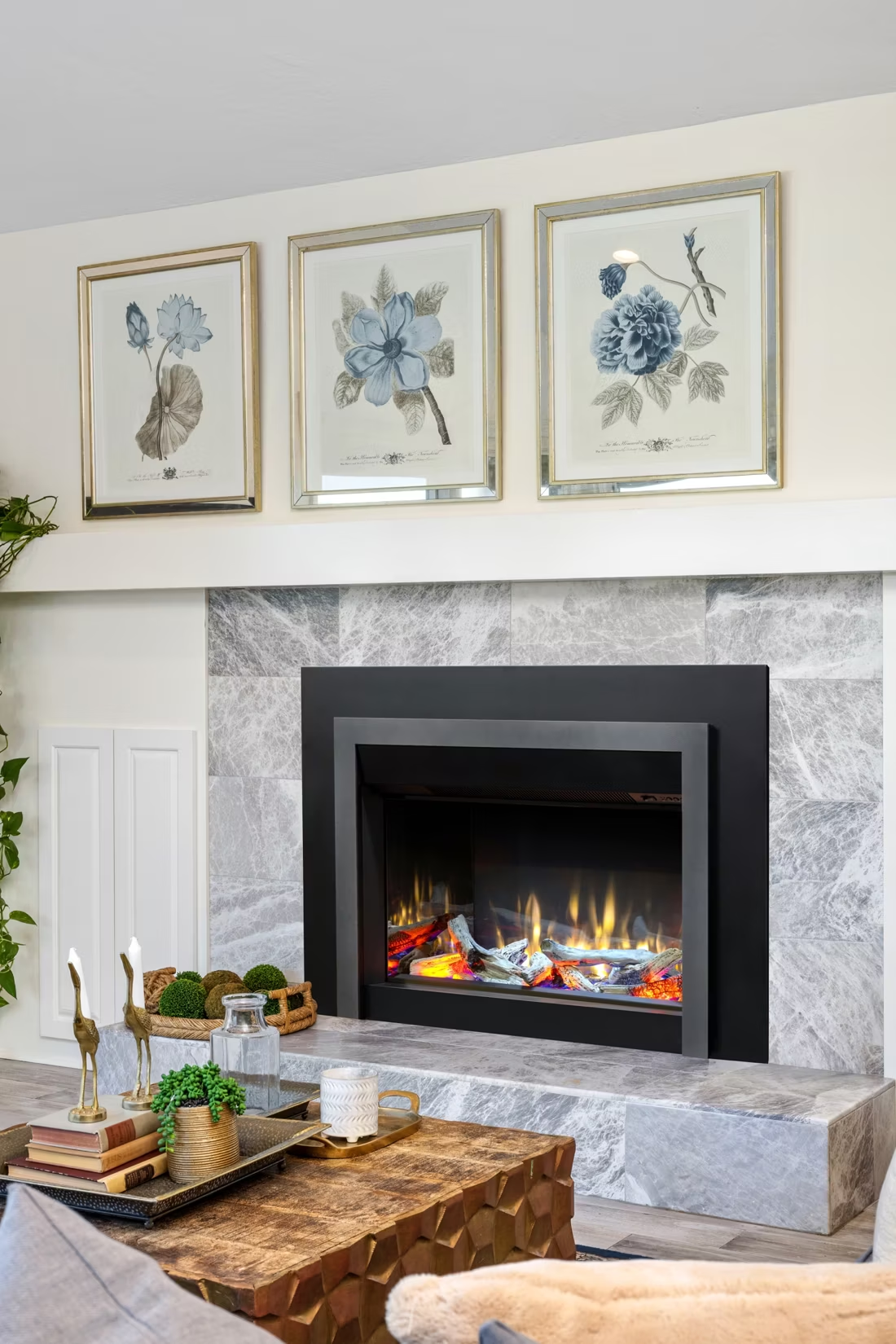
There's also a regulatory reality here. Santa Clara County is part of a Bay Area Air Quality Management District non-attainment area, and wildfire smoke is a recurring concern most falls. Under BAAQMD Regulation 6, Rule 3, wood-burning devices face mandatory no-burn curtailment on Spare the Air days, and new wood-burning fireplace installs are effectively off the table in most Bay Area jurisdictions, including Saratoga. That's why wood and pellet appliances aren't a realistic fit for this page—electric is. It plugs in, produces zero emissions, needs no chimney or venting, and isn't affected by a Spare the Air alert or a red flag warning.
Three steps. No salesperson until you're ready.
Tell us about your project
Your zip code, your situation, and the fuel you're leaning toward—or let the answers point you to one.
See what's actually available
The brands dealers within 100 miles genuinely carry—real options, never a catalog mirage.
Get your dealer & Project Guide
A trusted local dealer, plus the free Project Guide & Parts List that names every component of the job.
Frequently Asked Questions
How much does an electric fireplace installation cost in Saratoga?
A plug-in electric insert or freestanding unit that uses an existing outlet typically runs $200 to $1,500 installed, since there's no venting or gas line to run. A built-in wall-mounted electric fireplace or a linear unit set into new cabinetry usually costs $2,500 to $6,000 once you factor in framing, a dedicated 20-amp circuit, and an electrician's time. Retrofitting an old masonry fireplace with an electric insert sits in the middle of that range—most Saratoga homes with an existing hearth opening can have one installed in a single day.
Why isn't wood or pellet heat an option in Saratoga?
Santa Clara County falls under Bay Area Air Quality Management District rules, and wood-burning devices are banned from operating on Spare the Air days under Regulation 6, Rule 3—which can mean a dozen or more no-burn days each winter, plus additional restrictions during wildfire smoke events. New wood-burning fireplace and pellet stove installs are generally not permitted in Bay Area jurisdictions like Saratoga, which is why we mark both as not applicable for this area. A small number of rural Santa Clara County properties outside city limits may have older, grandfathered wood units, but for most Saratoga homeowners electric is the realistic path to a fireplace.
Do I need a permit to install an electric fireplace in Saratoga?
A plug-in unit that runs off an existing outlet doesn't require a permit. A built-in electric fireplace that needs a new dedicated circuit does require an electrical permit through the City of Saratoga's building division, since it involves licensed electrical work. Most local dealers or their electrician partners pull this permit as part of the installation, so it's rarely something homeowners have to manage themselves.
Can an electric insert go into my existing wood-burning fireplace?
Yes, and it's one of the more common projects local dealers handle in Saratoga's older homes. An electric insert slides into the existing firebox opening, plugs into a nearby outlet or a new dedicated circuit, and requires no chimney liner, no venting, and no gas line. It's also a practical way to retire an old masonry fireplace that would otherwise be restricted from burning on Spare the Air days, while keeping the mantel and hearth look intact.
Will an electric fireplace actually heat my room, or is it just for looks?
Most electric fireplaces put out around 4,600 to 5,000 BTU (roughly 1,500 watts) and are built for zone heating a single room of 400 to 500 square feet—enough to take the chill off a family room on a 40-degree Saratoga evening without running central heat. Given the area's mild winter lows and light, short heating season overall, that level of output covers the vast majority of local heating needs. Homeowners looking to heat a larger open floor plan should talk to a dealer about a linear model with a higher-wattage heater core rather than assuming size alone solves it.
What does it cost to run an electric fireplace with PG&E rates?
PG&E's residential rate in the Saratoga area runs around $0.317 per kWh, among the highest in the country, so operating cost is worth planning for. A typical 1,500-watt unit running on high costs roughly $0.47 an hour. Used for a few hours most winter evenings—say two to three hours a night—that works out to about $30 to $45 a month during the cooler season, far less than running central heat to warm the whole house. Most units let you run the flame effect without the heater engaged, which uses only a few watts, so ambiance-only use costs next to nothing.
Will my electric fireplace work during a power outage or PSPS event?
No—electric fireplaces need grid power or a battery system to run, and Santa Clara County's foothill areas, including parts of Saratoga, are subject to PG&E Public Safety Power Shutoff events during high fire-risk conditions, typically in late summer and fall. If backup heat during an outage matters to you, ask a local dealer about pairing your fireplace circuit with a home battery or portable generator, since the fireplace itself has no fuel-based backup option the way a wood stove would.
Electric vs. gas—which is right for my Saratoga home?
Gas fireplaces are common in Saratoga and offer higher heat output, work during power outages with a battery-backup ignition system, and give a more traditional flame—but they require gas line work, venting, and a larger installation budget. Electric fireplaces install in a fraction of the time, need no gas line or venting, cost far less upfront, and sidestep any Spare the Air or emissions concerns entirely. For a secondary room, a rental, or a homeowner who wants ambiance and light supplemental heat without construction, electric usually wins. For a primary living space where real heat output and a traditional look matter most, many Saratoga homeowners still choose gas.
What features should I look for in an electric fireplace?
Look for a realistic flame technology (multi-layer LED or water-vapor styles look far more convincing than older single-color LED strips), a separate control for flame-only versus heat-plus-flame operation, and a built-in thermostat so the unit cycles the heater rather than running constantly. If you're retrofitting an existing firebox, check the insert's depth and trim kit options against your opening dimensions before ordering—this is exactly the kind of sizing detail a local dealer will confirm during an in-home visit.
Can I put a TV above my fireplace?
Yes—with an asterisk. Fireplaces are hot and TVs don't like heat. Either put a mantel between them to deflect rising warmth, or choose a fireplace with heat-management technology that creates a cool zone on the wall above—the wall stays around 125 degrees, barely warm, while the room still gets full heat. If you like clean lines and don't want a mantel, heat management is the answer.
Do electric fireplaces actually produce heat?
Yes—most put out around 4,800–5,000 BTUs from a standard outlet, which comfortably warms a bedroom, office, or den as a comfort-zone heater. What they won't do is carry a whole house the way wood, gas, or pellet can. Think of electric as ambiance-first with honest supplemental heat: flames on with no heat in July, flames plus warmth in January.
Can a fireplace actually lower my heating bill?
Yes—by creating a comfort zone. A furnace heats every square foot of the house just to warm the one room you're in; a gas fireplace on low burns roughly a sixth of the gas a typical furnace does. Set the furnace around 55–60 degrees as a baseline, then heat the rooms your family actually uses. Families who heat this way commonly save $20–$60 a month.
Can I install a fireplace myself?
If you're putting a fire in your house on purpose, it's best to work with an expert. Unless you're genuinely experienced in framing, gas line, vent pipe, and the national code on clearances to combustibles, have a professional do it—and ideally the same company that sells you the fireplace, so warranty, service, and liability all live under one roof.
Nearby Dealers
Hearth shops serving Saratoga and the surrounding area.
Electric Service in Saratoga
An electric fireplace's heater draws about 1,500 watts—pennies per hour at local rates.
Pacific Gas & Electric Co.
Find your electric fireplace in Saratoga.
Tell us a bit about your home and we'll match you with a trusted local dealer and send over a free Project Guide & Parts List—the exact parts and recommended install for your Saratoga electric fireplace project.
Find Your Fireplace →