
Pellet heat isn't the norm here—here's when it still makes sense.
With winter lows averaging 43°F and only a light, short heating season each year, Santa Clara County rarely needs the kind of sustained BTU output a pellet stove is built to deliver. A small number of homeowners still install one—and we'll help you find the right local dealer if you're one of them.
Every Project Starts From One of These Five Situations
A mild Bay Area climate that rarely calls for heavy-duty heating appliances.
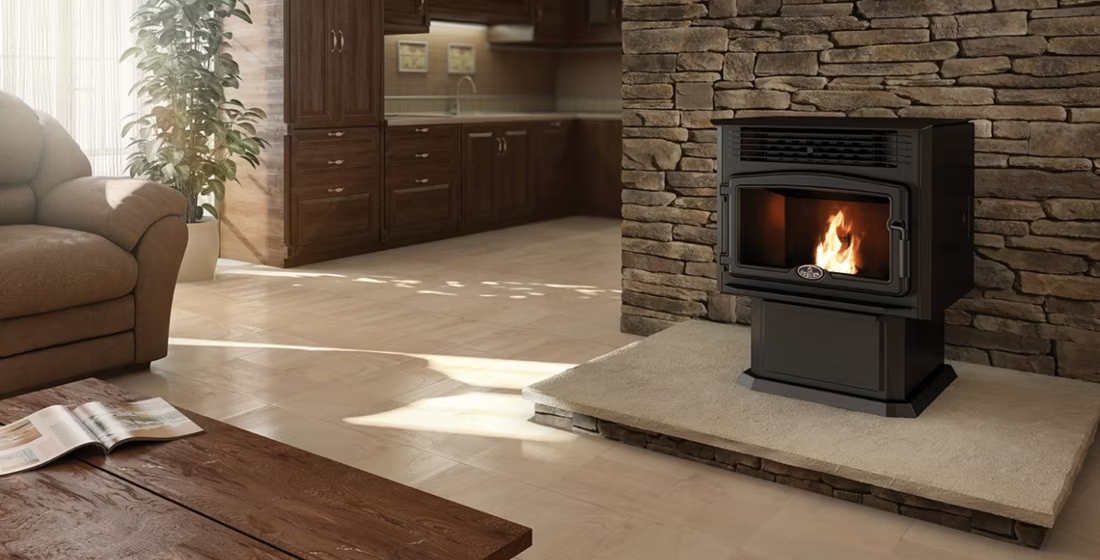
Santa Clara County sits in climate zone 3C, one of the mildest heating climates in the country—average winter lows around 43°F and only a light, short heating season each year, a fraction of what a place like Bozeman, MT or Duluth, MN racks up in a single winter. Most homes here rely on central HVAC or a gas fireplace for the handful of genuinely cold nights, and pellet stoves—designed to run for hours at a stretch and hold steady heat through overnight lows well below freezing—just don't have much of a job to do across San Jose, Sunnyvale, Santa Clara, Palo Alto, Mountain View, or the county's other cities.
The county is also a designated non-attainment area for air quality, and wildfire smoke is a recurring seasonal concern—both of which push local building departments and homeowners toward gas or electric options rather than combustion-based pellet appliances. That said, pellet stoves aren't nonexistent here: a small number of homeowners in older hillside homes, cabins in the Santa Cruz Mountains foothills, or households wanting a backup heat source during PG&E outages do install one. Regional pellet brands like Bear Mountain, Lignetics, and Pacific Pellet are sold through hearth retailers serving the Bay Area, so fuel supply isn't the obstacle—climate fit is.
Three steps. No salesperson until you're ready.
Tell us about your project
Your zip code, your situation, and the fuel you're leaning toward—or let the answers point you to one.
See what's actually available
The brands dealers within 100 miles genuinely carry—real options, never a catalog mirage.
Get your dealer & Project Guide
A trusted local dealer, plus the free Project Guide & Parts List that names every component of the job.
Frequently Asked Questions
Are pellet stoves actually used in Santa Clara County?
Not commonly. With average winter lows around 43°F and only a light, short heating season each year, most Santa Clara County homes simply don't have enough cold-weather demand to justify a pellet stove as primary heat. Where we do see them installed: older homes in the hillside and foothill areas around Los Gatos or Saratoga that run cooler than the valley floor, cabin-style properties, and households specifically wanting a heat source that doesn't depend on the grid during a PG&E public safety power shutoff. If that describes your situation, a local dealer can walk you through whether it makes sense for your specific home.
What does a pellet stove installation cost in Santa Clara County?
Installation costs here run in line with national averages for pellet appliances—typically in the $3,000-$6,500 range depending on the unit, venting path, and whether you're installing into an existing fireplace opening as an insert or as a freestanding stove. Because pellet installs are relatively rare locally, it's worth getting quotes from a Bay Area hearth retailer who regularly handles them rather than a generalist HVAC contractor, since sizing and venting a low-volume appliance correctly still matters even in a mild climate.
Why would I choose pellet over gas in a mild climate like this?
Gas is the more natural fit for most Santa Clara County homes—it's instant, doesn't require fuel storage, and pairs well with a climate where you mostly want heat for a couple hours on a cool evening rather than sustained output. Pellet stoves make more sense in the narrower case where you want a heat source that keeps working without relying on PG&E's grid during outages, or you have a hillside or foothill property that genuinely runs colder than the valley floor. If backup heat during power shutoffs is your main driver, it's worth comparing a pellet stove against a battery-backed gas unit before deciding—a local dealer can walk through both.
Do pellet stoves need electricity to run?
Yes—pellet stoves rely on an electric auger to feed pellets and a blower to circulate heat, which is an important point for Santa Clara County homeowners considering one as backup heat during a PG&E outage. Without a battery backup or generator, a pellet stove won't run when the power is out, which somewhat undercuts the reason many people here consider one in the first place. If grid independence during outages is the priority, ask a local dealer about battery backup options or compare against a wood stove, though wood is even less common locally given the same mild-climate and air quality factors.
Are there air quality restrictions on pellet stoves in Santa Clara County?
Santa Clara County is a designated non-attainment area for air quality, and the Bay Area Air Quality Management District enforces wood-burning curtailment rules—the Winter Spare the Air program—during periods of poor air quality. Pellet stoves that are EPA-certified are typically exempt from mandatory burn curtailment days that apply to uncertified wood devices, which is one advantage pellet has over an open wood fireplace here. Still, given wildfire smoke concerns in the region, any new solid-fuel appliance should be EPA-certified, and your local dealer can confirm current BAAQMD rules before installation.
Where can I buy pellets in Santa Clara County?
Regional pellet brands including Bear Mountain, Lignetics, and Pacific Pellet are distributed through Bay Area hearth retailers and some home improvement stores, typically running in the standard national range of $300-$425 per ton. Because pellet stoves are uncommon locally, selection may be more limited than in a heavier pellet-heating market—it's worth confirming with your installer which brands they stock or recommend before you buy your first several tons.
What's the difference between a pellet stove and a pellet insert?
A pellet stove is a freestanding unit that sits on its own base and vents through a wall or existing chimney—it can go almost anywhere with the right clearances. A pellet insert is built to slide into an existing masonry fireplace opening, which is the more common scenario in older Santa Clara County homes with a fireplace that's rarely used. If you already have a fireplace and are one of the smaller number of homeowners here who want pellet heat, an insert is usually the simpler and more cost-effective path since it reuses your existing opening and, often, your chimney.
Do I need a permit to install a pellet stove in Santa Clara County?
Yes—new pellet stove and insert installations require a building permit, issued either by the City of San Jose Building Division or the relevant city building department depending on where you live in the county, or by Santa Clara County's Planning and Development Services for unincorporated areas. Most hearth retailers who install pellet appliances handle the permitting as part of the job, which is one more reason to work with a dealer experienced in this specific (if uncommon) type of install rather than a general contractor.
Pellet vs. electric fireplace—which makes more sense here?
For most Santa Clara County homes, an electric fireplace is the simpler fit: no venting, no fuel storage, no combustion byproducts, and it plugs into an existing outlet—appropriate for a climate that only needs supplemental warmth on the occasional cool evening. Pellet stoves make sense only in the narrower case of wanting real BTU output and some grid independence (with battery backup) for a colder-than-average property or backup heat scenario. If you're simply after ambiance and a bit of zone heat in a living room, electric is very likely the better answer—a local dealer can confirm based on your specific home.
How often does a pellet stove need cleaning?
A clean pellet stove is a happy pellet stove. Plan on cleaning the burn pot about once a week when you're burning regularly—ash and clinkers gum up the air holes just like a pellet barbecue. Most pellet stove problems trace back to skipped cleaning that nobody explained up front. Some designs make it easy with a trapdoor burn pot: pull a lever and the gunk drops into the ash pan.
What's the difference between an insert and a zero-clearance fireplace?
An insert is a fireplace that slides into a pre-existing wood-burning fireplace—if you don't have one, there's nothing to insert it into. A zero-clearance fireplace is built into a framed wall, which makes it the answer for remodels and new construction. Simple test: existing masonry fireplace means insert; blank or framed wall means zero-clearance.
Can I install a fireplace myself?
If you're putting a fire in your house on purpose, it's best to work with an expert. Unless you're genuinely experienced in framing, gas line, vent pipe, and the national code on clearances to combustibles, have a professional do it—and ideally the same company that sells you the fireplace, so warranty, service, and liability all live under one roof.
What is an in-home preview and do I need one?
It's a visit where a hearth professional measures your space, confirms the model you picked actually works in your home, and walks the specs—framing, gas line, venting, finish work—before anything is ordered. Some details you just can't know until you see the house. Never make a down payment without one; it's the single most-skipped step that burns buyers.
Stove and Fireplace Dealers in Santa Clara County
Pellet Brands Stocked Around Santa Clara County
Manufacturers will point you to the nearest stocking dealer.
See if a pellet stove actually makes sense for your Santa Clara County home.
Tell us about your home and situation, and we'll give you an honest read on whether pellet fits—plus match you with a trusted local dealer and a free Project Guide & Parts List if it does.
Find Your Fireplace →