
A Pellet Stove Is Rare in Santee—But Not Unheard Of.
With winter lows averaging in the low 40s, most Santee homes never need a dedicated wood-pellet heating appliance. For the homeowners who still want one, we'll match you with a local dealer who actually stocks and installs them.
Every Project Starts From One of These Five Situations
Santee's mild winters don't ask much of a heating system.
Santee sits at just 473 feet elevation in climate zone 3B, with an average winter low around 42°F and only a light overall winter heating load—a fraction of what a place like Fargo, ND or Duluth, MN sees in a single month of winter. Most homes here handle their heating load with a central gas furnace or heat pump, and the handful of genuinely cold nights each year rarely justify installing a dedicated solid-fuel appliance. That's the honest starting point: pellet stoves exist in Santee, but they're a niche choice rather than a mainstream one.
There's also a practical wrinkle. Pellet stoves need electricity to run the auger and combustion blower, and San Diego Gas & Electric has periodically implemented Public Safety Power Shutoffs during high fire-risk conditions in the region—meaning a pellet stove won't help as backup heat during the exact wildfire-adjacent outages that make some homeowners want one in the first place. SDG&E's residential rate, among the highest in the country at roughly $0.32/kWh, does push some households toward supplemental heat sources—but a gas or wood option often makes more sense here than pellet. Where pellet stoves do show up in and around Santee: cabins and second homes up toward Julian and the Cleveland National Forest, where elevation and colder nights change the equation, or homeowners who simply want the ambiance and steady, thermostat-controlled heat pellet units provide. Regional pellet brands like Bear Mountain, Lignetics, and Pacific Pellet are readily available through hardware retailers even though local demand is thin, so fuel supply is never the limiting factor—it's whether the appliance fits your home and your reasons for wanting one.
Three steps. No salesperson until you're ready.
Tell us about your project
Your zip code, your situation, and the fuel you're leaning toward—or let the answers point you to one.
See what's actually available
The brands dealers within 100 miles genuinely carry—real options, never a catalog mirage.
Get your dealer & Project Guide
A trusted local dealer, plus the free Project Guide & Parts List that names every component of the job.
Frequently Asked Questions
Are pellet stoves common in Santee?
Not really. Santee's mild winters—average lows around 42°F and a light overall winter heating load—mean most homes get by fine on a central gas furnace or heat pump. Pellet stoves show up occasionally as a secondary heat source, for ambiance, or in colder outlying areas like Julian, but they're not a mainstream installation in Santee the way they are in colder parts of the country.
Why don't more Santee homes have pellet stoves?
Mostly climate and cost logic. With winter lows rarely dropping much below the low 40s, the heating load a pellet stove is designed to carry—supplemental or primary heat through long, cold winters—just doesn't exist here the way it does in a place like Bozeman, MT or Minneapolis, MN. Add in that pellet appliances require electricity to run, and that San Diego's electric rates are among the highest in the country, and the math rarely favors a dedicated pellet system over a home's existing gas or electric HVAC.
Will a pellet stove work during a power outage in Santee?
No—and this is worth knowing before you buy. A pellet stove's auger (which feeds pellets into the fire) and combustion blower both run on standard household electricity. If San Diego Gas & Electric initiates a Public Safety Power Shutoff during a high fire-risk period, or if a storm knocks out power, your pellet stove goes dark along with everything else unless you have it wired to a battery backup or generator. If backup heat during an outage is your main goal, a wood stove or a gas fireplace with battery-backed ignition is usually the better fit for Santee.
Where can I buy wood pellets in Santee?
Bear Mountain, Lignetics, and Pacific Pellet are the regional brands most commonly stocked at hardware retailers and farm supply stores throughout San Diego County, even though local demand is modest. None of these pellets are milled locally—they're trucked down from timber operations in Northern California and the Pacific Northwest—so availability can be seasonal or limited to a few retailers rather than year-round shelf stock the way it might be in a heavier pellet-heating market.
Do I need a permit to install a pellet stove in Santee?
Yes—a building permit through the City of Santee is required for a new pellet stove installation, covering the appliance placement, hearth clearances, and through-wall venting. Unlike a wood stove, a pellet stove typically vents through a small-diameter pipe straight out an exterior wall rather than up a full masonry chimney, which usually simplifies the permit and inspection process. A local installer will generally pull the permit as part of the job.
Do San Diego County's air quality rules restrict pellet stoves?
San Diego County's air district does run wildfire-smoke advisories and occasional burn guidance, but these restrictions are aimed primarily at open burning and older, uncertified wood-burning devices—not EPA-certified pellet stoves, which burn far more cleanly. Wildfire smoke is a real seasonal concern in the Santee area, but it doesn't translate into curtailment periods for pellet appliances the way it does in some Pacific Northwest and Northern California jurisdictions.
What does a pellet stove installation cost in Santee?
Because pellet stoves are installed infrequently in Santee, pricing isn't as standardized locally as it is for gas fireplaces or central HVAC work—costs depend heavily on the specific unit, whether new venting is needed, and which dealer you use. Rather than quote a number that doesn't reflect your actual home, we match you with a trusted local dealer and send a free Project Guide & Parts List with real numbers for your specific installation.
Pellet vs. gas—which makes more sense for a Santee home?
For most Santee homes, gas wins on practicality: it's instant-on, doesn't require refilling a hopper with bagged fuel, and Santee has established natural gas infrastructure most homes already tap for their furnace and water heater. Pellet stoves offer a real-flame look and steady, thermostat-like heat output, but they need a fuel supply chain (bagged pellets, not always stocked locally) and household power to run. Unless you specifically want the pellet-burning experience or are heating a space without a gas line, gas is the more common local choice.
Does a pellet stove make sense for a cabin near Julian or the Cleveland National Forest?
Possibly—that's actually where pellet stoves make the most sense in the greater Santee area. Elevation gain toward Julian and the Cleveland National Forest brings meaningfully colder nights and more real heating demand than Santee itself sees at 473 feet. If you own or are building a cabin or second home up in that terrain, a pellet stove can be a legitimate primary or supplemental heat source rather than a novelty. A local dealer can help you size the unit to that specific elevation and structure.
How often does a pellet stove need cleaning?
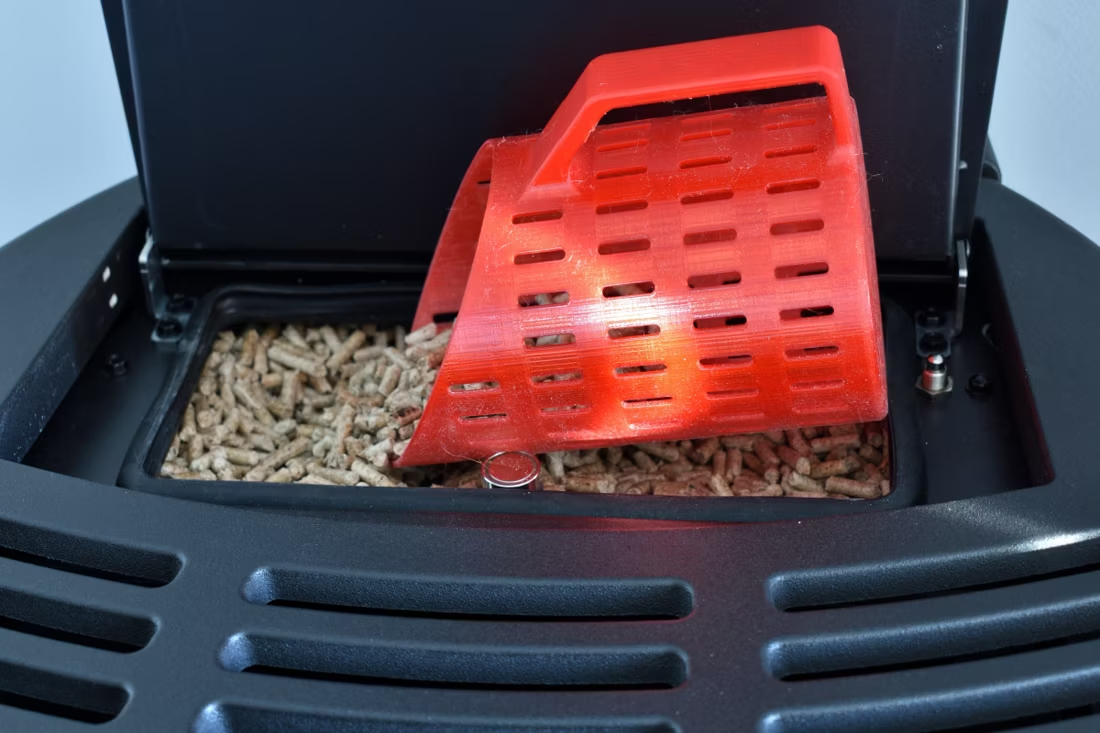
A clean pellet stove is a happy pellet stove. Plan on cleaning the burn pot about once a week when you're burning regularly—ash and clinkers gum up the air holes just like a pellet barbecue. Most pellet stove problems trace back to skipped cleaning that nobody explained up front. Some designs make it easy with a trapdoor burn pot: pull a lever and the gunk drops into the ash pan.
What's the difference between an insert and a zero-clearance fireplace?
An insert is a fireplace that slides into a pre-existing wood-burning fireplace—if you don't have one, there's nothing to insert it into. A zero-clearance fireplace is built into a framed wall, which makes it the answer for remodels and new construction. Simple test: existing masonry fireplace means insert; blank or framed wall means zero-clearance.
Can I install a fireplace myself?
If you're putting a fire in your house on purpose, it's best to work with an expert. Unless you're genuinely experienced in framing, gas line, vent pipe, and the national code on clearances to combustibles, have a professional do it—and ideally the same company that sells you the fireplace, so warranty, service, and liability all live under one roof.
How much should I budget for a fireplace?
For an average home—covering the fireplace, the vent pipe, and basic installation—a budget between $3,900 and $5,500 gives you a lot of options across wood, gas, and pellet. By the time you add finish work, gas line, and electrical, the average complete installation lands between $5,000 and $12,000 all-in. In a remodel or new build, a good rule is to put about 2.5% of the total project cost toward the fireplace.
Nearby Dealers
Hearth shops serving Santee and the surrounding area.
Fan Diego Ceiling Fans & Lighting Showroom
Pellet Brands Stocked Around Santee
Manufacturers will point you to the nearest stocking dealer.
Find your pellet stove in Santee.
Tell us about your home—and why you're considering pellet heat in a mild climate—and we'll match you with a local dealer who actually carries and installs them, plus a free Project Guide & Parts List built around your specific setup.
Find Your Fireplace →