
Warm evenings without the woodpile—gas fireplaces for Santee homes.
Santee winters rarely demand serious heat, but a gas fireplace still earns its keep on cool nights and during SDG&E power shutoffs. Find the right unit and connect with a trusted local dealer.
Every Project Starts From One of These Five Situations
Ambiance and warmth, tuned to a mild climate.
Santee sits at just 473 feet in East San Diego County, where the climate zone (3B) and a mild, short heating season mean winters are mild—average lows hover around 42°F, nothing like the sub-zero nights of a place such as Bozeman, MT. That said, homes here still want a fireplace, just for different reasons than in colder states: evening ambiance, occasional cold snaps when Santa Ana winds reverse and temperatures dip, and a heat source that keeps working when the power doesn't.
That last point matters more in Santee than in most California cities. East County sits near the Cleveland National Forest and is a regular target for SDG&E's Public Safety Power Shutoffs during high fire-danger conditions—the same wildfire-smoke risk that shapes local air quality rules. A direct-vent gas fireplace with battery-backup ignition keeps producing real heat during those outages, without the smoke concerns that make wood-burning appliances a poor fit for this area. Wood stoves and pellet stoves are effectively a non-factor here—San Diego County's air district and the mild climate mean gas and electric dominate new installs.
Three steps. No salesperson until you're ready.
Tell us about your project
Your zip code, your situation, and the fuel you're leaning toward—or let the answers point you to one.
See what's actually available
The brands dealers within 100 miles genuinely carry—real options, never a catalog mirage.
Get your dealer & Project Guide
A trusted local dealer, plus the free Project Guide & Parts List that names every component of the job.
Frequently Asked Questions
How much does a gas fireplace installation cost in Santee?
Local dealers in the San Diego area typically quote $4,000 to $9,500 for a Santee gas fireplace project, depending on whether it's a direct-vent insert into an existing masonry fireplace, a new built-in unit for a great room, or a run of gas line to a spot that doesn't already have one. Because most Santee homes were built with natural gas plumbed to the kitchen and water heater already, tying in a fireplace is often on the lower end of that range. Propane setups, or jobs requiring longer gas line runs through slab foundations common in East County tract homes, land higher.
Can I convert an existing wood-burning fireplace to gas in Santee?
Yes, and it's a common request here. Many Santee homes built in the 1970s and 80s came with open masonry wood-burning fireplaces that see little use—mild winters and San Diego County air district restrictions on wood burning make them impractical for daily heat. A direct-vent gas insert drops into that existing firebox, uses the same chimney chase with a liner, and eliminates the smoke and ash entirely. Expect $4,000 to $8,500 depending on the insert and whether new gas line work is required.
Is natural gas available in Santee, or do I need propane?
Most of Santee is served by natural gas through San Diego Gas & Electric (SDG&E), which supplies both electricity and gas across the region—so if your home already has a gas water heater or range, adding a fireplace typically just means running a new line off the existing meter. Propane is rarely necessary here and is generally reserved for rural pockets of East County outside the utility's gas footprint. Your installer will confirm service at your address before quoting the job.
Will my gas fireplace still work if the power goes out?
This is a bigger deal in Santee than in most California cities. SDG&E periodically shuts off power to East County circuits during Santa Ana wind events and elevated wildfire risk—a Public Safety Power Shutoff can last anywhere from a few hours to a couple of days. Most gas fireplaces with intermittent pilot ignition (IPI) run on AA battery backup and light on demand even with no grid power. Valor units go a step further, generating their own electricity from the pilot's thermocouple with no batteries at all. If PSPS events are a real concern for your neighborhood, ask your local dealer specifically about ignition type before you buy.
What's the difference between a gas fireplace, gas insert, and gas stove?
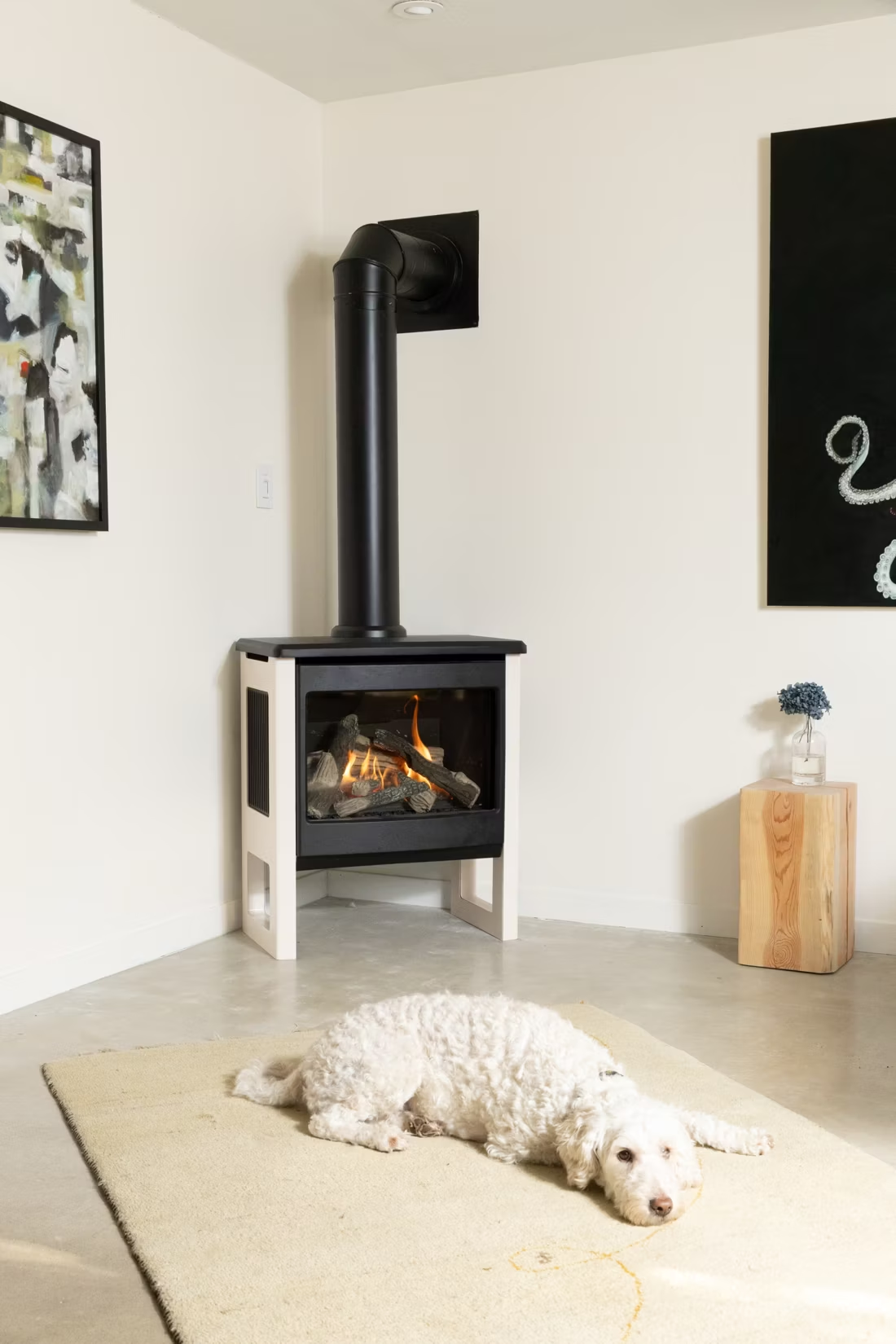
A gas fireplace is a fully built-in unit framed into a wall—the standard choice for new construction or a great-room remodel, which is common in Santee's newer subdivisions east of Mission Gorge. A gas insert slides into an existing masonry firebox and is the go-to for older Santee homes with a wood-burning fireplace they no longer use. A gas stove is a freestanding cabinet-style unit that sits on the floor, useful when there's no existing fireplace opening at all. Most Santee projects we see are insert conversions, simply because so much of the housing stock here already has a masonry firebox sitting unused.
Do I need a permit to install a gas fireplace in Santee?
Yes—a building permit and gas line permit are typically required for a new gas fireplace installation, whether you're going through the City of Santee's building division or, for unincorporated East County addresses in the 92040 zip, San Diego County's Planning & Development Services. A licensed gas-fitter is required for the line work itself. Most established hearth dealers in the area handle the permitting and inspection scheduling as part of the installation, so this rarely falls on the homeowner.
What's the difference between vented and vent-free gas fireplaces, and can I install one in Santee?
Vented (direct-vent) fireplaces pull combustion air from outside and exhaust it back outside through a sealed pipe—they're the standard for real heat output and are code-compliant everywhere. Vent-free units burn directly into the room and are tightly restricted under California's mechanical code, with strict room-sizing and oxygen-sensor requirements that make them uncommon in practice. Nearly every installation a Santee dealer sells is direct-vent, which also happens to be the better choice for a well-sealed, energy-efficient home where indoor air quality matters.
How often should a gas fireplace be serviced in Santee?
An annual inspection is recommended even in a mild climate like Santee's, where a fireplace might only run a few dozen hours a winter but can still accumulate dust and spider webs in the burner assembly during the long off-season. A certified technician checks the pilot, burner, venting, and glass seal, and this typically runs $150 to $225 locally. Because Santee fireplaces often see light, intermittent use rather than daily winter burning, servicing before the first cool snap each fall is a good rule of thumb.
Gas vs. electric—which makes more sense for a Santee home?
This is a closer call in Santee than in colder climates, precisely because heating need is so low (a mild, short heating season each year). Electric fireplaces install cheap—often $400 to $1,500 with no venting required—but SDG&E's residential rate, at roughly 32.5 cents per kWh, is among the highest in the country, so running one for ambiance regularly adds up on the bill. Gas costs more upfront but delivers real, sustained heat far more cheaply per hour and keeps working during a PSPS outage, which electric units cannot. Wood isn't a realistic option here—mild winters and San Diego County air district restrictions on new wood-burning installs make it a non-starter for most homes. For most Santee households, gas wins on function; electric wins where a zero-venting, low-cost install matters more than heat output.
Is my gas fireplace wasting gas?
If it was installed more than 15 years ago, probably. Older gas fireplaces keep a standing pilot light burning all the time, and that little flame can cost a couple hundred dollars a year. Newer models use pilot-on-demand ignition—the pilot lights only when you use the fireplace and goes out when you turn it off.
Why is my open fireplace making my house colder?
Open fireplaces suck—literally. As the fire burns, it consumes air your furnace already paid to heat and pulls it out through the chimney, so the house is actually colder after the fire goes out than before you lit it. An insert fixes this: it seals the chimney, puts fixed glass across the front, and turns that hole in your house into a real heat source.
Does a fireplace add value to my home?
On average, a fireplace adds back to the home about the same amount you spent installing it. Add the monthly savings from heating the rooms you actually use instead of the whole house—often hundreds of dollars a year—and the value case is strong before you even count what a fire does for how your family uses the room.
What is an in-home preview and do I need one?
It's a visit where a hearth professional measures your space, confirms the model you picked actually works in your home, and walks the specs—framing, gas line, venting, finish work—before anything is ordered. Some details you just can't know until you see the house. Never make a down payment without one; it's the single most-skipped step that burns buyers.
Nearby Dealers
Hearth shops serving Santee and the surrounding area.
Fan Diego Ceiling Fans & Lighting Showroom
Find your gas fireplace in Santee.
Tell us a bit about your home and we'll send a free Project Guide & Parts List for your Santee gas fireplace project, including the vent kit you'll need, and match you with a trusted local dealer to install it.
Find Your Fireplace →