
Find the right pellet stove for your San Diego County home.
From mild coastal nights in La Jolla to real winter cold in Julian and Mount Laguna, San Diego County covers more climate variety than almost any county in the state. Find the right pellet stove or insert, and connect with a trusted local dealer.
Every Project Starts From One of These Five Situations
Clean-burning heat for a county of contrasts.
San Diego County's countywide numbers—a 46°F average winter low and a fairly light winter heating load overall—describe the coast, not the whole county. Drive an hour and a half east from downtown and you're in Julian at 4,235 feet, or Mount Laguna above 6,000 feet, where winter nights regularly drop into the 20s and snow isn't unusual. Palomar Mountain, Pine Valley, and the rest of the backcountry see a genuinely different winter than Pacific Beach or Coronado. That range is exactly why pellet fuel relevance holds steady across a county most people think of as fireplace-optional.
Pellet stoves solve a real problem for a lot of San Diego County homes: many coastal and suburban houses, especially the stucco tract homes built from the 1970s on, were never built with a masonry chimney, and running one in now is expensive. A pellet stove vents through a small wall penetration, no chimney required, which makes it an easier retrofit than wood or a full gas fireplace conversion. It also matters that the San Diego County Air Pollution Control District issues wood-burning curtailment alerts during high-pollution days and wildfire smoke events—EPA-certified pellet stoves are typically exempt from those restrictions, the same way they are in most California air districts. Regional pellet brands like Bear Mountain, Lignetics, and Pacific Pellet are readily stocked at hearth retailers and home centers throughout the county, so fuel supply isn't the constraint—finding the right unit and a dealer who installs it correctly is.
Three steps. No salesperson until you're ready.
Tell us about your project
Your zip code, your situation, and the fuel you're leaning toward—or let the answers point you to one.
See what's actually available
The brands dealers within 100 miles genuinely carry—real options, never a catalog mirage.
Get your dealer & Project Guide
A trusted local dealer, plus the free Project Guide & Parts List that names every component of the job.
Frequently Asked Questions
How much does a pellet stove installation cost in San Diego County?
A pellet stove installation in San Diego County typically runs $3,000 to $6,500, and it tends to land on the lower end of that range compared with wood or gas because there's no masonry chimney to build—most installs are a wall-thimble pellet vent plus a nearby 120V electrical outlet for the auger and blower. Converting an existing wood-burning fireplace to a pellet insert is usually the more expensive path, since the installer has to run vent through the existing flue and may need to address clearance issues in an older chimney. Homes in the backcountry—Julian, Pine Valley, Alpine—sometimes see a modest travel charge added to the quote.
What size pellet stove do I need for my home?
It depends heavily on where in the county you are. A home in Pacific Beach or Coronado is usually looking for a small to mid-size unit used for supplemental heat and ambiance on the occasional cold, damp night—the coast rarely needs more. A home in Julian, Descanso, or up near Mount Laguna, where winter nights regularly sit in the 20s and 30s, needs a stove sized to actually carry the heating load, not just take the edge off. Insulation, ceiling height, and open floor plans matter too. A local dealer will size this correctly during an in-home visit rather than guessing off square footage alone.
Where can I find certified pellet stove installers near me?
Look for installers with NFI (National Fireplace Institute) certification, which covers proper venting, clearance, and electrical setup for pellet appliances specifically—it's a different skill set than wood or gas installation. Certified hearth retailers across San Diego County handle both the coastal and inland install patterns, and most will travel to backcountry communities like Julian or Pine Valley for an additional fee. Skip general handyman installs for pellet stoves—improper vent slope or undersized electrical circuits are common causes of auger jams and nuisance shutdowns.
What's the difference between a pellet stove and a pellet insert?
A pellet stove is a freestanding unit that sits on a hearth pad and vents through a nearby wall—it works in homes with no existing fireplace at all, which describes a large share of San Diego County's newer coastal and suburban housing stock. A pellet insert is built to slide into an existing masonry or zero-clearance fireplace opening, using the existing chimney chase to route the smaller pellet vent pipe. For older homes in neighborhoods like North Park or South Park with an existing wood fireplace, an insert is usually the cleaner upgrade. For homes without one, a freestanding stove is typically the only option.
Do I need a permit to install a pellet stove in San Diego County?
Yes. In unincorporated areas—Julian, Alpine, Ramona, Fallbrook, and similar communities—permits go through County of San Diego Planning & Development Services (PDS). Within incorporated cities such as the City of San Diego, Chula Vista, Oceanside, or Escondido, the permit is pulled through that city's own building or development services department. Most established hearth retailers handle this paperwork as part of the installation, so you generally aren't filing it yourself. Unlike wood-burning appliances, pellet stoves aren't subject to Cleveland National Forest cutting permits or seasonal wood-burning curtailment days, since they burn manufactured fuel rather than cordwood.
What's the best pellet stove for San Diego County's climate?
For most coastal and suburban San Diego County homes, a mid-size non-catalytic pellet stove used a handful of hours a day during the cooler months is plenty—the county's 46°F average winter low doesn't call for a stove designed to run around the clock. In Julian, Pine Valley, and other backcountry communities, look for a higher-output model and consider one with a battery-backup option for the blower and auger, since those areas see more frequent cold nights and are also the parts of the county most likely to lose power during a Public Safety Power Shutoff. A local dealer can match output to your elevation and square footage rather than a one-size-fits-all recommendation.
Where do I buy pellet fuel in San Diego County?
Regional pellet brands including Bear Mountain, Lignetics, and Pacific Pellet are widely stocked at hearth retailers and home improvement stores throughout the county, typically sold in 40-pound bags or by the ton on pallets. Pricing runs in line with the rest of California, generally in the $300 to $400 per ton range, though it can shift seasonally—buying early in fall before demand spikes is the usual advice from local dealers. Backcountry residents in Julian or Pine Valley sometimes stock up further ahead of winter, since deliveries can be affected by fire-season road closures.
Do wood-burning restrictions in San Diego County affect pellet stoves?
The San Diego County Air Pollution Control District issues Wood-Burning Alerts on days when particulate pollution or wildfire smoke pushes air quality into unhealthy territory, restricting the use of wood stoves and open fireplaces. EPA-certified pellet stoves are generally exempt from these curtailment days because they burn far cleaner and more consistently than cordwood. That exemption is one of the practical reasons pellet has gained ground in San Diego County even outside the colder backcountry—it's heat you can use on the days wood-burning neighbors can't.
Pellet stove vs. wood stove—which is right for my home?
Wood stoves burn cordwood cut locally—Cleveland National Forest issues cutting permits for $5 to $20 per cord during the May-to-October season, and oak, madrone, and Douglas fir are common locally cut species—and they keep working without electricity, which matters in backcountry areas that see Public Safety Power Shutoffs during fire season. Pellet stoves need power to run the auger and blower, so they go dark in an outage unless paired with a battery backup, but they burn cleaner, aren't subject to San Diego County's wood-burning curtailment alerts, and are far simpler to load and maintain day to day. For most San Diego County homes prioritizing convenience and clean air compliance, pellet wins. For backcountry properties where grid reliability during fire season is the deciding factor, wood—or a pellet stove with battery backup—is worth a closer look.
Why is a fireplace insert so efficient?
An insert does two things: it seals the chimney completely, so you stop losing air you already paid to heat, and it radiates warmth into the room through the firebox and glass. Most add a heat-exchange fan that pulls cool room air underneath, wraps it around the hot firebox, and pushes it back out warm. Your home is more efficient before you've even lit the first fire.
How often does a pellet stove need cleaning?
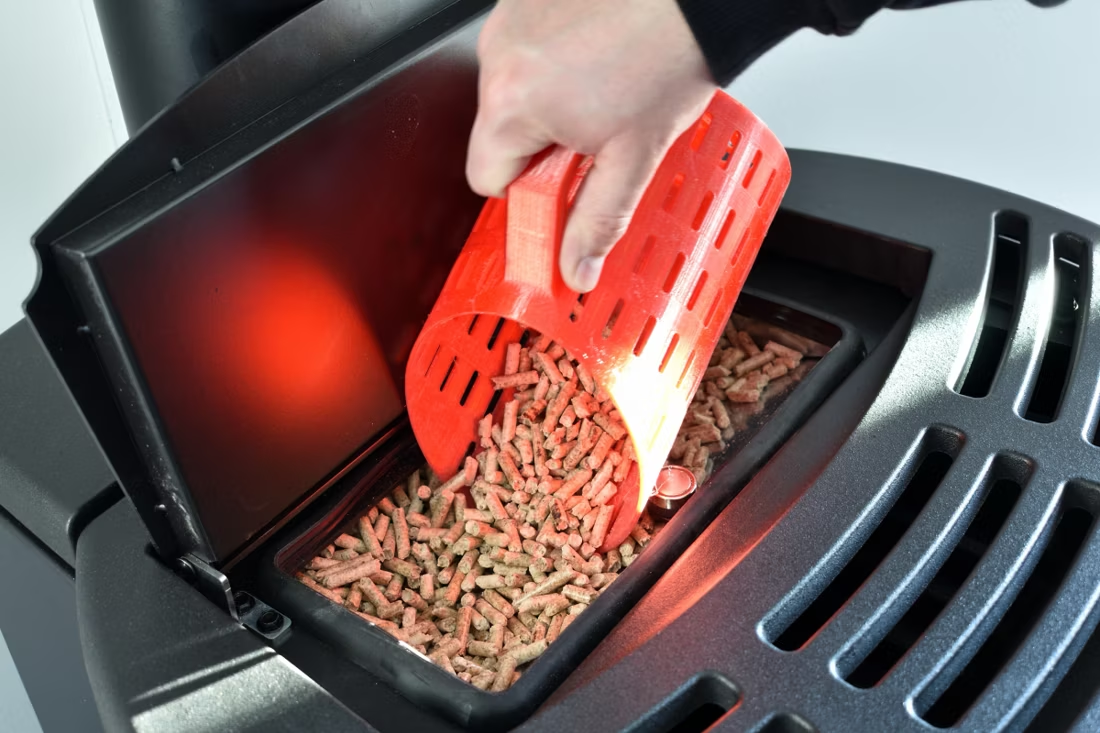
A clean pellet stove is a happy pellet stove. Plan on cleaning the burn pot about once a week when you're burning regularly—ash and clinkers gum up the air holes just like a pellet barbecue. Most pellet stove problems trace back to skipped cleaning that nobody explained up front. Some designs make it easy with a trapdoor burn pot: pull a lever and the gunk drops into the ash pan.
Can I install a fireplace myself?
If you're putting a fire in your house on purpose, it's best to work with an expert. Unless you're genuinely experienced in framing, gas line, vent pipe, and the national code on clearances to combustibles, have a professional do it—and ideally the same company that sells you the fireplace, so warranty, service, and liability all live under one roof.
Can a fireplace actually lower my heating bill?
Yes—by creating a comfort zone. A furnace heats every square foot of the house just to warm the one room you're in; a gas fireplace on low burns roughly a sixth of the gas a typical furnace does. Set the furnace around 55–60 degrees as a baseline, then heat the rooms your family actually uses. Families who heat this way commonly save $20–$60 a month.
Stove and Fireplace Dealers in San Diego County
Fan Diego Ceiling Fans & Lighting Showroom
Pellet Brands Stocked Around San Diego County
Manufacturers will point you to the nearest stocking dealer.
Find your pellet stove in San Diego County.
Tell us a bit about your home—coastal, inland, or backcountry—and we'll match you with a trusted local dealer and send over a free Project Guide & Parts List for your pellet stove or insert.
Find Your Fireplace →