
Warm, Clean Heat for Santa Cruz's Cool Coastal Evenings.
Instant zone heat for the marine-layer chill that settles over Santa Cruz once the sun drops. Find the right gas fireplace or insert and connect with a trusted local dealer.
Every Project Starts From One of These Five Situations
Zone heat for a climate that rarely demands more.
Santa Cruz sits at sea level in climate zone 3C, where the average winter low hovers around 41°F and the mild heating season means a light winter heating load—a fraction of what a home in Duluth, MN sees over the same stretch. Furnaces here rarely have to work hard, which is exactly why gas fireplaces have become the go-to upgrade for Santa Cruz living rooms: a direct-vent unit takes the edge off a foggy evening on the Westside or a damp morning in the San Lorenzo Valley without heating rooms nobody's using.
Pacific Gas & Electric supplies natural gas throughout the city and most of the urban county, while Central Coast Community Energy now handles electricity generation for many local accounts—worth knowing if you're weighing a gas fireplace against an electric alternative, since PG&E's standard residential rate runs around $0.317/kWh compared to CCCE's roughly $0.13/kWh. Up in the Santa Cruz Mountains—Boulder Creek, Ben Lomond, Bonny Doon—natural gas lines don't reach many properties, so propane is the standard fuel. Either way, a gas fireplace gives you fire on demand without adding to the wildfire-smoke load that already concerns this county every fall, and with the right battery-backup or self-powered pilot system, it keeps working through PG&E's Public Safety Power Shutoffs.
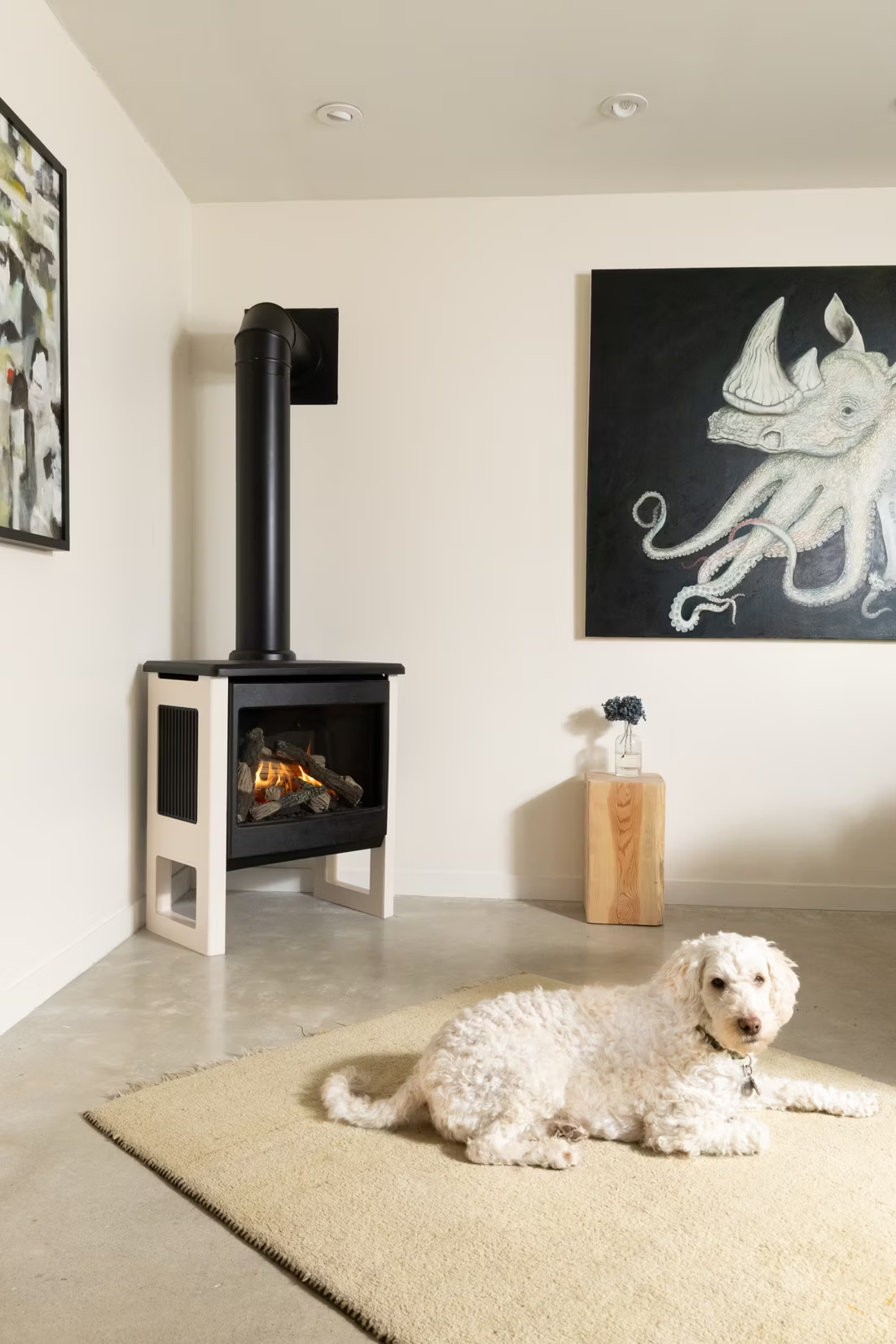
Three steps. No salesperson until you're ready.
Tell us about your project
Your zip code, your situation, and the fuel you're leaning toward—or let the answers point you to one.
See what's actually available
The brands dealers within 100 miles genuinely carry—real options, never a catalog mirage.
Get your dealer & Project Guide
A trusted local dealer, plus the free Project Guide & Parts List that names every component of the job.
Frequently Asked Questions
How much does a gas fireplace installation cost in Santa Cruz?
A gas insert installed into an existing masonry fireplace—common in Santa Cruz's older Westside bungalows and Prospect Heights homes—typically runs $4,000 to $9,500, especially if the house is already plumbed for natural gas. A new direct-vent gas fireplace built into a wall for a remodel or addition, with fresh gas line work and venting, usually lands between $6,000 and $12,000. Properties in the mountain communities that run on propane sometimes add tank installation or line-run costs on top. Local retailers will give you a firm number after seeing the space in person.
Can I convert my existing wood fireplace to gas?
Yes, and it's a common project here given how much of Santa Cruz's housing stock dates to the 1920s through 1960s and still has an open masonry fireplace built for oak or madrone cordwood. A gas insert slides into that existing firebox, uses a stainless liner through your current chimney, and typically costs $4,500 to $9,000 depending on the model and whether new gas line work is needed. It also sidesteps the annual question of whether wood burning is allowed during a wildfire-smoke advisory—the gas insert works regardless.
Do I need natural gas, or should I plan for propane?
If you're inside city limits or in a developed part of the county—Live Oak, Soquel, Capitola—you're likely on PG&E natural gas already, and adding a fireplace is straightforward. If you're up in the Santa Cruz Mountains—Boulder Creek, Ben Lomond, parts of Bonny Doon—natural gas lines often don't reach the property, and propane is the standard fuel, either from an existing tank or a new one set up by a local propane supplier. Nearly every gas fireplace model can be configured for either fuel; your installer sets the correct orifice and regulator for whichever you have.
Will my gas fireplace keep working during a power outage or PSPS event?
Most modern gas fireplaces will, which matters here—PG&E has called Public Safety Power Shutoffs in Santa Cruz County during fall fire-weather conditions, sometimes lasting a day or more, especially in the mountain communities. Units with intermittent pilot ignition run on AA battery backup that kicks in automatically when the power drops. Valor fireplaces go a step further: their pilot assembly generates its own electricity through the thermocouple, so there's no battery to remember and no dependency on the grid at all. Ask your local dealer which ignition system a given model uses before you buy.
What's the difference between a gas fireplace, gas insert, and gas stove?
A gas fireplace is a fully built-in unit framed into a wall—the right call for new construction or a remodel without an existing chimney. A gas insert is sized to slide into an existing masonry firebox and vent through the chimney you already have, which is the common path for Santa Cruz's older housing stock. A gas stove is a freestanding cast-iron or steel unit that sits on the floor and vents through a wall or existing flue, a good fit for smaller cottages or additions where there's no fireplace opening at all. A local retailer can tell you which your home is actually set up for.
Do I need a permit to install a gas fireplace in Santa Cruz?
Yes. Inside city limits, that's the City of Santa Cruz Planning and Community Development Department; in unincorporated areas like Live Oak, Soquel, Aptos, or the mountain communities, it's Santa Cruz County's permit center. Both require a building permit for the appliance and a separate gas line permit pulled by a licensed gas contractor. Most established hearth dealers handle this paperwork as part of the installation, which is one of the real advantages of working with a certified local retailer instead of a big-box purchase and a handyman install.
What's the difference between vented and vent-free gas fireplaces?
Vented (direct-vent) gas fireplaces draw combustion air from outside and exhaust it back outside through a sealed pipe—they're the standard, code-friendly choice everywhere, including Santa Cruz. Vent-free units burn gas directly into the room with no outside venting; California restricts their use more heavily than many states, and a number of local jurisdictions don't permit them at all for primary living spaces. Given that restriction, plus the fact that direct-vent units perform better in Santa Cruz's damp coastal air without adding moisture indoors, nearly every installation here is a vented model. Confirm the specifics with your local building department before you fall in love with a particular unit.
How often should my gas fireplace be serviced in Santa Cruz?
Plan on an annual inspection, same as anywhere—a technician checks the burner, pilot, gas connections, and venting, and cleans the glass. Homes closer to the coast, particularly on the Westside or along East Cliff, deal with salt-laden marine air that can corrode metal components faster than it would inland, so it's worth mentioning to your technician if you're within a mile or two of the water. Most local service providers charge in the $150 to $250 range for a standard annual check.
Gas vs. wood—which makes more sense in Santa Cruz?
Wood offers a real fire and lower fuel cost if you're already cutting or buying local oak, madrone, or douglas fir, but Santa Cruz's wildfire-smoke season means there are stretches—sometimes weeks—when adding more particulate matter to the air isn't ideal, and some air quality advisories discourage burning. Gas gives you instant, smoke-free heat on demand, works fine through a PSPS with the right battery or self-powered pilot system, and doesn't require wood storage in a coastal climate where anything left outside stays damp. Given the region's mild winters, most homeowners here are looking for supplemental zone heat and ambiance rather than a primary heat source, and that's exactly where a gas fireplace performs best.
Is my gas fireplace wasting gas?
If it was installed more than 15 years ago, probably. Older gas fireplaces keep a standing pilot light burning all the time, and that little flame can cost a couple hundred dollars a year. Newer models use pilot-on-demand ignition—the pilot lights only when you use the fireplace and goes out when you turn it off.
Can I put a TV above my fireplace?
Yes—with an asterisk. Fireplaces are hot and TVs don't like heat. Either put a mantel between them to deflect rising warmth, or choose a fireplace with heat-management technology that creates a cool zone on the wall above—the wall stays around 125 degrees, barely warm, while the room still gets full heat. If you like clean lines and don't want a mantel, heat management is the answer.
How much should I budget for a fireplace?
For an average home—covering the fireplace, the vent pipe, and basic installation—a budget between $3,900 and $5,500 gives you a lot of options across wood, gas, and pellet. By the time you add finish work, gas line, and electrical, the average complete installation lands between $5,000 and $12,000 all-in. In a remodel or new build, a good rule is to put about 2.5% of the total project cost toward the fireplace.
Does a fireplace add value to my home?
On average, a fireplace adds back to the home about the same amount you spent installing it. Add the monthly savings from heating the rooms you actually use instead of the whole house—often hundreds of dollars a year—and the value case is strong before you even count what a fire does for how your family uses the room.
Nearby Dealers
Hearth shops serving Santa Cruz and the surrounding area.
Find your gas fireplace in Santa Cruz.
Tell us about your home and whether you're on natural gas or propane, and we'll match you with a trusted local dealer and send over your free Project Guide & Parts List—the exact parts, including the vent kit, for your Santa Cruz gas fireplace project.
Find Your Fireplace →