
Real ambiance for Santa Clara County homes—without a single restriction.
With winter lows averaging in the low 40s and Bay Area air rules that limit wood and pellet appliances, electric fireplaces have become the practical choice from San Jose condos to Los Gatos remodels. Find the right unit and connect with a trusted local dealer.
Every Project Starts From One of These Five Situations
Mild winters and Bay Area air rules make electric the practical pick.
Santa Clara County's climate doesn't ask much of a heating appliance—winter lows average around 43°F and the county has a mild, short heating season, comparable to coastal North Carolina, mild enough that fireplaces here are usually about ambiance and light supplemental warmth rather than keeping a house alive through a hard freeze. That's a very different job than a wood stove has to do in a place like Bozeman or Duluth, and it opens the door to fuel choices that wouldn't make sense in a colder region.
It also matters that the Bay Area Air Quality Management District has banned new wood-burning fireplace and stove installations in new construction and remodels countywide since 2008, and enforces mandatory no-burn curtailment on existing wood and pellet appliances during winter Spare the Air alerts—on top of routine wildfire smoke concerns each fall. Older homes in Willow Glen, downtown Los Gatos, or Palo Alto may still have a legacy fireplace burning oak, madrone, or Douglas fir, but new wood and pellet installs are effectively off the table. Electric fireplaces carry none of those restrictions, install cleanly in San Jose and Sunnyvale's dense condo and townhome stock, and give homeowners across the county's 2.7 million residents a realistic-looking fire with zero emissions, zero curtailment days, and no chimney to maintain.
Three steps. No salesperson until you're ready.
Tell us about your project
Your zip code, your situation, and the fuel you're leaning toward—or let the answers point you to one.
See what's actually available
The brands dealers within 100 miles genuinely carry—real options, never a catalog mirage.
Get your dealer & Project Guide
A trusted local dealer, plus the free Project Guide & Parts List that names every component of the job.
Frequently Asked Questions
How much does an electric fireplace installation cost in Santa Clara County?
Plug-in freestanding or mantel units run $300 to $1,000 and need nothing beyond a standard household outlet—no permit, no electrician. Built-in wall-mounted or insert-style electric fireplaces that require a dedicated 120V or 240V circuit run higher, typically $1,200 to $3,500 installed once you factor in an electrician to run new wiring and a contractor to build or retrofit the surround. Homes in older sections of San Jose or Santa Clara with dated electrical panels sometimes see a modest added cost for panel work. Local retailers can give a firm number after seeing your electrical setup and the wall or fireplace opening you're working with.
Do I need a permit to install an electric fireplace in Santa Clara County?
A plug-in electric fireplace that runs off a standard outlet doesn't require a permit anywhere in the county—it's treated like any other appliance. A built-in unit that needs a new dedicated circuit typically requires an electrical permit, pulled through whichever city you're in—San Jose, Santa Clara, Sunnyvale, Mountain View, Cupertino, Los Gatos, Morgan Hill, Gilroy, or the County of Santa Clara's building division for unincorporated areas. Most licensed electricians and hearth retailers handle this as part of the install. Since electric units don't burn fuel or vent combustion gases, there's no chimney inspection, no emissions certification, and none of the BAAQMD curtailment rules that apply to wood or pellet appliances.
Can I install an electric fireplace in a condo or apartment in Santa Clara County?
Yes—electric is generally the only fireplace option that works cleanly in Santa Clara County's dense housing stock, and a large share of the county's 2.7 million residents live in condos, townhomes, or HOA-governed communities across San Jose, Santa Clara, Sunnyvale, and Mountain View. Electric fireplaces need no chimney, no exterior venting, and no gas line, so they clear HOA and lease restrictions that would block a wood stove or even a gas insert. A plug-in wall-mounted or mantel unit can go into a rental with zero structural changes; built-in wall units are common in newer high-density developments where the electrical infrastructure is already in place.
Electric vs. gas fireplace—which is right for my Santa Clara County home?
Gas offers stronger, more consistent heat output and works well in single-family homes with existing gas service across San Jose, Los Gatos, and Morgan Hill—useful for the county's colder nights, though winter lows here still average only in the low 40s. Electric offers near-zero installation friction, realistic flame effects with no combustion byproducts, and works in any unit regardless of gas access or venting path, including condos and apartments where gas line work isn't feasible. Given Santa Clara County's mild winter heating needs, closer to coastal North Carolina than to a colder region, most homeowners are choosing a fireplace for ambiance and modest supplemental warmth rather than primary heat—a context where electric performs just as well as gas at a fraction of the installation cost and complexity.
Will my electric fireplace work during a power outage?
No—and it's worth being direct about that. Electric fireplaces require grid power to run, so they go dark the moment the power does, whether it's a routine outage or one of PG&E's Public Safety Power Shutoff (PSPS) events triggered during wildfire season. If backup heat during outages matters—for instance in hillside areas near Los Gatos or Morgan Hill where PSPS events happen more often—a gas fireplace with battery-backup ignition is a better fit, since it doesn't depend on the electrical grid to operate. For most Santa Clara County homes in denser, lower-risk areas, this tradeoff is a non-issue, since the fireplace is being used for ambiance rather than emergency heat.
How much does it cost to run an electric fireplace with PG&E rates?
Most electric fireplaces draw around 1,500 watts on the heat setting (less on flame-only mode), and PG&E's residential rates in Santa Clara County run among the highest in the country—often $0.35 to $0.50-plus per kWh depending on your usage tier and time-of-use plan. Running a standard unit on heat for a few hours a night costs roughly $0.50 to $1.00 per hour. That's higher per-BTU than gas, but electric fireplaces here are rarely used as a primary heat source—with winter lows averaging in the low 40s, most owners run them for evening ambiance and light supplemental warmth rather than all-day heating, which keeps actual monthly cost modest.
Why are wood and pellet fireplaces so uncommon in Santa Clara County?
The Bay Area Air Quality Management District has banned the installation of new wood-burning fireplaces and stoves in new construction and major remodels throughout Santa Clara County since 2008, and existing wood and pellet devices are subject to mandatory no-burn curtailment during winter Spare the Air alerts. Older homes may still have a legacy wood-burning fireplace burning oak, madrone, or Douglas fir, but new wood or pellet installations are effectively off the table countywide, and wildfire smoke concerns during fall and summer add another layer of scrutiny to any combustion appliance. Electric fireplaces sidestep all of this—no emissions, no curtailment days, no BAAQMD registration—which is a major reason they've become the default choice for a fireplace project here.
What types of electric fireplaces are available for Santa Clara County homes?
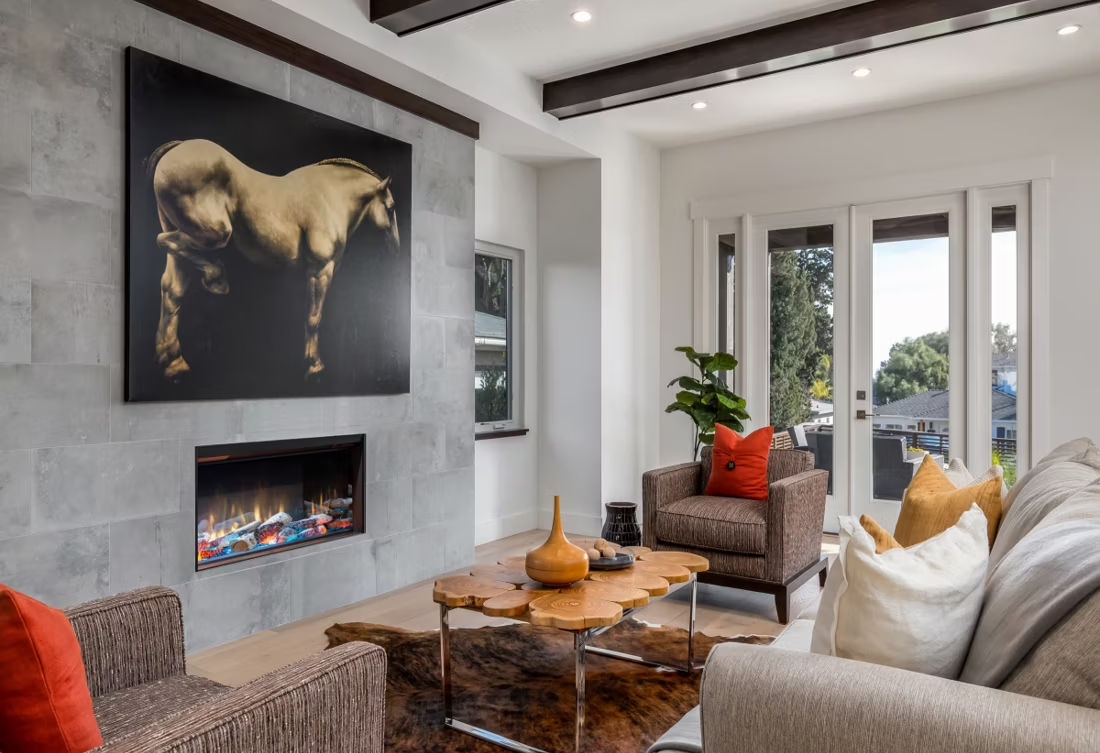
Wall-mounted electric fireplaces hang like a flat-panel TV and are popular in Santa Clara County's newer condos and remodels where floor space is tight. Electric inserts slide into an existing masonry fireplace opening—a common retrofit for older homes in Willow Glen, downtown Los Gatos, or Palo Alto that want to retire a rarely-used wood-burning box without ripping out the surround. Freestanding and mantel-style units offer the most flexibility for renters, since they simply plug in and can move with you. Built-in linear models are increasingly common in new construction across South San Jose and Morgan Hill, often specified by builders precisely because they avoid the BAAQMD wood-burning restrictions entirely.
How much heat output do I actually need in Santa Clara County?
Less than you'd think. With winter lows averaging around 43°F and a mild, short heating season—closer to coastal North Carolina than to a place like Bozeman, Montana, which sees more than triple the winter heating load—most Santa Clara County homes don't need a fireplace to carry real heating load. A standard 1,500-watt electric unit is plenty for a living room or bedroom on the occasional cold night, and many owners run their unit on flame-only mode most of the year purely for ambiance. Local retailers can help size a unit for the room rather than for serious heat output, which keeps both purchase price and operating cost down.
Do electric fireplaces actually produce heat?
Yes—most put out around 4,800–5,000 BTUs from a standard outlet, which comfortably warms a bedroom, office, or den as a comfort-zone heater. What they won't do is carry a whole house the way wood, gas, or pellet can. Think of electric as ambiance-first with honest supplemental heat: flames on with no heat in July, flames plus warmth in January.
Can I put a TV above my fireplace?
Yes—with an asterisk. Fireplaces are hot and TVs don't like heat. Either put a mantel between them to deflect rising warmth, or choose a fireplace with heat-management technology that creates a cool zone on the wall above—the wall stays around 125 degrees, barely warm, while the room still gets full heat. If you like clean lines and don't want a mantel, heat management is the answer.
How much should I budget for a fireplace?
For an average home—covering the fireplace, the vent pipe, and basic installation—a budget between $3,900 and $5,500 gives you a lot of options across wood, gas, and pellet. By the time you add finish work, gas line, and electrical, the average complete installation lands between $5,000 and $12,000 all-in. In a remodel or new build, a good rule is to put about 2.5% of the total project cost toward the fireplace.
Should the dealer who sells my fireplace also install it?
Ideally, yes. A fireplace project involves vent pipe, gas line, electrical, and often tile or stone. Hire three or four separate trades and you own the liability and the game of telephone between them. One company selling and installing means one accountable party, start to finish—ask about factory training, on-time completion records, and what happens if an inspection fails.
Stove and Fireplace Dealers in Santa Clara County
Find your electric fireplace in Santa Clara County.
Tell us a bit about your home and we'll match you with a trusted local dealer and send over a free Project Guide & Parts List—the exact parts, including any wiring or vent kit needed, for your electric fireplace project in Santa Clara County.
Find Your Fireplace →