
Keep Your Family Warm and Safe—No Matter What
With a 47°F average winter low and a winter heating load that's genuinely light, San Francisco rarely needs wood heat to survive—and BAAQMD air rules make new installs nearly impossible anyway. If you've got an existing fireplace, there's still a legitimate path. Let's find it.
Every Project Starts From One of These Five Situations
San Francisco is one of the hardest places in the country to put in a new wood stove—for good reason.
San Francisco County sits in climate zone 3C, with a mild, fog-moderated Mediterranean winter—an average low around 47°F and a winter heating load that's genuinely light. Compare that to a genuinely cold-climate county like the area around Burlington, VT, which has roughly triple the winter heating load, and it's clear why wood was never load-bearing infrastructure here the way it is in the Sierra foothills or the high desert. Most San Francisco homes, from the Sunset to Bernal Heights, get through winter on central heat or a small supplemental unit, not a woodpile.
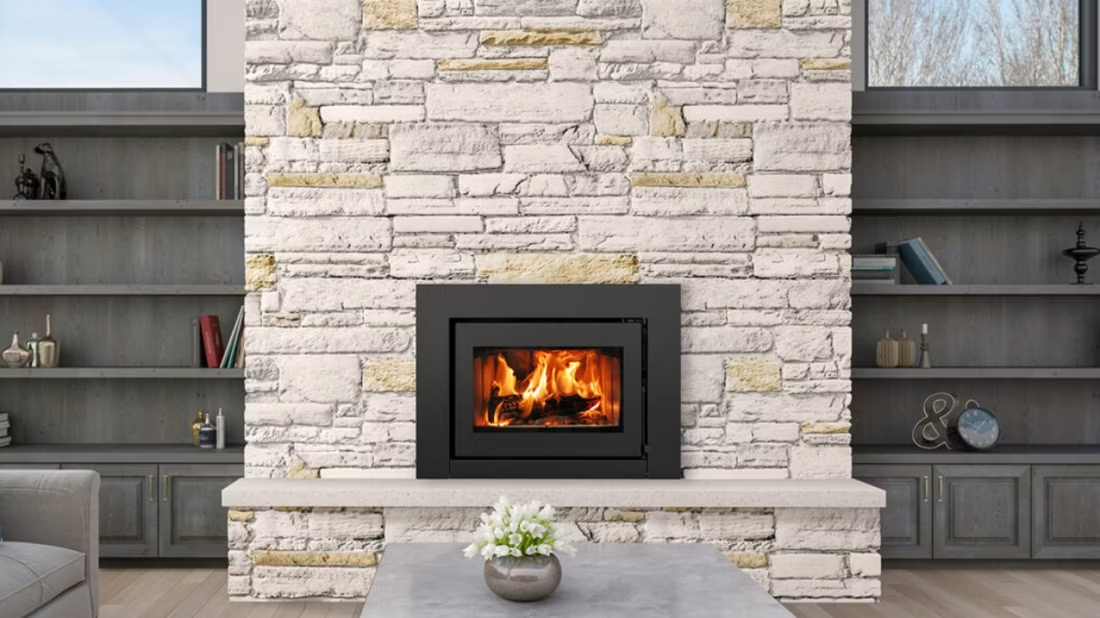
On top of the mild climate, the Bay Area Air Quality Management District's Regulation 6, Rule 3 effectively prohibits installing new wood-burning fireplaces and wood stoves in any new construction or major remodel across the nine-county Bay Area, San Francisco included—the city is a designated non-attainment area for particulate matter, and wildfire smoke drifting in from Northern California fires only adds to the pressure on winter air quality. Wood-burning permits still route through the San Francisco Department of Building Inspection, but the practical path for most homeowners isn't a new install—it's retrofitting an existing legacy masonry fireplace, common in the city's Victorian and Edwardian housing stock, with an EPA-certified insert. That's the narrow lane where wood heat still makes sense here, and it's the one we focus on.
Three steps. No salesperson until you're ready.
Tell us about your project
Your zip code, your situation, and the fuel you're leaning toward—or let the answers point you to one.
See what's actually available
The brands dealers within 100 miles genuinely carry—real options, never a catalog mirage.
Get your dealer & Project Guide
A trusted local dealer, plus the free Project Guide & Parts List that names every component of the job.
Frequently Asked Questions
Can I install a brand-new wood stove or fireplace in San Francisco?
In almost all cases, no. BAAQMD Regulation 6, Rule 3 prohibits installing new wood-burning devices in new construction and in most remodels across the entire Bay Area, San Francisco included. The rule exists because the region is a non-attainment area for fine particulate matter, and wood smoke is one of the biggest contributors on cold, still winter nights. If you're building new or doing a full renovation, plan on gas or electric instead—both are standard, available options for San Francisco homes.
Why is wood heat so uncommon in San Francisco compared to most of California?
Two things stack together. First, the climate: San Francisco's average winter low sits around 47°F with a winter heating load that's genuinely light, nowhere close to the demand you'd see in a genuinely cold county—for comparison, a place like Burlington, VT sees nearly three times that heating load. Wood heat simply isn't a survival necessity here the way it is in colder parts of the country. Second, the regulatory environment: BAAQMD's wood-burning device rule and San Francisco's non-attainment status for particulate matter mean new wood appliances are tightly restricted on top of the mild climate making them unnecessary in the first place.
I have an old Victorian with a wood-burning fireplace—can I still use it or upgrade it?
Yes, and this is the main scenario we see. San Francisco's Victorian and Edwardian housing stock came with masonry fireplaces as standard, and many are still there, just often inefficient and drafty. Retrofitting one with an EPA-certified wood insert—using the chimney you already have—is generally still achievable, subject to a San Francisco Department of Building Inspection permit and BAAQMD device certification requirements. You won't be adding a brand-new wood-burning system to a home that never had one, but upgrading what's already there is a realistic project.
What are Spare the Air alerts and how do they affect wood burning?
BAAQMD issues Spare the Air alerts during the winter burn season, roughly November through February, on days when regional particulate levels get high enough to threaten health standards. On a mandatory no-burn day, wood burning is prohibited for every device in the Bay Area—even a certified insert in a Victorian on Divisadero—with fines for violations. Some newer EPA Phase II devices get limited exemptions during less severe advisories, but you should never assume your unit is exempt without checking the current-day status.
Is a pellet stove a better option than wood in San Francisco?
Not really—pellet appliances fall under the same BAAQMD wood-burning device restrictions as cordwood stoves, so new pellet stove installs face the same regulatory ceiling. Regional pellet brands like Bear Mountain, Lignetics, and Pacific Pellet serve Northern California broadly, but they're really stocking rural and mountain markets, not San Francisco's dense rowhouses and condos. For most San Francisco homes, gas or electric is the more realistic route to supplemental heat and fireplace ambiance.
What wood species would I even burn if I had a working fireplace here?
If you do have a legacy masonry fireplace or a retrofitted insert, oak, madrone, and douglas fir are the common Northern California species you'd see from regional suppliers—the same mix burned across the wider Bay Area and up into the foothills. San Francisco itself has no meaningful urban firewood supply chain, so wood gets trucked in from outside the city, which is worth factoring into cost and logistics if you go this route.
Do I need a permit for wood-burning work in San Francisco?
Yes. Any chimney relining, insert installation, or structural work tied to a fireplace goes through the San Francisco Department of Building Inspection. Separately, the appliance itself needs to meet BAAQMD certification standards—installers who work regularly in the city will know how to document both the permit and the device registration correctly, which matters if you ever sell the home.
Is this just a San Francisco thing, or the whole region?
It's regional. BAAQMD's authority covers all nine Bay Area counties, so the same Regulation 6, Rule 3 restrictions apply from Marin to the South Bay. San Francisco's status as a non-attainment area for particulate matter, combined with wildfire smoke drifting in during fall and winter, makes local officials especially cautious about anything that adds more particulate load to the air—which is why the rules here are enforced consistently rather than loosely.
If wood isn't realistic, what should I actually consider for my San Francisco home?
For most San Francisco properties—condos, rowhouses, dense multi-unit buildings—a direct-vent gas fireplace or insert or an electric fireplace are the practical choices, and both are standard, well-supported fuel types here. If you specifically have an existing masonry fireplace and want to keep burning wood, a certified insert retrofit is still on the table and worth exploring with a local dealer who knows the BAAQMD paperwork. Either way, the right answer depends on what's already built into your home, not a generic recommendation.
Why won't my new wood stove get going like my old one?
New wood stoves are 70%+ efficient, so far less heat goes up the flue—which also means less draft to get a fire established. The rule: build a genuinely hot fire for about 45 minutes before you choke it down. Skip that and you get smoke in the room, creosote in the chimney, and a fire that never takes off. Most performance complaints trace straight back to this.
Why is my open fireplace making my house colder?
Open fireplaces suck—literally. As the fire burns, it consumes air your furnace already paid to heat and pulls it out through the chimney, so the house is actually colder after the fire goes out than before you lit it. An insert fixes this: it seals the chimney, puts fixed glass across the front, and turns that hole in your house into a real heat source.
Can a fireplace actually lower my heating bill?
Yes—by creating a comfort zone. A furnace heats every square foot of the house just to warm the one room you're in; a gas fireplace on low burns roughly a sixth of the gas a typical furnace does. Set the furnace around 55–60 degrees as a baseline, then heat the rooms your family actually uses. Families who heat this way commonly save $20–$60 a month.
Does a fireplace add value to my home?
On average, a fireplace adds back to the home about the same amount you spent installing it. Add the monthly savings from heating the rooms you actually use instead of the whole house—often hundreds of dollars a year—and the value case is strong before you even count what a fire does for how your family uses the room.
Stove and Fireplace Dealers in San Francisco County
See if a wood insert retrofit works for your San Francisco fireplace.
Tell us about your home—including whether you already have a masonry fireplace—and we'll match you with a trusted local dealer who knows San Francisco's permitting and BAAQMD rules, plus a free Project Guide & Parts List with the exact parts, including the vent kit, for your project.
Find Your Fireplace →