
Fireplaces, matched to San Francisco's Victorians, condos, and fire codes.
San Francisco's fog-belt winters rarely demand heat, but the city's Edwardians, Victorians, and dense condo stock still want a gas insert or an electric unit that fits the building code, the HOA, and the chimney you already have.
Every Project Starts From One of These Five Situations
Mild fog-belt heating in one of America's densest counties.
San Francisco sits in climate zone 3C—the mild, marine-influenced belt that keeps winter lows around 47°F and a heating season that's a fraction of what a place like Duluth, Minnesota logs in a single hard winter. There's no real need for a wood stove to survive the season here, and the Bay Area Air Quality Management District has made that point official: Regulation 6-3 has prohibited new wood-burning fireplaces and stoves in new construction and remodels since 2015, and the county sits in a PM2.5 non-attainment area where wildfire smoke from Northern California fire seasons already strains air quality without adding wood smoke on top of it. Local oak, madrone, and Douglas fir still get split for backyard fire pits and the occasional cabin outside city limits, but inside San Francisco, wood heat is essentially a non-starter.
What you'll find on this hub: gas and electric hearth retailers, service techs, and fuel suppliers covering the city's neighborhoods—from the Sunset and Richmond districts to Bernal Heights, Noe Valley, and the Financial District high-rises. San Francisco is a consolidated city-county, so there's no patchwork of small-town building departments to navigate—permits run through the Department of Building Inspection, and gas service runs through PG&E. Pick a fuel below to see local dealers, typical install costs, and the retrofit details that matter for a 1900s Victorian firebox or a modern condo built without a chimney at all.
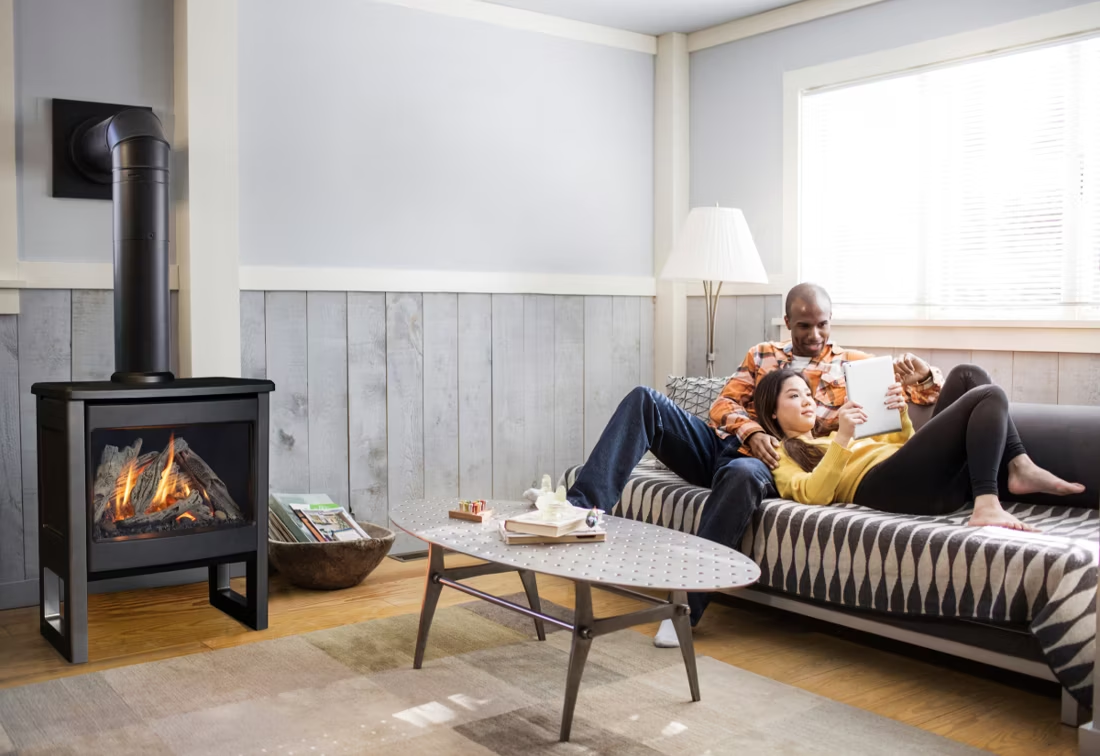
Four fuels. One honest answer for San Francisco County.
Wood
66 models available near San Francisco County.
Find your wood stove →Gas
365 models available near San Francisco County.
Find your gas fireplace →Pellet
See what's available near San Francisco County.
Find your pellet stove →Electric
11 models available near San Francisco County.
Find your electric fireplace →Three steps. No salesperson until you're ready.
Tell us about your project
Your zip code, your situation, and the fuel you're leaning toward—or let the answers point you to one.
See what's actually available
The brands dealers within 100 miles genuinely carry—real options, never a catalog mirage.
Get your dealer & Project Guide
A trusted local dealer, plus the free Project Guide & Parts List that names every component of the job.
Frequently Asked Questions
Which fuel actually makes sense for a home in San Francisco?
Gas and electric, in almost every case. San Francisco's climate zone 3C winters average around 47°F with a short, mild heating season—mild enough that a fireplace here is mostly about ambiance and backup warmth on foggy nights, not survival heat. Gas fireplace inserts are the most common upgrade for the city's Victorian and Edwardian homes, dropping a direct-vent unit into a masonry firebox that was originally built for wood. Electric fireplaces are the default for condos and apartments without a chimney or flue, and for HOA buildings that restrict any kind of combustion appliance. Wood stoves are essentially off the table for new installs—Bay Area Air Quality Management District Regulation 6-3 has barred new wood-burning devices in new construction and remodels since 2015—and pellet stoves are rare simply because most San Francisco housing stock doesn't have the venting chase or storage space for them.
Do I need a permit to install a fireplace in San Francisco?
Yes, in most cases. San Francisco's Department of Building Inspection issues permits for gas fireplace, gas insert, and gas stove installations, and any gas line work requires a licensed gas fitter through PG&E's service territory. Electric fireplaces typically don't need a building permit for plug-in units, but a built-in electric fireplace with a new dedicated circuit does require an electrical permit and licensed electrician sign-off. Because new wood-burning installations are prohibited under BAAQMD Regulation 6-3, there's essentially no permit path for a new wood stove or fireplace in the city—existing wood fireplaces can often stay in place, but replacing one usually means converting to gas or electric. Most local hearth retailers handle the DBI permit process as part of the installation.
Are there air quality restrictions on burning in San Francisco?
Yes, and they're stricter here than in most counties. The Bay Area Air Quality Management District calls mandatory no-burn days during winter Spare the Air alerts—unlike some regions where curtailment is voluntary, San Francisco's are enforceable, with fines for burning wood on a declared no-burn day. EPA-certified gas fireplaces and gas inserts are exempt from these curtailment rules, which is a big part of why gas has become the default hearth fuel in the city. San Francisco also sits in a PM2.5 non-attainment area, and Northern California wildfire smoke adds a second layer of air quality concern most summers and falls—another reason local air officials discourage any new wood-burning installation inside city limits.
Can one hearth retailer in San Francisco handle both gas and electric?
Yes—most San Francisco hearth retailers carry both gas and electric lines, since those are the two fuels that actually fit the city's housing stock. What varies is retrofit expertise: some dealers specialize in converting old masonry fireboxes in Victorians and Edwardians to direct-vent gas inserts, which requires understanding century-old chimney construction and venting clearances. Others focus more on new-construction and condo work, where a wall-mount or built-in electric unit goes into a space that never had a chimney at all. If your home has an existing masonry firebox, ask specifically about gas insert conversion experience—it's a different job than a straightforward new gas fireplace install.
How does fireplace service work in a dense city like San Francisco?
Most gas techs, sweeps, and electricians serving San Francisco are based in the city or on the nearby Peninsula, so response times are generally faster than in rural counties—but street parking and building access (elevators, HOA scheduling, tight stairwells in older Victorians) can add time to a service call. Homes with a converted masonry-to-gas firebox still benefit from an occasional chimney inspection, since the original flue liner and clearances matter even after a wood-to-gas conversion. Gas units need annual pilot, valve, and venting checks; hardwired electric units rarely need more than a check on connections and the heating element. Scheduling early in fall, before Spare the Air season ramps up demand for gas service, tends to be easier than waiting for the first cold snap.
What's the typical cost range for a fireplace installation in San Francisco across gas and electric?
Gas fireplace, insert, or stove: roughly $5,000 to $12,000 in San Francisco, with cost driven mostly by whether you're converting an existing masonry firebox (lower end) or running new gas line and venting through a building with no existing chimney (higher end)—city labor rates also push installs above what you'd see in less expensive markets. Electric fireplace: $200 to $3,500 for the unit itself, plus $400 to $1,500 in labor for a built-in or wall-mount installation that involves a dedicated circuit; plug-in freestanding units need no installation labor at all. Wood and pellet installs aren't really part of the local cost picture—Regulation 6-3 blocks new wood-burning installs, and pellet stoves are rare enough that most retailers don't quote them as a standard line item. For exact numbers tied to your building type, see the county + fuel pages above.
What is an in-home preview and do I need one?
It's a visit where a hearth professional measures your space, confirms the model you picked actually works in your home, and walks the specs—framing, gas line, venting, finish work—before anything is ordered. Some details you just can't know until you see the house. Never make a down payment without one; it's the single most-skipped step that burns buyers.
Can I install a fireplace myself?
If you're putting a fire in your house on purpose, it's best to work with an expert. Unless you're genuinely experienced in framing, gas line, vent pipe, and the national code on clearances to combustibles, have a professional do it—and ideally the same company that sells you the fireplace, so warranty, service, and liability all live under one roof.
Wood, gas, pellet, or electric—how do I choose?
Match the fuel to your life, not the other way around. Wood: lowest fuel cost and total power-outage independence, but you're hauling and stacking. Gas: press a button, set a thermostat, no maintenance to speak of. Pellet: wood economics with automatic feeding, in exchange for weekly cleaning and a need for electricity. Electric: plugs in anywhere with honest supplemental heat. Nobody regrets the fuel that fits how they actually live.
Can a fireplace actually lower my heating bill?
Yes—by creating a comfort zone. A furnace heats every square foot of the house just to warm the one room you're in; a gas fireplace on low burns roughly a sixth of the gas a typical furnace does. Set the furnace around 55–60 degrees as a baseline, then heat the rooms your family actually uses. Families who heat this way commonly save $20–$60 a month.
Stove and Fireplace Dealers in San Francisco County
Listings include WhyFire partner dealers, dealers we have verified as authorized for the brands we recommend, and established local businesses that carry hearth products. Every listing shows which one it is. The ones marked Preferred run on WhyFire's software, so they can show you real pricing and book your appointment right here. No manufacturer pays for placement. How we verify dealers →
O'Kell's Fireplace
Giorgi Bros
Gold Chimney
Terra Outdoor Living
Berkeley Heat, LLC
Terra Outdoor Living
Creative Energy
Sdi Insulation, Inc
Kidd Fireplaces
Terra Outdoor Living
Kidd Services
The Irish Sweep, Inc.
Jerrys Fireplaces
Terra Outdoor Living
Toms Outdoor Furniture
Buck Stove Spa & Fan
River City Stoves
Find your fireplace in San Francisco.
Tell us about your San Francisco home—Victorian firebox, condo, new construction—and we'll match you with a trusted local dealer and send a free Project Guide & Parts List: the exact parts, including the vent kit, and the dealer who can actually get it installed under DBI permit.
Find Your Fireplace →