
Gas heat that's actually legal to burn in San Francisco.
Instant, damp-fog-cutting warmth for Sunset, Noe Valley, and every foggy San Francisco block in between—powered by PG&E natural gas and installed by a trusted local dealer who knows the city's older housing stock.
Every Project Starts From One of These Five Situations
Clean gas heat for a city where wood smoke isn't an option.
San Francisco sits in climate zone 3C—a mild, marine climate where the winter low averages a comparatively gentle 47°F and the county logs only a light winter heating load each year, a fraction of what a place like Duluth, Minnesota racks up in a single hard winter. But mild doesn't mean warm: the damp, wind-driven fog that rolls in off the Pacific most evenings makes the Victorians and Edwardians of the Sunset, the Richmond, and Noe Valley feel colder than the thermometer suggests, and central heat in these older houses is often underpowered or entirely absent from the room you're sitting in. A gas fireplace or insert fills exactly that gap—real, consistent heat in the room you're using, on demand, without waiting on a furnace that was never sized for the house.
It's also close to the only hearth option left for most homeowners here. The Bay Area Air Quality Management District's Regulation 6, Rule 3 has banned installing new wood-burning fireplaces and stoves across the region since 2016, and existing wood fireboxes face mandatory no-burn days whenever a Spare the Air alert is called—which happens often given the county's non-attainment status and the wildfire smoke that drifts in from Northern California fire seasons even when local burning is restricted. Converting an old masonry firebox to a direct-vent gas insert is now the standard move for homeowners who want real flame and real heat without running afoul of the wood-burning rules. PG&E natural gas service reaches nearly every building in the county, which keeps most conversions straightforward.
Three steps. No salesperson until you're ready.
Tell us about your project
Your zip code, your situation, and the fuel you're leaning toward—or let the answers point you to one.
See what's actually available
The brands dealers within 100 miles genuinely carry—real options, never a catalog mirage.
Get your dealer & Project Guide
A trusted local dealer, plus the free Project Guide & Parts List that names every component of the job.
Frequently Asked Questions
How much does a gas fireplace installation cost in San Francisco?
Most San Francisco gas fireplace and insert installations run roughly $4,500 to $12,000, with the wide range driven by venting path, gas line work, and the city's higher labor and permitting costs compared to the rest of the Bay Area. A direct-vent gas insert dropped into an existing masonry firebox with a gas line already nearby sits toward the low end. A new built-in gas fireplace in a kitchen remodel or ADU—with fresh framing, a new gas line run from the meter, and roof or wall penetration for venting—runs toward the high end, sometimes higher in older Victorians where structural work is needed to route venting through multiple floors. A local dealer will give you a firm number after seeing the space.
Can I convert my existing wood-burning fireplace to gas?
Yes, and it's the most common project local dealers handle in San Francisco. Since the BAAQMD's Regulation 6, Rule 3 bars new wood-burning installations and restricts existing wood fireboxes on Spare the Air days, converting an old masonry firebox to a direct-vent gas insert lets you keep the original mantel and opening while getting a unit you can actually run whenever you want. The installer runs a stainless liner down your existing chimney as the venting path and connects it to a new or existing PG&E gas line. It preserves the look of a century-old fireplace while sidestepping the wood-burning restrictions entirely.
Do I need natural gas, or can I use propane?
Natural gas from PG&E reaches nearly every building in San Francisco County, so the vast majority of gas fireplace installs here run on natural gas rather than propane. Propane comes into play mainly for detached units, ADUs, or properties where a gas line extension from the street would be unusually costly—a rare situation in this dense a city, but it does come up on some hillside and outer-edge parcels. Most gas fireplace models can be configured for either fuel; your installer sets the correct orifice and regulator for whichever you have.
Will my gas fireplace work during a power outage?
Most modern gas fireplaces will, which matters in a county that occasionally sees PG&E Public Safety Power Shutoffs during fire-weather conditions even though San Francisco itself is less exposed than inland areas. Units with IPI (intermittent pilot ignition) run on a small battery backup that kicks in automatically when power drops, so the fireplace lights on demand just like normal. Valor's gas fireplaces skip the battery question altogether—they generate their own electricity from the pilot's thermocouple, so there's no battery to remember to replace. Ask your local dealer about the ignition system on any unit you're considering if outage backup matters to you.
What's the difference between a gas fireplace, gas insert, and gas stove?
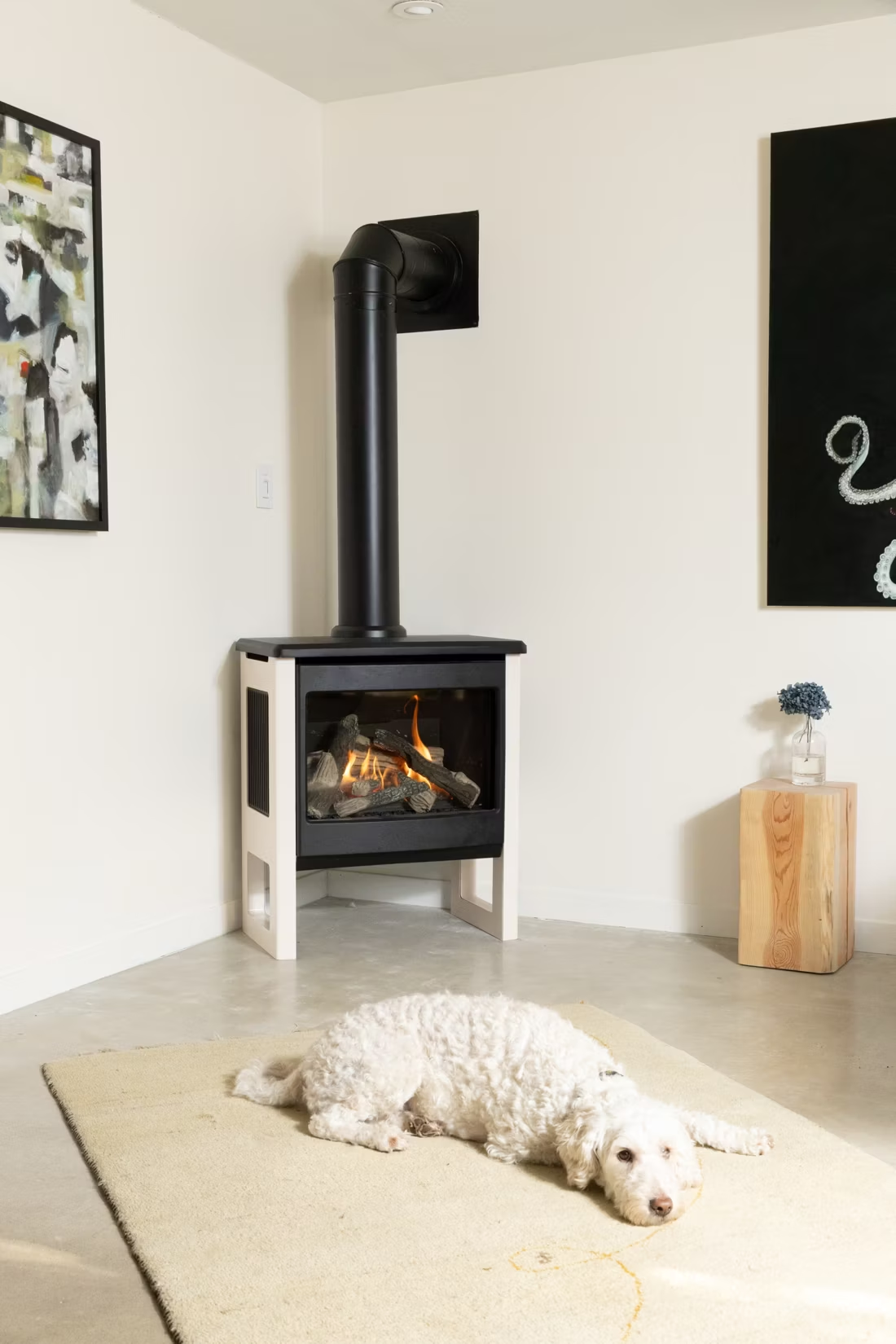
A gas fireplace is a fully built-in unit framed into a wall—the right call for new construction, ADUs, or a remodel where there's no existing chimney. A gas insert slides into an existing masonry firebox, which describes a huge share of San Francisco's Victorian and Edwardian housing stock, and converts that opening into a sealed, efficient unit using the chimney as the vent path. A gas stove is a freestanding unit that sits on the floor like a wood stove but burns gas—a good option in a condo or flat with no fireplace opening at all but floor space for a small footprint unit. For most homeowners here with an existing fireplace, an insert is the simplest upgrade.
Do I need a permit to install a gas fireplace in San Francisco?
Yes—the San Francisco Department of Building Inspection requires both a building permit and a plumbing/gas permit for new gas fireplace installations, and the gas line connection itself must be done by a licensed gas-fitter. This is separate from the BAAQMD's wood-burning restrictions, which don't apply to gas appliances at all—one reason gas has become the practical default for hearth upgrades in the county. Most local dealers coordinate the permitting, gas line work, and venting as one package rather than leaving you to manage separate trades.
What's the difference between vented and vent-free gas fireplaces?
Vented gas fireplaces draw combustion air from outside and exhaust it back outside through a sealed direct-vent system. Vent-free units burn gas directly into the room with no exterior venting at all, which sounds convenient but releases combustion byproducts into your living space and comes with strict room-sizing and ventilation rules. California is one of the states that restricts vent-free gas appliances, so nearly every install in San Francisco County is a vented, direct-vent unit. In practice this works well here—direct-vent units can terminate through a side wall in a rowhouse without needing a full chimney, which suits the tight lot lines and shared walls common across the city.
How often should my gas fireplace be serviced?
Plan on an annual inspection, ideally before the foggy season ramps up in the fall. A technician checks the burner, pilot assembly, venting, gas connections, and any electronic ignition hardware, and cleans the glass and interior. It's a shorter visit than a wood-stove chimney sweep but just as important for safety, and most San Francisco gas service providers charge in the $150 to $250 range for a standard annual visit.
Gas vs. electric fireplace—which is right for my San Francisco home?
Wood isn't really on the table for new installs here given the BAAQMD's ban on new wood-burning fireplaces and stoves, so the real choice in most San Francisco homes is gas versus electric. Gas delivers genuine radiant heat and real flame, requires a gas line and venting, and works well in single-family Victorians and Edwardians with an existing firebox. Electric fireplaces need nothing but a standard outlet—no gas line, no venting, no permit for a plug-in unit—which makes them the practical choice for rentals, condos with HOA restrictions on gas appliances, or in-law units where running new gas line simply isn't feasible. If you own the building and have (or can get) gas service, a direct-vent gas insert generally delivers more real heat for the room; if you're in a rental or a strata-managed condo, electric is often the only realistic option.
Why is my open fireplace making my house colder?
Open fireplaces suck—literally. As the fire burns, it consumes air your furnace already paid to heat and pulls it out through the chimney, so the house is actually colder after the fire goes out than before you lit it. An insert fixes this: it seals the chimney, puts fixed glass across the front, and turns that hole in your house into a real heat source.
Why is a fireplace insert so efficient?
An insert does two things: it seals the chimney completely, so you stop losing air you already paid to heat, and it radiates warmth into the room through the firebox and glass. Most add a heat-exchange fan that pulls cool room air underneath, wraps it around the hot firebox, and pushes it back out warm. Your home is more efficient before you've even lit the first fire.
How much should I budget for a fireplace?
For an average home—covering the fireplace, the vent pipe, and basic installation—a budget between $3,900 and $5,500 gives you a lot of options across wood, gas, and pellet. By the time you add finish work, gas line, and electrical, the average complete installation lands between $5,000 and $12,000 all-in. In a remodel or new build, a good rule is to put about 2.5% of the total project cost toward the fireplace.
Does a fireplace add value to my home?
On average, a fireplace adds back to the home about the same amount you spent installing it. Add the monthly savings from heating the rooms you actually use instead of the whole house—often hundreds of dollars a year—and the value case is strong before you even count what a fire does for how your family uses the room.
Stove and Fireplace Dealers in San Francisco County
Find your gas fireplace in San Francisco County.
Tell us about your home—Victorian firebox, condo flat, or new build—and we'll match you with a trusted local dealer and send over a free Project Guide & Parts List with the exact parts, including the vent kit, for your San Francisco gas fireplace project.
Find Your Fireplace →