
Find a pellet stove built for National City's mild coastal climate.
Clean-burning supplemental heat for the occasional cold snap near San Diego Bay. Find the right pellet stove or insert, and connect with a trusted local dealer.
Every Project Starts From One of These Five Situations
A supplemental heat source built for occasional cold snaps.
National City sits at just 40 feet of elevation along San Diego Bay, with an average winter low of 46°F and a heating season so light it barely counts as one. Compare that to a genuinely cold-climate city like Duluth, Minnesota, which faces a heating load roughly seven times heavier, and it's clear this isn't a place where anyone needs a primary heat source running all winter. Most National City homes get by on occasional space heating, and a pellet stove here tends to fill a specific role: warming a converted garage or casita, taking the chill off a marine-layer evening, or adding a clean, low-maintenance ambiance feature to a main living space.
Two local factors make pellet a smart pick even in a mild climate. First, San Diego Gas & Electric's residential rate of roughly $0.32 per kWh is among the highest in the country, so leaning on electric resistance heat for those occasional cold nights gets expensive fast—a pellet stove burning bagged fuel from regional suppliers like Bear Mountain, Lignetics, or Pacific Pellet is often cheaper to run. Second, wildfire smoke is a recurring air quality concern in this part of San Diego County. Pellet appliances burn far cleaner than cordwood, producing a fraction of the particulate matter—a real advantage on days when regional smoke is already pushing air quality toward unhealthy. One honest caveat: pellet stoves need electricity to run the auger and combustion blower, so they won't function during a power outage without a battery backup or generator, unlike a wood stove.
Three steps. No salesperson until you're ready.
Tell us about your project
Your zip code, your situation, and the fuel you're leaning toward—or let the answers point you to one.
See what's actually available
The brands dealers within 100 miles genuinely carry—real options, never a catalog mirage.
Get your dealer & Project Guide
A trusted local dealer, plus the free Project Guide & Parts List that names every component of the job.
Frequently Asked Questions
How much does a pellet stove installation cost in National City?
Most pellet stove and insert installations in National City run $3,000 to $6,000, on the lower end compared to wood-burning appliances because pellet stoves vent horizontally through an exterior wall rather than requiring a full masonry chimney. A pellet insert going into an existing fireplace opening is usually toward the lower end of that range if the wall venting path is short and straightforward. Costs climb if the installer needs to run venting through brick, stucco, or a longer wall section, or if electrical work is needed to add a dedicated outlet for the unit. Local dealers will give you a firm number after seeing your home.
What size pellet stove do I need for a National City home?
Because National City's heating season is short and mild—average winter lows sit around 46°F—most homes here don't need a large-capacity stove sized for sustained sub-freezing heating. Smaller units in the 1,000-to-1,500-square-foot range are often plenty for a main living area, converted garage, or ADU, even in an older, less-insulated home near the bay. If you're trying to heat a larger open floor plan as a genuine substitute for central heat on cool days, a mid-size unit makes sense, but going bigger than that usually means more fuel burned for heat you don't need. A local dealer can size this correctly during an in-home visit.
Pellet stove vs. wood stove—which makes more sense in National City?
Wood is available locally—oak, madrone, and Douglas fir are common species, and Cleveland National Forest issues cutting permits (roughly $5 to $20 per cord) during the May-to-October season—but sourcing and seasoning your own firewood is a bigger commitment than this climate's light heating load usually justifies. Pellet stoves solve that by using bagged fuel from regional suppliers like Bear Mountain, Lignetics, and Pacific Pellet, sold at local hearth shops and hardware stores, so you're never dealing with a woodpile. Pellets also burn dramatically cleaner, which matters in a region where wildfire smoke already stresses air quality several weeks a year. For most National City homeowners who want occasional, low-hassle heat rather than a full wood-heating lifestyle, pellet is the easier fit.
Will my pellet stove work during a power outage?
No, not without a backup power source. Pellet stoves rely on an electric auger to feed fuel and a blower to distribute heat and exhaust combustion gases, so they shut down when the power does. San Diego Gas & Electric does conduct Public Safety Power Shutoffs in high fire-risk areas during extreme wind events, though these affect SDG&E's backcountry and canyon territory far more often than the urban San Diego Bay area where National City sits. Still, if backup heat during an outage matters to you, pair a pellet stove with a small battery backup unit or generator, or consider a wood-burning option instead, which will run without any electricity at all.
Where can I buy pellets in National City?
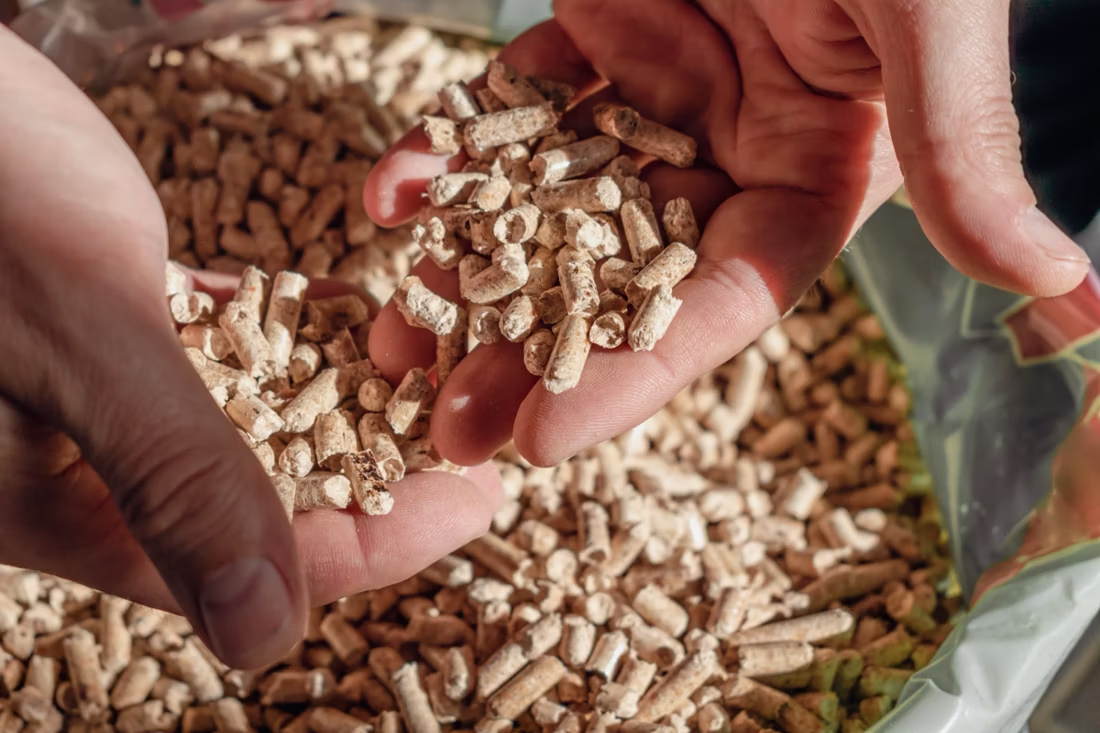
Regional brands including Bear Mountain, Lignetics, and Pacific Pellet are widely stocked at hearth retailers and home improvement stores throughout San Diego County. Bagged premium hardwood pellets typically run $6 to $9 per 40-pound bag, or roughly $280 to $380 per ton if you buy by the pallet, which is worth doing if you have dry storage space in a garage—a ton lasts most National City homes an entire mild winter given the light heating demand here. Buying pellets in bulk ahead of the fall wildfire-smoke season is also a practical way to avoid scrambling for fuel if a supply run gets delayed.
Do I need a permit to install a pellet stove in National City?
Yes—a building permit through the City of National City's Building Division is required for a new pellet stove installation, covering the wall venting and any electrical work. Most local hearth dealers handle this paperwork as part of the install. One advantage worth knowing: the San Diego County Air Pollution Control District's Check Before You Burn program, which restricts wood-burning on high-pollution days, generally exempts EPA-certified pellet stoves because they burn so much cleaner than cordwood. That means a pellet stove keeps working on days when a neighbor's wood stove might be under a burn advisory.
What's the best pellet stove for a mild coastal climate like National City's?
Since most National City homes only need supplemental heat rather than a workhorse for sustained sub-freezing nights, a compact or mid-size pellet stove from a mainstream manufacturer is usually the right call—look for models with a modulating burn rate so the stove can run low and steady rather than cycling on and off on a 55-degree evening. A larger, high-output unit designed for cold-climate primary heating is more stove than most homes here will ever use. A local dealer can match a specific model to your room size and how often you actually expect to run it.
How much maintenance does a pellet stove need?
Pellet stoves need the ash pan emptied roughly every few days of use and the burn pot cleaned weekly during active burning—light work compared to a wood stove's chimney sweep. Because National City's mild climate means most owners only run their stove on cooler nights and during the occasional cold snap rather than all winter, annual usage is typically light, and a yearly professional service—checking the auger, blower, gaskets, and venting—is usually sufficient rather than the twice-a-season schedule that colder, heavier-use climates require.
Pellet stove vs. electric fireplace—which is cheaper to run in National City?
An electric fireplace or insert is much cheaper to install, typically $400 to $1,200, and needs no venting at all. But San Diego Gas & Electric's residential rate of about $0.32 per kWh is among the highest in the nation, so running electric resistance heat regularly costs noticeably more per BTU than a pellet stove burning bagged fuel. If you want a fireplace mainly for looks and occasional light warmth in one room, electric is the simpler, lower-cost choice. If you actually plan to lean on it for real supplemental heat on cool nights, a pellet stove's higher upfront cost tends to pay back through lower operating costs over a few winters.
Why is a fireplace insert so efficient?
An insert does two things: it seals the chimney completely, so you stop losing air you already paid to heat, and it radiates warmth into the room through the firebox and glass. Most add a heat-exchange fan that pulls cool room air underneath, wraps it around the hot firebox, and pushes it back out warm. Your home is more efficient before you've even lit the first fire.
Why is my open fireplace making my house colder?
Open fireplaces suck—literally. As the fire burns, it consumes air your furnace already paid to heat and pulls it out through the chimney, so the house is actually colder after the fire goes out than before you lit it. An insert fixes this: it seals the chimney, puts fixed glass across the front, and turns that hole in your house into a real heat source.
Can a fireplace actually lower my heating bill?
Yes—by creating a comfort zone. A furnace heats every square foot of the house just to warm the one room you're in; a gas fireplace on low burns roughly a sixth of the gas a typical furnace does. Set the furnace around 55–60 degrees as a baseline, then heat the rooms your family actually uses. Families who heat this way commonly save $20–$60 a month.
What is an in-home preview and do I need one?
It's a visit where a hearth professional measures your space, confirms the model you picked actually works in your home, and walks the specs—framing, gas line, venting, finish work—before anything is ordered. Some details you just can't know until you see the house. Never make a down payment without one; it's the single most-skipped step that burns buyers.
Nearby Dealers
Hearth shops serving National City and the surrounding area.
Fan Diego Ceiling Fans & Lighting Showroom
Pellet Brands Stocked Around National City
Manufacturers will point you to the nearest stocking dealer.
Find your pellet stove in National City.
Tell us a bit about your home and we'll match you with a trusted local dealer and send over a free Project Guide & Parts List—the exact parts, including the vent kit, for your pellet project in National City.
Find Your Fireplace →