
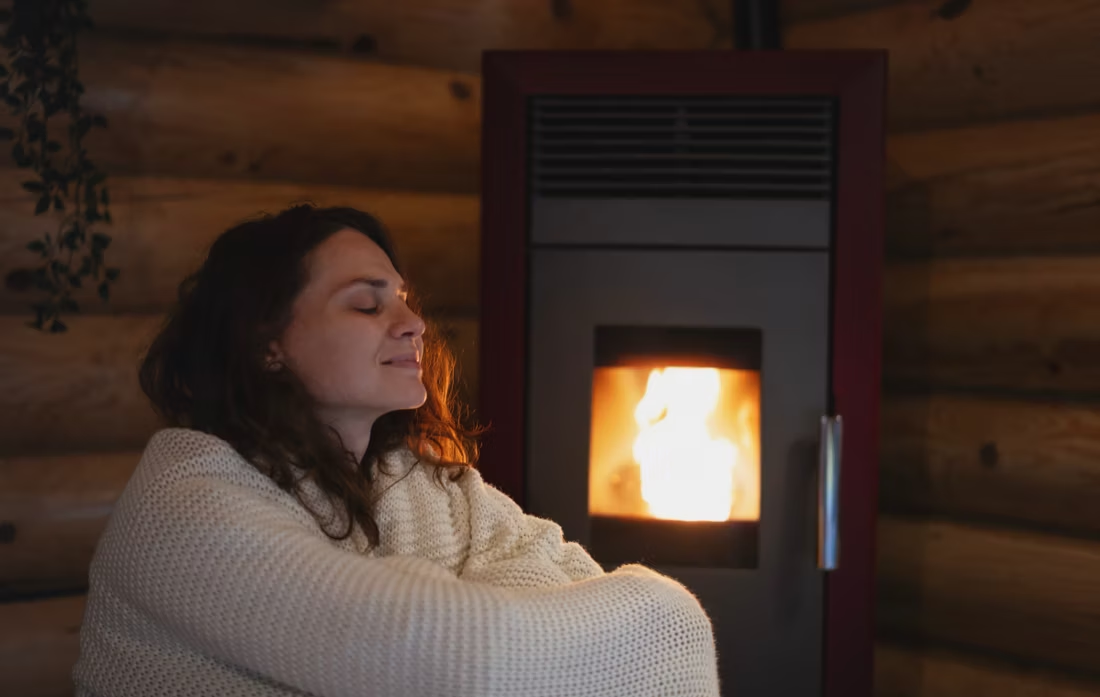
The clean-burning heat that keeps working on Spare the Air days.
Napa's mild valley winters don't need a furnace-level fire—they need a clean, efficient pellet stove that still runs when the Bay Area Air Quality Management District calls a no-burn day. Get matched with a local dealer who can size and install the right unit.
Every Project Starts From One of These Five Situations
Wine country's cleanest option for solid-fuel heat.
Napa sits in climate zone 3C at just 47 feet of elevation, with a Mediterranean pattern of foggy mornings and mild, wet winters—average lows only dip to around 40°F, and the valley logs a light heating season overall each year. This isn't Duluth or Bismarck territory; nobody in Napa is fighting single-digit nights. What homeowners here actually want is supplemental warmth for the tasting-room-style great rooms, the drafty older farmhouses near Yountville and St. Helena, and the shoulder-season chill that lingers into a valley evening even when the days are warm.
Napa Valley falls inside the San Francisco Bay Area Air Basin, a designated non-attainment area, and the county has lived through real wildfire smoke—the 2017 Tubbs Fire and the 2020 Glass Fire both pushed heavy smoke through the valley. Between that history and BAAQMD's Winter Spare the Air program, which restricts uncertified fireplaces and older wood stoves on high-pollution days, pellet appliances have carved out a real niche: EPA-certified pellet stoves are typically exempt from mandatory burn curtailments, which means a pellet stove often keeps running on exactly the days a wood-burning neighbor has to let the fire go cold.
Three steps. No salesperson until you're ready.
Tell us about your project
Your zip code, your situation, and the fuel you're leaning toward—or let the answers point you to one.
See what's actually available
The brands dealers within 100 miles genuinely carry—real options, never a catalog mirage.
Get your dealer & Project Guide
A trusted local dealer, plus the free Project Guide & Parts List that names every component of the job.
Frequently Asked Questions
How much does a pellet stove installation cost in Napa?
Most pellet stove and insert installations in Napa run roughly $3,500 to $7,500, depending on whether you're installing a freestanding stove with a simple through-wall vent kit or a pellet insert into an existing masonry fireplace. Because pellet appliances don't require a full masonry chimney—just a smaller-diameter vent pipe—installs tend to run cheaper and faster than a comparable wood stove project, especially in Napa's many homes with existing fireplace openings from the 1970s and 80s that need updating anyway.
Do I need a permit to install a pellet stove in Napa?
Yes. Whether your home falls under the City of Napa Building Division or the Napa County Building Division depends on your address, but both require a building permit for a new solid-fuel appliance installation, and the unit itself needs to be EPA-certified to pass inspection. Most local hearth dealers handle the permit paperwork as part of the installation, so you're not filing anything yourself—but if you're buying a used stove or installing one yourself, confirm it's on the current EPA-certified appliance list before you start.
Can I still run a pellet stove during a BAAQMD Spare the Air alert?
In most cases, yes. The Bay Area Air Quality Management District's Winter Spare the Air program restricts burning in uncertified fireplaces and older, non-EPA wood stoves on days when air quality is forecast to be poor. EPA-certified pellet stoves are generally exempt from these mandatory curtailment days because they burn far more completely and produce a fraction of the particulate matter of an open fireplace. That exemption is one of the main reasons Napa homeowners—particularly those near town where BAAQMD enforcement is active—choose pellet over an open wood-burning fireplace for regular use.
Will my pellet stove work during a PG&E power outage?
Not without backup power. Pellet stoves rely on an electric auger to feed pellets and a blower to circulate heat and exhaust—typically drawing 100 to 400 watts—so they shut down the moment the power does. That matters in Napa, where PG&E has called Public Safety Power Shutoffs during high fire-risk wind events, sometimes for a day or more. Homeowners who want heat during those outages usually pair their pellet stove with a small battery backup unit or a portable generator sized to the stove's draw. Ask your local dealer about battery backup compatibility when you're choosing a model—not every unit accepts one.
What size pellet stove do I actually need in a mild climate like Napa's?
Smaller than you'd think. With average winter lows around 40°F and a light heating season overall each year, most Napa homes do fine with a modest pellet stove in the 40,000–50,000 BTU range used for supplemental heat in a great room or open living area—not a large unit sized to carry an entire house through a hard freeze. Oversizing is a common mistake: a stove that's too big for a mild-climate home ends up cycling on and off constantly, which wastes pellets and shortens component life. A local dealer can size the unit to your square footage and insulation rather than defaulting to a bigger model.
Where can I buy pellets in Napa, and what do they cost?
Regional brands like Bear Mountain, Lignetics, and Pacific Pellet are the most common on shelves at Napa-area hardware and hearth stores, typically running $320 to $420 per 40-lb-bag ton depending on the season and how early you buy—stocking up in late summer before the fall rush usually saves money. Softwood pellets (pine-based, like Bear Mountain) burn hotter and are the standard choice for most stoves; hardwood blends are less common on the West Coast. Buying by the ton pallet rather than individual bags is almost always cheaper per unit if you have dry storage.
What are the best pellet stove brands for a Napa home?
Harman, Quadra-Fire, and Enviro all have strong track records in Northern California and are commonly stocked by dealers serving the Napa Valley. For a mild climate like Napa's, look less at maximum BTU output and more at turndown range and auto-ignition convenience—features that matter more when you're running the stove intermittently on cool evenings rather than around the clock. A local dealer can also confirm which models are on the current EPA-certified list, which matters for both permitting and Spare the Air exemption status.
Pellet stove vs. wood stove—which makes more sense in Napa?
Wood stoves burn local oak, madrone, and Douglas fir—species common throughout Napa County and available via BLM California State Office cutting permits (about $10 per cord, cut April through October)—and they work without electricity, which matters during a PG&E outage. But wood stoves and open fireplaces are the units most likely to be restricted on a BAAQMD Spare the Air day. Pellet stoves burn cleaner, are generally exempt from those curtailments, and are easier to run day-to-day, but they need electricity and a steady pellet supply. For most Napa homes without a wood-cutting habit already in place, pellet tends to be the lower-hassle, cleaner-air choice; for rural properties with wood access and outage concerns, wood still has a case.
Pellet vs. gas—which is right for my Napa home?
Gas fireplaces offer instant on-off heat with no fuel storage or hopper refilling, and many run on standard household electricity for ignition with battery backup available for outages. Pellet stoves require you to keep bagged pellets on hand and refill the hopper every day or two of use, but they give you the visual and radiant feel of a real solid fire and generally cost less to install than a new direct-vent gas line if your home doesn't already have gas plumbed. In Napa specifically, pellet has the added advantage of typically staying exempt from Spare the Air burn restrictions—something to weigh if you want a real fire you can count on regardless of the day's air quality forecast.
Why is a fireplace insert so efficient?
An insert does two things: it seals the chimney completely, so you stop losing air you already paid to heat, and it radiates warmth into the room through the firebox and glass. Most add a heat-exchange fan that pulls cool room air underneath, wraps it around the hot firebox, and pushes it back out warm. Your home is more efficient before you've even lit the first fire.
What's the difference between an insert and a zero-clearance fireplace?
An insert is a fireplace that slides into a pre-existing wood-burning fireplace—if you don't have one, there's nothing to insert it into. A zero-clearance fireplace is built into a framed wall, which makes it the answer for remodels and new construction. Simple test: existing masonry fireplace means insert; blank or framed wall means zero-clearance.
What is an in-home preview and do I need one?
It's a visit where a hearth professional measures your space, confirms the model you picked actually works in your home, and walks the specs—framing, gas line, venting, finish work—before anything is ordered. Some details you just can't know until you see the house. Never make a down payment without one; it's the single most-skipped step that burns buyers.
How much should I budget for a fireplace?
For an average home—covering the fireplace, the vent pipe, and basic installation—a budget between $3,900 and $5,500 gives you a lot of options across wood, gas, and pellet. By the time you add finish work, gas line, and electrical, the average complete installation lands between $5,000 and $12,000 all-in. In a remodel or new build, a good rule is to put about 2.5% of the total project cost toward the fireplace.
Nearby Dealers
Hearth shops serving Napa and the surrounding area.
Pellet Brands Stocked Around Napa
Manufacturers will point you to the nearest stocking dealer.
Find your pellet stove in Napa.
Tell us a bit about your home and we'll match you with a trusted local Napa dealer and send over a free Project Guide & Parts List—the exact stove, vent kit, and install specs for your space.
Find Your Fireplace →