
Clean-burning heat built for Napa County's Spare the Air days.
Napa County winters are mild—lows averaging 40°F and a short, light heating season—but wildfire smoke season and non-attainment air rules make a sealed, EPA-certified pellet appliance one of the smartest heat sources in the valley. We'll match you with a local dealer who can size and install the right unit.
Every Project Starts From One of These Five Situations
Efficient heat that respects Napa Valley air quality rules.
Napa County stretches from the valley floor—vineyard rows between Napa, Yountville, and St. Helena—up into the oak, madrone, and Douglas fir woodlands of the Mayacamas and Vaca ranges. With around 125,000 residents spread across that terrain, the climate is genuinely mild: Climate Zone 3C, winter lows averaging 40°F, and a short, light heating season—a fraction of the winter heating load a place like Duluth, MN or Bozeman, MT sees. Heating here is mostly about taking the chill off cool valley evenings and shoulder-season mornings, not surviving hard freezes.
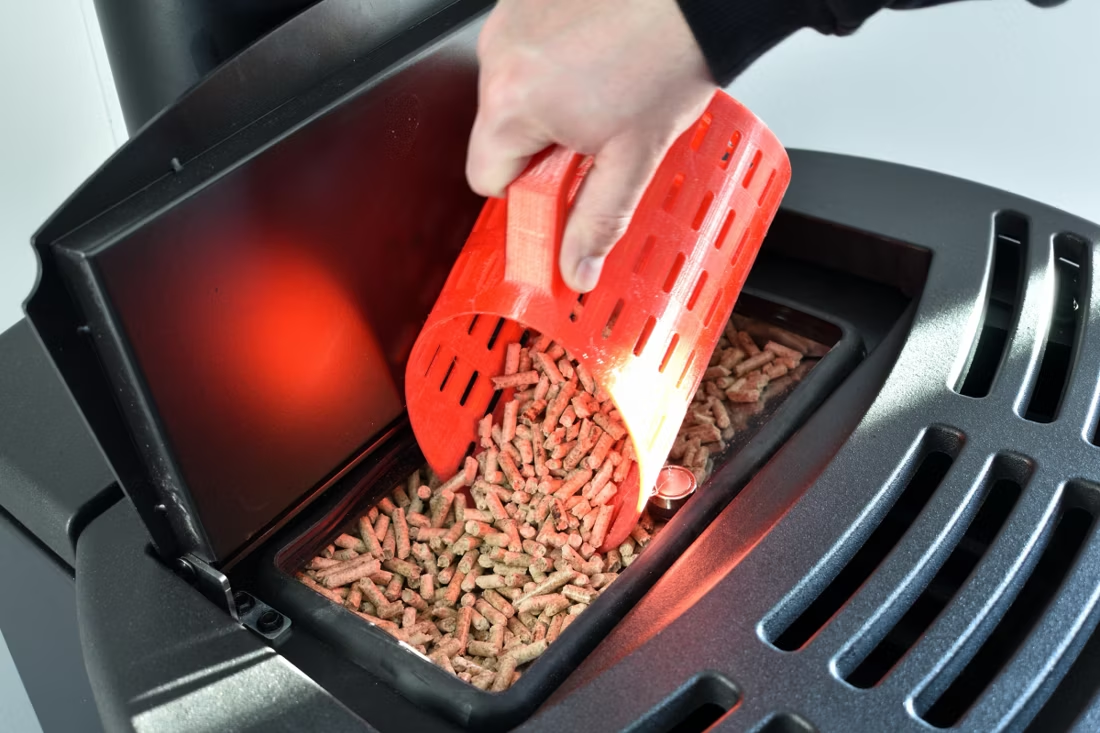
What complicates wood heat locally isn't the cold—it's air quality. Napa County sits in a non-attainment area, and wildfire smoke has become a defining feature of late-summer and fall seasons here. That combination pushes many homeowners toward pellet appliances: EPA-certified, sealed-combustion pellet stoves burn cleaner than open hearths and older wood stoves, and they're typically allowed to keep running during Bay Area Spare the Air advisories that curtail uncertified wood burning. Regional brands like Bear Mountain, Lignetics, and Pacific Pellet are widely stocked, giving Napa County homeowners a heat source that works in guest cottages, ADUs, and main living areas alike without adding to the valley's smoke load.
Three steps. No salesperson until you're ready.
Tell us about your project
Your zip code, your situation, and the fuel you're leaning toward—or let the answers point you to one.
See what's actually available
The brands dealers within 100 miles genuinely carry—real options, never a catalog mirage.
Get your dealer & Project Guide
A trusted local dealer, plus the free Project Guide & Parts List that names every component of the job.
Frequently Asked Questions
How much does a pellet stove or insert cost to install in Napa County?
Cost depends mainly on whether you're converting an existing wood-burning fireplace to a pellet insert (which reuses your chimney chase) or installing a freestanding pellet stove that needs new venting run through a wall or roof. It also depends on whether a dedicated electrical circuit is needed for the auger and blower motor—pellet units, unlike wood stoves, require power to operate. A local dealer will give you a firm number after seeing your fireplace, home, and electrical panel in person; there's no accurate quote without that walkthrough.
Can I run a pellet stove during a Bay Area Spare the Air alert?
In most cases, yes. Because Napa County falls under Bay Area Air Quality Management District non-attainment rules, winter Spare the Air advisories typically restrict older, uncertified wood-burning devices, while EPA-certified sealed-combustion appliances—including most modern pellet stoves—are commonly exempt. That's one of the practical reasons pellet appliances have caught on here even though winters are mild: you can keep using them on days when an open wood fireplace next door has to stay cold. Always confirm current exemption status with your dealer or the county before burning on an advisory day, since rules can be updated season to season.
Is a pellet stove even necessary given how mild Napa County winters are?
Napa County's heating season is short and mild compared to most of the country—a light winter heating load and winter lows around 40°F won't put you anywhere near the demands of a place like Fargo, ND or Burlington, VT. Most Napa County homeowners use a pellet stove as zone heat for a single room, a guest house, or a converted barn or ADU rather than as their whole-home heat source. That's a legitimate and common use case here: cheaper than running central heat for a chilly evening in a tasting room casita, and a lot cleaner-burning than an open wood fireplace during smoke season.
What size pellet stove do I need for my Napa County home?
Because the climate here is mild, many Napa County homes do fine with a small to mid-size pellet stove—especially for supplemental heat in a single living area, guest cottage, or wine country casita. Homes higher up in the Mayacamas or Vaca ranges see cooler nights than the valley floor and may want to size up slightly. A local dealer can walk your specific space, factor in ceiling height and insulation, and recommend a unit that won't be running at full output constantly just to take the edge off a 40-degree evening.
Will my pellet stove work during a PG&E power outage or PSPS event?
Not without a backup power source, and this matters more in Napa County than in most places. Pellet stoves rely on an electric auger to feed fuel and a blower to distribute heat, so they shut down when the power does. Napa County is in PG&E's wildfire-prone service territory and is subject to Public Safety Power Shutoffs during high fire-danger conditions—often the exact stretches when you'd most want reliable heat or air filtration running. If backup heat during outages matters to you, ask your dealer about pairing the stove with a battery backup unit or small inverter generator, or consider a wood-burning appliance for a secondary heat source that needs no electricity at all.
Where can I buy pellet fuel in Napa County?
Regional brands including Bear Mountain, Lignetics, and Pacific Pellet are commonly stocked at local hearth dealers and feed and hardware stores serving the county. Given the wildfire-smoke-driven demand spikes that hit Northern California pellet supply most falls, it's worth buying pallets ahead of the season rather than waiting until a Spare the Air stretch when everyone else is doing the same. Store pellets somewhere dry—Napa County's rainy season runs roughly November through March, and damp pellets swell and jam the auger.
Do I need a permit to install a pellet stove in Napa County?
Generally yes—a building permit is required for a new pellet stove or insert installation, whether you're in unincorporated Napa County or within the city limits of Napa, St. Helena, Calistoga, Yountville, or American Canyon, each of which handles its own permitting. Most established hearth dealers pull the permit as part of the installation and coordinate the inspection, so you're not left tracking down paperwork yourself.
Pellet insert vs. freestanding pellet stove—which is right for my home?
A pellet insert slides into an existing masonry wood fireplace and vents through the existing chimney chase with a liner—a natural fit for the older farmhouses and Craftsman-style homes scattered through Napa, St. Helena, and Calistoga that already have a fireplace opening. A freestanding pellet stove sits on its own hearth pad and vents through a wall or roof, which makes it the better option for newer construction, guest houses, and ADUs that don't already have a fireplace to convert. Either way, the appliance still needs an electrical outlet nearby for the auger and blower.
Pellet vs. wood—which fuel makes sense in Napa County?
Wood has real appeal here: oak, madrone, and Douglas fir are all locally available, and BLM's California State Office issues personal-use cutting permits for around $10 per cord during an April-through-October season. But Napa County's non-attainment status and wildfire smoke concerns mean uncertified wood-burning devices are the first thing restricted on a Spare the Air day, while EPA-certified pellet stoves generally keep running. For homes on rural properties out toward Pope Valley or Chiles Valley where self-sufficiency and ambiance matter, wood still makes sense. For in-town homes near air quality monitoring in Napa or St. Helena, pellet is usually the lower-friction choice.
Why is my open fireplace making my house colder?
Open fireplaces suck—literally. As the fire burns, it consumes air your furnace already paid to heat and pulls it out through the chimney, so the house is actually colder after the fire goes out than before you lit it. An insert fixes this: it seals the chimney, puts fixed glass across the front, and turns that hole in your house into a real heat source.
Why is a fireplace insert so efficient?
An insert does two things: it seals the chimney completely, so you stop losing air you already paid to heat, and it radiates warmth into the room through the firebox and glass. Most add a heat-exchange fan that pulls cool room air underneath, wraps it around the hot firebox, and pushes it back out warm. Your home is more efficient before you've even lit the first fire.
Does a fireplace add value to my home?
On average, a fireplace adds back to the home about the same amount you spent installing it. Add the monthly savings from heating the rooms you actually use instead of the whole house—often hundreds of dollars a year—and the value case is strong before you even count what a fire does for how your family uses the room.
What is an in-home preview and do I need one?
It's a visit where a hearth professional measures your space, confirms the model you picked actually works in your home, and walks the specs—framing, gas line, venting, finish work—before anything is ordered. Some details you just can't know until you see the house. Never make a down payment without one; it's the single most-skipped step that burns buyers.
Stove and Fireplace Dealers in Napa County
Pellet Brands Stocked Around Napa County
Manufacturers will point you to the nearest stocking dealer.
Find your pellet stove in Napa County.
Tell us a bit about your home and we'll match you with a trusted local dealer and send over your free Project Guide & Parts List—a clear plan for your pellet stove or insert project in Napa County, with the exact parts, including the vent kit, and the local pro we recommend for the install.
Find Your Fireplace →