
Instant Heat for Napa Evenings—Even When PG&E Shuts Off the Power.
Napa's winters are mild, but wildfire-season power shutoffs and cool wine-country evenings still make a gas fireplace worth having. Find the right unit and connect with a trusted local dealer.
Every Project Starts From One of These Five Situations
Mild winters, real reasons to add gas heat.
At 47 feet of elevation on the Napa Valley floor, Napa sees a mild Mediterranean climate—winter lows average around 40°F and the city logs roughly 2,358 heating degree days a year, a fraction of what a place like Duluth, MN racks up in a single hard winter. Nobody in Napa is heating their whole house with a fireplace. What drives demand here is different: zone heat for a chilly evening on the patio or in a drafty 1920s Craftsman near downtown, and the ambiance that goes with wine country living.
There's also a more practical reason gas has gained ground locally. Napa sits in PG&E's wildfire mitigation footprint, and Public Safety Power Shutoffs during fall's high-wind red flag days can leave homes—especially up toward Atlas Peak or Mount Veeder—without power for a day or more. A direct-vent gas fireplace with battery-backup ignition keeps producing real heat during those outages. On top of that, Napa County falls under Bay Area Air Quality Management District non-attainment status, and wood burning is restricted on Spare the Air days most winters—gas fireplaces aren't subject to those curtailments at all.
Three steps. No salesperson until you're ready.
Tell us about your project
Your zip code, your situation, and the fuel you're leaning toward—or let the answers point you to one.
See what's actually available
The brands dealers within 100 miles genuinely carry—real options, never a catalog mirage.
Get your dealer & Project Guide
A trusted local dealer, plus the free Project Guide & Parts List that names every component of the job.
Frequently Asked Questions
How much does a gas fireplace installation cost in Napa?
Gas fireplace installations in Napa typically run $5,500 to $12,000, with Bay Area labor rates pushing costs above what you'd pay in inland Northern California. A direct-vent insert dropped into an existing masonry fireplace—common in the older Craftsman and Victorian homes near downtown Napa—lands toward the lower end when a gas line already reaches the firebox. New-construction installs in newer areas like American Canyon (94581), requiring a fresh gas line run and full venting through a wall or roof, land closer to the top. A local dealer will give you a firm number after an in-home visit, since site conditions vary enormously between a 1920s bungalow and a 2000s build.
Can I convert my existing wood fireplace to gas?
Yes, and it's a common project among Napa homeowners with older masonry fireplaces originally built to burn local oak and madrone. A gas insert typically installs into the existing firebox using a stainless liner run through your current chimney, running $5,000 to $9,500 depending on the insert and whether new gas line work is required. Homes already plumbed for a gas range or water heater are usually on the lower end. The conversion keeps your fireplace's original look while eliminating ash cleanup and the wood-smoke restrictions that apply on Bay Area Spare the Air days.
Do I need natural gas, or can I use propane?
Either works, but availability depends on where in Napa County you are. PG&E runs natural gas service throughout most of the city of Napa, so homes with an existing gas water heater or range can usually add a fireplace without much extra plumbing. Out in unincorporated parts of the county—Pope Valley, Wooden Valley, the hillside parcels off Soda Canyon Road—natural gas mains often don't reach, and propane tanks are the standard fuel source instead. Most gas fireplace models can be configured for either fuel; your installer sets the correct orifice and regulator for whichever you have.
Will my gas fireplace work during a PG&E power shutoff?
Most modern gas fireplaces will, which is a real consideration in Napa given PG&E's Public Safety Power Shutoffs during fall fire-weather events. Units with intermittent pilot ignition (IPI) run on a small battery backup—typically AA batteries built into the unit—that kicks in automatically when grid power drops, so the fireplace lights on demand just like normal. It's worth keeping fresh batteries on hand, since they're easy to forget until a shutoff actually happens. Valor fireplaces take a different approach: their pilot assembly generates its own electricity through the thermocouple, so there are no batteries to maintain at all. For a multi-day shutoff on Atlas Peak or in the Napa hills, that's a meaningful difference worth asking your local dealer about.
What's the difference between a gas fireplace, gas insert, and gas stove?
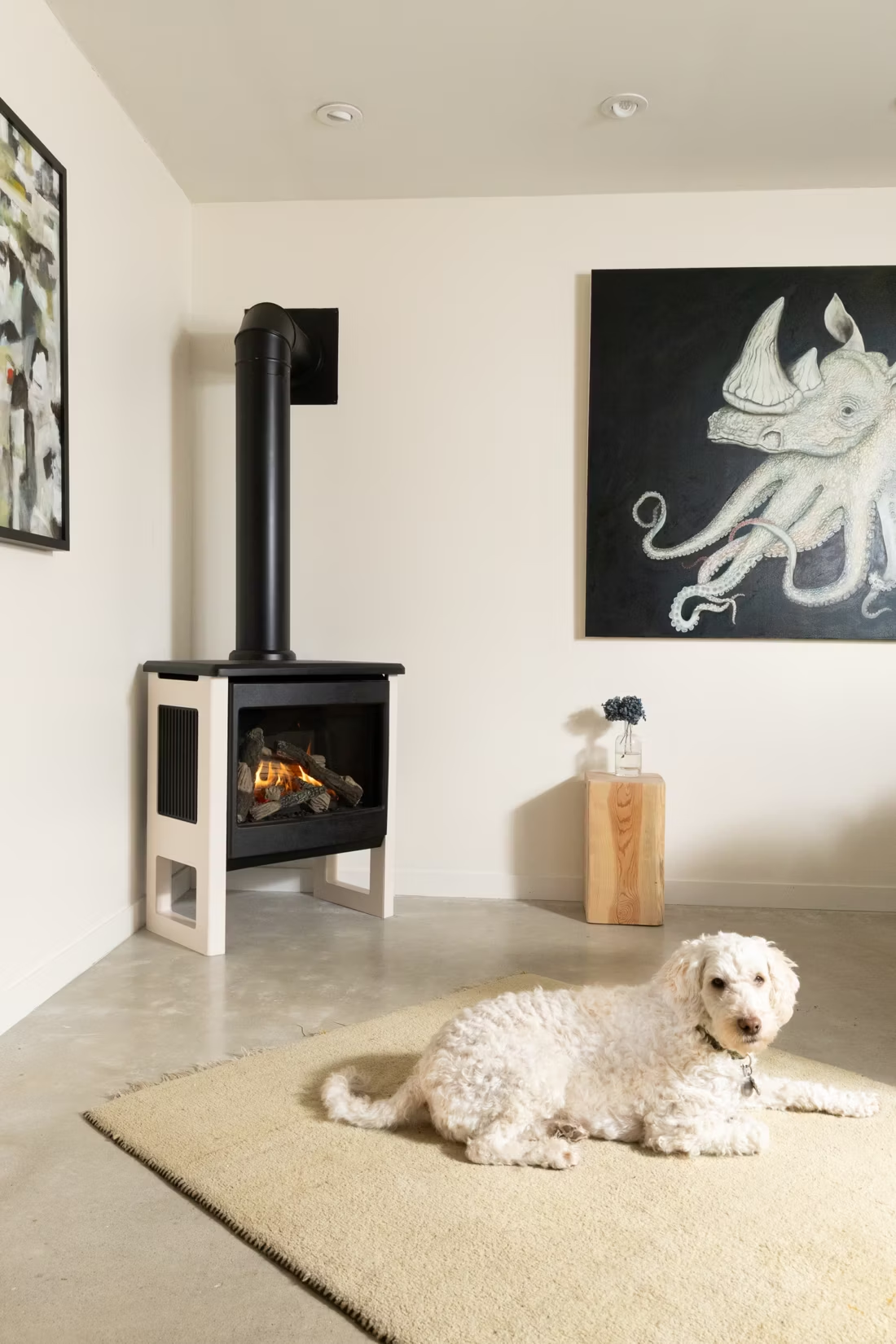
A gas fireplace is a fully built-in unit framed into a wall—the standard choice for new construction or a remodel in one of Napa's newer subdivisions. A gas insert is sized to slide into an existing masonry firebox, converting an old wood-burning fireplace into a sealed, high-efficiency unit that vents through the existing chimney. A gas stove is a freestanding cast-iron or steel unit that sits on the floor, often chosen for a den or converted garage space where there's no existing fireplace opening. For most Napa homeowners working with an older home's original masonry fireplace, an insert is the straightforward answer.
Do I need a permit to install a gas fireplace in Napa?
Yes. Properties within city limits need a building permit and gas permit through the City of Napa Building Division; parcels in unincorporated Napa County—including much of the rural hillside area—go through Napa County Planning, Building and Environmental Services instead. Either way, the gas line work has to be done by a licensed gas-fitter, which is one reason working with an established hearth dealer helps: they coordinate the gas line, venting, and inspection sign-off together instead of leaving you to manage separate trades.
Can I install a vent-free gas fireplace in Napa?
California is one of the states where vent-free (unvented) gas appliances face real restrictions, and local building officials in Napa generally steer installations toward direct-vent, sealed-combustion units instead. Direct-vent fireplaces draw combustion air from outside and exhaust it back outside through a sealed pipe, which matters in a county already under Bay Area Air Quality Management District non-attainment status. In practice, nearly every gas fireplace and insert installed in Napa is a direct-vent model—ask your local dealer if you're weighing the option, but expect that recommendation.
How often should my gas fireplace be serviced?
Plan on an annual inspection, ideally before the cooler months when you'll actually use it. A certified technician checks the burner, pilot assembly, venting, and gas connections, and cleans the glass and interior—a much lighter job than wood chimney sweeping but still important for safety. Local gas appliance service providers in Napa typically charge $150 to $250 for this visit.
Gas vs. wood—which makes sense in Napa?
Wood is genuinely available here—oak, madrone, and Douglas fir are the common species, and BLM's California State Office issues personal-use cutting permits for $10 per cord during the April-to-October season. But Napa County's non-attainment status means Bay Area Air Quality Management District Spare the Air days restrict wood burning on the worst winter air-quality days, and wildfire smoke already fills the valley some summers and falls. Gas fireplaces aren't subject to those curtailments, light instantly, and—with the right ignition system—keep working through a PG&E power shutoff. For a primary, everyday fireplace in Napa, gas is usually the more livable choice; wood tends to end up in a second home, an outdoor fireplace, or a fire pit instead.
Is my gas fireplace wasting gas?
If it was installed more than 15 years ago, probably. Older gas fireplaces keep a standing pilot light burning all the time, and that little flame can cost a couple hundred dollars a year. Newer models use pilot-on-demand ignition—the pilot lights only when you use the fireplace and goes out when you turn it off.
What's the difference between an insert and a zero-clearance fireplace?
An insert is a fireplace that slides into a pre-existing wood-burning fireplace—if you don't have one, there's nothing to insert it into. A zero-clearance fireplace is built into a framed wall, which makes it the answer for remodels and new construction. Simple test: existing masonry fireplace means insert; blank or framed wall means zero-clearance.
Can I install a fireplace myself?
If you're putting a fire in your house on purpose, it's best to work with an expert. Unless you're genuinely experienced in framing, gas line, vent pipe, and the national code on clearances to combustibles, have a professional do it—and ideally the same company that sells you the fireplace, so warranty, service, and liability all live under one roof.
Can a fireplace actually lower my heating bill?
Yes—by creating a comfort zone. A furnace heats every square foot of the house just to warm the one room you're in; a gas fireplace on low burns roughly a sixth of the gas a typical furnace does. Set the furnace around 55–60 degrees as a baseline, then heat the rooms your family actually uses. Families who heat this way commonly save $20–$60 a month.
Nearby Dealers
Hearth shops serving Napa and the surrounding area.
Find your gas fireplace in Napa.
Tell us a bit about your home and we'll match you with the right gas fireplace, insert, or stove—and hand you a free Project Guide & Parts List with the vent kit and parts you'll need, plus your recommended local Napa dealer.
Find Your Fireplace →