
Keep Your Family Warm and Safe—No Matter What
Mild bay winters and strict regional air rules mean wood-burning is a niche choice here—but if you have an existing fireplace or want one for occasional use, we'll connect you with a local dealer who knows the rules.
Every Project Starts From One of These Five Situations
El Cerrito's climate and air rules work against wood heat.
El Cerrito sits at 197 feet in the East Bay, where the average winter low is a mild 43°F and the city has a light overall heating season. Compare that to a cold-climate city like Duluth, MN, which has a much longer, harsher winter heating season—El Cerrito homes simply don't need a heat source capable of carrying a house through a hard freeze. Gas furnaces and heat pumps handle the region's mild, wet winters without much strain, which is a big part of why wood heat never became the default here the way it has in colder inland climates.
On top of the mild climate, the Bay Area Air Quality Management District (BAAQMD) regulates wood burning closely under Regulation 6, Rule 3. New wood-burning fireplaces are generally prohibited in new construction, and on "Spare the Air" days—called when PM2.5 forecasts run high, which happens more often now with regional wildfire smoke—burning in any wood-burning device is illegal, including in existing fireplaces, with fines for violations. El Cerrito is part of a federal non-attainment area for particulate matter, so the district enforces these rules seriously. None of this means wood is off the table entirely—some homeowners with existing masonry fireplaces still want an EPA-certified insert for occasional, code-compliant use—but it does mean wood is a smaller, more tightly regulated category here than in most of the country.
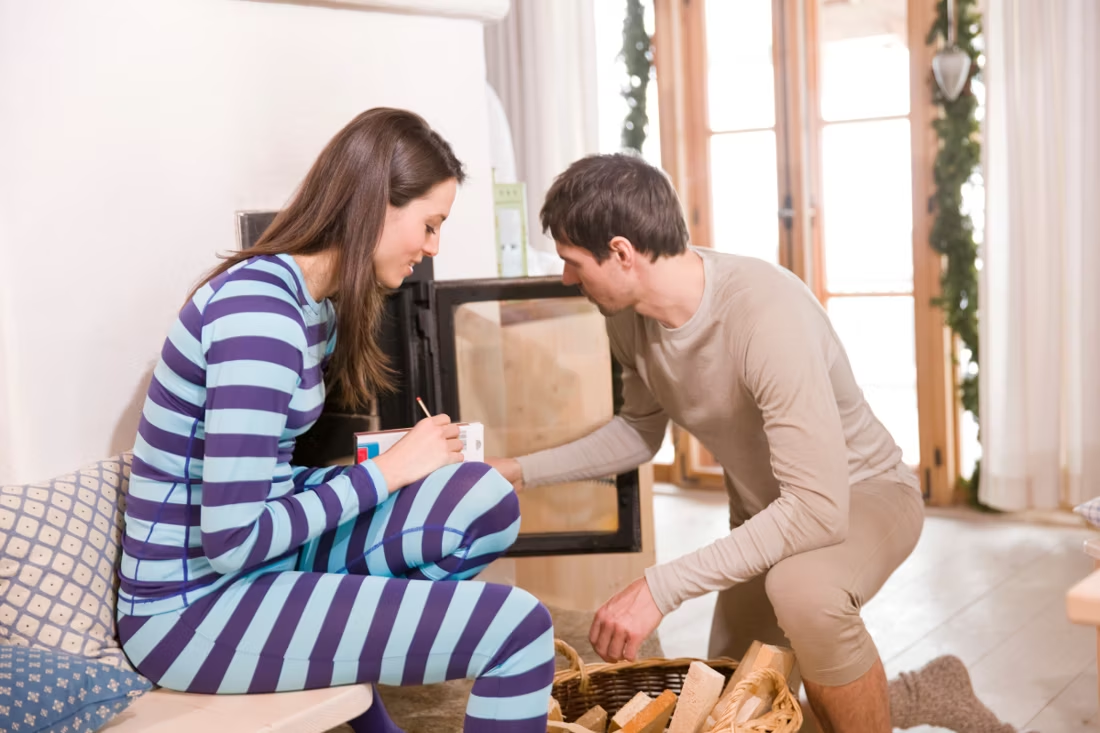
Firewood Cutting Permits Near El Cerrito
Three steps. No salesperson until you're ready.
Tell us about your project
Your zip code, your situation, and the fuel you're leaning toward—or let the answers point you to one.
See what's actually available
The brands dealers within 100 miles genuinely carry—real options, never a catalog mirage.
Get your dealer & Project Guide
A trusted local dealer, plus the free Project Guide & Parts List that names every component of the job.
Frequently Asked Questions
Is it legal to install a new wood stove or fireplace in El Cerrito?
It's restricted. BAAQMD Regulation 6, Rule 3 prohibits installing a new wood-burning fireplace or stove in new construction throughout the Bay Area, including El Cerrito. If you're replacing an existing wood-burning device in an existing home, the replacement unit must be EPA Phase 2 (or newer) certified and registered with the district—older, uncertified stoves can't simply be swapped one-for-one. A local hearth dealer familiar with BAAQMD paperwork, combined with a permit through the City of El Cerrito Building Division, is the right way to navigate this rather than assuming a straightforward install.
What does it cost to replace an existing wood stove or fireplace insert in El Cerrito?
Costs vary a lot based on whether you're relining an existing masonry chimney, installing a factory-built insert, or doing a full stove replacement. In the Bay Area, replacing an old uncertified unit with an EPA Phase 2 or better wood insert typically runs into the mid-to-upper thousands once chimney liner work and code-required clearances are factored in—a local dealer can give you a firm number after seeing your existing setup, since El Cerrito's older housing stock has a wide range of chimney conditions.
What are Spare the Air days, and how do they affect my wood fireplace?
Spare the Air is BAAQMD's regional program that calls mandatory no-burn days when particulate pollution is forecast to be high—most commonly in winter during stagnant air conditions, and increasingly during wildfire smoke events in fall. On a declared Spare the Air day, burning wood in any fireplace or stove is illegal in El Cerrito and across the district, even in a device you already own, with fines for repeat violations. EPA-certified pellet-burning devices are sometimes exempted from these rules elsewhere in the state, but wood-burning devices generally are not. Check BAAQMD's Spare the Air status before lighting a fire in the colder months.
Why don't more El Cerrito homes have wood heat?
Two things work against it: climate and air quality rules. With an average winter low around 43°F and a light overall heating season, El Cerrito simply doesn't get cold enough often enough to justify wood as a primary heat source—gas and electric systems handle the mild bay winters easily. On top of that, BAAQMD's non-attainment status for particulate matter and its Spare the Air burn bans mean wood-burning is actively discouraged, not just economically unnecessary. Most homeowners here who want a fireplace lean toward gas or electric instead, both of which are common and well-supported by local dealers.
Can I still get firewood if I have an existing wood-burning fireplace?
Yes, though most El Cerrito residents source it commercially rather than cutting their own, since there's no national forest land within the city. If you're managing a secondary property in the Sierra foothills or elsewhere, the BLM California State Office issues cutting permits for around $10 per cord during an April-to-October season, and common species in the region include oak, madrone, and Douglas fir. Locally, firewood delivery services serving the East Bay are the more typical route for the occasional fire in an existing fireplace on a non-restricted evening.
How does wildfire smoke factor into whether I should use my wood fireplace?
It's worth thinking about even on days without an official Spare the Air alert. El Cerrito already sits in a non-attainment area for fine particulates, and fall wildfire smoke from Northern California regularly pushes regional air quality into unhealthy ranges for weeks at a time. Adding wood smoke from your own chimney on top of an already smoky day compounds indoor and neighborhood air quality issues—many local homeowners with existing wood fireplaces choose to use them sparingly, reserving fires for clear, cool evenings rather than as a regular habit.
I have an old masonry fireplace—should I get a wood insert or switch to gas?
If you specifically want to keep burning wood, an EPA-certified wood insert is the compliant path—it drops into your existing masonry opening, uses a stainless liner in the existing chimney, and burns far cleaner and more efficiently than an open hearth. But given El Cerrito's mild climate and BAAQMD's burn-day restrictions, many homeowners in this situation opt to convert to a direct-vent gas insert instead, which gives instant heat with no Spare the Air limitations. A local dealer can walk you through both options against your existing chimney and help you weigh compliance, cost, and how often you'd actually use it.
If wood isn't practical here, what do El Cerrito homeowners use instead?
Gas and electric fireplaces are both standard, widely installed options in El Cerrito. Gas offers instant, consistent heat without any Spare the Air restrictions. Electric fireplaces and inserts are also common, particularly for ambiance or zone heating in a single room, though it's worth knowing that PG&E's residential rate here runs a relatively high $0.317 per kWh, so electric heat costs more to run than gas on a per-BTU basis. Most local dealers can walk you through both if wood turns out not to fit your situation.
Wood vs. gas vs. electric—what actually makes sense for an El Cerrito home?
Wood makes sense mainly if you already have a working masonry fireplace and want the authentic experience on the handful of cold, clear evenings each winter when burning is allowed—it's not a realistic primary heat source given the climate and BAAQMD rules. Gas is the most practical everyday choice: instant heat, no burn-day restrictions, and reasonable operating costs even with PG&E's higher electric rates driving up the cost of running electric heat. Electric fireplaces suit homeowners who want ambiance or supplemental warmth in one room without any venting or gas line work. For most El Cerrito households, gas ends up being the default, with wood reserved for occasional, weather-permitting use in an existing fireplace.
Why won't my new wood stove get going like my old one?
New wood stoves are 70%+ efficient, so far less heat goes up the flue—which also means less draft to get a fire established. The rule: build a genuinely hot fire for about 45 minutes before you choke it down. Skip that and you get smoke in the room, creosote in the chimney, and a fire that never takes off. Most performance complaints trace straight back to this.
What's the difference between an insert and a zero-clearance fireplace?
An insert is a fireplace that slides into a pre-existing wood-burning fireplace—if you don't have one, there's nothing to insert it into. A zero-clearance fireplace is built into a framed wall, which makes it the answer for remodels and new construction. Simple test: existing masonry fireplace means insert; blank or framed wall means zero-clearance.
Can I install a fireplace myself?
If you're putting a fire in your house on purpose, it's best to work with an expert. Unless you're genuinely experienced in framing, gas line, vent pipe, and the national code on clearances to combustibles, have a professional do it—and ideally the same company that sells you the fireplace, so warranty, service, and liability all live under one roof.
What is an in-home preview and do I need one?
It's a visit where a hearth professional measures your space, confirms the model you picked actually works in your home, and walks the specs—framing, gas line, venting, finish work—before anything is ordered. Some details you just can't know until you see the house. Never make a down payment without one; it's the single most-skipped step that burns buyers.
Nearby Dealers
Hearth shops serving El Cerrito and the surrounding area.
See what's actually possible for wood heat in El Cerrito.
Tell us about your existing fireplace or project, and we'll match you with a trusted local dealer who understands BAAQMD's rules—plus a free Project Guide & Parts List covering the exact parts, venting, and permitting your El Cerrito home needs. If gas or electric turns out to be the better fit given local restrictions, we'll point you there too.
Find Your Fireplace →