
Clean heat for El Cerrito's mild bay climate.
No chimney, no smoke, no Spare the Air violations—just a real-looking flame and a local dealer who can size it right for your home.
Every Project Starts From One of These Five Situations
Electric fits El Cerrito's mild winters and strict air rules.
El Cerrito sits at just 197 feet in elevation along the eastern shore of San Francisco Bay, where winter lows average 43 degrees and the city logs only about 2,579 heating degree days a year—a fraction of what a place like Duluth, MN racks up in a single season. That mild bay climate is one reason wood stoves and pellet stoves barely register here: most homes simply don't need a serious primary heat source, and the Bay Area Air Quality Management District's non-attainment status and winter Spare the Air burn bans make wood a poor fit for a city already dealing with wildfire smoke drifting down from the hills most falls.
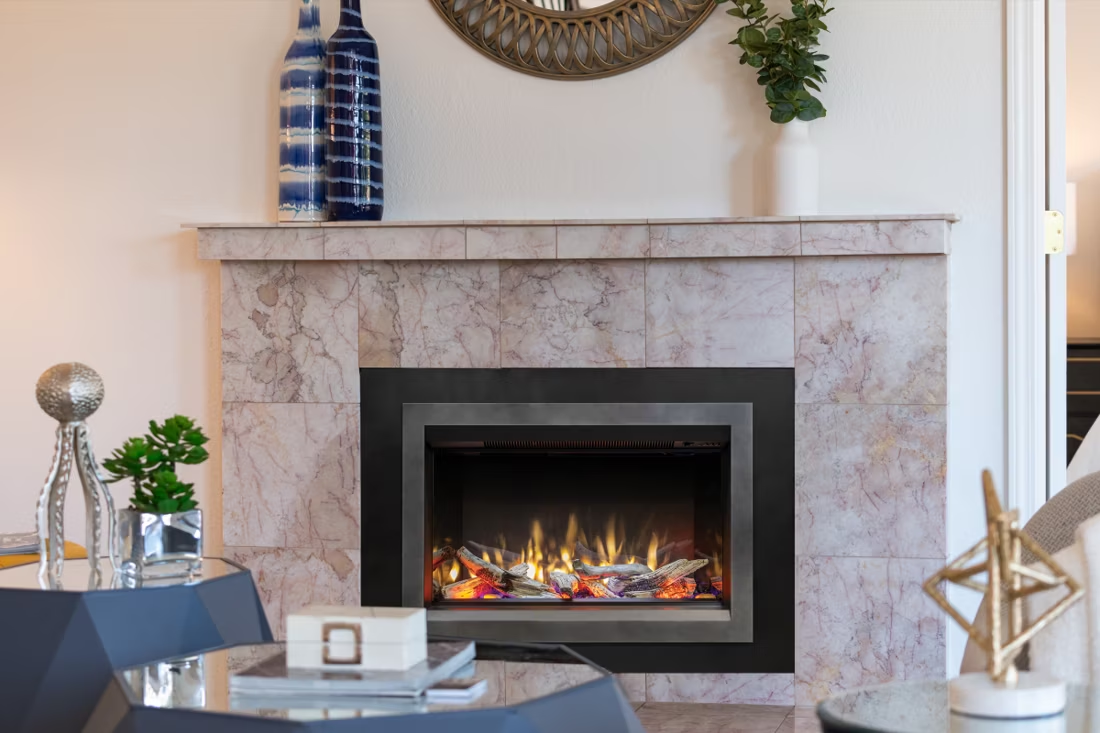
Electric fireplaces sidestep all of that. There's no combustion, no flue, no exemption to track down when a Spare the Air alert is called, and no issue with the wildland-urban interface rules that apply to El Cerrito's hillside neighborhoods. Many of the city's 1920s-to-1950s bungalows and mid-century homes still have an old wood-burning masonry fireplace that hasn't seen a real fire in years—dropping in an electric insert brings that fireplace back to life without a permit fight or a chimney rebuild. Pacific Gas & Electric serves the area at a residential rate around $0.317 per kWh, among the higher rates in the state, so most homeowners here use electric fireplaces for ambiance and zone heat in one room rather than as a whole-house heating strategy.
Three steps. No salesperson until you're ready.
Tell us about your project
Your zip code, your situation, and the fuel you're leaning toward—or let the answers point you to one.
See what's actually available
The brands dealers within 100 miles genuinely carry—real options, never a catalog mirage.
Get your dealer & Project Guide
A trusted local dealer, plus the free Project Guide & Parts List that names every component of the job.
Frequently Asked Questions
How much does an electric fireplace installation cost in El Cerrito?
A plug-in electric insert or freestanding unit typically runs $150 to $700 for the unit itself, with no real installation cost beyond plugging it into an existing outlet—a popular option for dropping into an old, unused masonry fireplace opening. A built-in wall unit or mantel-style electric fireplace that requires a dedicated 20-amp circuit, wiring, and possibly some wall or framing work runs closer to $800 to $2,500 installed, depending on how far the electrical panel is from the install location. Given PG&E's residential rate near $0.317 per kWh, a licensed electrician sizing the circuit correctly matters more here than in lower-rate parts of the state.
Should I get a plug-in insert or a hardwired built-in unit?
If you have an existing wood-burning masonry fireplace—common in El Cerrito's older housing stock—a plug-in electric insert is usually the simplest path: it slides into the firebox opening, plugs into a standard outlet, and gives you flame effect and supplemental heat without touching the chimney. A hardwired built-in or wall-mounted linear unit makes more sense for a remodel, a new-construction accent wall, or a room without an existing fireplace, since it can be recessed flush and run on its own circuit for full heater output. Local dealers can tell you within a few minutes which fits your specific opening and wall.
Do I need a permit to install an electric fireplace in El Cerrito?
A plug-in insert or freestanding unit that runs off an existing outlet doesn't require a permit. A hardwired built-in unit that needs a new dedicated circuit does require an electrical permit through the City of El Cerrito Building Division, since it involves running new wiring back to the panel. Because there's no combustion or venting involved, electric installs skip the mechanical and fire-clearance review that gas and wood projects go through—it's largely an electrical-code question, not an air-quality one.
How much does it cost to run an electric fireplace with PG&E rates?
At El Cerrito's residential PG&E rate of roughly $0.317 per kWh, a typical 1,500-watt heater running on high costs about $0.48 an hour. Most units let you run the flame effect with the heater switched off, which draws only 30 to 100 watts—a few cents an hour—so you can keep the ambiance going on mild bay evenings without the heating cost. Given how high PG&E's rate runs compared to much of the country, a lot of El Cerrito owners use the flame-only mode most nights and save the heater setting for the rare cold snap.
What size or style electric fireplace makes sense for El Cerrito's climate?
With winter lows averaging 43 degrees and only about 2,579 heating degree days a year—nowhere near a place like Fargo, ND or Burlington, VT—most El Cerrito homes don't need serious heating capacity from a fireplace. A smaller insert or wall unit rated for 400 to 1,000 square feet of supplemental zone heat covers a living room or bedroom comfortably. The exception is homes up in the El Cerrito hills, where fog and wind off the bay can make evenings noticeably colder than down near the flats—those homes sometimes opt for a slightly higher-output unit as a genuine backup heat source.
Will my electric fireplace work during a power outage?
No—electric fireplaces require grid power to run, both the flame effect and the heater. That matters in El Cerrito because PG&E has called Public Safety Power Shutoffs in Contra Costa County during high fire-risk conditions in past years, sometimes for a day or more. If backup heat during an outage is a real priority for your household, a gas fireplace with a standing pilot or battery-backed ignition is a better fit for that specific need—electric is best thought of as everyday ambiance and zone heat, not storm preparedness.
What's the difference between a linear wall unit and a mantel-style electric fireplace?
A linear wall unit is a wide, low-profile recessed or surface-mounted unit popular in the open-concept living rooms found in many of El Cerrito's remodeled mid-century homes—it reads more like a piece of architecture than a traditional fireplace. A mantel-style unit sits inside or is topped by a wood or stone mantel surround and looks closer to a classic fireplace, which tends to suit the city's older Craftsman and bungalow housing stock. Both run off the same electric components; the choice usually comes down to the room's existing layout and finish level.
How much maintenance does an electric fireplace need?
Very little. There's no chimney to sweep, no creosote to manage, and no annual inspection required the way wood and gas units need—a real advantage in a non-attainment area where BAAQMD keeps an eye on combustion appliances. Occasionally dust the heater's air intake and vacuum around the base, and check the LED flame bulbs or light strip every few years if the unit uses replaceable ones. Most electric fireplaces run for a decade or more with essentially no service calls.
Electric vs. gas fireplace—which is right for my El Cerrito home?
Gas fireplaces deliver more real heat output, can include battery-backed ignition that works during a power outage, and burn natural gas at a lower cost per BTU than PG&E's electric rate—but they need venting or a gas line, plus an annual service check. Electric fireplaces skip the venting entirely, cost less to install in most cases, avoid any combustion or emissions concern in a non-attainment area, and are the only realistic option for condos or units where running a flue isn't possible. For a primary living space where you want real heat and outage resilience, gas often wins here; for a bedroom, den, or a home where simplicity and clean installation matter most, electric is usually the easier call.
Can I put a TV above my fireplace?
Yes—with an asterisk. Fireplaces are hot and TVs don't like heat. Either put a mantel between them to deflect rising warmth, or choose a fireplace with heat-management technology that creates a cool zone on the wall above—the wall stays around 125 degrees, barely warm, while the room still gets full heat. If you like clean lines and don't want a mantel, heat management is the answer.
Does an electric fireplace need a vent or chimney?
No—that's its superpower. An electric fireplace needs a wall and an outlet, period. No vent pipe, no gas line, no clearances to design around, which is why it works in bedrooms, offices, apartments, and walls where venting a gas or wood unit would be impractical or impossible. Installation is typically the simplest and least expensive of any fireplace type.
Does a fireplace add value to my home?
On average, a fireplace adds back to the home about the same amount you spent installing it. Add the monthly savings from heating the rooms you actually use instead of the whole house—often hundreds of dollars a year—and the value case is strong before you even count what a fire does for how your family uses the room.
What is an in-home preview and do I need one?
It's a visit where a hearth professional measures your space, confirms the model you picked actually works in your home, and walks the specs—framing, gas line, venting, finish work—before anything is ordered. Some details you just can't know until you see the house. Never make a down payment without one; it's the single most-skipped step that burns buyers.
Nearby Dealers
Hearth shops serving El Cerrito and the surrounding area.
Electric Service in El Cerrito
An electric fireplace's heater draws about 1,500 watts—pennies per hour at local rates.
Pacific Gas & Electric Co.
Find your electric fireplace in El Cerrito.
Tell us about your room and your fireplace opening, and we'll match you with a trusted local dealer and send over your free Project Guide & Parts List—sized right for your space and PG&E's rates.
Find Your Fireplace →