
Real fire, without the smoke restrictions.
From the Oakland and Berkeley flatlands to Fremont, Hayward, and the Livermore Valley, Alameda County's mild marine winters and strict Bay Area air rules make gas the fireplace of choice. Find the right unit and get matched with a trusted local dealer.
Every Project Starts From One of These Five Situations
Why gas is the default flame in the Bay Area.
Alameda County sits in climate zone 3C, one of the mildest heating climates in the country—average winter lows near 45°F and only a light winter heating load each year, a fraction of what a place like Duluth, MN or Bismarck, ND sees in a single hard winter. That mild marine climate means most homes here don't need a fireplace to survive winter, but plenty of Craftsman bungalows and Victorians in Oakland, Berkeley, and Alameda were built decades before central forced-air heat and still lean on a single fireplace or wall furnace to take the chill off foggy evenings.
Alameda County sits inside the Bay Area Air Quality Management District's non-attainment area, and BAAQMD calls mandatory Spare the Air no-burn days most winters when marine inversion layers trap wood smoke over the flatlands—on top of routine wildfire smoke advisories. Several county cities also restrict installing new wood-burning fireplaces in remodels and new construction outright. The result is that gas has become the near-universal way to get real, radiant flame in a home here: PG&E natural gas service covers most of the urbanized county, with propane filling gaps in unincorporated hill and valley pockets around places like Sunol and rural east county.
Three steps. No salesperson until you're ready.
Tell us about your project
Your zip code, your situation, and the fuel you're leaning toward—or let the answers point you to one.
See what's actually available
The brands dealers within 100 miles genuinely carry—real options, never a catalog mirage.
Get your dealer & Project Guide
A trusted local dealer, plus the free Project Guide & Parts List that names every component of the job.
Frequently Asked Questions
How much does a gas fireplace installation cost in Alameda County?
A typical gas fireplace or insert installation in Alameda County runs roughly $4,500 to $12,000, depending on the unit, the venting path, and whether new gas line work is needed. A direct-vent insert dropped into an existing masonry firebox with gas already run to the room sits on the lower end. A new built-in direct-vent fireplace in a remodel—with framing, venting through an exterior wall, and a fresh gas line—lands in the middle to upper range. Bay Area labor rates and older-home quirks (masonry chimneys in Oakland and Berkeley bungalows, tight lot setbacks in Alameda's flatland neighborhoods) can push costs toward the higher end. A local retailer will give you a firm number after an in-home look at your existing firebox and gas access.
Can I convert my existing wood fireplace to gas in Alameda County?
Yes, and it's one of the most common projects in the county precisely because of BAAQMD's Spare the Air rules—plenty of homeowners in Oakland, Berkeley, and San Leandro have an old wood firebox that sits unused on no-burn days and want a fireplace they can actually use whenever they want. The standard approach is a direct-vent gas insert that runs a liner up your existing chimney, converting the masonry opening into a sealed, code-compliant gas appliance. Cost typically runs $4,500 to $9,500 depending on the insert and whether new gas line work is required. Homes already plumbed for a gas range or water heater are usually on the lower end.
Do I need natural gas to install a gas fireplace, or can I use propane?
Either works, but which one you'll use mostly depends on where in Alameda County you live. PG&E natural gas service covers most of the urbanized flatlands—Oakland, Berkeley, Alameda, San Leandro, Hayward, Fremont, and most of Pleasanton and Dublin—so if you already have a gas range or furnace, adding a fireplace is straightforward. In unincorporated hill and rural pockets, including parts of the Sunol area and outlying east county, propane is the standard alternative, supplied by a tank on the property. Most gas fireplace models can be set up for either fuel with the correct orifice and regulator.
Will my gas fireplace work during a power outage?
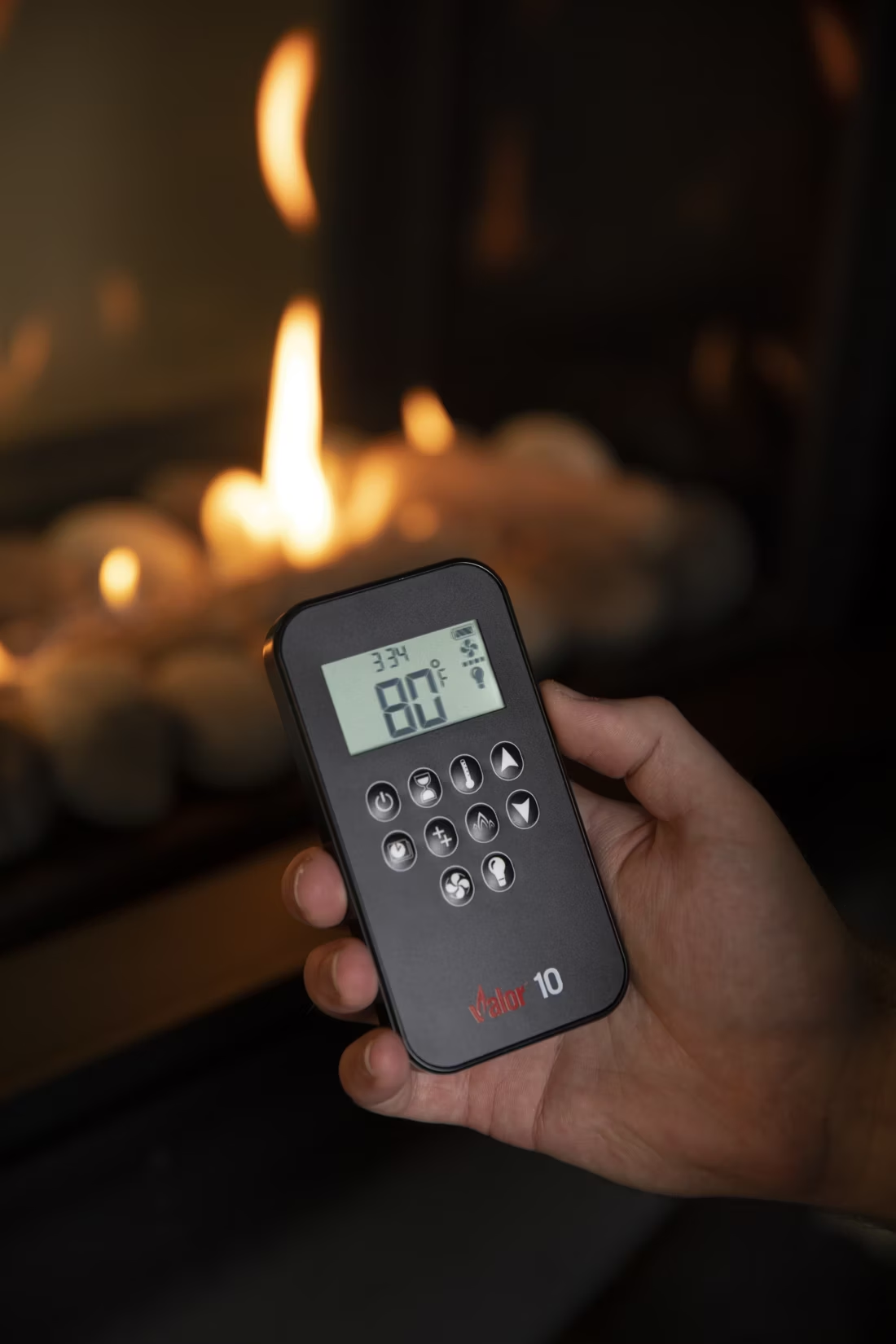
Most modern gas fireplaces will. Units with IPI (intermittent pilot ignition) run on battery backup—typically AA batteries inside the unit—that kicks in the moment power drops, so the fireplace still lights on demand. That matters in Alameda County: PG&E has called Public Safety Power Shutoffs across parts of the East Bay hills during high-wind, high-fire-risk conditions, sometimes for a day or more. Valor's gas fireplaces take a different approach—their pilot's thermocouple generates its own electricity, so there's no battery to remember at all. Ask your local retailer about the ignition system on any unit you're considering if outage resilience matters to you.
What's the difference between a gas fireplace, gas insert, and gas stove?
A gas fireplace is a fully built-in unit framed into a wall—common in newer Fremont, Dublin, and Pleasanton construction. A gas insert is designed to drop into an existing masonry firebox, which is why it's the go-to option for older Oakland and Berkeley homes with a fireplace they no longer burn wood in. A gas stove is a freestanding unit that sits on the floor like a traditional wood stove but runs on gas, and works well in a home without an existing chimney opening. For most Alameda County homeowners upgrading an old wood-burning fireplace, an insert is the simplest and most common answer.
Do I need a permit to install a gas fireplace in Alameda County?
Yes—a building permit and a gas line permit are both required, and which office issues them depends on your address. Oakland, Berkeley, Fremont, Hayward, and the other incorporated cities each run their own building department; unincorporated areas go through the Alameda County Building Department. The gas line connection itself has to be done by a licensed gas fitter or plumber. Most established hearth retailers coordinate the permitting, the gas line work, and the venting inspection together, which is one reason to go through a certified local dealer rather than a handyman install.
What's the difference between vented and vent-free gas fireplaces?
Vented (direct-vent) gas fireplaces draw combustion air from outside and exhaust combustion byproducts back outside through a sealed pipe. Vent-free units burn fuel directly into the room without any outside venting. California building and health code restrictions make vent-free units effectively rare in residential installations here, and several Alameda County jurisdictions won't approve them in a remodel or new build. In practice, nearly every gas fireplace and insert installed in the county is a sealed direct-vent model—which also happens to be the safer, more universally code-compliant choice for indoor air quality.
How often should my gas fireplace be serviced?
An annual inspection is the standard recommendation for any gas fireplace or insert. A certified technician checks the burner, pilot assembly, venting, and gas connections, and cleans the glass and interior—a much smaller job than a wood chimney sweep, but still important for safety and for keeping the flame pattern looking right. Local gas hearth service providers in Alameda County typically charge $150 to $250 for this annual visit.
Is wood or pellet heat ever a realistic option in Alameda County?
Not really, and it's worth being direct about that. Alameda County sits inside a BAAQMD non-attainment area, winters are mild (a light winter heating load compared to a place like Minneapolis or Fargo), and Spare the Air no-burn days plus wildfire smoke advisories make wood-burning fireplaces impractical for regular use—several cities in the county won't even permit a new one. Older homes may still have a legacy wood firebox burning local oak, madrone, or Douglas fir on the rare clear day, but pellet stoves have essentially no foothold here either, since the mild climate and tight air-quality rules push nearly every real-flame installation toward gas or an electric unit instead.
Is my gas fireplace wasting gas?
If it was installed more than 15 years ago, probably. Older gas fireplaces keep a standing pilot light burning all the time, and that little flame can cost a couple hundred dollars a year. Newer models use pilot-on-demand ignition—the pilot lights only when you use the fireplace and goes out when you turn it off.
Why is a fireplace insert so efficient?
An insert does two things: it seals the chimney completely, so you stop losing air you already paid to heat, and it radiates warmth into the room through the firebox and glass. Most add a heat-exchange fan that pulls cool room air underneath, wraps it around the hot firebox, and pushes it back out warm. Your home is more efficient before you've even lit the first fire.
Can a fireplace actually lower my heating bill?
Yes—by creating a comfort zone. A furnace heats every square foot of the house just to warm the one room you're in; a gas fireplace on low burns roughly a sixth of the gas a typical furnace does. Set the furnace around 55–60 degrees as a baseline, then heat the rooms your family actually uses. Families who heat this way commonly save $20–$60 a month.
How much should I budget for a fireplace?
For an average home—covering the fireplace, the vent pipe, and basic installation—a budget between $3,900 and $5,500 gives you a lot of options across wood, gas, and pellet. By the time you add finish work, gas line, and electrical, the average complete installation lands between $5,000 and $12,000 all-in. In a remodel or new build, a good rule is to put about 2.5% of the total project cost toward the fireplace.
Stove and Fireplace Dealers in Alameda County
Find your gas fireplace in Alameda County.
Tell us a bit about your home and we'll match you with a trusted local dealer and send over a free Project Guide & Parts List—the exact parts, including the vent kit, for your gas fireplace project in Alameda County.
Find Your Fireplace →