
Clean-burning heat for Castro Valley's smoke-restricted air basin.
With Bay Area Air Quality Management District rules limiting wood burning, gas has become the default hearth fuel across Castro Valley's hills and flatlands. Find the right unit and connect with a trusted local dealer.
Every Project Starts From One of These Five Situations
Where wood is restricted, gas fills the gap.
Castro Valley sits in an unincorporated pocket of Alameda County at roughly 371 feet elevation, with a mild coastal climate—winter lows average in the low 40s and the area logs only about 2,300 heating degree days a year, a fraction of what a place like Bozeman, MT sees. That's not a climate that demands a wood-burning furnace. It's a climate where a fireplace is used for ambiance, morning chill, and the occasional cold snap, and where the Bay Area Air Quality Management District's Regulation 6, Rule 3 has effectively phased out new wood-burning installs in non-attainment zones like this one, especially with wildfire smoke already a recurring fall concern.
That combination is exactly why gas has become the practical choice for most Castro Valley households. PG&E runs both the electric grid and the natural gas mains through most of the 94546, 94552, and 94578 zip codes, so adding a direct-vent gas fireplace or converting an existing wood-burning fireplace to gas usually means tapping into service you already have. The result: instant, code-compliant heat with none of the Spare the Air burn restrictions that apply to cordwood.
Three steps. No salesperson until you're ready.
Tell us about your project
Your zip code, your situation, and the fuel you're leaning toward—or let the answers point you to one.
See what's actually available
The brands dealers within 100 miles genuinely carry—real options, never a catalog mirage.
Get your dealer & Project Guide
A trusted local dealer, plus the free Project Guide & Parts List that names every component of the job.
Frequently Asked Questions
How much does a gas fireplace installation cost in Castro Valley?
Across Alameda County, a direct-vent gas insert installed into an existing masonry fireplace typically runs $5,000 to $8,500, including the liner, gas line tie-in if one is already nearby, and labor. A new built-in gas fireplace for a remodel or addition—with framing, venting through an exterior wall, and a fresh gas line run from the meter—usually lands between $8,000 and $12,000 given Bay Area labor rates and Alameda County permit fees. Homes without an existing gas line to the fireplace location will sit at the higher end. A local retailer will give you a firm number after seeing the space.
Can I convert my existing wood-burning fireplace to gas?
Yes, and it's one of the more common projects in Castro Valley specifically because of BAAQMD's wood-burning restrictions—Regulation 6, Rule 3 prohibits installing new wood-burning devices in this non-attainment area, so converting an old masonry fireplace to a gas insert is often the only realistic upgrade path if you want more heat output without running afoul of local air rules. A gas insert slides into your existing firebox on a stainless liner, uses the chimney you already have, and typically runs $5,000 to $9,000 depending on whether PG&E gas service already reaches that wall.
Do I need natural gas, or is propane an option in Castro Valley?
Most of Castro Valley—including the flatlands around Castro Valley Boulevard and the neighborhoods off Redwood Road—is on PG&E's natural gas mains, so a straight tie-in is usually the simplest route. A handful of homes higher in the hills or on the fringes of the service area sometimes rely on propane instead, supplied by a tank from a regional propane company. Nearly every gas fireplace on the market can be set up for either fuel; your installer just configures the correct orifice and regulator for whichever gas you have.
Will my gas fireplace still work if PG&E shuts off power?
In most cases, yes. Alameda County's hill areas are within PG&E's Public Safety Power Shutoff footprint during high fire-risk wind events, and a standard IPI (intermittent pilot ignition) gas fireplace runs on AA battery backup, so it lights on demand even with the grid down—as long as the batteries are fresh. Valor fireplaces go a step further: their pilot assembly generates its own electricity through the thermocouple, so there's no battery to remember at all. Given how often PSPS events hit the Castro Valley hills in fall fire season, that's worth asking about when you're comparing units.
What's the difference between a gas fireplace, gas insert, and gas stove?
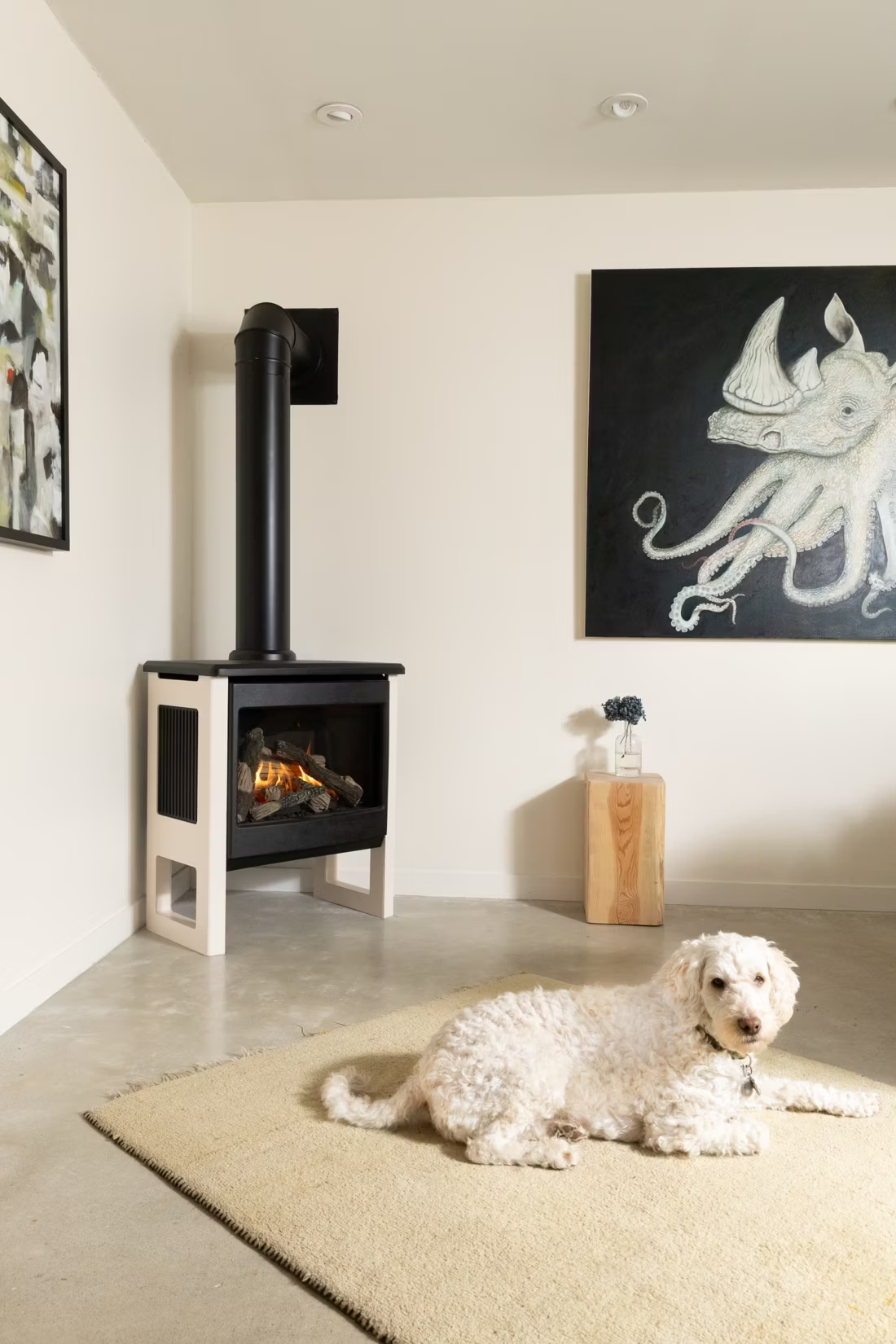
A gas fireplace is a fully built-in unit framed into a wall—the standard choice for new construction or a room without an existing fireplace. A gas insert is sized to slide into an existing masonry firebox, which describes a lot of the older ranch and split-level homes scattered through Castro Valley's established neighborhoods. A gas stove is a freestanding cast-iron or steel unit that sits on a hearth pad, similar in footprint to a wood stove but running on gas. For a home with an existing wood fireplace you're retiring due to BAAQMD rules, an insert is almost always the right fit.
Do I need a permit to install a gas fireplace in Castro Valley?
Yes. Because Castro Valley is unincorporated, permits go through the Alameda County Building & Safety Division rather than a city building department—both a building permit and a gas line permit are required for a new gas fireplace or insert. Most established hearth retailers pull these permits as part of the installation and coordinate the licensed gas-fitter work directly, so you're not left managing separate trades or inspections yourself.
Are vent-free gas fireplaces allowed in Castro Valley?
California's building code restricts unvented gas appliances in bedrooms and small enclosed rooms, and Alameda County inspectors generally expect a sealed, direct-vent system for any new gas fireplace install. Direct-vent units draw combustion air from outside and exhaust it back outside through a sealed pipe—no indoor air quality trade-offs, and no debate with an inspector. Given the county's non-attainment status and wildfire-smoke-conscious air quality culture, direct-vent is the practical default here, and it's what nearly every local retailer will steer you toward.
How often does a gas fireplace need to be serviced?
Plan on an annual inspection, ideally before the first cool snap in late fall. A technician checks the burner, pilot assembly, venting, and gas connections, and cleans the glass and interior—a much lighter lift than chimney sweeping for a wood-burning unit. Local gas appliance service providers typically charge $150 to $250 for this visit. It's a small cost against the alternative: a neglected pilot or venting issue is the most common reason a gas fireplace stops lighting reliably.
Gas vs. electric fireplace—which makes more sense in Castro Valley?
Gas gives you real flame, higher heat output for supplemental warmth on the area's cooler nights, and—with battery-backup ignition—a unit that still works during a PG&E Public Safety Power Shutoff. Electric fireplaces are cheaper to install (often $400 to $1,500 with no venting or gas line required) and simpler to place anywhere in the home, but PG&E's residential rate of roughly $0.317 per kWh makes electric heat one of the more expensive ways to add real warmth, so most electric units here are chosen for ambiance and zone heating in a room rather than as a workhorse heat source. Given Castro Valley's mild winters, both fuels work—gas tends to win for anyone wanting genuine flame and backup capability, electric wins for low upfront cost and installation flexibility.
Can I put a TV above my fireplace?
Yes—with an asterisk. Fireplaces are hot and TVs don't like heat. Either put a mantel between them to deflect rising warmth, or choose a fireplace with heat-management technology that creates a cool zone on the wall above—the wall stays around 125 degrees, barely warm, while the room still gets full heat. If you like clean lines and don't want a mantel, heat management is the answer.
Why is a fireplace insert so efficient?
An insert does two things: it seals the chimney completely, so you stop losing air you already paid to heat, and it radiates warmth into the room through the firebox and glass. Most add a heat-exchange fan that pulls cool room air underneath, wraps it around the hot firebox, and pushes it back out warm. Your home is more efficient before you've even lit the first fire.
How much should I budget for a fireplace?
For an average home—covering the fireplace, the vent pipe, and basic installation—a budget between $3,900 and $5,500 gives you a lot of options across wood, gas, and pellet. By the time you add finish work, gas line, and electrical, the average complete installation lands between $5,000 and $12,000 all-in. In a remodel or new build, a good rule is to put about 2.5% of the total project cost toward the fireplace.
Can I install a fireplace myself?
If you're putting a fire in your house on purpose, it's best to work with an expert. Unless you're genuinely experienced in framing, gas line, vent pipe, and the national code on clearances to combustibles, have a professional do it—and ideally the same company that sells you the fireplace, so warranty, service, and liability all live under one roof.
Nearby Dealers
Hearth shops serving Castro Valley and the surrounding area.
Find your gas fireplace in Castro Valley.
Tell us a bit about your home and we'll match you with the right gas fireplace, insert, or stove—and connect you with a trusted local dealer who knows Alameda County's permit process and BAAQMD rules.
Find Your Fireplace →