
Warm Evenings Without the Spare the Air Alerts.
Clean, instant gas heat for Dublin's Tri-Valley homes—the fireplace option that keeps working even on the Bay Area's high-pollution curtailment days. Find the right unit and connect with a trusted local dealer.
Every Project Starts From One of These Five Situations
In the Bay Area's air basin, gas is the practical choice.
Dublin sits at 361 feet in the East Bay's Tri-Valley, with a mild Mediterranean climate (Zone 3C) that rarely sees a hard freeze. Winter lows average 39°F and the city sees a light overall heating load each year—a fraction of what a place like Fargo, ND racks up in a single January. That's not a climate that demands aggressive heat; it's one where a fireplace is mostly about ambiance, zone heating on a cool evening, and backup warmth when the power goes out.
What actually shapes the fuel decision in Dublin is air quality, not temperature. Alameda County sits inside the Bay Area Air Quality Management District's non-attainment area, and BAAQMD Regulation 6, Rule 3 prohibits installing new wood-burning devices and restricts them heavily in remodels—which is why wood and pellet appliances are essentially off the table here, even with oak, madrone, and Douglas fir available in the surrounding foothills. Winter Spare the Air alerts go further, banning wood fires (including older, grandfathered fireplaces) on high-pollution days. Gas is the fuel that keeps working regardless. PG&E supplies both natural gas and electric service throughout Dublin, so most homes—especially in Dublin Ranch, Positano, and the other subdivisions built out since the 1990s—already have gas plumbed to the house, which usually makes adding or upgrading a fireplace straightforward.
Three steps. No salesperson until you're ready.
Tell us about your project
Your zip code, your situation, and the fuel you're leaning toward—or let the answers point you to one.
See what's actually available
The brands dealers within 100 miles genuinely carry—real options, never a catalog mirage.
Get your dealer & Project Guide
A trusted local dealer, plus the free Project Guide & Parts List that names every component of the job.
Frequently Asked Questions
How much does a gas fireplace installation cost in Dublin?
A typical gas fireplace or insert installation in Dublin runs $4,500 to $12,000. Bay Area labor rates and City of Dublin permit fees push costs toward the higher end of the national range compared to less expensive markets. A direct-vent insert dropped into an existing masonry fireplace with a gas line already nearby lands on the lower end, around $4,500 to $7,500. A new built-in unit for a remodel or an addition—with framing, venting through an exterior wall, and a fresh gas line run—sits at the top of the range. A local retailer will give you a firm number after an in-home look at your specific fireplace opening and gas access.
Can I convert my existing wood-burning fireplace to gas?
Yes, and it's one of the most common projects local installers handle in Dublin. Many of the city's tract homes from the Dublin Ranch and Positano-era boom came with a builder-grade wood-burning fireplace that's now impractical to use given BAAQMD's Regulation 6-3 restrictions and winter Spare the Air bans on wood fires. Converting to a gas insert uses your existing chimney as the venting path with a stainless liner and typically costs $4,500 to $9,500, depending on whether new gas line work is needed. The swap keeps the look of your original fireplace opening while giving you a unit you can actually light on a poor-air-quality day.
Do I need to run a new gas line, or can I use my existing hookup?
Dublin is fully within PG&E's natural gas service territory, so nearly every home already has gas service somewhere on the property—often to a furnace, water heater, or range. In most cases, a licensed gas-fitter just extends a branch line to the fireplace location, which is far simpler and cheaper than running new gas from the meter. Propane is uncommon here and mostly limited to a handful of custom hillside properties without a gas main nearby. If you're unsure what you have, a local hearth retailer can check your existing gas service during the same visit where they measure for the fireplace.
Will my gas fireplace work during a power outage?
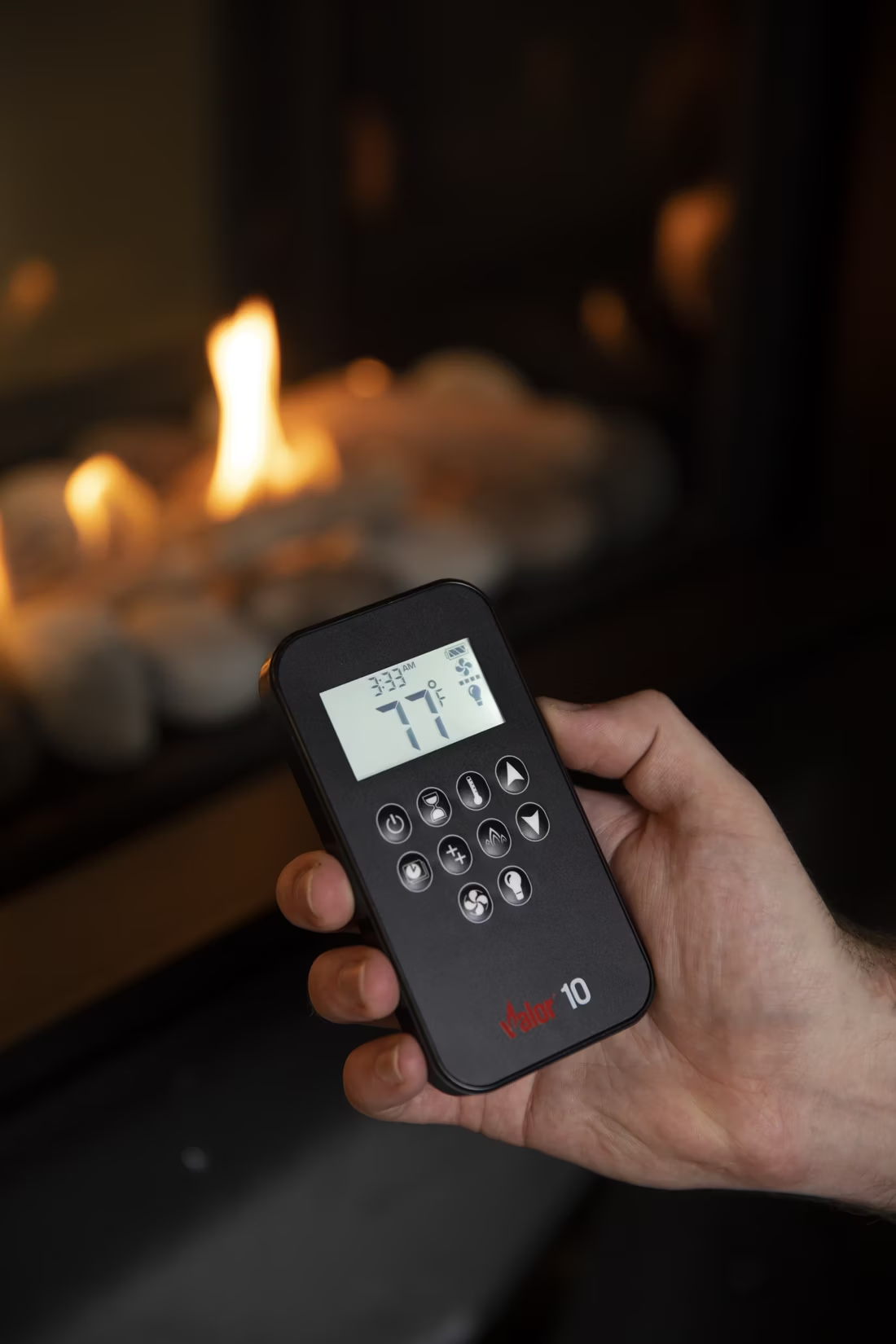
Most modern gas fireplaces are designed to keep working when the power drops. Units with IPI (intermittent pilot ignition) run off battery backup—usually a set of AA batteries built into the unit—so they light on demand even with no electricity. That matters in Dublin specifically because PG&E conducts Public Safety Power Shutoffs (PSPS) during high wildfire risk conditions in the East Bay hills, and outages can stretch for a day or more. Valor fireplaces take a different approach: their pilot's thermocouple generates the small amount of electricity the unit needs, so there's no battery to remember at all. Ask your local retailer which ignition system a given model uses before you buy.
What's the difference between a gas fireplace, gas insert, and gas stove?
A gas fireplace is a fully built-in unit installed into a framed wall or enclosure—the right call for new construction or a remodel where there's no existing fireplace. A gas insert is built to slide into an existing masonry fireplace opening, sealing it up and using the chimney as the vent path, which is the common upgrade for Dublin's older wood-burning fireplaces. A gas stove is a freestanding cabinet-style unit that sits on the floor, similar in shape to a wood stove but running on gas. For most Dublin homes with an existing fireplace, an insert is the straightforward answer; new spaces without one usually call for a built-in fireplace instead.
Do I need a permit to install a gas fireplace in Dublin?
Yes. The City of Dublin's Building and Safety Division requires a building permit and a gas line permit for new gas fireplace or insert installations, and the gas work has to be done by a licensed gas-fitter. Most established hearth retailers pull these permits as part of the job and schedule the required inspection, so you're not coordinating separate trades yourself. Unlike wood stoves, gas appliances aren't subject to BAAQMD's Spare the Air burn bans, so once it's installed and inspected, you can run it on the same days a wood fireplace next door has to stay cold.
What's the difference between vented and vent-free gas fireplaces?
Vented (direct-vent) gas fireplaces pull combustion air from outside and exhaust the byproducts back outside through a sealed pipe—they're the cleanest and most code-friendly option everywhere. Vent-free units burn gas directly into the room without exterior venting; California is one of the states that heavily restricts this category, and in practice you'll find that direct-vent is essentially the only option local Dublin retailers install. That's not a hardship here—direct-vent units seal the firebox completely, which also means outdoor wildfire smoke during fire season can't get pulled into your living room through the fireplace the way it can with an open masonry hearth.
How often should my gas fireplace be serviced?
Plan on an annual inspection, ideally in early fall before the cooler Tri-Valley evenings start. A certified technician checks the burner, pilot assembly, venting, and gas connections, and cleans the glass and interior—a much lighter job than sweeping a wood chimney but still important, since a dirty burner or degraded seal is the most common cause of a fireplace that won't light reliably. Local gas appliance service providers typically charge $150 to $250 for this visit.
Gas vs. electric fireplace—which makes more sense in Dublin?
Gas gives you real flame, stronger heat output, and—with the right battery-backup ignition—a unit that still works during a PG&E PSPS outage. Electric fireplaces skip the gas line and venting entirely, install for far less (often $400 to $1,500), and are the easier option for condos or townhomes where the HOA or building structure won't allow venting. The tradeoff is operating cost: PG&E's residential rate runs about $0.317 per kWh, among the higher electric rates in the country, so an electric unit used for real supplemental heat costs more to run per BTU than a gas fireplace on the same PG&E gas line. For a primary living room in a single-family Dublin home, gas usually wins; for a bedroom, apartment, or rental where venting isn't practical, electric is often the better fit.
Why is a fireplace insert so efficient?
An insert does two things: it seals the chimney completely, so you stop losing air you already paid to heat, and it radiates warmth into the room through the firebox and glass. Most add a heat-exchange fan that pulls cool room air underneath, wraps it around the hot firebox, and pushes it back out warm. Your home is more efficient before you've even lit the first fire.
Why is my open fireplace making my house colder?
Open fireplaces suck—literally. As the fire burns, it consumes air your furnace already paid to heat and pulls it out through the chimney, so the house is actually colder after the fire goes out than before you lit it. An insert fixes this: it seals the chimney, puts fixed glass across the front, and turns that hole in your house into a real heat source.
What is an in-home preview and do I need one?
It's a visit where a hearth professional measures your space, confirms the model you picked actually works in your home, and walks the specs—framing, gas line, venting, finish work—before anything is ordered. Some details you just can't know until you see the house. Never make a down payment without one; it's the single most-skipped step that burns buyers.
How much should I budget for a fireplace?
For an average home—covering the fireplace, the vent pipe, and basic installation—a budget between $3,900 and $5,500 gives you a lot of options across wood, gas, and pellet. By the time you add finish work, gas line, and electrical, the average complete installation lands between $5,000 and $12,000 all-in. In a remodel or new build, a good rule is to put about 2.5% of the total project cost toward the fireplace.
Preferred Dealer in Dublin
Find your gas fireplace in Dublin.
Tell us a bit about your home and we'll match you with a trusted local Dublin dealer, plus a free Project Guide & Parts List—the exact parts, vent kit, and install plan for your gas fireplace or insert.
Find Your Fireplace →