
Clean Gas Heat for Oakland's Mild, Foggy Nights.
Real flame without the smoke restrictions—the practical choice for Oakland's air quality rules and marine-layer chill. Find the right unit and connect with a trusted local dealer.
Every Project Starts From One of These Five Situations
The clear choice where wood smoke is restricted.
Oakland sits at just 160 feet in elevation with a mild Mediterranean climate—winter lows average around 45°F and the city has a short, light heating season, a fraction of what places like Bozeman, MT or Duluth, MN see. Nobody in the flatlands or the hills needs heat to survive the night here. But the Bay Area's damp, foggy evenings still call for warmth, and Oakland's older housing stock—the Craftsman bungalows of Rockridge, the Victorians near Grand Lake, the Mediterranean revivals up in the hills—was largely built around a wood-burning hearth that's no longer a practical option.
Alameda County falls under Bay Area Air Quality Management District jurisdiction, a federal non-attainment area where Regulation 6, Rule 3 prohibits new wood-burning fireplace installations and triggers mandatory no-burn Spare the Air days for uncertified devices throughout winter. Add in wildfire smoke concerns that intensified after the 1991 Oakland Hills firestorm, and it's little surprise that gas has become the default upgrade for homeowners converting an old masonry fireplace or building new. PG&E supplies natural gas to nearly every neighborhood in the city, and a gas insert or direct-vent fireplace delivers instant, controllable heat without adding a single BAAQMD violation to worry about.
Three steps. No salesperson until you're ready.
Tell us about your project
Your zip code, your situation, and the fuel you're leaning toward—or let the answers point you to one.
See what's actually available
The brands dealers within 100 miles genuinely carry—real options, never a catalog mirage.
Get your dealer & Project Guide
A trusted local dealer, plus the free Project Guide & Parts List that names every component of the job.
Frequently Asked Questions
How much does a gas fireplace installation cost in Oakland?
Most gas fireplace and insert installations in Oakland run $4,500 to $11,000, with the wide range driven by Bay Area labor rates, the age of the home, and how much gas line work is needed. Converting an existing masonry fireplace in a Craftsman or Victorian home into a direct-vent gas insert—using the existing chimney with a stainless liner—tends to land in the $4,500 to $9,500 range if a gas line is already nearby. New construction or hillside remodels requiring fresh gas line runs, custom framing, or venting through multiple stories push toward the higher end. A local retailer will give you a firm number after an in-home walkthrough.
Can I convert my old wood-burning fireplace to gas?
Yes, and it's one of the most common projects in Oakland's older housing stock. Because BAAQMD Regulation 6, Rule 3 restricts new wood-burning installations across Alameda County, converting an existing wood fireplace to a direct-vent gas insert is the standard path for homeowners in Rockridge, Piedmont Avenue, and the Oakland hills who want a working fireplace without air-quality headaches. The existing chimney typically gets a stainless steel liner, and the insert seals the old firebox for a cleaner, more efficient burn. Expect the project to fall in the $4,500 to $9,500 range depending on whether the home already has a gas line nearby.
Do I need natural gas service, or should I use propane?
Natural gas is available through PG&E across nearly all of Oakland's flatland and hill neighborhoods, so the overwhelming majority of installations run on natural gas rather than propane. Propane only becomes a consideration for a small number of remote hillside properties where gas line extension isn't practical. If you already have a gas water heater, range, or furnace, adding a gas fireplace is usually a straightforward tie-in for your installer rather than a new utility connection.
Will my gas fireplace work during a power outage?
Most modern gas fireplaces with IPI (intermittent pilot ignition) include a battery backup that keeps the unit operating when the power drops. That matters in Oakland: PG&E's Public Safety Power Shutoffs during high fire-risk conditions have hit hillside neighborhoods more than once in recent years, sometimes for a day or longer. Valor fireplaces take a different approach—their pilot assembly generates its own electricity through the thermocouple, so there's no battery to remember or replace. If PSPS events are a real concern for your zip code, ask your local retailer about self-powering ignition systems specifically.
What's the difference between a gas fireplace, gas insert, and gas stove?
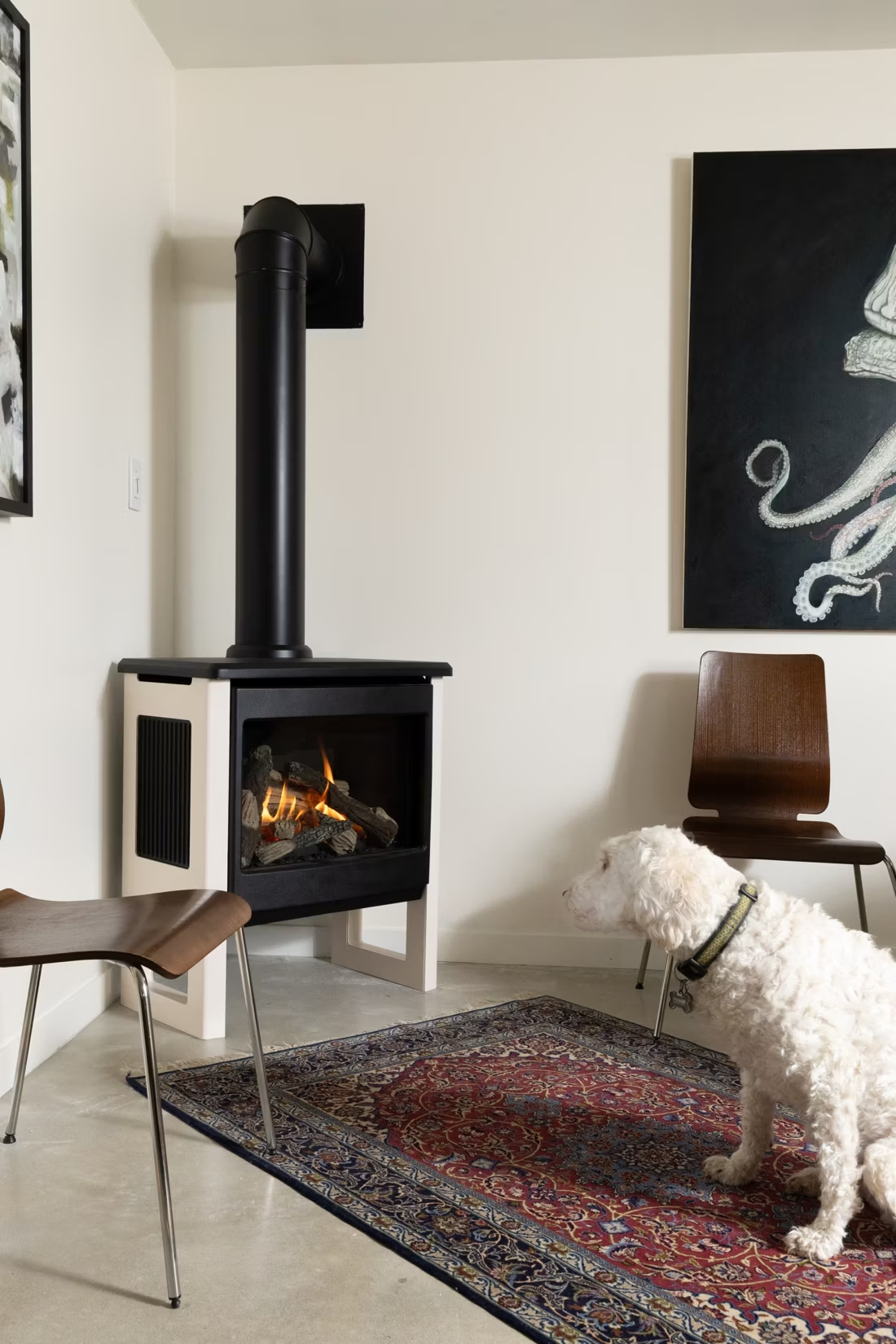
A gas fireplace is a fully built-in unit framed into a wall—the right call for new construction or a full remodel. A gas insert slides into an existing masonry firebox, which is exactly what most Oakland homeowners with a 1920s Craftsman or Victorian fireplace need. A gas stove is a freestanding cast-iron or steel unit that vents through a wall or existing chimney and works well in a room without a fireplace opening at all, including many of Oakland's smaller bungalow living rooms. For homes with an existing chimney that's structurally sound, an insert is almost always the simplest and least invasive option.
Do I need a permit to install a gas fireplace in Oakland?
Yes—the City of Oakland Building Services Division requires a building permit and gas line permit for new gas fireplace or insert installations, and the gas work itself must be done by a licensed gas-fitter. Most established hearth retailers pull these permits as part of the job. If you're removing an old uncertified wood-burning device as part of the conversion, keep documentation—BAAQMD compliance for wood devices sometimes comes up during home sales in Alameda County, and having records of a gas conversion simplifies that process.
What's the difference between vented and vent-free gas fireplaces, and can I install a vent-free unit in Oakland?
Vented gas fireplaces (direct-vent or B-vent) draw combustion air from outside and exhaust exhaust gases back outside through a sealed flue. Vent-free units burn fuel directly into the room without external venting. California's mechanical and building codes effectively prohibit unvented gas-burning fireplace appliances in most residential applications, so vent-free is not an option for an Oakland installation regardless of what you may see marketed online. Direct-vent gas fireplaces are the standard here, and they're also the better fit for older, less-insulated homes in the flatlands where indoor air quality and moisture control matter.
How often should my gas fireplace be serviced?
Plan on an annual inspection, ideally before the foggy season sets in each fall. A certified technician checks the burner, pilot assembly, venting, and gas connections, and cleans the glass and interior. This is a quick, low-cost visit compared to wood-stove chimney work—typically $150 to $250 in the Oakland area—but it's the main thing standing between you and a nuisance service call mid-winter.
Gas vs. wood—why isn't wood really an option in Oakland?
Wood-burning fireplaces are largely a non-starter for new installations in Oakland. Alameda County sits within a federal air quality non-attainment area, and BAAQMD Regulation 6, Rule 3 bars new wood-burning device installations while imposing mandatory no-burn Spare the Air days on existing uncertified units throughout the winter. Wildfire smoke risk in the hills—a real concern since the 1991 Oakland Hills firestorm—adds another layer of caution around open burning. A handful of existing wood fireplaces remain in older homes, but most owners looking to actually use their fireplace regularly convert to gas rather than fight the restrictions. Gas delivers the same instant, controllable heat and ambiance without any of the compliance risk.
Can I put a TV above my fireplace?
Yes—with an asterisk. Fireplaces are hot and TVs don't like heat. Either put a mantel between them to deflect rising warmth, or choose a fireplace with heat-management technology that creates a cool zone on the wall above—the wall stays around 125 degrees, barely warm, while the room still gets full heat. If you like clean lines and don't want a mantel, heat management is the answer.
Why is my open fireplace making my house colder?
Open fireplaces suck—literally. As the fire burns, it consumes air your furnace already paid to heat and pulls it out through the chimney, so the house is actually colder after the fire goes out than before you lit it. An insert fixes this: it seals the chimney, puts fixed glass across the front, and turns that hole in your house into a real heat source.
Does a fireplace add value to my home?
On average, a fireplace adds back to the home about the same amount you spent installing it. Add the monthly savings from heating the rooms you actually use instead of the whole house—often hundreds of dollars a year—and the value case is strong before you even count what a fire does for how your family uses the room.
Can I install a fireplace myself?
If you're putting a fire in your house on purpose, it's best to work with an expert. Unless you're genuinely experienced in framing, gas line, vent pipe, and the national code on clearances to combustibles, have a professional do it—and ideally the same company that sells you the fireplace, so warranty, service, and liability all live under one roof.
Nearby Dealers
Hearth shops serving Oakland and the surrounding area. Every listing shows whether it is a WhyFire partner, a dealer we have verified as authorized for the brands we recommend, or a local business carrying hearth products. No manufacturer pays for placement. How we verify dealers →
Kidd Fireplaces
Kidd Services
Berkeley Heat, LLC
The Irish Sweep, Inc.
Terra Outdoor Living
O'Kell's Fireplace
Terra Outdoor Living
Creative Energy
Jerrys Fireplaces
Buck Stove Spa & Fan
Terra Outdoor Living
Giorgi Bros
Sdi Insulation, Inc
Gold Chimney
The Patio & Fire Place
River City Stoves
Terra Outdoor Living
Terra Outdoor Living
Wright Lighting & Fireside
Find your gas fireplace in Oakland.
Tell us a bit about your home and we'll match you with the right gas fireplace or insert—plus a free Project Guide & Parts List with your recommended local Oakland dealer.
Find Your Fireplace →