
Steady, clean heat for White County homes.
From Searcy to Beebe to Bald Knob, pellet stoves give White County homeowners a low-maintenance way to add real, radiant heat without splitting or stacking wood. Find the right unit and get matched with a trusted local dealer.
Every Project Starts From One of These Five Situations
Low-maintenance heat built for White County's mild, mixed-humid winters.
White County sits in climate zone 3A—a mixed-humid region where winter lows average around 30°F and the heating season adds up to a fairly light winter heating load each year. That's a fraction of what a place like Duluth, Minnesota racks up in a single season, and it means most homes here aren't fighting sub-zero nights so much as long stretches of chilly, damp weather from December through February. That's exactly the kind of climate where a pellet stove shines: consistent, thermostatically controlled heat for a family room or open living area, without the BTU overkill a harsh-winter stove would deliver.
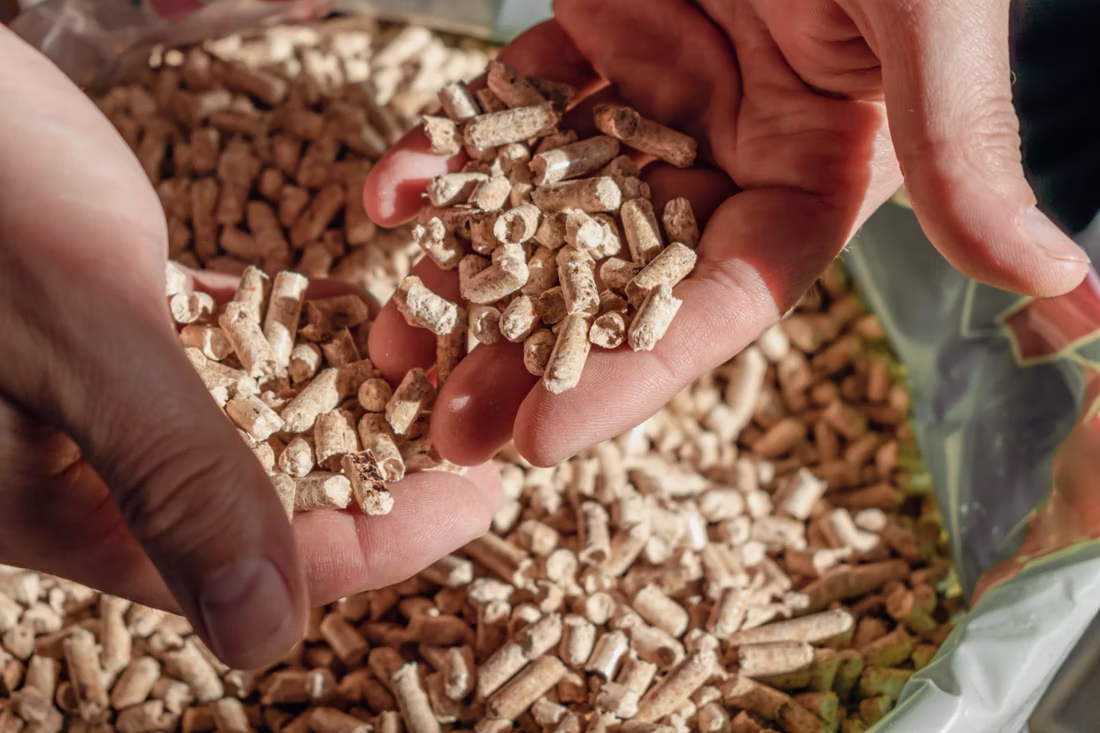
White County has no air quality non-attainment concerns, so there's no curtailment schedule or burn-ban season to plan around—you run the stove when it's cold, and that's it. Local hardwoods like oak and hickory (with pine mixed in) are part of the region's wood-heat heritage, but pellet fuel itself comes from regional suppliers including Lignetics and Indeck Energy Services, sold by the ton or by the bag at hearth retailers and farm stores throughout the county. For homeowners who want the ambiance and steady warmth of a wood-burning appliance without the chainsaw, the splitting maul, and the woodpile, pellet is often the simplest path to real heat in a Searcy or Beebe living room.
Three steps. No salesperson until you're ready.
Tell us about your project
Your zip code, your situation, and the fuel you're leaning toward—or let the answers point you to one.
See what's actually available
The brands dealers within 100 miles genuinely carry—real options, never a catalog mirage.
Get your dealer & Project Guide
A trusted local dealer, plus the free Project Guide & Parts List that names every component of the job.
Frequently Asked Questions
How much does a pellet stove installation cost in White County?
Costs depend mainly on the stove itself, the venting path, and whether you need new electrical work for the hopper motor and combustion blower. A pellet insert going into an existing fireplace with a straightforward through-wall vent tends to run on the lower end; a freestanding stove in a new location that needs fresh electrical and venting runs higher. Because pellet stoves vent through a smaller-diameter pipe than wood stoves, labor is usually less than a full masonry chimney job. A local dealer serving White County will walk your home and give you a firm number—that's part of what the free Project Guide & Parts List is built to set up.
Will my pellet stove work if the power goes out?
No—and this matters in White County, where ice storms have knocked out power for days at a time in past winters. A pellet stove's auger, igniter, and combustion blower all run on standard household electricity, so when the grid goes down, the stove stops feeding pellets and stops burning. Some homeowners pair a pellet stove with a small battery backup or portable generator specifically to keep it running through an outage. If backup heat during a multi-day power outage is a top priority, a wood stove or a battery-independent gas unit is worth comparing—a local dealer can talk through both.
What size pellet stove do I need for my White County home?
Because White County's winters are relatively mild—average lows around 30°F and a fairly light winter heating load overall—most homes here don't need the largest primary-heat pellet stoves built for harsh-winter climates. A small to mid-size unit is usually enough to heat a living room or open-concept main floor as zone heat, with central HVAC handling the rest of the house. Larger, well-insulated homes or those using the stove as their main heat source should size up. A local retailer will factor in your square footage, ceiling height, and floor plan during an in-home consultation.
Where can I buy pellet fuel in White County?
Regional pellet brands like Lignetics and Indeck Energy Services supply hearth retailers and farm/hardware stores throughout central Arkansas, and most White County dealers stock bagged pellets by the ton pallet, especially heading into fall. Buying early in the season—before the first cold snap hits Searcy and Beebe—typically means better availability and fewer sold-out runs at local retailers. Many households buy a full ton or more at once and store it in a garage or shed to avoid mid-winter restocking trips.
Do I need a permit to install a pellet stove in White County?
In most cases, yes—a building permit is required for a new pellet stove installation, whether that's through the White County building department for unincorporated areas or the local permitting office if you're inside city limits in Searcy, Beebe, Bald Knob, or Judsonia. The specific requirements come down to venting penetrations and any electrical work for the unit. Most hearth retailers handle the permitting as part of the installation, so you're not usually coordinating it yourself.
Pellet stove vs. wood stove—which makes more sense in White County?
White County has plenty of oak, hickory, and pine available locally, so wood heat is a realistic option for homeowners who don't mind splitting, stacking, and hauling fuel. Pellet stoves trade that hands-on work for convenience: load a hopper, set a thermostat, and let the auger feed the fire automatically, with far less ash and no chimney creosote to worry about. Given the county's relatively mild winters, many homeowners here use either fuel more for supplemental zone heat and ambiance than as a sole heat source—which is exactly the situation where pellet's low-maintenance operation tends to win out over wood.
How much maintenance does a pellet stove need?
Pellet stoves need regular but light upkeep: emptying the ash pan every few days during heavy use, cleaning the burn pot and heat exchanger tubes weekly to keep efficiency up, and a full professional service—including the venting and combustion blower—once a year, ideally before cold weather sets in. Compared to a wood-burning chimney system, it's a much smaller job, but skipping the annual service is still the most common cause of poor burns and unit failures reported by local technicians.
What's the best pellet stove for White County's climate?
Since most White County homes are using a pellet stove as supplemental heat rather than fighting deep-freeze nights, a mid-efficiency, moderate-output model is usually the right fit—you don't need the largest cold-climate-rated units built for places with a winter heating load nearly triple what White County sees. Look for a stove with a reliable auger feed system and a hopper large enough to run overnight without a refill, since that's the detail that affects day-to-day convenience the most. A local dealer can match hopper capacity and BTU output to your specific room and floor plan.
Pellet vs. gas fireplace—which is right for my home?
Gas fireplaces offer instant on-off heat with no fuel handling at all, which appeals to homeowners who want zero maintenance. Pellet stoves require loading a hopper and periodic cleaning, but they burn a renewable, often cheaper fuel and give you the visual and radiant qualities of a real flame that vent-free or fully sealed gas units can't fully replicate. For White County homes without existing natural gas service, propane gas units are the alternative to compare against pellet—a local dealer can walk through fuel availability and operating cost for your specific address.
Why is my open fireplace making my house colder?
Open fireplaces suck—literally. As the fire burns, it consumes air your furnace already paid to heat and pulls it out through the chimney, so the house is actually colder after the fire goes out than before you lit it. An insert fixes this: it seals the chimney, puts fixed glass across the front, and turns that hole in your house into a real heat source.
Are pellet stoves loud?
They make some noise—there are two fans running plus an auger motor that turns as it feeds pellets. But there's a real range: premium models are engineered quiet, and the best offer a whisper-quiet mode you can comfortably watch TV next to. If noise matters in your room, ask to hear a stove running before you buy—it's a five-minute test that saves years of annoyance.
What is an in-home preview and do I need one?
It's a visit where a hearth professional measures your space, confirms the model you picked actually works in your home, and walks the specs—framing, gas line, venting, finish work—before anything is ordered. Some details you just can't know until you see the house. Never make a down payment without one; it's the single most-skipped step that burns buyers.
Does a fireplace add value to my home?
On average, a fireplace adds back to the home about the same amount you spent installing it. Add the monthly savings from heating the rooms you actually use instead of the whole house—often hundreds of dollars a year—and the value case is strong before you even count what a fire does for how your family uses the room.
Stove and Fireplace Dealers in White County
Pellet Brands Stocked Around White County
Manufacturers will point you to the nearest stocking dealer.
Find your pellet stove in White County.
Tell us a bit about your home and we'll match you with a trusted local dealer serving White County, plus a free Project Guide & Parts List—the exact parts, including the vent kit, for your pellet stove project.
Find Your Fireplace →