
Efficient Heat That Fits Searcy's Milder Winters.
Thermostat-controlled pellet heat for White County homes—set it, forget it, and stay warm through the season's cold snaps. Find the right stove or insert and connect with a trusted local dealer.
Every Project Starts From One of These Five Situations
Consistent warmth without the woodpile.
Searcy sits at about 233 feet in the Arkansas Delta transition zone, in climate zone 3A, where the average winter low hovers around 30 degrees and the heating season adds up to a moderate stretch of chilly weather across the colder months. That's a fraction of what a place like Duluth, Minnesota logs in a single winter, and it means Searcy homeowners aren't fighting sub-zero nights—but White County still sees enough cold snaps, ice, and damp winter mornings that a dedicated heat source in the main living area makes a real difference on the power bill.
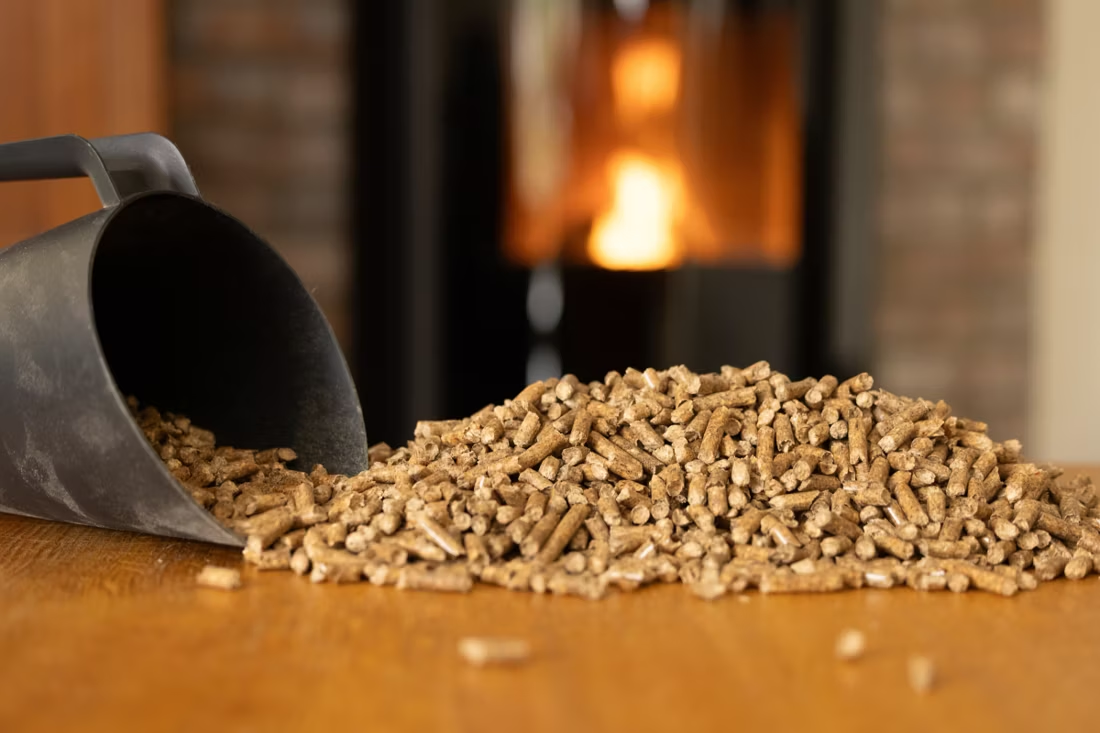
Pellet stoves have found a steady following here because they solve a problem wood can't: convenience. Load a hopper with bagged pellets from brands like Lignetics or Indeck Energy Services—both distributed through regional dealers—set a thermostat, and the auger and blower handle the rest. There's no cutting, splitting, or stacking, no timber-cutting permits in the oak and hickory stands around White County, and no daily tending. The tradeoff is that a pellet stove depends on electricity to run its auger and blower, so it's not the outage-proof option wood is; Entergy Arkansas serves most of the area, and a small battery backup or generator keeps a pellet stove running through the occasional ice storm that takes down power lines here.
Three steps. No salesperson until you're ready.
Tell us about your project
Your zip code, your situation, and the fuel you're leaning toward—or let the answers point you to one.
See what's actually available
The brands dealers within 100 miles genuinely carry—real options, never a catalog mirage.
Get your dealer & Project Guide
A trusted local dealer, plus the free Project Guide & Parts List that names every component of the job.
Frequently Asked Questions
How much does a pellet stove or insert installation cost in Searcy?
A freestanding pellet stove typically runs $2,500 to $5,500 installed in Searcy, while a pellet insert set into an existing masonry fireplace runs closer to $3,000 to $6,500, depending on the venting path and whether an existing chimney liner needs modification. Pellet venting is simpler and cheaper than wood or masonry chimney work—most units vent horizontally through an exterior wall with a small-diameter PL vent pipe, which keeps installation costs lower than a full wood stove chimney system. A local dealer can give you a firm number after seeing your fireplace or install location.
Do I need a permit to install a pellet stove in Searcy or White County?
Most jurisdictions, including the City of Searcy and White County, require a building permit for any new solid-fuel or pellet-burning appliance, since it involves new venting through an exterior wall or roof. Your installer typically pulls this permit as part of the job. White County has no current air quality non-attainment designation and no winter burn curtailment periods, so unlike some western cities, there's no seasonal restriction on when you can run a pellet stove—you're simply working through standard code and safety inspection.
Pellet stove vs. wood stove—which makes more sense in Searcy?
Both work well here. Wood is genuinely abundant—White County's mix of oak, hickory, and pine means self-cut or locally purchased firewood is cheap and plentiful, and a wood stove keeps working even if the power's out. A pellet stove trades that off-grid independence for convenience: no splitting or stacking, longer burn times per loading, and a more even, thermostat-set heat output. Since Searcy's winters are milder than the northern cold-climate markets where wood dominates by necessity, a lot of homeowners here choose pellet purely for ease of use rather than for surviving brutal cold—it's less a survival appliance and more a comfortable, efficient supplemental heat source.
Where can I buy pellets in Searcy?
Regional brands like Lignetics and Indeck Energy Services distribute through hearth dealers and farm supply stores across central Arkansas, and bagged hardwood or softwood pellets typically run in the $200 to $260 per ton range, sold in 40-pound bags. Because Searcy's heating season is relatively short compared to northern markets, most households burn one to three tons per winter rather than the five-plus tons a colder climate might need—worth factoring into your storage plans.
Will my pellet stove work during a power outage?
Not without backup power. Pellet stoves depend on an electric auger to feed fuel and a blower to distribute heat, so a power outage shuts them down even with a full hopper. Entergy Arkansas's service in the Searcy area is generally reliable, but White County isn't immune to winter ice storms that can knock out power for a day or more. If backup heat during outages matters to you, a small battery backup unit made for pellet stoves, or a portable generator sized to run the stove's motor and controls, solves the problem. Homeowners who want heat that works with zero electricity typically pair a pellet stove with a wood-burning option as backup.
What size pellet stove do I need for my Searcy home?
Because Searcy's winter lows average around 30 degrees rather than the single digits colder climates see, most homes here don't need a maximum-output unit. A small to mid-size pellet stove rated for 1,200 to 1,800 square feet handles most main living areas as supplemental heat, while larger open floor plans or homes using pellet as primary heat may want a unit rated closer to 2,000-plus square feet. A local dealer will factor in your ceiling height, insulation, and floor plan during an in-home visit—oversizing is a common mistake that leads to short-cycling and more frequent ash buildup.
How much maintenance does a pellet stove need?
Pellet stoves need more routine attention than gas but less than wood. Plan on emptying the ash pan every few days during regular use, cleaning the burn pot weekly to keep the fire feeding evenly, and wiping the glass as needed. A full professional service—cleaning the exhaust fan, hopper, and venting—is recommended annually, ideally before the season starts each fall. Because Searcy's burn season is shorter than in colder markets, most units here see less overall wear than the same stove would running nonstop from October through April farther north.
Are there rebates or tax credits available for pellet stoves?
Yes—the federal biomass stove tax credit (Section 25C) covers 30% of the cost of a qualifying pellet stove and its installation, up to $2,000, for units rated at 75% efficiency or higher, which covers most modern EPA-certified pellet stoves and inserts. This is a federal credit available regardless of location, so Searcy homeowners can claim it the same as anyone else. Arkansas doesn't currently have a state-level hearth appliance rebate program, so the federal credit is the main incentive to factor into your budget.
Pellet vs. propane or electric heat—which is right for my home?
Much of White County outside city gas service relies on propane furnaces or electric heat pumps through Entergy Arkansas for primary heating, and a pellet stove works well as a zone-heating supplement to either—you heat the room you're in and let the pellet stove take pressure off the central system during the coldest stretches, which can meaningfully lower a winter electric bill given Entergy's residential rate of roughly 13 cents per kWh. Propane offers similar convenience but tracks fuel-tank deliveries and price swings; pellets are typically cheaper per BTU and sold locally in bags, without a tank lease. For most Searcy homes, pellet makes the most sense as a supplemental heat source in the main living area rather than a whole-house replacement for central heat.
Why is a fireplace insert so efficient?
An insert does two things: it seals the chimney completely, so you stop losing air you already paid to heat, and it radiates warmth into the room through the firebox and glass. Most add a heat-exchange fan that pulls cool room air underneath, wraps it around the hot firebox, and pushes it back out warm. Your home is more efficient before you've even lit the first fire.
Why is my open fireplace making my house colder?
Open fireplaces suck—literally. As the fire burns, it consumes air your furnace already paid to heat and pulls it out through the chimney, so the house is actually colder after the fire goes out than before you lit it. An insert fixes this: it seals the chimney, puts fixed glass across the front, and turns that hole in your house into a real heat source.
How much should I budget for a fireplace?
For an average home—covering the fireplace, the vent pipe, and basic installation—a budget between $3,900 and $5,500 gives you a lot of options across wood, gas, and pellet. By the time you add finish work, gas line, and electrical, the average complete installation lands between $5,000 and $12,000 all-in. In a remodel or new build, a good rule is to put about 2.5% of the total project cost toward the fireplace.
What is an in-home preview and do I need one?
It's a visit where a hearth professional measures your space, confirms the model you picked actually works in your home, and walks the specs—framing, gas line, venting, finish work—before anything is ordered. Some details you just can't know until you see the house. Never make a down payment without one; it's the single most-skipped step that burns buyers.
Nearby Dealers
Hearth shops serving Searcy and the surrounding area.
Pellet Brands Stocked Around Searcy
Manufacturers will point you to the nearest stocking dealer.
Find your pellet stove in Searcy.
Tell us a bit about your home and we'll match you with the right pellet stove or insert, plus a free Project Guide & Parts List—including the vent kit—from a trusted local dealer.
Find Your Fireplace →